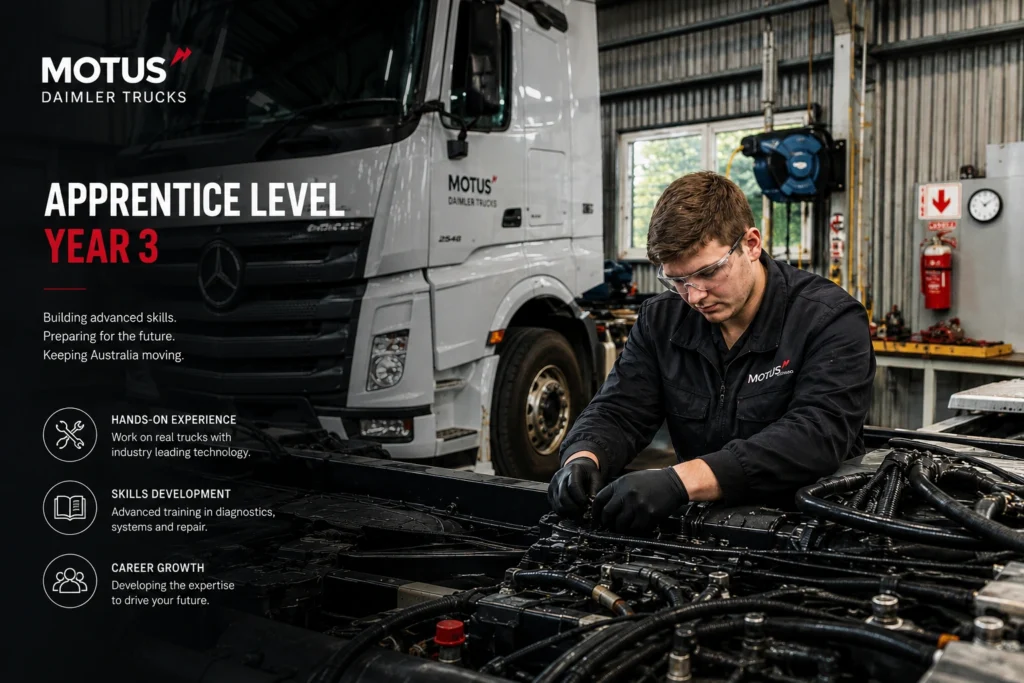

The sudden rise in attention around the Motus Daimler Trucks Apprentice Level Year 3 opportunity is not happening in isolation. Across South Africa, technical apprenticeships are becoming one of the most discussed career pathways for young people trying to enter industries that still offer hands-on, long-term employment growth.
While many graduates continue struggling to find stable work, employers in transport, logistics and commercial vehicle servicing are increasingly searching for candidates with practical technical ability rather than only theoretical qualifications. That shift is exactly why opportunities linked to truck diagnostics, workshop systems and commercial vehicle servicing are gaining traction online.
The latest apprentice opening from Motus Holdings places the spotlight on an area many job seekers overlook: heavy commercial vehicle maintenance and diagnostics.
And right now, that sector matters more than many people realise.
Why the Motus Daimler Trucks Apprentice Level Year 3 Opportunity Is Getting Attention
South Africa’s logistics and transport industry depends heavily on commercial vehicles. From long-haul freight movement to municipal transport and industrial supply chains, trucks and buses remain essential to economic activity.
Yet the industry continues facing a growing shortage of technically trained artisans and diagnostic specialists.
That is where the Motus Daimler Trucks Apprentice Level Year 3 programme enters the conversation.
Unlike entry-level opportunities focused mainly on observation or administration, this apprenticeship places candidates inside a working commercial vehicle service environment. The role combines workshop discipline, technical diagnostics, repair support and structured manufacturer-linked training.
For many applicants, that combination is becoming increasingly attractive because it offers something the labour market currently values highly: practical competence.
The apprenticeship is based in Polokwane and falls under the Engineering functional area within Motus Corporation operations. The opportunity focuses specifically on truck and bus servicing, fault-finding and workshop support.
That means successful applicants will not simply shadow technicians from a distance. They will participate in real workshop processes tied to service delivery standards.
How the Industry Shift Created More Interest in Apprenticeships
Over the past few years, South Africa has seen growing discussion around the mismatch between education and employability.
Many young people complete qualifications but still struggle to gain workplace exposure. At the same time, employers repeatedly mention the shortage of practical technical experience among applicants.
This gap has pushed apprenticeships back into focus.
Motor industry employers especially are placing more emphasis on candidates who understand diagnostics, electrical systems, fault tracing and workshop operations.
Modern commercial vehicles are also far more technologically advanced than older generations of trucks and buses. Today’s vehicles rely heavily on computerized systems, electronic diagnostics and integrated service software.
As a result, workshops increasingly need apprentices who can combine mechanical understanding with technical problem-solving.
That explains why opportunities linked to diagnostic systems are receiving more attention online than traditional workshop assistant roles.
What the Apprentice Will Actually Do
One reason this opportunity stands out is the level of practical exposure involved.
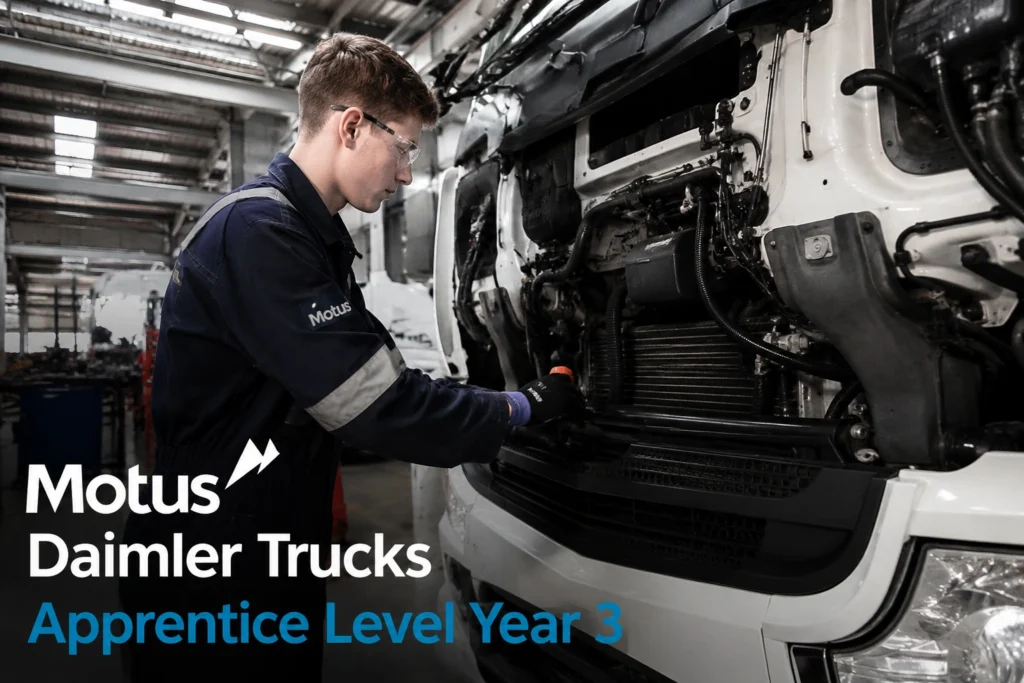
According to the role outline, the apprentice will support truck and bus repair operations under dealer and distributor standards while reporting to the Service Manager.
The work includes:
- Supporting vehicle fault diagnosis
- Assisting with truck and bus repairs
- Using diagnostic equipment
- Following DCSA procedures
- Handling diagnostic printouts
- Supporting workshop cleanliness and organisation
- Assisting during breakdown situations
- Managing parts usage and returns
- Helping maintain service quality standards
These responsibilities may sound routine on paper, but inside a commercial workshop environment they form the foundation of technical growth.
Fault diagnosis, especially, has become one of the most valuable workshop skills in the modern motor industry.
A technician who understands systems and accurately identifies problems is often more valuable than someone who simply replaces parts without understanding the root issue.
That distinction matters.
The Growing Importance of Vehicle Diagnostics
One of the biggest developments in automotive servicing over the past decade has been the shift toward diagnostics-led repairs.
Commercial vehicles now contain sophisticated electrical and electronic systems that require specialized examination tools and technical interpretation.
This means apprentices entering the industry today need far stronger analytical skills than previous generations.
The Motus Daimler Trucks Apprentice Level Year 3 opportunity reflects this evolution directly.
Candidates will use diagnostic equipment during examinations and support technical investigations into vehicle faults. That type of exposure can become extremely valuable later in an artisan career.
Across the transport sector, employers increasingly prioritise technicians who understand:
- Electronic fault codes
- Sensor systems
- Control modules
- Electrical troubleshooting
- Preventative maintenance systems
- Computer-based diagnostics
For ambitious candidates, this apprenticeship may therefore represent more than short-term experience. It could become a gateway into specialised commercial vehicle servicing.
Public Reaction: Why Many Young South Africans Are Paying Attention
Online reaction to technical opportunities like this often follows a familiar pattern.
Many young job seekers express frustration about university-focused career messaging while practical technical trades receive less public attention despite offering real earning potential.
As unemployment pressures continue, apprenticeships connected to large automotive or transport brands tend to attract strong interest because they offer structured exposure instead of vague promises of “experience.”
There is also growing awareness that artisan careers can lead to long-term stability.
Truck servicing, diagnostics and commercial vehicle maintenance remain critical industries even during periods of economic pressure because logistics operations cannot simply stop.
That reality gives technical roles a level of resilience many sectors currently lack.
Some applicants are also viewing opportunities like this strategically. Rather than chasing oversaturated office-based careers, they are looking toward industries with actual skills shortages.
Commercial vehicle servicing is increasingly becoming one of those sectors.
Why This Matters Right Now
The timing of this apprenticeship matters because South Africa’s broader conversation around youth employment is changing.
For years, discussions focused heavily on degrees and white-collar pathways. But economic realities are shifting attention back toward technical professions, apprenticeships and artisan development.
At the same time, logistics, freight transport and infrastructure industries continue depending on skilled technicians to keep operations running efficiently.
That creates an unusual situation:
While many industries reduce hiring, certain technical sectors still need trained people.
The Motus Daimler Trucks Apprentice Level Year 3 opportunity sits directly inside that demand area.
It also highlights another important shift: employers increasingly want candidates who already possess foundational technical knowledge.
Applicants need:
- Grade 12 with Mathematics and Physical Science
- N2 Engineering Science
- Technical Drawing
- Mathematics
- Motor Trade Theory
APPLY HERE: Motus Daimler Trucks Apprentice
ALSO APPLY FOR: V&A Waterfront Mechanical Apprenticeship
This requirement structure shows that companies are looking for apprentices who can contribute meaningfully from the beginning rather than starting entirely from zero.
In other words, technical preparation is becoming a competitive advantage again.
Why Communication Skills Now Matter in Technical Roles
One of the more interesting aspects of the apprenticeship is the emphasis on communication and interpersonal ability.
Traditionally, many people viewed workshop environments as purely mechanical spaces where technical skill alone mattered most.
That perception is changing.
Modern service departments increasingly require technicians and apprentices to communicate clearly with supervisors, colleagues and sometimes customers.
The apprentice may occasionally discuss service details or support customer-facing technical explanations.
That means employers are now searching for candidates who can combine:
- Technical understanding
- Professional behaviour
- Team collaboration
- Clear communication
- Organisational discipline
This shift reflects how commercial service environments are evolving into more integrated operations where technical teams work closely with customer support and service coordination staff.
The Role of Training Exposure
Another major attraction of the opportunity is the training component linked to Daimler and Cargo Motors systems.
In South Africa’s current employment environment, structured training matters almost as much as the job itself.
Many young workers enter unstable positions without mentorship or formal development. Apprenticeships tied to recognized automotive systems can therefore provide stronger long-term value.
Exposure to manufacturer-linked training can help apprentices build familiarity with professional service standards and industry procedures that smaller workshops may not always provide.
That experience can later strengthen employability across the wider automotive and transport servicing sector.
What Makes a Strong Applicant Stand Out
The reality is that technical opportunities often receive high application volumes.
Applicants who stand out usually show evidence of practical readiness rather than generic interest.
A CV that simply states “passionate about mechanics” is unlikely to carry much weight.
Stronger candidates typically highlight:
- Workshop exposure
- Diagnostic familiarity
- Technical subjects
- Tool-handling experience
- Vehicle maintenance activities
- Safety awareness
- Practical training
- Team-based workshop work
A driver’s licence may also strengthen an application because mobility and vehicle handling are useful within service environments.
Importantly, workshop culture also rewards reliability and discipline.
Technical environments move quickly, and mistakes can become costly. Employers therefore pay close attention to candidates who demonstrate accuracy, responsibility and attention to detail.
The Bigger Picture Around Apprenticeships in 2026
One reason apprenticeship opportunities are performing strongly online in 2026 is because they align with what many young South Africans now want most: employable skills.
The labour market is increasingly rewarding specialised capability over general qualifications alone.
That does not mean degrees no longer matter. But it does mean technical training pathways are regaining relevance in industries where hands-on expertise remains essential.
Commercial vehicles, transport logistics and fleet servicing all require human technical skill despite advances in automation and digital systems.
Someone still needs to:
- Diagnose faults
- Repair systems
- Service vehicles
- Maintain operational safety
- Interpret diagnostic data
- Keep fleets functioning efficiently
That demand is unlikely to disappear anytime soon.
What Could Happen Next
If more employers continue prioritising technical capability, South Africa could see a broader revival of apprenticeship-based career development over the next few years.
Large companies may increasingly invest in structured artisan pipelines instead of relying only on external recruitment.
For candidates, this could create stronger long-term opportunities in:
- Commercial vehicle diagnostics
- Fleet maintenance
- Transport engineering support
- Technical servicing
- Automotive electrical systems
- Workshop management
The growing complexity of modern vehicles may also increase demand for technicians who understand both mechanical and electronic systems.
That means apprentices entering the industry now could eventually move into highly specialised diagnostic or supervisory positions later in their careers.
At the same time, competition for quality apprenticeship placements may become even stronger.
Applicants who build technical foundations early — especially through Mathematics, Physical Science and N2 technical subjects — are likely to place themselves in a far better position.
Final Thoughts
The Motus Daimler Trucks Apprentice Level Year 3 opportunity reflects a wider shift happening across South Africa’s employment landscape.
Technical skills are becoming valuable again in a labour market searching for practical capability and industry-ready workers.
For candidates already building a foundation in engineering studies, motor trade theory and workshop systems, this apprenticeship offers more than temporary exposure. It represents entry into a sector where specialised technical knowledge can still create long-term career growth.
Not every young person will pursue a university-centered path. And increasingly, many employers are acknowledging that practical technical expertise may be just as important for the future economy.
In that context, opportunities linked to diagnostics, truck servicing and workshop training are no longer being viewed as “alternative” careers.
They are becoming strategic ones.