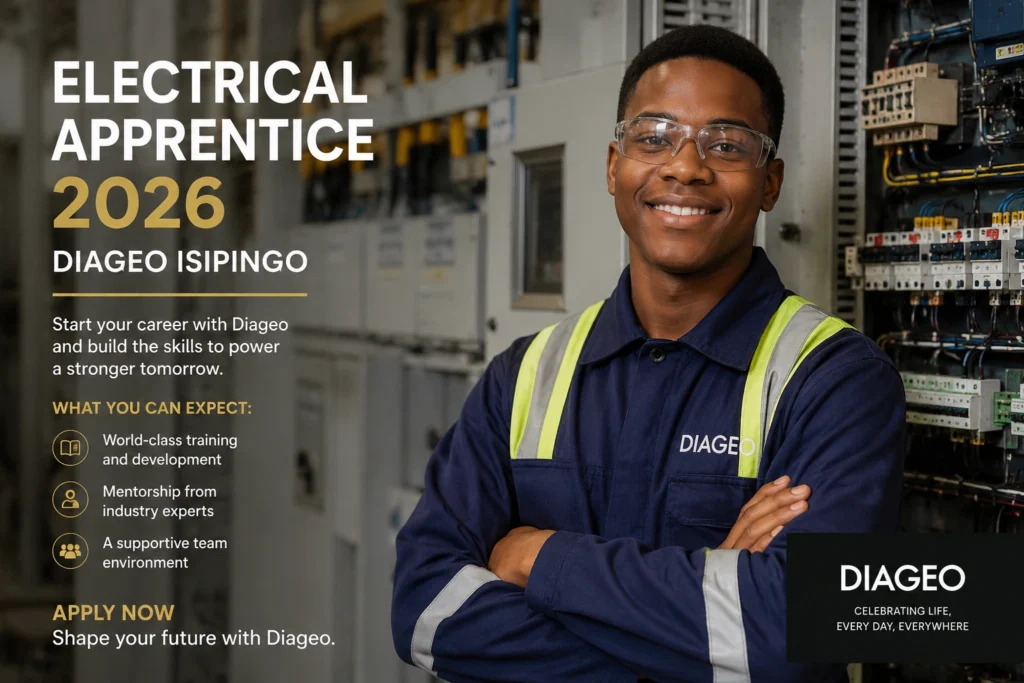

In a job market where many young South Africans are struggling to move from classroom learning into meaningful employment, the Electrical Apprentice 2026-Diageo Isipingo opportunity has emerged as one of the more interesting openings in the manufacturing sector.
The timing is significant.
Across South Africa, employers continue to emphasize practical experience alongside qualifications. At the same time, industries are becoming increasingly automated, creating demand for technicians and electricians who understand both traditional electrical systems and modern industrial controls. Against this backdrop, Diageo’s Isipingo-based apprenticeship opportunity is attracting attention from graduates and technical students eager to gain hands-on exposure in a real production environment.
For many aspiring electricians, opportunities that combine workplace learning, mentorship, and exposure to advanced manufacturing equipment are becoming increasingly valuable. That is one reason why this apprenticeship is generating interest beyond KwaZulu-Natal and drawing attention from candidates across the country.
Understanding the Opportunity
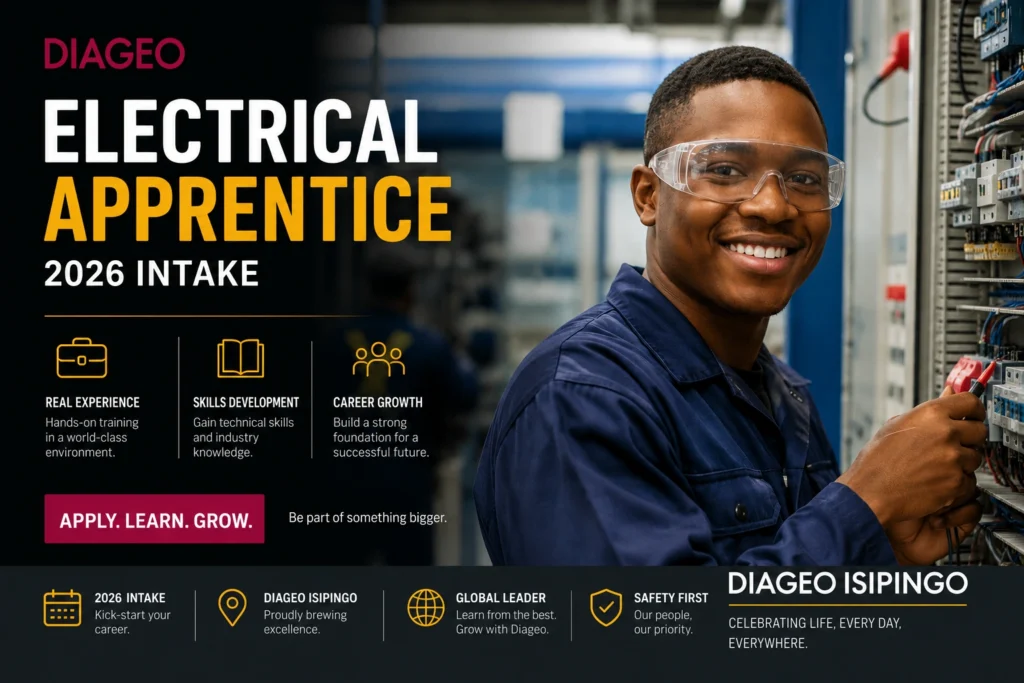
The Electrical Apprentice 2026 position is designed to support the maintenance team while providing practical training to future electricians.
Rather than placing apprentices in a purely observational role, the programme introduces them to the day-to-day realities of maintaining equipment in a fast-moving consumer goods (FMCG) manufacturing environment.
Successful candidates can expect exposure to:
- Electrical maintenance and repairs
- Production machinery troubleshooting
- Conveyor systems and motors
- Industrial sensors and control equipment
- Preventive maintenance procedures
- PLC panels and automation systems
- Electrical testing instruments
- Industrial safety practices
The structure reflects a growing trend within modern manufacturing: developing technical talent through practical learning while simultaneously supporting operational requirements.
For apprentices, this means gaining real workplace experience rather than relying solely on theoretical training.
How Manufacturing Apprenticeships Have Evolved
A decade ago, many electrical apprenticeships focused primarily on basic electrical installation and maintenance.
Today’s factories look very different.
Automation technologies have transformed production facilities across the FMCG sector. Modern manufacturing plants rely heavily on programmable logic controllers (PLCs), industrial drives, sensors, automated conveyors, and sophisticated control systems.
As a result, electrical apprentices entering the workforce now require broader technical skills.
The Diageo Isipingo opportunity reflects this shift. The role includes exposure not only to conventional electrical maintenance but also to industrial automation systems that increasingly define modern manufacturing operations.
This evolution matters because employers are seeking candidates who can adapt to increasingly digital workplaces.
Electrical skills remain essential, but the ability to understand automated systems is becoming equally important.
Why FMCG Experience Matters
One factor making this apprenticeship particularly attractive is its FMCG setting.
Fast-moving consumer goods manufacturers operate in highly demanding environments where production downtime can have immediate financial consequences.
Machines often run continuously, maintenance schedules are carefully planned, and breakdowns require rapid responses.
For apprentices, this creates a valuable learning environment.
Instead of encountering occasional maintenance tasks, they are exposed to situations where efficiency, reliability, and problem-solving directly impact production performance.
Working in such conditions can accelerate learning and help apprentices develop confidence under pressure.
It also provides exposure to workplace standards that many employers value across manufacturing industries.
The Skills Employers Are Looking For
A closer look at the apprenticeship requirements reveals broader industry trends.
Candidates are expected to possess:
- Matric or Grade 12
- N2–N6 Electrical Engineering qualifications
- Basic industrial electrical knowledge
- Understanding of manufacturing safety standards
- Ability to work shifts
Beyond formal qualifications, the listed skills tell an important story.
Electrical troubleshooting, attention to detail, teamwork, and the ability to remain effective during breakdown situations are increasingly viewed as critical workplace competencies.
Technical knowledge alone is rarely enough.
Modern employers often seek individuals who can collaborate with production teams, communicate effectively during equipment failures, and maintain safety standards under pressure.
These softer workplace skills frequently separate strong candidates from average applicants.
Recent Developments Driving Interest
Several broader developments are contributing to increased interest in apprenticeship opportunities like this one.
First, there has been growing awareness among young South Africans that workplace experience significantly improves employability.
Many graduates have discovered that academic qualifications alone do not always guarantee employment. Apprenticeships help bridge this gap by combining structured learning with practical experience.
Second, South Africa’s manufacturing sector continues investing in modernization and automation.
As factories introduce more advanced technologies, demand is increasing for technically trained workers capable of maintaining and supporting these systems.
Third, artisan careers are receiving renewed attention.
Government initiatives, industry campaigns, and employer programmes have increasingly highlighted the importance of technical trades in supporting economic growth and infrastructure development.
This has contributed to greater interest in careers such as electrical engineering, millwright work, instrumentation, and industrial maintenance.
Public Reaction to Technical Apprenticeships
Among job seekers, apprenticeship opportunities continue to generate strong interest.
Many young applicants view these programmes as practical pathways into industries that might otherwise be difficult to enter.
The appeal is understandable.
Unlike some entry-level roles that provide limited technical exposure, apprenticeships typically offer structured development and opportunities to learn from experienced professionals.
Industry observers also point out that apprenticeships can help address skills shortages by creating a pipeline of trained workers for future operational needs.
However, competition remains intense.
Because high-quality apprenticeship opportunities are relatively limited compared to demand, employers often receive large numbers of applications for each available position.
For applicants, standing out requires more than meeting minimum requirements.
Demonstrating enthusiasm for technical work, commitment to safety, and a willingness to learn can be equally important.
The Importance of Safety in Modern Manufacturing
One notable aspect of the apprenticeship is its strong emphasis on safety.
Candidates are expected to follow health, safety, and food-safety regulations within the factory environment.
This requirement reflects wider industry priorities.
Manufacturing facilities increasingly operate under strict safety frameworks designed to protect employees, products, and equipment.
For electrical apprentices, understanding safe work practices is not optional.
Electrical systems present inherent risks, and improper procedures can lead to equipment damage, production interruptions, or personal injury.
Learning these standards early in a career can provide long-term benefits and help establish professional credibility.
Many employers view safety awareness as a core competency rather than a secondary consideration.
Why This Matters Right Now
The significance of the Electrical Apprentice 2026-Diageo Isipingo opportunity extends beyond a single job advertisement.
South Africa faces an ongoing challenge of connecting education with employment.
Many technically qualified individuals struggle to gain the practical experience employers require. Apprenticeships help address this issue by creating structured pathways into the workforce.
At the same time, manufacturing is becoming more technologically advanced.
Companies increasingly need workers who understand automation, industrial controls, predictive maintenance, and digital production systems.
Opportunities that provide exposure to these technologies can significantly influence career trajectories.
For aspiring electricians, gaining experience in a sophisticated FMCG environment may open doors to future roles in:
- Industrial maintenance
- Automation engineering
- Electrical supervision
- Manufacturing operations
- Technical services
- Plant engineering
The apprenticeship therefore represents more than short-term training.
It reflects broader workforce trends that are shaping future employment opportunities in South Africa’s industrial economy.
APPLY HERE: Electrical Apprentice 2026
ALSO APPLY FOR: Motus VW Apprenticeship 2026
Diversity and Inclusion as a Strategic Priority
Another notable aspect of the opportunity is its emphasis on inclusion.
The company highlights a commitment to creating an environment where people from diverse backgrounds feel valued and respected.
In recent years, diversity and inclusion have become increasingly important topics within global organizations.
Employers are recognizing that varied perspectives can strengthen innovation, improve decision-making, and enhance workplace culture.
For candidates, such commitments can signal an organizational focus on creating opportunities based on capability and potential.
While inclusion statements are now common in recruitment materials, they also reflect broader shifts in how companies position themselves in competitive talent markets.
Increasingly, candidates evaluate employers not only on salary and career prospects but also on workplace culture and values.
The Bigger Picture for Electrical Careers
The attention surrounding this apprenticeship also highlights a larger conversation about the future of electrical careers.
Electrical expertise remains foundational across numerous sectors:
- Manufacturing
- Energy
- Mining
- Infrastructure
- Telecommunications
- Transportation
As industries adopt smarter technologies, electrical professionals are becoming central to operational success.
The integration of automation, robotics, and digital monitoring systems means future electricians may work with technologies that barely existed in factories a generation ago.
This evolution creates both challenges and opportunities.
Continuous learning is becoming essential, but those who embrace technological change may find themselves in high demand.
Programmes that expose apprentices to these environments early can provide a competitive advantage.
What Could Happen Next
Looking ahead, several possible outcomes emerge from opportunities like the Electrical Apprentice 2026-Diageo Isipingo programme.
First, successful participants may strengthen the pipeline of skilled technical professionals entering South Africa’s manufacturing sector.
Second, growing interest in apprenticeships could encourage more employers to expand similar programmes as they compete for future talent.
Third, increasing automation across industries may lead to even greater demand for electrical professionals who understand both conventional systems and advanced industrial technologies.
There is also the possibility that apprenticeship programmes evolve further, incorporating digital maintenance tools, predictive analytics, and Industry 4.0 technologies into training curricula.
For job seekers, this suggests that adaptability will remain a crucial career asset.
The most successful technicians and electricians are likely to be those who combine strong technical foundations with a willingness to learn emerging technologies throughout their careers.
Final Thoughts
The Electrical Apprentice 2026-Diageo Isipingo opportunity arrives at a time when technical skills, practical experience, and industrial automation expertise are becoming increasingly valuable in South Africa’s economy.
While the role itself focuses on supporting maintenance teams and learning the trade, its broader significance lies in what it represents: a pathway into a rapidly evolving manufacturing landscape.
For aspiring electricians, the opportunity offers exposure to real-world production environments, modern industrial systems, and the workplace disciplines that employers consistently value.
In a labour market where experience often matters as much as qualifications, apprenticeships continue to play a critical role in helping young professionals bridge the gap between education and employment.
Whether viewed as a career launchpad or a reflection of broader industry trends, this apprenticeship highlights the growing importance of technical talent in shaping the future of South African manufacturing.