

Graduating with a finance qualification can feel exciting at first, but many graduates quickly discover a difficult reality: employers often want experience before offering opportunities. This creates a frustrating cycle where talented young professionals struggle to move from classroom theory into real workplace exposure.
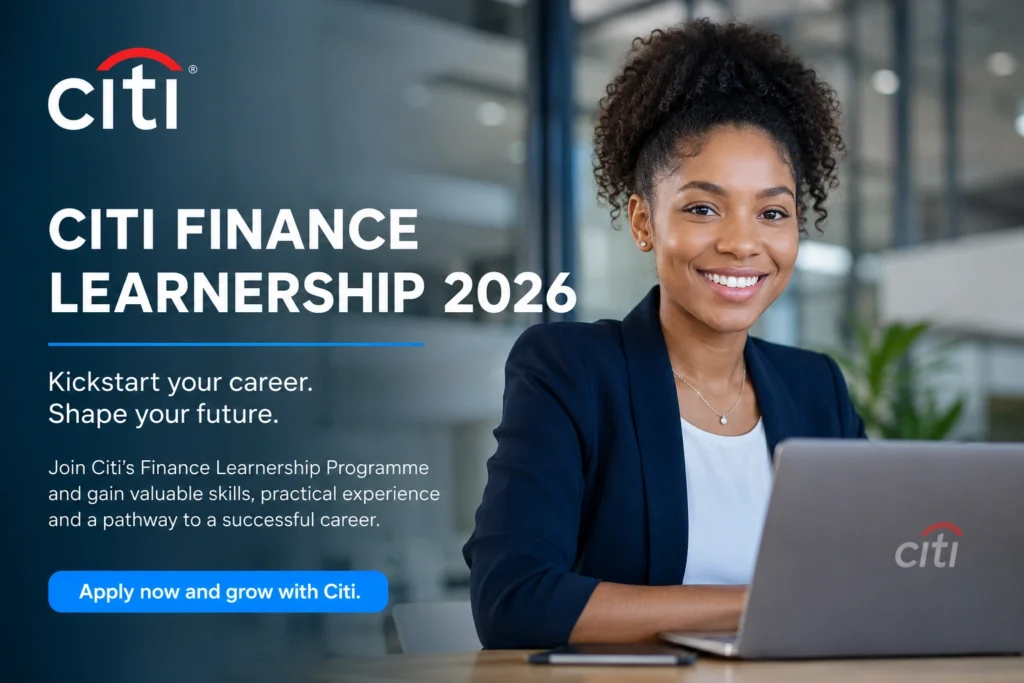
That is exactly why the Citi Finance Learnership 2026 stands out. It offers graduates a structured pathway into the finance and banking industry while helping them build practical skills in reporting, analysis, compliance, controls, and financial operations.
For many South African graduates, especially those aiming to work in banking, treasury, accounting, or financial planning, programmes like this can become the bridge between university and long-term employment.
The programme is based in Johannesburg and gives selected candidates exposure to real finance operations inside a global financial services environment. Instead of spending months searching unsuccessfully for entry-level work, graduates can develop technical knowledge, professional confidence, and workplace experience inside a respected international organisation.
What Is the Citi Finance Learnership 2026?
The Citi Finance Learnership 2026 is a graduate development programme designed for individuals who want to start careers in banking and finance. The programme combines workplace learning with exposure to multiple finance disciplines within Citi’s South African operations.
According to the programme details, successful candidates may support functions such as:
- Financial and regulatory reporting
- Accounting and controls
- Treasury support
- Tax reporting
- Financial planning and analysis
- Data quality improvement
- Business reporting
- Cross-functional finance collaboration
The programme is based in Johannesburg, Gauteng, and operates as a full-time, on-site opportunity.
Unlike many entry-level positions that limit graduates to repetitive administrative tasks, this programme appears designed to provide broader exposure across finance operations. That matters because graduates often struggle to understand how different financial departments interact inside large organisations.
By participating in structured finance processes, candidates can gain experience that may later support careers in:
- Banking
- Financial analysis
- Audit and assurance
- Treasury
- Corporate finance
- Financial reporting
- Risk and compliance
- Tax consulting
- Investment operations
Why This Issue Matters
South Africa continues to face a major youth unemployment challenge, especially among graduates who hold qualifications but lack workplace exposure.
Many graduates leave university with strong theoretical knowledge but little understanding of:
- Regulatory reporting
- Corporate finance systems
- Financial controls
- Banking compliance
- Internal reporting structures
- Data management processes
- Cross-border finance operations
This skills gap creates a problem for both employers and graduates.
Companies need candidates who can adapt quickly in professional environments, while graduates need opportunities to apply what they learned academically.
The Citi Finance Learnership 2026 matters because it addresses this transition problem directly. Programmes like this help graduates develop workplace readiness while learning from experienced finance professionals inside a large global institution.
In practical terms, this kind of exposure can improve future employability significantly. Even one year of relevant finance experience often strengthens applications for permanent roles, postgraduate opportunities, or specialist finance careers.
Who Should Apply for the Citi Finance Learnership 2026?
This opportunity is particularly suitable for graduates who want careers in:
- Banking
- Financial reporting
- Accounting
- Treasury
- Tax
- Financial planning
- Business analysis
- Corporate finance
Citi indicates that applicants should have:
- An undergraduate qualification with a GPA of 65% or above
- Or a master’s degree in any discipline
- Preference for BCom Accounting or Business Science graduates
- Up to one year of work experience
- Strong analytical and communication skills
One important point is that prior work experience is not required. That makes the programme accessible to recent graduates who may still be struggling to enter the job market.
Graduates who enjoy problem-solving, financial analysis, teamwork, and structured environments are likely to benefit most from this type of programme.
What Finance Areas Could Graduates Experience?
One of the strongest aspects of the Citi Finance Learnership 2026 is the variety of finance disciplines graduates may encounter.
Financial Reporting
Graduates may assist with local regulatory reporting and internal reporting requirements. This can include preparing reports for regulators, management teams, or business units.
Understanding how financial reports are prepared is essential for many finance careers because reporting influences decision-making, compliance, and risk management.
Treasury Exposure
Treasury functions help organisations manage liquidity, funding, and capital requirements.
Even limited treasury exposure can help graduates understand how banks manage financial resources and maintain operational stability.
Tax Reporting
Tax compliance remains a major part of corporate finance operations. Graduates may gain exposure to:
- VAT reporting
- Income tax support
- Tax documentation
- Reporting controls
This experience can become valuable for future careers in accounting or tax advisory.
Financial Planning and Analysis
FP&A functions involve budgeting, forecasting, financial modelling, and performance analysis.
These skills are increasingly important because organisations rely heavily on data-driven financial decision-making.
Controls and Data Quality
Finance professionals are expected to maintain accurate records and identify risks or inconsistencies.
Learning about internal controls and data-quality processes can help graduates develop attention to detail and professional discipline early in their careers.
Step-by-Step Guide to Applying Successfully
Step 1: Update Your CV Properly
Many graduates make the mistake of submitting generic CVs.
Your CV should clearly highlight:
- Finance-related coursework
- Accounting modules
- Excel skills
- Financial analysis projects
- Group assignments
- Leadership roles
- Data analysis experience
- Academic achievements
APPLY HERE: Citi Finance Learnership 2026
Do not simply list your degree title.
Instead, demonstrate how your studies connect to practical finance work.
Step 2: Prepare a Strong Cover Letter
A cover letter should explain:
- Why you want to work in finance
- Why banking interests you
- Why you are interested in Citi specifically
- What skills you can contribute
- Your long-term career goals
Keep the tone professional and specific.
Avoid vague statements like “I am passionate about finance” without supporting examples.
Step 3: Organise Your Academic Documents
Applicants should prepare:
- Updated CV
- Academic transcripts
- Certified ID copy
- Cover letter
Ensure documents are readable and professionally named.
Messy or incorrectly uploaded documents can create a poor first impression.
Step 4: Highlight Technical Skills
Even entry-level finance programmes increasingly value technical ability.
Useful skills may include:
- Microsoft Excel
- Financial modelling basics
- Data analysis
- Accounting systems knowledge
- PowerPoint presentation skills
- Quantitative analysis
Graduates who can demonstrate comfort with numbers and reporting tools may stand out.
Step 5: Submit Early
The programme listing reportedly does not specify a closing date.
That means applications could close once enough candidates have applied.
Submitting early reduces the risk of missing the opportunity.
ALSO APPLY FOR: SASSA Work Integrated Learning (WIL) 2026
Best Practices Experts Recommend
Tailor Every Application
Recruiters can immediately recognise copied applications.
Adjust your CV and cover letter specifically for the Citi Finance Learnership 2026.
Use keywords related to:
- Financial reporting
- Analysis
- Controls
- Compliance
- Banking
- Treasury
- Finance operations
Research the Banking Industry
Applicants who understand basic banking trends often perform better during interviews.
Research topics such as:
- Regulatory compliance
- Interest rates
- Financial markets
- Digital banking
- Corporate finance
- Risk management
You do not need expert knowledge, but awareness shows initiative.
Prepare for Behavioural Interviews
Finance employers frequently assess professionalism and teamwork.
Be ready to discuss:
- Challenges you solved
- Leadership experiences
- Team projects
- Deadlines you managed
- Situations requiring attention to detail
Demonstrate Ethical Thinking
Finance roles require integrity and responsibility.
Interviewers may assess how candidates approach ethical decisions, confidentiality, and accountability.
Show Willingness to Learn
Graduates are not expected to know everything already.
Employers value adaptability, curiosity, and a willingness to improve.
Mistakes People Often Make
Submitting Generic CVs
A finance programme requires a finance-focused application.
Generic CVs that do not highlight relevant skills often fail quickly.
Ignoring Academic Performance
If your GPA meets the requirement, make it visible.
Do not force recruiters to search through transcripts.
Using Poor Formatting
Unprofessional formatting can weaken strong applications.
Avoid:
- Multiple fonts
- Bright colours
- Long paragraphs
- Spelling mistakes
- Low-quality scans
Waiting Too Long to Apply
Many graduates delay applications while trying to perfect documents.
Late applications often miss opportunities entirely.
Failing to Research Citi
Applicants who know nothing about the organisation usually perform poorly during interviews.
Research the company’s finance operations, global presence, and banking environment beforehand.
How the Citi Finance Learnership 2026 Can Shape a Career
Graduate programmes often influence future career direction more than graduates initially realise.
The exposure gained through structured finance training can help candidates:
- Build professional confidence
- Understand corporate finance systems
- Improve technical skills
- Learn workplace communication
- Develop reporting knowledge
- Gain exposure to international finance teams
Experience inside a global financial institution can also strengthen future applications for:
- Chartered accounting pathways
- Investment banking
- Treasury careers
- Financial management roles
- Risk and compliance positions
- Banking operations
For many graduates, the first professional environment they enter becomes the foundation for long-term career growth.
Frequently Asked Questions
Does the Citi Finance Learnership 2026 require work experience?
No. The programme states that candidates may have up to one year of work experience, but prior experience is not required.
What qualifications are preferred?
Citi prefers candidates with BCom Accounting or Business Science backgrounds, although graduates from other disciplines may also qualify.
Is the programme based remotely?
No. The listing describes the opportunity as on-site/resident in Johannesburg, Gauteng.
What skills improve my chances of selection?
Strong analytical ability, communication skills, teamwork, Excel knowledge, organisation, and an interest in finance can improve competitiveness.
Final Thoughts
The Citi Finance Learnership 2026 offers more than a basic graduate opportunity. It gives young professionals a chance to enter the banking and finance sector through structured workplace exposure, practical learning, and collaboration inside a global financial environment.
For graduates struggling to gain relevant experience, programmes like this can provide a valuable starting point. Exposure to reporting, controls, tax, treasury, analytics, and financial planning can help candidates build both technical and professional confidence.
The most successful applicants will likely be those who prepare carefully, tailor their applications properly, and demonstrate genuine interest in finance and banking.
If you plan to apply, focus on presenting yourself as someone who can learn quickly, handle responsibility, communicate professionally, and contribute positively in a team environment.
Do not wait until the last minute. Prepare your documents thoroughly, research the industry, and submit your application as early as possible.