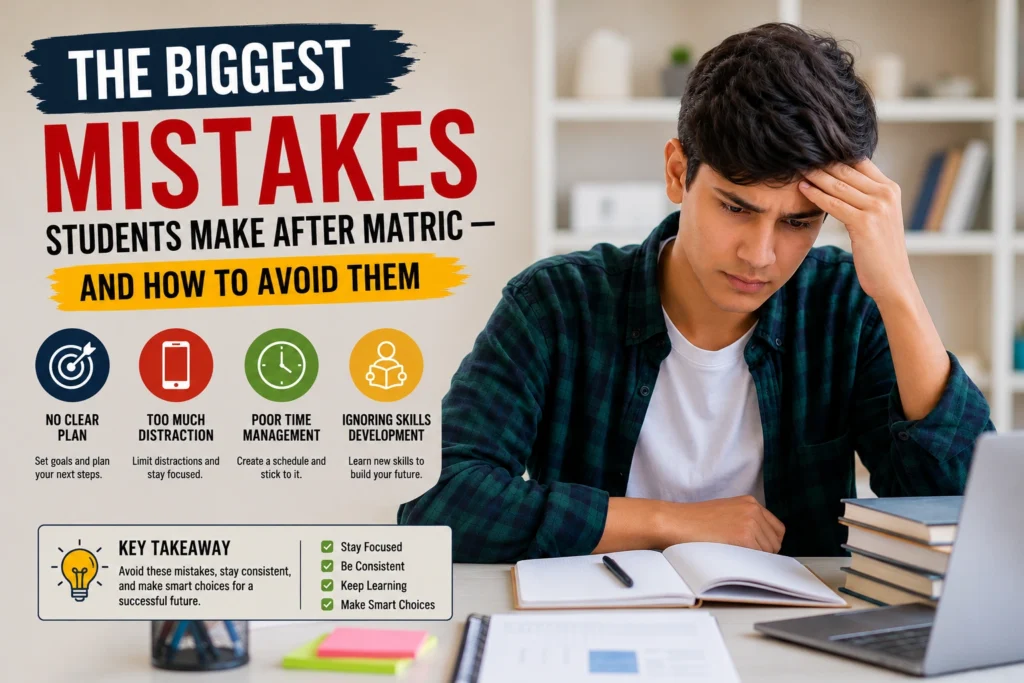

Finishing matric is exciting, but it can also feel overwhelming. One moment you are focused on exams, school uniforms, and final marks, and the next you are expected to make life-changing decisions about careers, university, jobs, money, and independence.
For many young South Africans, the months after matric become a stressful transition period. Some rush into degrees they do not understand. Others spend months applying for opportunities without a plan. Many take advice from friends or social media instead of doing proper research. These choices may seem small at first, but they can affect finances, confidence, and career growth for years.
The reality is that the period after matric is one of the most important stages in a young person’s life. The good news is that most common problems are avoidable with the right information and planning.
This guide explains The Biggest Mistakes Students Make After Matric, why these mistakes happen, and practical strategies to help school leavers make smarter decisions about their future.
Understanding The Biggest Mistakes Students Make After Matric
After matric, students suddenly face major responsibilities:
- Choosing a career path
- Applying for university or TVET college
- Looking for bursaries or learnerships
- Managing money independently
- Adjusting to adult expectations
- Handling pressure from family and society
Because this transition happens quickly, many students make emotional or rushed decisions.
Some think they must immediately know what they want to do for the rest of their lives. Others feel embarrassed about taking a gap year or starting with a short course instead of university.
Social pressure also plays a major role. Students often compare themselves to classmates who appear successful online. This creates anxiety and causes poor decision-making.
Understanding these challenges is the first step toward avoiding costly mistakes.
ALSO APPLY FOR: Wilmar Bursaries 2027
ALSO APPLY FOR: SAAFoST Undergraduate Bursary 2027
Why This Issue Matters
The choices made after matric can shape a person’s financial stability, mental wellbeing, and long-term career opportunities.
A wrong study choice can lead to:
- Student debt without employment opportunities
- Dropping out of university
- Years spent studying something uninteresting
- Low confidence and frustration
- Delayed career growth
At the same time, failing to apply for opportunities early can mean missing:
- Bursaries
- Apprenticeships
- Learnerships
- Graduate programmes
- Skills training opportunities
South Africa’s job market is already highly competitive. Employers increasingly look for practical skills, work readiness, adaptability, and experience. Students who plan carefully after matric often place themselves in a much stronger position later.
That is why learning about The Biggest Mistakes Students Make After Matric is not just helpful — it can genuinely change a young person’s future.
1. Choosing a Career Based Only on Salary
One of the most common mistakes is choosing a career simply because it appears profitable.
Students often hear:
- “Engineering pays well.”
- “IT is the future.”
- “Accounting guarantees a job.”
- “Doctors make good money.”
While income matters, salary alone should never determine a career path.
A student who dislikes mathematics may struggle in engineering. Someone uncomfortable with long academic pressure may battle in medicine. Others discover too late that they dislike office environments despite choosing corporate careers.
Better Strategy
Before choosing a field:
- Research the daily reality of the job.
- Speak to professionals already working in that industry.
- Consider your personality, strengths, and interests.
- Look at future demand and job trends.
- Explore internships or job shadowing opportunities.
A sustainable career usually combines:
- Skills
- Interest
- Opportunity
- Practical demand
2. Applying Late for Opportunities
Many students wait until matric results are released before applying for universities, bursaries, or learnerships.
By then, thousands of opportunities are already closed.
This creates panic and disappointment.
Step-by-Step Solution
Step 1: Start Researching Early
Applications for many programmes open while students are still in Grade 11 or early Grade 12.
Step 2: Create an Opportunity Calendar
Track:
- Opening dates
- Closing dates
- Required documents
- Application status
Step 3: Prepare Documents in Advance
Keep certified copies of:
- ID
- Matric results
- Proof of residence
- CV
- Motivational letters
Step 4: Apply Broadly
Do not depend on only one university or bursary.
Apply to:
- Universities
- TVET colleges
- Learnerships
- Apprenticeships
- Online skills programmes
This increases your chances significantly.
3. Ignoring TVET Colleges and Skills Training
A major misconception among matriculants is believing university is the only path to success.
This mindset causes students to overlook practical and highly employable training opportunities.
In reality, many industries urgently need:
- Electricians
- Plumbers
- Millwrights
- Technicians
- Welders
- IT support specialists
- Artisans
TVET colleges and occupational training programmes can lead to strong careers, entrepreneurship, and stable income.
Better Strategy
Research sectors experiencing skills shortages.
Fields linked to infrastructure, renewable energy, logistics, and technology continue growing in South Africa and globally.
Practical skills often create faster employment opportunities than overcrowded academic fields.
4. Taking a Gap Year Without a Plan
A gap year itself is not the problem.
The real issue is taking a gap year without structure, goals, or development plans.
Some students spend a year doing very little, which makes it harder to return to studying later.
How to Use a Gap Year Properly
A productive gap year can include:
- Short courses
- Volunteering
- Internship experience
- Freelancing
- Learning digital skills
- Improving matric subjects
- Building a portfolio
- Starting a small business
The key is intentional growth.
A gap year should strengthen future opportunities rather than delay progress.
5. Following Friends Instead of Personal Goals
Many matriculants choose courses or institutions because their friends are going there.
This often leads to regret later.
Every student has different:
- Strengths
- Interests
- Financial situations
- Career goals
- Learning styles
What works for one person may not work for another.
Better Strategy
Make decisions based on:
- Your abilities
- Your long-term vision
- Your financial reality
- Your preferred learning environment
Avoid comparing your journey with others.
Career success is rarely a race.
ALSO READ ABOUT: Google Certificates Worth Doing in 2026
The Biggest Mistakes Students Make After Matric With Money
Financial mistakes are another major problem after matric.
Many young people experience financial independence for the first time without proper money management knowledge.
Common issues include:
- Unnecessary debt
- Overspending NSFAS allowances
- Ignoring budgeting
- Taking expensive private loans
- Falling for scams
Smart Financial Habits
Create a Monthly Budget
Track:
- Transport
- Food
- Data
- Study expenses
- Savings
Avoid Lifestyle Pressure
Social media creates pressure to appear successful.
Many students overspend trying to maintain appearances.
Learn Basic Financial Literacy
Understand:
- Interest rates
- Credit scores
- Debt
- Savings
- Emergency funds
Financial discipline after matric creates long-term stability.
6. Ignoring Mental Health and Burnout
The transition after matric can trigger anxiety and emotional stress.
Students face pressure from:
- Family expectations
- Financial uncertainty
- Academic competition
- Unemployment fears
- Social comparison
Some feel lost when plans do not work out immediately.
Better Strategy
Take care of mental wellbeing by:
- Maintaining routines
- Exercising regularly
- Talking to mentors or counsellors
- Avoiding unhealthy isolation
- Setting realistic goals
Remember that career journeys are rarely perfect or immediate.
Progress often takes time.
7. Depending Only on Formal Education
Many students assume qualifications alone guarantee employment.
Today’s job market increasingly rewards practical skills and adaptability.
Employers value:
- Communication skills
- Problem-solving ability
- Digital literacy
- Work ethic
- Experience
- Initiative
Skills Worth Learning After Matric
Students can strengthen employability by learning:
- Microsoft Excel
- Data analysis
- Graphic design
- Coding
- AI tools
- Digital marketing
- Content creation
- Public speaking
- CV writing
Free and affordable online learning platforms make skills development more accessible than ever.
Best Practices Experts Recommend
Career advisers, recruiters, and education professionals consistently recommend several habits that help matriculants succeed.
Research Before Committing
Do not choose courses blindly.
Investigate:
- Employment rates
- Industry demand
- Course difficulty
- Career growth potential
Build a Professional Network Early
Connect with:
- Lecturers
- Mentors
- Alumni
- Professionals on LinkedIn
Networking often opens hidden opportunities.
Gain Experience Quickly
Even unpaid experience can build:
- Confidence
- References
- Practical skills
Small opportunities can lead to bigger ones later.
Stay Flexible
Career paths are changing rapidly.
Students who adapt, reskill, and continue learning remain competitive.
Focus on Consistency
Long-term progress matters more than instant success.
Small daily improvements often create major results over time.
Mistakes People Often Make
Here are some additional mistakes many matriculants regret later:
- Waiting for motivation instead of taking action
- Applying for courses they know little about
- Ignoring deadlines
- Trusting misinformation online
- Quitting too quickly after rejection
- Believing success must happen immediately
- Avoiding practical work opportunities
- Not improving communication skills
- Depending entirely on parents for planning
- Refusing alternative pathways to success
Recognising these patterns early can help students avoid unnecessary setbacks.
Practical Strategy for Students After Matric
Here is a simple action plan students can follow immediately after matric.
Month 1: Reflect and Research
- Identify interests and strengths
- Explore industries
- Speak to mentors
Month 2: Apply Widely
Submit applications for:
- Universities
- TVET colleges
- Bursaries
- Learnerships
- Internships
Month 3: Build Skills
Complete short online courses in:
- Computer literacy
- Communication
- AI tools
- Career preparation
Month 4: Gain Experience
Volunteer, freelance, or shadow professionals.
Month 5 and Beyond: Stay Consistent
Keep applying, learning, networking, and improving.
Persistence matters.
Frequently Asked Questions
Is taking a gap year after matric a bad idea?
No. A gap year can be valuable if it includes structured learning, work experience, or personal development. Problems usually happen when students spend the year without goals or growth.
What if I do not know what career I want?
That is completely normal. Many people discover their interests over time. Start by researching industries, taking career assessments, and exploring practical experiences before making long-term decisions.
Are TVET colleges worth considering?
Yes. TVET colleges provide practical skills that are in high demand in many industries. Skilled trades and technical careers can offer excellent employment and entrepreneurship opportunities.
Can I succeed without going to university?
Yes. Many successful professionals build careers through vocational training, certifications, entrepreneurship, apprenticeships, or digital skills development. University is one pathway, not the only pathway.
Final Thoughts
The period after matric can feel confusing, stressful, and uncertain, but it is also full of opportunity.
Many students make mistakes because they feel pressured to have everything figured out immediately. In reality, successful careers are usually built step by step through learning, adaptability, and consistent effort.
The most important thing is to avoid rushed decisions.
Research carefully. Apply early. Stay open to different pathways. Build practical skills. Learn from setbacks instead of giving up.
Most importantly, remember that there is no single definition of success after matric.
Some students go to university immediately. Others take gap years, join TVET colleges, start businesses, or enter learnerships. Different journeys can still lead to meaningful careers and financial stability.
Students who stay proactive, informed, and flexible give themselves the best chance of long-term success.
ALSO APPLY FOR: Wilmar Bursaries 2027
ALSO APPLY FOR: SAAFoST Undergraduate Bursary 2027
ALSO READ ABOUT: Google Certificates Worth Doing in 2026