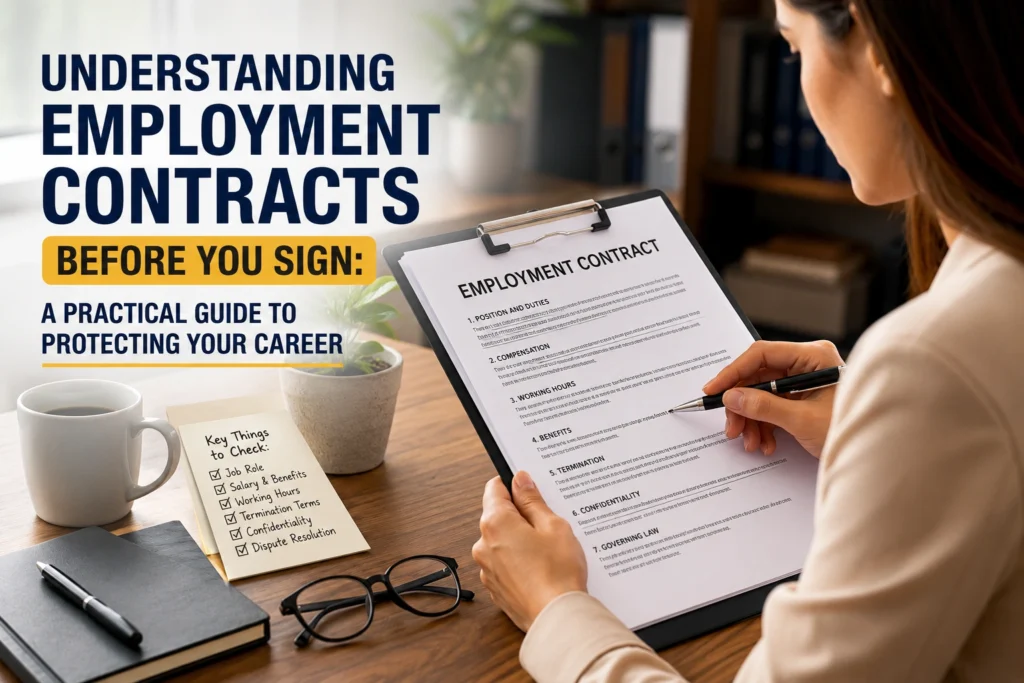

Starting a new job is exciting. After weeks of searching, interviews, and waiting for feedback, receiving an offer can feel like a major achievement. However, many people make the mistake of signing an employment contract immediately without fully understanding what they are agreeing to.
This is where problems often begin. Employees sometimes discover unexpected working hours, restrictive clauses, unclear performance expectations, or difficult resignation terms only after they have started working. In some cases, misunderstandings about salary, benefits, leave, or probation periods can lead to disputes that could have been avoided by carefully reviewing the contract beforehand.
Understanding Employment Contracts Before You Sign is one of the most important steps you can take to protect your career, income, and workplace rights. Whether you are entering the workforce for the first time, changing employers, or accepting a senior position, understanding the details of your employment agreement can help you make informed decisions and avoid costly surprises.
What Is an Employment Contract?
An employment contract is a legally binding agreement between an employer and an employee. It outlines the terms and conditions of employment and establishes the rights and responsibilities of both parties.
Employment contracts can be written, verbal, or implied in some jurisdictions, but written contracts provide the clearest protection for everyone involved.
A typical employment contract may include:
- Job title and responsibilities
- Working hours
- Salary and payment schedule
- Leave entitlements
- Benefits and allowances
- Probation period
- Notice periods
- Confidentiality obligations
- Performance expectations
- Disciplinary procedures
- Termination conditions
The purpose of the contract is to create clear expectations and reduce misunderstandings during the employment relationship.
ALSO APPLY FOR: Maersk YES Learnership 2026-2027
ALSO APPLY FOR: Necsa Work-Integrated Learning 2026
Why This Issue Matters
Many workplace disputes begin because employees sign agreements they do not fully understand.
An employment contract affects far more than your monthly salary. It influences your work-life balance, career flexibility, job security, and future opportunities.
Failing to review a contract carefully can result in:
- Unexpected overtime requirements
- Lower benefits than expected
- Restrictive non-compete agreements
- Difficulty resigning
- Disputes over commissions or bonuses
- Unclear performance standards
- Limited legal protections
On the other hand, employees who understand their contracts can negotiate better terms, identify unfair conditions, and enter new roles with confidence.
Taking an extra day to review a contract may prevent months or years of workplace frustration.
Understanding Employment Contracts Before You Sign: Key Sections to Review
Not every contract looks the same, but several areas deserve special attention.
Job Description and Duties
Ensure the contract accurately reflects the position you applied for.
Review:
- Job title
- Reporting structure
- Key responsibilities
- Expected performance standards
Be cautious if the description is extremely broad or vague. While some flexibility is normal, overly broad language may allow significant changes to your role without additional compensation.
Ask questions if responsibilities appear substantially different from what was discussed during interviews.
Salary and Compensation
Many people focus only on the salary figure while overlooking important details.
Confirm:
- Basic salary
- Payment frequency
- Overtime compensation
- Performance bonuses
- Commission structures
- Salary review policies
- Allowances and reimbursements
If a bonus or commission was promised verbally, ensure it appears in writing.
Verbal promises are often difficult to enforce later.
Working Hours
Review expected working hours carefully.
Look for information regarding:
- Standard workweek
- Shift requirements
- Weekend work
- Overtime expectations
- Remote work arrangements
- Flexible scheduling
If overtime is required regularly, understand how it will be compensated and documented.
Leave Benefits
Leave provisions can significantly impact your quality of life.
Check details regarding:
- Annual leave
- Sick leave
- Family responsibility leave
- Maternity or parental leave
- Public holidays
- Unpaid leave options
Understand both your entitlement and the procedures for requesting leave.
Probation Period
Many employers use probation periods to evaluate new employees.
Review:
- Length of probation
- Performance criteria
- Review process
- Termination conditions during probation
A probation clause should clearly explain expectations and evaluation procedures.
Benefits and Perks
Benefits can substantially increase the value of a compensation package.
Look for information about:
- Medical aid
- Retirement contributions
- Life insurance
- Disability coverage
- Wellness programs
- Training opportunities
- Tuition assistance
- Company vehicle policies
Calculate the total value of benefits rather than focusing only on salary.
Notice Periods
Notice periods determine how much warning must be given before ending employment.
Check:
- Employee notice requirements
- Employer notice requirements
- Payment in lieu of notice
- Immediate termination circumstances
Long notice periods can provide security but may also reduce flexibility when changing jobs.
Confidentiality Clauses
Most employers include confidentiality provisions.
These clauses typically prevent employees from sharing:
- Trade secrets
- Client information
- Internal processes
- Financial data
- Strategic plans
Make sure you understand what information is considered confidential and how long obligations continue after employment ends.
Non-Compete and Restrictive Clauses
These clauses deserve careful attention.
They may limit:
- Working for competitors
- Starting competing businesses
- Contacting former clients
- Recruiting former colleagues
Some restrictions may be reasonable, while others can significantly affect future career opportunities.
If the clause appears unusually broad, consider seeking legal advice before signing.
Termination Conditions
Every contract should explain how employment can end.
Review:
- Grounds for termination
- Disciplinary procedures
- Severance provisions
- Resignation requirements
- Dismissal processes
Understanding these terms helps protect your rights if workplace issues arise later.
ALSO READ ABOUT: How Economic Trends Affect Hiring
Step-by-Step Guide to Reviewing an Employment Contract
Many people skim contracts quickly because they feel pressure to accept an offer.
Instead, follow a structured approach.
Step 1: Read the Entire Document
Never rely solely on summaries from recruiters or hiring managers.
Read every section carefully, including appendices and attachments.
Important obligations are often hidden in sections that employees overlook.
Step 2: Compare the Contract to the Job Offer
Verify that the written agreement matches what was discussed during recruitment.
Compare:
- Salary
- Benefits
- Working arrangements
- Job title
- Bonus structures
Any discrepancy should be clarified before signing.
Step 3: Highlight Unclear Language
Legal and HR terminology can be confusing.
Highlight clauses that seem:
- Ambiguous
- Contradictory
- Unusually restrictive
- Difficult to understand
Do not assume unclear language is harmless.
Ask for clarification.
Step 4: Ask Questions
Employers generally expect candidates to ask questions.
Consider asking:
- How is performance measured?
- How often are salary reviews conducted?
- What happens during probation?
- How are bonuses calculated?
- Are flexible work arrangements available?
Seeking clarification demonstrates professionalism rather than distrust.
Step 5: Evaluate Long-Term Impact
Think beyond your first few months in the role.
Ask yourself:
- Could this clause affect future career opportunities?
- Does the notice period fit my goals?
- Are performance expectations realistic?
- Would I still be comfortable with these terms in two years?
Long-term thinking helps prevent future regrets.
Step 6: Seek Professional Advice if Needed
For senior positions, executive contracts, or agreements containing complex legal clauses, professional review may be worthwhile.
Human resources specialists, labour consultants, or employment lawyers can help identify risks that may not be obvious.
Step 7: Keep a Signed Copy
Once you sign, retain a copy of the final agreement.
Store both digital and physical copies in a secure location.
You may need the document later for reference during performance reviews, disputes, or career transitions.
Best Practices Experts Recommend
Professionals who regularly deal with employment agreements often recommend the following practices:
Never Sign Under Pressure
A reputable employer should allow reasonable time for review.
If you are pressured to sign immediately, proceed carefully.
Get Everything in Writing
If something matters, ensure it appears in the contract.
Examples include:
- Remote work arrangements
- Bonus agreements
- Promotion promises
- Additional leave benefits
Written documentation reduces misunderstandings.
Understand Local Labour Laws
Employment contracts operate within the framework of national labour legislation.
Knowing your basic rights helps you identify clauses that may conflict with legal protections.
Focus on More Than Salary
A slightly lower salary with stronger benefits, training opportunities, and career growth may provide greater long-term value.
Evaluate the complete package.
Review Updates Carefully
If the employer sends a revised version of the contract, review it from beginning to end.
Do not assume only the requested changes were made.
Maintain Professional Communication
Questions and negotiations should remain respectful and constructive.
Professional communication often leads to better outcomes than aggressive bargaining.
Mistakes People Often Make
Even experienced professionals occasionally make avoidable errors when reviewing employment agreements.
Signing Without Reading
This remains the most common mistake.
Reading every clause may feel tedious, but it is essential.
Assuming Verbal Promises Are Guaranteed
If a promise is not documented, enforcing it later can be difficult.
Always request written confirmation.
Ignoring Restrictive Clauses
Many employees focus on salary while overlooking non-compete or confidentiality provisions.
These clauses can affect future career choices.
Failing to Clarify Ambiguous Terms
Unclear wording often creates future disputes.
Ask questions before signing.
Not Keeping Records
Some employees lose copies of signed agreements.
Maintaining records helps resolve misunderstandings later.
Overlooking Benefit Details
Health coverage, retirement contributions, bonuses, and leave entitlements can significantly affect the value of an offer.
Review them carefully.
Frequently Asked Questions
1. Can I negotiate an employment contract before signing?
Yes. Many employers are willing to discuss salary, benefits, leave arrangements, flexible work options, or notice periods. Negotiation is often a normal part of the hiring process.
2. What should I do if I do not understand a clause?
Ask the employer for clarification. If the clause remains unclear or appears legally complex, consider consulting a labour specialist or employment lawyer before signing.
3. Is it acceptable to take time to review a contract?
Absolutely. Most employers expect candidates to review agreements carefully. Taking reasonable time demonstrates professionalism and responsibility.
4. What if the contract differs from what was discussed during interviews?
Raise the issue immediately. Request written corrections or clarification before signing. Do not rely on verbal assurances that differences will be resolved later.
Final Thoughts: Protect Your Future Before You Sign
Understanding Employment Contracts Before You Sign is not simply a legal exercise—it is a practical career skill that can protect your income, rights, and long-term professional opportunities.
Every employment contract establishes the foundation of your relationship with an employer. Taking time to review responsibilities, compensation, benefits, probation terms, notice periods, and restrictive clauses can help you avoid misunderstandings and make informed career decisions.
Before signing any agreement, read it carefully, compare it with the original offer, ask questions about unclear terms, and seek professional advice when necessary. A few extra hours spent reviewing a contract today can save you significant stress, financial loss, and workplace conflict in the future.
ALSO APPLY FOR: Maersk YES Learnership 2026-2027
ALSO APPLY FOR: Necsa Work-Integrated Learning 2026
ALSO READ ABOUT: How Economic Trends Affect Hiring