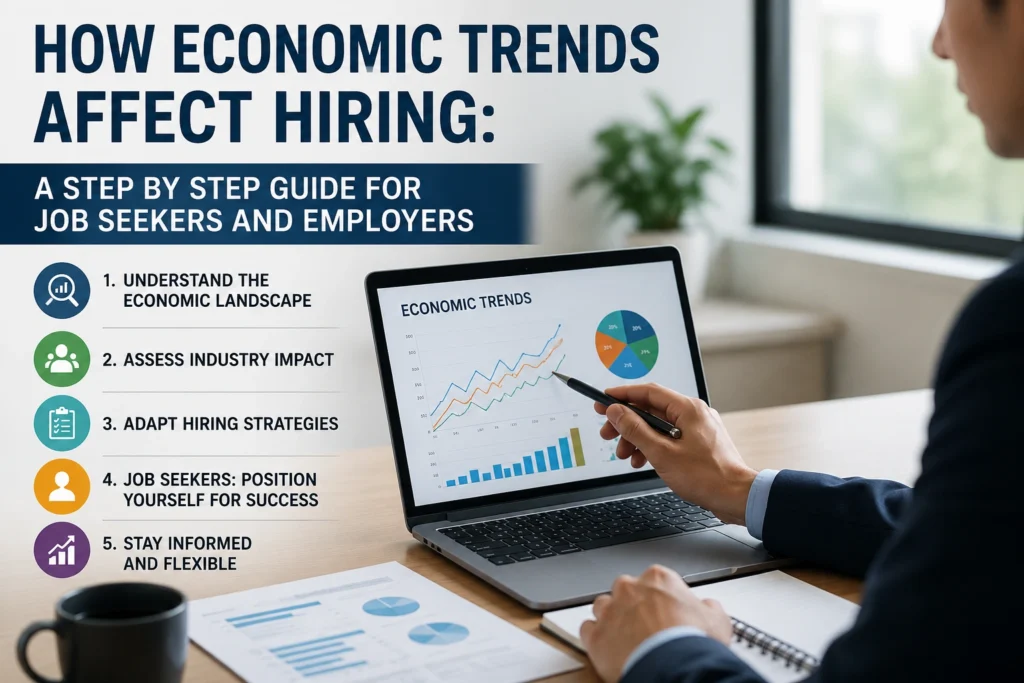

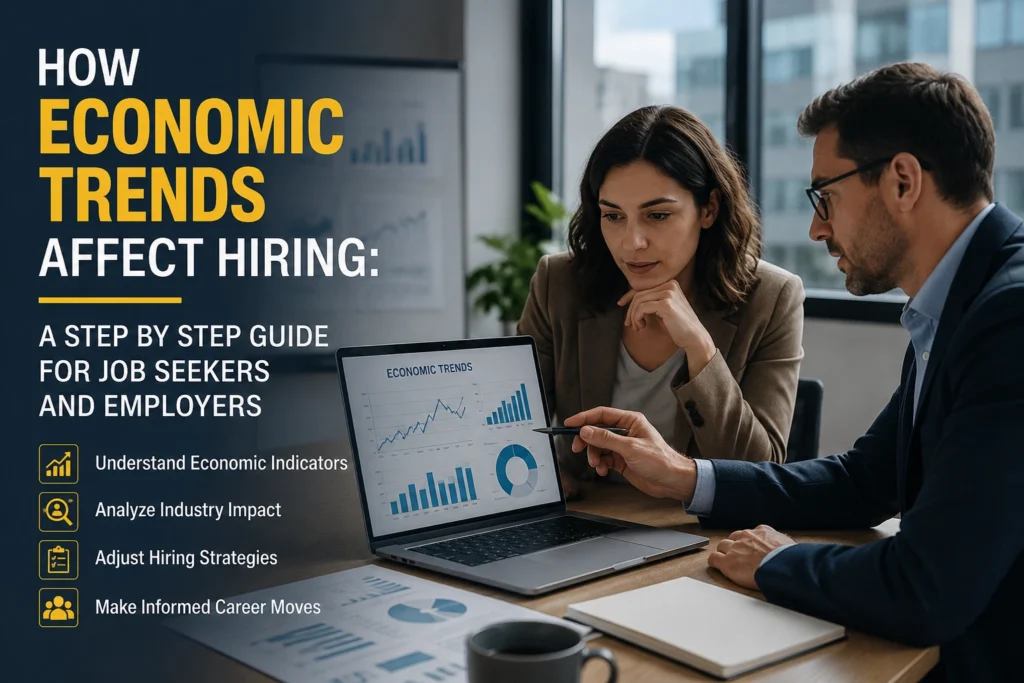
Economic conditions can change quickly, and when they do, hiring patterns often change with them. Many job seekers find themselves confused when they have strong qualifications but struggle to get interviews. At the same time, employers may wonder why recruiting has become more difficult, more expensive, or less predictable than before.
Understanding How Economic Trends Affect Hiring can help both job seekers and businesses make smarter decisions. Whether the economy is growing, slowing down, or going through uncertainty, economic trends influence the number of available jobs, salary levels, recruitment strategies, and workforce planning.
This guide explains the connection between economic trends and hiring, explores why it matters, and provides practical strategies to help people navigate changing labor market conditions successfully.
Understanding How Economic Trends Affect Hiring
Before discussing solutions, it is important to understand what economic trends are and why they influence employment.
Economic trends refer to broad patterns that affect economic activity over time. These may include:
- Economic growth or recession
- Inflation rates
- Interest rate changes
- Consumer spending patterns
- Business confidence
- Technological innovation
- Global trade conditions
- Industry-specific developments
When economies grow, companies typically generate more revenue and expand operations. Expansion often creates new jobs and increases hiring activity.
When economies slow down, businesses may become cautious. They may reduce recruitment, freeze hiring, delay expansion projects, or restructure departments to control costs.
This direct relationship explains How Economic Trends Affect Hiring across virtually every industry.
ALSO APPLY FOR: AECOM Internship 2026
ALSO APPLY FOR: Capitec Graduate Internships 2027
Why This Issue Matters
The impact of economic trends goes far beyond employment statistics.
For job seekers, economic conditions can determine:
- How many vacancies are available
- Which skills are most in demand
- How competitive recruitment becomes
- Salary negotiation opportunities
- Career growth prospects
For employers, economic conditions influence:
- Talent availability
- Recruitment budgets
- Employee retention
- Workforce planning
- Long-term business growth
Ignoring economic trends can lead to poor decisions. A job seeker may focus on declining industries while overlooking growing sectors. An employer may struggle to recruit effectively because hiring strategies fail to reflect current market realities.
Understanding these trends helps individuals and organizations prepare rather than react.
Key Economic Trends That Influence Hiring
Economic Growth and Expansion
During periods of economic growth, businesses often experience increasing demand for products and services.
As a result, employers may:
- Open new positions
- Expand departments
- Invest in training programs
- Increase graduate recruitment
- Offer competitive salaries
Job seekers generally benefit from more opportunities and greater flexibility when choosing employers.
Industries such as construction, manufacturing, technology, healthcare, and financial services often see increased hiring during strong economic periods.
Recession and Economic Slowdowns
A recession occurs when economic activity declines significantly over a sustained period.
During economic downturns, employers often focus on cost management. Common responses include:
- Hiring freezes
- Reduced recruitment budgets
- Delayed expansion plans
- Workforce restructuring
- Increased use of temporary staff
Competition for available jobs typically increases because more people are actively seeking employment.
However, some sectors continue hiring even during difficult economic conditions, including healthcare, essential services, utilities, and certain technology roles.
Inflation
Inflation refers to rising prices across the economy.
High inflation can affect hiring in several ways:
- Businesses face higher operating costs.
- Employees seek salary increases.
- Recruitment budgets come under pressure.
- Employers become more selective when hiring.
At the same time, inflation may increase demand for workers in sectors that support economic adjustment, such as financial planning, supply chain management, and data analysis.
Interest Rate Changes
Central banks often raise or lower interest rates to manage economic conditions.
Higher interest rates make borrowing more expensive for businesses.
This can lead to:
- Reduced investment
- Slower expansion
- Fewer new projects
- Lower recruitment activity
Lower interest rates often have the opposite effect by encouraging business investment and expansion.
Technological Change
Technology remains one of the most powerful economic forces affecting hiring.
Automation, artificial intelligence, digital transformation, and data analytics are reshaping labor markets.
While some traditional roles decline, new opportunities emerge in areas such as:
- Software development
- Cybersecurity
- Data science
- Cloud computing
- Digital marketing
- AI implementation
Professionals who continuously update their skills are often better positioned to benefit from these shifts.
Global Economic Conditions
Modern businesses operate in interconnected markets.
Events occurring in one region can affect hiring elsewhere through:
- Supply chain disruptions
- Trade policy changes
- Currency fluctuations
- International investment trends
Companies with global operations frequently adjust recruitment plans based on international economic developments.
How Economic Trends Affect Hiring Across Different Industries
Not all industries respond to economic changes in the same way.
Technology
Technology often remains resilient because businesses continue investing in digital transformation even during slower economic periods.
Demand remains strong for:
- Software engineers
- Data analysts
- Cybersecurity specialists
- Cloud professionals
Healthcare
Healthcare tends to experience relatively stable demand regardless of economic cycles.
Growing populations and ongoing healthcare needs support long-term hiring.
Construction
Construction hiring often rises during economic expansion but may decline when interest rates increase or infrastructure spending slows.
Retail
Retail employment frequently reflects consumer spending patterns.
When consumers spend more, retailers hire additional staff. When spending weakens, hiring may slow significantly.
Manufacturing
Manufacturing employment is highly influenced by demand, trade conditions, and supply chain stability.
Economic uncertainty can lead manufacturers to delay hiring until conditions improve.
ALSO READ ABOUT: What Is a Probation Period?
Step-by-Step Strategies for Job Seekers
Understanding How Economic Trends Affect Hiring is only valuable if you know how to respond effectively.
Step 1: Monitor Labor Market Trends
Stay informed about:
- Industry growth forecasts
- Employment reports
- Skills shortages
- Emerging occupations
Reliable information helps identify where opportunities are increasing rather than decreasing.
Step 2: Focus on Transferable Skills
Economic conditions can change unexpectedly.
Transferable skills remain valuable across industries, including:
- Communication
- Problem-solving
- Leadership
- Project management
- Digital literacy
- Data analysis
These skills improve adaptability when industries experience change.
Step 3: Invest in Continuous Learning
Economic shifts often create demand for new capabilities.
Consider:
- Professional certifications
- Online courses
- Technical training
- Industry-specific credentials
Continuous learning demonstrates initiative and increases employability.
Step 4: Build a Strong Professional Network
Networking becomes especially important during uncertain economic periods.
Many opportunities are discovered through:
- Industry events
- Professional associations
- Alumni networks
- LinkedIn connections
- Referrals
Relationships can provide access to opportunities before they become publicly advertised.
Step 5: Target Growth Industries
Rather than applying broadly, focus on sectors showing long-term growth potential.
Examples may include:
- Healthcare
- Renewable energy
- Technology
- Logistics
- Financial technology
- Advanced manufacturing
Growing industries often continue hiring despite broader economic challenges.
Step 6: Maintain Financial Preparedness
Job searches can take longer during economic slowdowns.
Building an emergency fund and maintaining financial discipline can reduce pressure while pursuing career opportunities.
Step-by-Step Strategies for Employers
Businesses can also adapt successfully to changing economic conditions.
Step 1: Use Workforce Planning
Analyze future staffing needs regularly.
Effective workforce planning helps organizations:
- Anticipate skills shortages
- Manage costs
- Avoid reactive hiring decisions
Step 2: Prioritize Critical Roles
Not every vacancy requires immediate replacement.
Focus recruitment efforts on positions that directly support strategic goals and revenue generation.
Step 3: Invest in Employee Development
Upskilling existing employees often costs less than recruiting new talent.
Training programs can help organizations close skills gaps while improving retention.
Step 4: Strengthen Employer Branding
Economic uncertainty does not eliminate competition for top talent.
Strong employer brands attract qualified candidates more efficiently and reduce recruitment costs.
Step 5: Adopt Flexible Hiring Models
Many organizations now use:
- Contract workers
- Freelancers
- Project-based staff
- Hybrid work arrangements
Flexibility helps businesses respond to changing economic conditions while maintaining operational effectiveness.
Step 6: Use Data-Driven Recruitment
Modern recruitment analytics can identify:
- Hiring bottlenecks
- Candidate quality trends
- Retention risks
- Recruitment return on investment
Data supports better decision-making during both growth and downturns.
Best Practices Experts Recommend
Experts consistently recommend several approaches for navigating economic uncertainty successfully.
Stay Proactive Rather Than Reactive
Waiting for economic conditions to improve often creates missed opportunities.
Successful individuals and organizations prepare early for change.
Develop Future-Oriented Skills
Focus on capabilities likely to remain valuable regardless of economic cycles, including:
- Digital skills
- Critical thinking
- Adaptability
- Leadership
- Analytical reasoning
Follow Industry-Specific Trends
National economic headlines provide useful context, but industry-specific trends often offer more practical insights.
A growing industry may continue hiring even when broader economic growth slows.
Maintain Professional Visibility
Keeping professional profiles updated and engaging with industry communities can create opportunities before active job searching becomes necessary.
Embrace Adaptability
Flexibility remains one of the most valuable traits in changing labor markets.
Professionals willing to learn new skills and employers willing to adapt hiring strategies often achieve better outcomes.
Mistakes People Often Make
Many individuals misunderstand How Economic Trends Affect Hiring, leading to avoidable setbacks.
Ignoring Market Conditions
Some job seekers continue pursuing declining sectors without recognizing changing demand patterns.
Understanding market realities helps focus efforts more effectively.
Waiting Too Long to Upskill
Skills development should occur before economic disruption happens, not after.
Those who invest in learning early often gain competitive advantages.
Assuming All Industries Behave the Same
Economic trends affect sectors differently.
A slowdown in one industry does not necessarily mean opportunities are disappearing everywhere.
Overreacting to Negative Headlines
Economic news can sometimes create unnecessary fear.
Even during challenging periods, many organizations continue recruiting and investing in talent.
Neglecting Networking
Relying solely on online applications can limit opportunities, especially during competitive hiring environments.
Professional relationships often become increasingly important during economic uncertainty.
Frequently Asked Questions
1. How do economic recessions affect hiring?
Recessions typically reduce hiring activity as businesses focus on controlling costs. However, some sectors such as healthcare, essential services, and certain technology fields may continue recruiting.
2. Which industries are usually strongest during economic uncertainty?
Healthcare, utilities, cybersecurity, logistics, and essential consumer services often remain relatively stable because demand continues regardless of broader economic conditions.
3. Can economic growth guarantee more job opportunities?
Economic growth generally increases hiring activity, but opportunities vary by industry, location, and skill requirements. Growth alone does not guarantee employment for every profession.
4. How can job seekers prepare for changing economic conditions?
The most effective preparation includes developing transferable skills, staying informed about labor market trends, building professional networks, and continuously upgrading qualifications.
Final Thoughts and Practical Advice
Understanding How Economic Trends Affect Hiring is essential for anyone navigating today’s job market. Economic growth, inflation, interest rates, technological innovation, and global developments all influence how organizations recruit and manage talent.
For job seekers, the key is adaptability. Monitor market trends, invest in skills development, build professional relationships, and focus on industries with strong long-term demand.
For employers, success comes from strategic workforce planning, employee development, flexible recruitment models, and data-driven decision-making.
Economic conditions will continue to change, but those who understand the relationship between the economy and hiring can make smarter decisions, identify opportunities earlier, and remain competitive regardless of market conditions.
ALSO APPLY FOR: AECOM Internship 2026
ALSO READ ABOUT: What Is a Probation Period?
ALSO APPLY FOR: Capitec Graduate Internships 2027