
Finding meaningful work can be one of the biggest challenges facing young South Africans today. Many employers expect applicants to have practical experience, yet gaining that experience is difficult without first getting an opportunity. This creates a frustrating cycle where motivated young people struggle to enter the workforce despite having the willingness to learn.
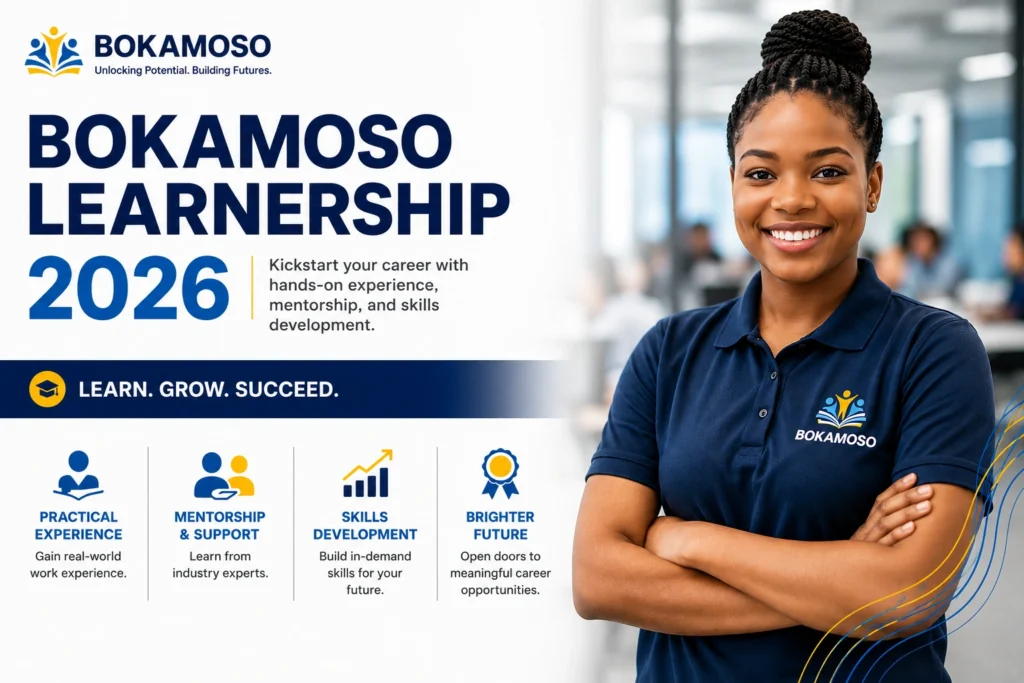
The Bokamoso Learnership 2026 aims to bridge that gap by combining structured training with real workplace experience in logistics, supply chain management, and technology-related environments. Rather than offering classroom learning alone, the programme allows participants to build practical skills while receiving a monthly stipend of approximately R2,000 to R4,000 during the 12-month learnership.
As South Africa’s logistics and digital industries continue evolving, employers increasingly value candidates who understand warehouse operations, business processes, inventory management, and technology-driven supply chains. For unemployed youth with Grade 11 or higher, this learnership offers an opportunity to develop those in-demand skills while improving future employability.
This guide explains everything applicants need to know about the Bokamoso Learnership 2026, including eligibility requirements, expected benefits, application preparation, expert recommendations, and practical advice to help improve your chances of success.
Understanding the Bokamoso Learnership 2026
The Bokamoso Learnership 2026 is a structured workplace learning programme designed to prepare young South Africans for careers in logistics, supply chain management, warehouse operations, and business technology.
Unlike traditional academic courses, a learnership combines two essential elements:
- Formal skills training
- Practical workplace experience
This approach allows learners to apply newly acquired knowledge in real working environments while gaining exposure to modern business operations.
The programme is expected to run for approximately 12 months, giving participants sufficient time to develop workplace confidence, professional behaviour, and industry-specific competencies.
Successful learners may receive a monthly stipend ranging from approximately R2,000 to R4,000, helping cover transport, meals, and other essential participation costs.
Why This Issue Matters
South Africa continues to face high youth unemployment, with many school leavers finding it difficult to secure entry-level positions because they lack workplace experience.
At the same time, industries such as logistics, e-commerce, warehousing, transportation, and supply chain management are becoming increasingly technology-driven. Businesses now rely on digital inventory systems, barcode tracking, warehouse management software, and automated business processes to improve efficiency.
This creates growing demand for employees who possess both practical operational knowledge and digital workplace skills.
The Bokamoso Learnership 2026 matters because it addresses several important challenges:
- It helps unemployed youth gain recognised workplace experience.
- It introduces learners to modern logistics operations.
- It develops practical employability skills.
- It provides financial support through a monthly stipend.
- It creates a pathway toward long-term employment opportunities.
Rather than simply earning a certificate, participants leave with valuable workplace exposure that many employers actively seek when recruiting junior staff.
Who Can Apply?
Before submitting an application, candidates should ensure they meet the minimum eligibility requirements.
Applicants should generally be:
- South African citizens or permanent residents
- At least 18 years old
- In possession of Grade 11 or a higher qualification
- Available for the full duration of the programme
- Interested in logistics, technology, warehousing, or supply chain careers
Although prior work experience is generally not required, demonstrating enthusiasm, reliability, and willingness to learn can strengthen an application.
What Can You Expect During the Programme?
The Bokamoso Learnership 2026 is designed to simulate the expectations of a real workplace while providing structured support throughout the learning process.
Participants may receive exposure to:
- Warehouse operations
- Inventory management
- Stock control
- Supply chain coordination
- Logistics planning
- Business administration
- Digital workplace systems
- Customer service
- Team collaboration
- Workplace communication
- Professional conduct
- Time management
These skills are transferable across many industries, making the experience valuable even beyond logistics.
Financial Support: Understanding the Monthly Stipend
One of the attractive features of the programme is the estimated monthly stipend of R2,000 to R4,000.
It is important to understand that a learnership stipend is not the same as a salary.
Instead, it is financial assistance intended to help participants cover essential expenses such as:
- Transport
- Daily meals
- Communication costs
- Basic study-related expenses
The stipend allows learners to participate consistently without facing the same financial pressures that often prevent unemployed youth from completing training programmes.
Skills You Can Develop Through the Bokamoso Learnership 2026
Modern logistics involves much more than moving products from one location to another.
Today’s supply chains rely on technology, coordination, planning, and accurate information management.
Participants may develop practical skills including:
Logistics Operations
Understanding how goods move through warehouses and distribution centres.
Supply Chain Processes
Learning how products are sourced, stored, tracked, and delivered efficiently.
Digital Business Systems
Working with computer-based systems used to monitor inventory and business operations.
Warehouse Support
Assisting with receiving, packing, dispatching, and inventory control.
Communication Skills
Developing professional verbal and written communication required in the workplace.
Teamwork
Learning to collaborate effectively with supervisors and colleagues.
Problem Solving
Understanding how to respond to operational challenges while maintaining productivity.
Time Management
Meeting deadlines and managing workplace responsibilities efficiently.
These competencies can improve employability across numerous sectors.
How to Apply Successfully: Step-by-Step Guide
Step 1: Confirm Your Eligibility
Read all programme requirements carefully before beginning your application.
Only apply if you meet the minimum criteria.
Step 2: Prepare Your Documents
Gather all required documentation in advance.
Typically, applicants should prepare:
- South African ID or permanent residence documentation
- Highest school qualification
- Updated CV
- Proof of residence
- Any additional supporting documents requested
Ensure all copies are clear and readable.
Step 3: Update Your CV
Many applicants overlook the importance of tailoring their CV.
Include examples that demonstrate:
- Reliability
- Teamwork
- Computer literacy
- Leadership roles
- School achievements
- Volunteer work
- Organisational skills
- Problem-solving ability
Even if you have never been formally employed, these qualities help employers understand your potential.
Step 4: Complete the Online Application Carefully
Take your time entering personal information.
Double-check:
- Name spelling
- Identity number
- Email address
- Phone number
- Qualification details
APPLY HERE: Bokamoso Learnership 2026
Simple typing mistakes can prevent recruiters from contacting successful applicants.
Step 5: Submit Before the Deadline
Applications close on 28 July 2026.
Avoid waiting until the last day, as technical issues or internet problems could prevent successful submission.
ALSO APPLY FOR: Fundi Learnership 2026
Best Practices Experts Recommend
Recruitment professionals consistently recommend several habits that improve the quality of learnership applications.
Tailor Every Application
Avoid sending identical CVs for every opportunity.
Highlight experiences relevant to logistics, technology, administration, or teamwork.
Use a Professional Email Address
An email containing your real name creates a better impression than informal usernames.
Keep Contact Details Updated
If recruiters cannot reach you, the opportunity may be offered to another candidate.
Demonstrate Interest
Your application should show genuine interest in logistics and technology rather than simply seeking any available opportunity.
Be Honest
Never exaggerate qualifications or include false information.
Employers routinely verify educational and personal details.
Stay Organised
Save digital copies of all submitted documents so you can respond quickly if additional information is requested.
Mistakes People Often Make
Many applications are unsuccessful because of avoidable errors rather than lack of potential.
Some of the most common mistakes include:
Waiting Until the Final Day
Last-minute submissions increase the risk of technical problems.
Uploading Poor-Quality Documents
Blurred or incomplete files may delay processing or lead to rejection.
Using an Outdated CV
Your CV should always include your latest education, achievements, and contact details.
Ignoring Eligibility Requirements
Submitting applications without meeting the minimum criteria wastes time for both applicants and recruiters.
Not Checking Contact Information
Incorrect phone numbers and inactive email addresses prevent recruiters from reaching shortlisted candidates.
Submitting Incomplete Applications
Always review your application before clicking submit to ensure every required section has been completed.
Career Opportunities After Completing the Learnership
Completing the Bokamoso Learnership 2026 does not automatically guarantee permanent employment, but it can significantly strengthen your career prospects.
Graduates may become suitable candidates for entry-level positions such as:
- Warehouse Assistant
- Logistics Administrator
- Inventory Clerk
- Distribution Assistant
- Supply Chain Support Officer
- Operations Assistant
- Dispatch Coordinator
- Stock Controller
- Data Capture Clerk
- Junior Logistics Officer
The practical experience gained during the programme can also strengthen future applications for internships, apprenticeships, and additional skills development programmes.
Frequently Asked Questions
1. Who is eligible for the Bokamoso Learnership 2026?
Applicants should generally be South African citizens or permanent residents who are at least 18 years old, have Grade 11 or higher, and are available to complete the full learnership programme.
2. How much is the monthly stipend?
Successful learners may receive an estimated monthly stipend of approximately R2,000 to R4,000, depending on programme arrangements.
3. Does completing the learnership guarantee a permanent job?
No. While the programme improves employability through practical experience and skills development, permanent employment is not guaranteed.
4. When is the application deadline?
Applications for the Bokamoso Learnership 2026 close on 28 July 2026. Applicants are encouraged to submit well before the closing date to avoid last-minute issues.
Final Thoughts
The Bokamoso Learnership 2026 represents more than a temporary training opportunity—it offers a practical pathway into industries that continue to grow as businesses modernise their logistics and supply chain operations. By combining structured learning, workplace exposure, and a monthly stipend of approximately R2,000 to R4,000, the programme helps unemployed youth build valuable experience while developing skills that employers increasingly demand.
If you meet the eligibility requirements, prepare your documents early, update your CV to highlight relevant strengths, and complete your online application well before the 28 July 2026 deadline. Paying attention to small details—such as accurate contact information, clear supporting documents, and a tailored CV—can make a meaningful difference in a competitive selection process.
For young South Africans looking to move from education into employment, the Bokamoso Learnership 2026 can serve as an important stepping stone toward a career in logistics, supply chain management, warehouse operations, or technology-enabled business environments. The skills and workplace confidence gained during the programme can continue to create opportunities long after the learnership itself has ended.