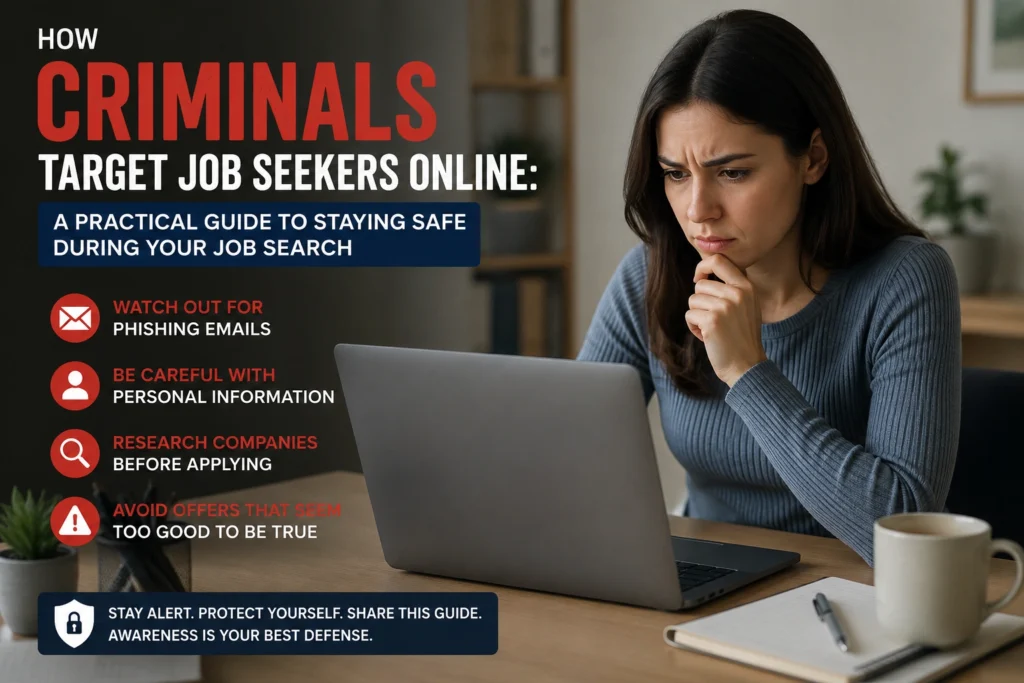

Searching for a job online has never been easier. With thousands of vacancies posted daily on job boards, social media platforms, company websites, and recruitment portals, job seekers have more opportunities than ever before. Unfortunately, criminals have noticed this trend too.
Many people focus on creating a strong CV, improving interview skills, and applying to as many opportunities as possible. However, they often overlook a growing threat: online job scams. Fraudsters increasingly use fake job advertisements, impersonation tactics, phishing schemes, and identity theft methods to exploit people who are actively looking for employment.
Understanding How Criminals Target Job Seekers Online is no longer optional. Whether you are a recent graduate, an unemployed professional, or someone seeking a career change, recognizing the warning signs can help you protect your personal information, finances, and future opportunities.
This guide explains how these scams work, why they are becoming more common, and what practical steps you can take to stay safe throughout your job search.
Understanding How Criminals Target Job Seekers Online
Online job scams are fraudulent schemes designed to trick job seekers into providing money, personal information, banking details, or access to their digital accounts.
Criminals often exploit emotions associated with job searching, including urgency, financial pressure, excitement, and hope. They create convincing job advertisements that appear legitimate and often imitate real companies, recruiters, or hiring managers.
Common platforms targeted by scammers include:
- Online job boards
- Social media networks
- Messaging apps
- Email platforms
- Professional networking websites
- Fake company websites
The goal is usually one of the following:
- Stealing personal information
- Committing identity fraud
- Obtaining banking details
- Collecting upfront payments
- Installing malware on devices
- Taking control of online accounts
Because many scams appear highly professional, even experienced job seekers can become victims.
ALSO APPLY FOR: Pepkor Graduate Intern 2026
ALSO APPLY FOR: Grindrod Logistics Intern 2026
Why This Issue Matters
The impact of job scams extends far beyond losing money.
When criminals obtain personal information, they may use it to open accounts, apply for credit, commit identity theft, or conduct other fraudulent activities in a victim’s name.
The consequences can include:
- Financial losses
- Damaged credit records
- Emotional stress
- Delayed employment opportunities
- Compromised online accounts
- Long-term identity theft issues
Young graduates and unemployed individuals are often particularly vulnerable because they may be applying for many positions at once and may be eager to respond quickly to opportunities.
The increasing use of artificial intelligence, professional-looking websites, and sophisticated communication tools has also made fraudulent job offers more difficult to identify. This means awareness and prevention have become essential skills for every job seeker.
The Most Common Ways Criminals Target Job Seekers
1. Fake Job Advertisements
One of the most common methods involves posting fake vacancies.
The advertisement may promise:
- High salaries
- Immediate hiring
- Remote work opportunities
- Flexible schedules
- Minimal qualifications
These offers often seem unusually attractive compared to genuine market opportunities.
Once candidates apply, scammers begin requesting personal information or payments under the guise of processing applications.
2. Recruitment Impersonation
Fraudsters frequently impersonate recruiters from well-known companies.
They may use:
- Fake email addresses
- Copied company logos
- Professional signatures
- Social media profiles that resemble real recruiters
The communication often appears authentic, making it difficult for job seekers to recognize the deception.
3. Advance Payment Scams
Legitimate employers do not charge applicants for jobs.
However, scammers may request payment for:
- Background checks
- Training materials
- Work permits
- Uniforms
- Equipment
- Registration fees
After receiving payment, the scammers disappear.
4. Phishing Attacks
Phishing involves tricking victims into revealing sensitive information.
A job seeker might receive an email claiming to contain:
- Interview invitations
- Employment contracts
- Assessment tests
- Application updates
The links lead to fake websites designed to steal usernames, passwords, and personal information.
5. Identity Theft
Criminals often request documents such as:
- Identity documents
- Passports
- Driver’s licenses
- Banking information
- Utility bills
While employers sometimes require documentation later in the hiring process, scammers request these details much earlier to facilitate identity theft.
6. Fake Remote Work Opportunities
Remote work remains highly popular, making it an attractive target for fraudsters.
Scammers advertise positions such as:
- Data entry clerks
- Administrative assistants
- Virtual assistants
- Customer service agents
- Social media managers
These fake roles often promise exceptional earnings for minimal work.
7. Equipment Purchase Scams
In some schemes, victims receive fake employment offers and are instructed to purchase equipment from specific suppliers.
The victim pays money, but the equipment never arrives, and the employer vanishes.
Warning Signs Every Job Seeker Should Know
Recognizing red flags early can prevent serious problems.
Be cautious if you encounter any of the following:
Unrealistically High Salaries
If compensation seems far above industry standards without a clear explanation, investigate further.
Immediate Job Offers
Most employers conduct interviews, assessments, and reference checks before hiring.
An instant offer should raise concerns.
Requests for Money
Legitimate employers generally pay employees, not the other way around.
Poor Grammar and Communication
Many fraudulent messages contain spelling errors, awkward phrasing, or inconsistent information.
Personal Email Addresses
Recruiters typically use official company email domains rather than free email services.
Pressure to Act Quickly
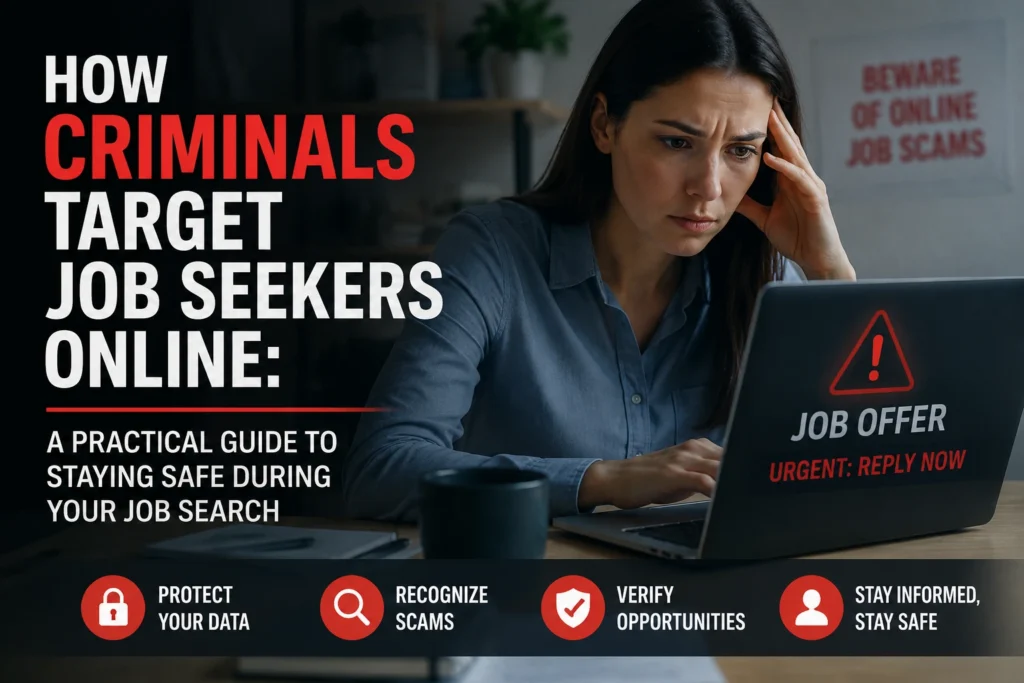
Scammers often create urgency to prevent victims from verifying information.
Requests for Sensitive Information Too Early
Be cautious if someone requests banking details, identity documents, or passwords before a formal hiring process is completed.
ALSO READ ABOUT: Can You Reapply After Being Rejected?
Step-by-Step Guide to Protecting Yourself
Understanding How Criminals Target Job Seekers Online is important, but taking action is even more valuable.
Step 1: Research the Employer
Before applying or responding:
- Visit the official company website
- Verify company contact details
- Review online presence and history
- Search for scam reports involving the organization
A legitimate employer should have a verifiable digital footprint.
Step 2: Verify Recruiter Identities
If contacted by a recruiter:
- Check their professional profile
- Confirm they work for the stated company
- Compare email addresses with official company domains
When uncertain, contact the company directly through publicly listed channels.
Step 3: Protect Personal Information
Share only the information necessary during the application stage.
Avoid sending:
- Banking details
- Copies of identification documents
- Tax numbers
- Passwords
unless there is a verified and legitimate reason.
Step 4: Examine Website URLs Carefully
Fraudulent websites often mimic real company websites.
Look for:
- Misspellings
- Unusual domains
- Extra characters
- Suspicious redirects
Always verify that the website belongs to the actual employer.
Step 5: Be Skeptical of Unexpected Messages
Even if an email appears professional, confirm its authenticity before clicking links or downloading attachments.
Step 6: Use Secure Passwords
Create unique passwords for:
- Job boards
- Email accounts
- Professional networking platforms
Enable two-factor authentication whenever possible.
Step 7: Trust Your Instincts
If something feels unusual or inconsistent, investigate further before proceeding.
Many victims later report that they initially noticed warning signs but ignored them due to excitement about the opportunity.
Best Practices Experts Recommend
Cybersecurity specialists and recruitment professionals consistently recommend several habits that reduce risk.
Maintain a Professional Email Account
Use a dedicated email address for job applications to keep communications organized and easier to monitor.
Apply Through Trusted Platforms
Focus on reputable job boards, company career pages, and established recruitment agencies.
Keep Records of Applications
Maintain a spreadsheet or document containing:
- Company names
- Positions applied for
- Application dates
- Recruiter details
This makes it easier to identify suspicious contacts.
Regularly Monitor Your Accounts
Check:
- Bank accounts
- Credit reports
- Email activity
- Online profiles
for unusual behavior.
Update Devices and Security Software
Current software helps protect against malware and phishing attacks.
Verify Before Sharing Documents
Always confirm the legitimacy of an employer before submitting sensitive information.
Stay Informed About New Scam Trends
Fraud tactics evolve constantly. Keeping up with emerging scams improves your ability to recognize threats.
Mistakes People Often Make
Many victims fall for scams because of avoidable mistakes.
Applying Without Research
Some job seekers apply to every opportunity without verifying companies.
Focusing Only on Salary
High earnings can distract candidates from obvious warning signs.
Clicking Every Link Received
Not every email or message is genuine.
Sharing Too Much Information Too Soon
Sensitive information should be shared only when necessary and with verified employers.
Ignoring Red Flags
Pressure, urgency, and unrealistic promises are often indicators of fraud.
Assuming Professional Appearance Means Legitimacy
Modern scammers can create convincing websites, emails, and social media profiles.
Professional presentation alone is not proof of authenticity.
What To Do If You Suspect a Job Scam
If you believe you have encountered a fraudulent job offer:
- Stop communication immediately.
- Do not send additional information.
- Save all messages and evidence.
- Report the listing to the platform where it appeared.
- Notify the company being impersonated.
- Change passwords if you clicked suspicious links.
- Monitor financial accounts.
- Report identity theft concerns to relevant authorities.
Quick action can reduce potential damage.
Frequently Asked Questions
How can I tell if a job offer is fake?
Look for warning signs such as requests for money, unrealistic salaries, poor communication, urgent pressure tactics, and unverified recruiter identities. Always research the employer independently.
Is it safe to send my CV online?
Generally yes, but only through reputable platforms and verified employers. Avoid including unnecessary personal details such as banking information, identity numbers, or copies of official documents in your initial application.
Why do scammers target unemployed people?
Job seekers may be more willing to respond quickly to opportunities because of financial pressure or urgency. Criminals exploit this vulnerability to increase the chances of success.
What information should never be shared during an early application stage?
Avoid sharing banking details, passwords, tax numbers, full identity documentation, or financial account information before verifying the employer and reaching a legitimate hiring stage.
Final Thoughts
Understanding How Criminals Target Job Seekers Online is one of the most important skills in today’s digital job market. While online recruitment creates valuable opportunities, it also provides criminals with new ways to exploit unsuspecting applicants.
The good news is that most job scams can be avoided through careful verification, healthy skepticism, and good cybersecurity habits. Research employers thoroughly, verify recruiter identities, protect personal information, and never send money to secure a job opportunity.
A genuine employer will respect reasonable caution and provide clear evidence of legitimacy. By staying alert and following the practical strategies outlined in this guide, you can focus on finding real career opportunities while avoiding the growing threat of online job fraud.
ALSO APPLY FOR: Pepkor Graduate Intern 2026
ALSO APPLY FOR: Grindrod Logistics Intern 2026
ALSO READ ABOUT: Can You Reapply After Being Rejected?