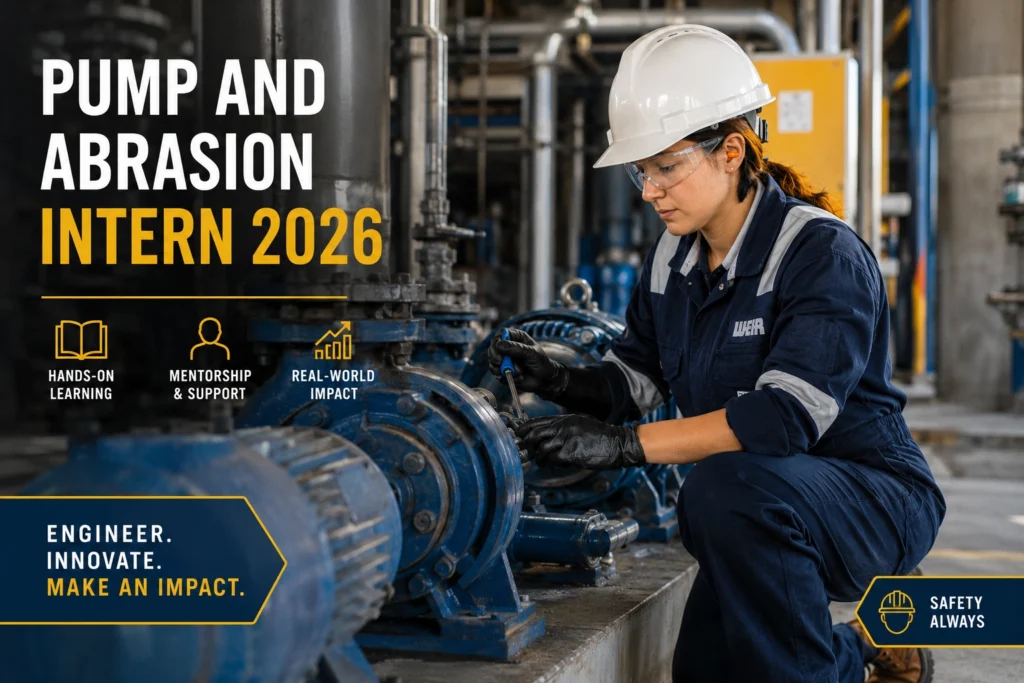

Imagine a delivery truck arriving at a busy industrial facility in Centurion just after sunrise. Pallets of components, equipment, and materials need to be checked, documented, and stored before production teams can begin their work. A single mistake—a missing item, an incorrect quantity, or a damaged shipment that goes unnoticed—can create delays that ripple across an entire operation.
Behind the scenes, receiving teams play a crucial role in preventing those problems.
This is the environment that awaits successful applicants in the Pump and Abrasion Intern 2026 opportunity. While many entry-level job seekers focus on visible career paths such as administration, customer service, or sales, logistics and receiving functions remain some of the most important—and often overlooked—entry points into the industrial economy.
For South Africans looking to build experience in supply chain operations, warehouse administration, inventory management, and logistics support, this internship offers practical exposure to the real-world systems that keep businesses moving.
Why Logistics Experience Matters More Than Ever
South Africa’s economy depends heavily on supply chains. From mining and manufacturing to retail and agriculture, businesses rely on efficient movement of goods and materials.
Over the past few years, employers have increasingly looked for candidates who understand operational processes, even at junior levels. The challenge for many young people is that employers often ask for experience before offering an opportunity to gain it.
That is why internships such as the Pump and Abrasion Intern 2026 programme are significant.
Rather than focusing purely on theory, the role places candidates directly into operational activities where accuracy, communication, and organisation influence daily business performance.
In a country where youth unemployment remains a major concern, practical workplace exposure can become the difference between remaining a job seeker and becoming a competitive candidate in the labour market.
Understanding the Pump and Abrasion Intern 2026 Opportunity
The internship is based in Centurion, Gauteng, and falls within the company’s Operations functional area.
The role is specifically focused on receiving activities, meaning interns will assist with the process that occurs when goods arrive at the business from suppliers and transport companies.
At first glance, receiving may seem straightforward. However, modern receiving operations involve far more than signing delivery paperwork.
Interns will be expected to compare purchase orders against invoices and packaging lists, inspect incoming deliveries, update inventory systems, maintain records, and communicate with procurement teams when discrepancies arise.
The position offers exposure to multiple operational functions, including:
- Inventory management
- Warehouse administration
- Supplier coordination
- Procurement support
- Document control
- Logistics reporting
Because receiving sits at the intersection of these activities, interns gain a broad understanding of how operational departments work together.
For someone considering a long-term career in logistics or supply chain management, that perspective can be extremely valuable.
More Than a Warehouse Role
One of the most common misconceptions about logistics positions is that they involve only physical handling of stock.
In reality, modern receiving operations combine administrative accuracy with operational execution.
An intern may spend part of the day checking delivery documentation and another part communicating with suppliers about missing items. They may assist with unloading deliveries before updating inventory records and distributing receiving information to internal departments.
This blend of responsibilities develops both technical and professional skills.
Successful interns often gain experience in:
Documentation and Compliance
Every received item must be supported by accurate documentation.
Purchase orders, invoices, delivery notes, packaging lists, and receiving records all need to align.
Learning how these documents interact provides valuable insight into business processes and financial controls.
Inventory Accuracy
Inventory errors can become expensive.
Incorrect stock records may lead to over-ordering, shortages, production delays, or financial discrepancies.
Receiving teams serve as one of the first quality checkpoints in preventing those issues.
Communication Skills
Receiving departments regularly communicate with procurement teams, warehouse staff, suppliers, transport providers, and internal stakeholders.
Interns therefore learn how to communicate professionally across different business functions.
A Strong Entry Point Into South Africa’s Supply Chain Sector
Many professionals currently working as warehouse supervisors, procurement officers, logistics coordinators, or supply chain specialists started in operational support positions.
Receiving roles often provide a foundation for understanding the full supply chain journey.
Goods do not simply appear on shelves or in production facilities. They move through a carefully managed process involving suppliers, transport providers, receiving teams, inventory systems, storage facilities, and distribution networks.
The Pump and Abrasion Intern 2026 opportunity offers exposure to the beginning of that chain.
For candidates with long-term ambitions in logistics, this exposure can help them identify future specialisation areas such as:
- Warehouse management
- Inventory control
- Procurement administration
- Supply chain planning
- Logistics coordination
- Operations management
In many cases, employers value candidates who understand receiving processes because those processes affect every subsequent operational activity.
What Makes a Candidate Stand Out?
Although the minimum requirement is a completed Matric qualification, employers increasingly look beyond academic credentials when assessing entry-level applicants.
The strongest candidates typically demonstrate evidence of reliability and attention to detail.
Even if applicants have never worked in a formal logistics environment, they may have transferable experience from:
- Retail stock handling
- Administrative support
- Volunteer inventory management
- Small business assistance
- Storekeeping responsibilities
- Data capturing tasks
These experiences show employers that a candidate understands responsibility and accuracy.
A well-structured CV should clearly highlight situations where the applicant handled records, managed stock, organised documents, or worked with processes requiring careful attention.
Candidates who have completed certificates or diplomas in logistics, supply chain management, finance, or business administration may also strengthen their applications.
Expert Insight: Why Receiving Is Becoming a Strategic Function
Receiving departments were once viewed primarily as operational support units.
Today, many organisations see them differently.
As businesses rely more heavily on data-driven decision-making, inventory accuracy has become a strategic priority. Incorrect receiving information can affect purchasing forecasts, financial reporting, supplier performance measurement, and production planning.
This means receiving personnel increasingly contribute to broader business outcomes.
For interns entering the field today, understanding both the physical and administrative sides of receiving creates opportunities for future progression into supervisory and analytical roles.
In other words, receiving is no longer just about accepting deliveries—it is about ensuring the integrity of operational information.
Learning the NCR Process
One aspect of the internship that deserves special attention is exposure to the NCR process.
NCR typically stands for Non-Conformance Report or Non-Conformance Procedure.
This process becomes necessary when received goods fail to meet required standards.
Examples include:
- Damaged products
- Incorrect quantities
- Wrong specifications
- Missing items
- Defective materials
Instead of simply accepting problematic deliveries, organisations use NCR procedures to document and resolve issues systematically.
For interns, learning this process provides valuable exposure to quality control and supplier management practices.
These are skills that remain relevant across numerous industries, including manufacturing, mining, engineering, retail, and distribution.
Why Centurion Is a Strategic Location
Centurion occupies an important position within Gauteng’s economic landscape.
Situated between Johannesburg and Pretoria, the area hosts numerous industrial, manufacturing, engineering, logistics, and technology businesses.
For young professionals entering the workforce, this environment offers exposure to diverse industries and operational networks.
A logistics internship in Centurion therefore provides more than workplace experience—it places candidates within one of South Africa’s key economic corridors.
The skills developed in this environment are transferable across many sectors.
Whether an individual later moves into mining logistics, manufacturing operations, distribution management, or procurement support, the foundational knowledge remains relevant.

Preparing a Competitive Application
Candidates interested in the Pump and Abrasion Intern 2026 opportunity should focus on presenting themselves as organised, dependable, and eager to learn.
A strong application should include:
- An updated CV
- Certified South African ID copy
- Matric certificate
- Relevant tertiary qualifications, if applicable
- Academic transcripts where relevant
- Short, professional cover letter
APPLY HERE: Pump and Abrasion Intern 2026
ALSO APPLY FOR: Vodacom Internships 2027
The cover letter does not need to be lengthy.
Instead, it should explain why the applicant is interested in logistics, what skills they bring, and how the internship aligns with their career goals.
Because no closing date has been publicly specified, early submission is advisable.
Recruiters often begin reviewing applications soon after vacancies are posted, and strong candidates may be shortlisted before a formal deadline is announced.
Frequently Asked Questions
1. Do applicants need previous logistics experience?
No. The opportunity is designed for entry-level candidates. However, any experience involving administration, stock handling, document management, or inventory support may strengthen an application.
2. Is Matric enough to qualify?
Yes. A completed Matric qualification is the minimum requirement. Additional studies in logistics, supply chain management, or finance may provide an advantage.
3. What careers can this internship lead to?
The experience gained can support future roles in warehouse administration, inventory control, procurement support, logistics coordination, supply chain operations, and related fields.
Looking Beyond the Internship
The value of the Pump and Abrasion Intern 2026 opportunity extends beyond the internship itself.
Many young South Africans face the challenge of bridging the gap between education and employment. Employers frequently seek practical experience, yet gaining that experience often requires an initial opportunity.
Receiving internships help address that challenge by placing candidates directly into operational environments where they can learn how businesses function in practice.
The skills developed—accuracy, organisation, communication, inventory management, problem-solving, and process compliance—are not limited to logistics. They are transferable capabilities that employers across industries continue to value.
For aspiring logistics professionals, this internship represents more than a temporary placement. It offers a firsthand view of how products, information, and business processes connect to keep operations running smoothly.
In an economy where supply chains influence everything from mining production to retail availability, understanding those systems can be a powerful career advantage. For candidates willing to learn, pay attention to detail, and embrace operational responsibility, the Pump and Abrasion receiving internship could be the first meaningful step toward a long-term career in logistics and supply chain management.