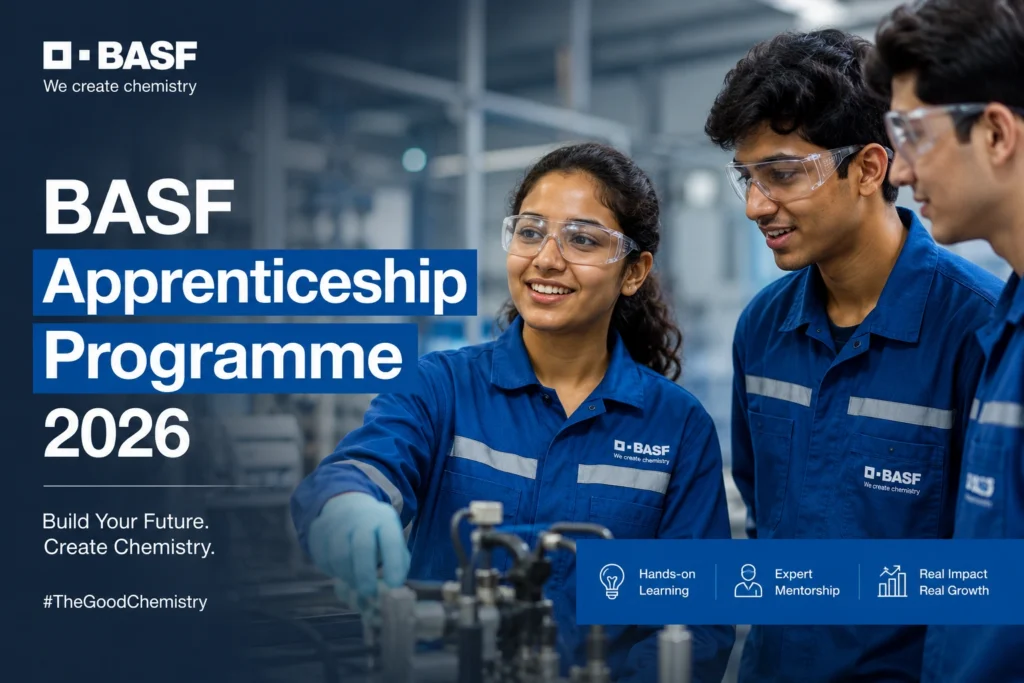

The BASF Apprenticeship Programme 2026 is attracting significant attention among South African school leavers, and it’s not difficult to understand why.
At a time when youth unemployment remains one of the country’s biggest challenges, opportunities that combine structured training, real workplace exposure, and a pathway to a nationally recognised qualification have become increasingly valuable. Many matriculants are discovering that university is not the only route to a successful future. Technical careers are experiencing renewed interest as industries seek skilled artisans capable of supporting manufacturing, engineering, production, and industrial operations.
Against this backdrop, BASF’s latest apprenticeship intake stands out as more than just another training programme. It represents a chance to enter a global organisation while developing practical skills that remain in demand across multiple sectors.
The programme’s growing popularity reflects a broader shift in how young South Africans are thinking about career development. Instead of focusing exclusively on academic qualifications, many are exploring vocational pathways that offer direct access to employment and long-term career growth.
And that is precisely where BASF’s apprenticeship model enters the conversation.
The Bigger Story Behind BASF’s Skills Development Push
To understand why the programme is generating interest, it helps to look at the company behind it.
BASF is widely recognised as one of the world’s largest chemical manufacturers, operating across dozens of countries and serving industries ranging from agriculture and automotive manufacturing to construction and consumer goods.
For years, multinational companies operating in South Africa have faced increasing expectations to contribute meaningfully to local skills development. The demand is particularly urgent in technical fields where qualified artisans remain essential to industrial growth.
BASF has responded by expanding various talent development initiatives that include internships, graduate programmes, disability learnerships, and apprenticeships.
The company’s recent achievement of Level 1 B-BBEE status has further strengthened its reputation as an organisation actively investing in transformation and workforce development. Rather than viewing skills development as a compliance exercise, BASF appears to be positioning it as a long-term business strategy.
The apprenticeship programme is one of the clearest examples of that approach.
Why Technical Careers Are Becoming Attractive Again
For years, conversations about career success often centred around university degrees.
Today, the picture looks very different.
Across South Africa, employers continue reporting shortages of skilled technical professionals. Electricians, fitters, millwrights, instrumentation technicians, and other artisans remain critical to industries that keep the economy functioning.
At the same time, many graduates face a competitive job market where practical experience is often required even for entry-level roles.
This has created renewed appreciation for apprenticeships.
Unlike many traditional educational pathways, apprenticeships combine learning and workplace exposure simultaneously. Participants gain practical experience while building recognised qualifications.
For many young people, that combination offers a more direct route into employment.
The BASF Apprenticeship Programme 2026 arrives at a moment when these advantages are becoming increasingly apparent.
What Makes the BASF Apprenticeship Programme Different?
One reason the programme is drawing attention is its structured design.
Rather than offering short-term workplace exposure, BASF provides a comprehensive 36-month development journey aimed at producing qualified artisans.
The emphasis is not only on technical competence but also on workplace readiness.
Participants can expect exposure to:
- Practical on-the-job learning
- Technical skills development
- Structured educational components
- Professional workplace preparation
- Safety-focused training
- Personal development support
- Career readiness initiatives
This holistic approach reflects changing employer expectations.
Modern artisans are expected to possess more than technical expertise. They must communicate effectively, understand workplace systems, work within safety frameworks, and adapt to evolving technologies.
The BASF model appears designed to develop these broader capabilities alongside trade-specific skills.
Recent Developments Fueling Interest
Several recent developments have contributed to the growing visibility of the programme.
First, BASF’s continued investment in South African talent development has strengthened confidence among young job seekers. The company has demonstrated an ongoing commitment to creating opportunities through multiple development streams.
Second, awareness around artisan shortages has increased significantly.
Industry experts frequently highlight the need for more technically skilled workers to support manufacturing, infrastructure development, energy projects, and industrial operations.
Third, there has been growing recognition that apprenticeships can provide strong long-term earning potential.
Many qualified artisans eventually progress into supervisory, specialist, maintenance planning, or technical management roles. Some even establish successful businesses of their own after gaining sufficient industry experience.
As a result, programmes like the BASF Apprenticeship Programme 2026 are increasingly viewed as career-launching opportunities rather than merely training placements.
Who Is the Programme Designed For?
The target audience is relatively straightforward.
BASF is primarily looking for:
- South African citizens
- Individuals who have completed Grade 12
- Candidates with no prior relevant work experience
- Young people interested in technical careers
- Applicants willing to commit to a structured learning journey
Interestingly, the programme does not simply seek candidates with exceptional academic records.
Technical curiosity, problem-solving ability, and a genuine interest in practical work may be equally important.
Many successful artisans begin with a natural fascination for machinery, systems, equipment, and how things function.
That mindset often proves just as valuable as classroom performance.
Public Reaction: Why Young South Africans Are Talking About It
Among career-focused communities, apprenticeship opportunities from major employers consistently generate discussion.
Part of the excitement comes from the reputation associated with BASF.
Global companies often provide exposure to international standards, advanced technologies, and structured training systems that smaller organisations may struggle to match.
There is also growing appreciation for opportunities that offer clear progression.
Many young people are increasingly cautious about programmes that provide temporary experience without meaningful qualifications or long-term prospects.
The BASF apprenticeship stands out because participants are working toward becoming qualified artisans.
That distinction matters.
A recognised artisan qualification can remain valuable throughout an individual’s career, opening opportunities across multiple industries and regions.
Why This Matters Right Now
The timing of the BASF Apprenticeship Programme 2026 is particularly significant.
South Africa continues to grapple with youth unemployment levels that remain among the highest globally. At the same time, employers in technical industries often struggle to recruit suitably qualified candidates.
This creates an interesting contradiction:
Many young people need jobs.
Many industries need skills.
Apprenticeships help bridge that gap.
The BASF programme represents more than an individual opportunity for successful applicants. It reflects a broader effort to strengthen the country’s technical skills pipeline.
Every new artisan entering the workforce contributes to industrial productivity, infrastructure maintenance, manufacturing capacity, and economic growth.
In practical terms, programmes like this can help create sustainable careers while addressing real skills shortages.
That combination makes them increasingly important in today’s labour market.
APPLY HERE: BASF Apprenticeship Programme 2026
ALSO APPLY FOR: Schaeffler Apprenticeship 2026
The Benefits Extend Beyond Technical Training
One of the most overlooked aspects of apprenticeship programmes is the value of workplace exposure.
Many employers consistently report that young job seekers lack practical workplace experience.
Through BASF’s programme, participants gain exposure to:
- Professional work environments
- Workplace safety culture
- Team collaboration
- Problem-solving processes
- Operational procedures
- Professional communication standards
These experiences can be difficult to acquire elsewhere.
Even if participants eventually pursue opportunities outside BASF, the skills and habits developed during the programme can continue benefiting them throughout their careers.
What Applicants Should Know Before Applying
Competition is expected to be strong.
Global companies with established reputations typically attract large numbers of applications.
Applicants who want to improve their chances should focus on presenting themselves as genuinely interested in technical careers.
This means:
- Preparing a professional CV
- Highlighting relevant school subjects
- Demonstrating problem-solving interests
- Showing enthusiasm for practical learning
- Ensuring all documents are complete and accurate
Recruiters often look beyond qualifications alone.
Motivation, attitude, willingness to learn, and commitment to completing the programme can play a significant role during the selection process.
The Long-Term Career Outlook for Qualified Artisans
One reason apprenticeship opportunities continue attracting attention is the long-term career potential they offer.
Qualified artisans frequently enjoy career mobility across industries.
Skills gained in manufacturing environments can often transfer into sectors such as:
- Mining
- Energy
- Construction
- Automotive manufacturing
- Industrial maintenance
- Chemical production
- Engineering services
As industries modernise, technical professionals who combine traditional trade skills with an understanding of modern technologies may become even more valuable.
This means today’s apprentices could find themselves entering a workforce where technical expertise remains highly sought after.
What Could Happen Next?
Looking ahead, several possible developments could shape the future of programmes like the BASF Apprenticeship Programme 2026.
The first possibility is expansion.
If current talent development initiatives continue delivering positive outcomes, BASF and similar employers may increase investments in apprenticeship and artisan training programmes.
A second possibility involves greater industry collaboration.
South Africa’s skills shortages may encourage stronger partnerships between businesses, training institutions, and government stakeholders.
A third trend could be the increasing integration of digital technologies into artisan training.
Modern industrial environments are becoming more automated, data-driven, and technologically sophisticated. Future artisans may need to combine traditional technical skills with digital competencies.
For successful BASF apprentices, this could create opportunities to develop highly marketable expertise.
A Programme That Reflects Changing Career Priorities
Perhaps the most interesting aspect of the BASF Apprenticeship Programme 2026 is what it says about changing perceptions of career success.
For years, vocational training pathways were often overlooked in favour of academic routes.
Today, attitudes are shifting.
Many young people are recognising that technical careers can offer stability, growth, professional pride, and strong earning potential.
Companies are increasingly recognising the value of developing talent from the ground up.
And industries continue needing skilled artisans to support economic activity.
These trends are converging at precisely the right moment.
Final Thoughts
The BASF Apprenticeship Programme 2026 represents far more than a training opportunity.
It reflects the growing importance of technical skills in a rapidly evolving economy, the increasing value of practical workplace experience, and the role that major employers can play in developing future talent.
For South African matriculants interested in technical careers, the programme offers a structured pathway toward becoming a qualified artisan while gaining exposure to a globally respected organisation.
Whether viewed as a career launchpad, a skills development initiative, or an example of corporate investment in youth development, the programme arrives at a time when opportunities that combine learning and employment are more valuable than ever.
As industries continue searching for skilled technical professionals, programmes like this may become some of the most important pathways into sustainable careers for the next generation of South African talent.