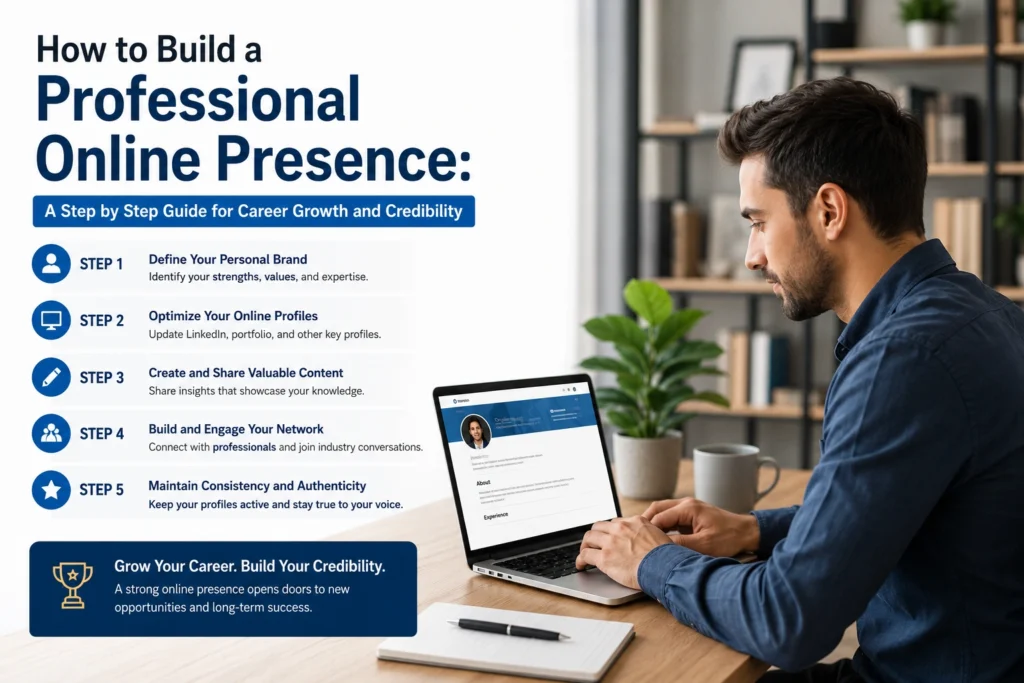

In today’s digital world, people often form their first impression of you before ever meeting you. Employers search candidate names online, clients review social media profiles before making purchasing decisions, and recruiters assess professional credibility through digital platforms. Unfortunately, many people struggle with outdated profiles, inconsistent messaging, limited visibility, or content that fails to showcase their skills and expertise.
Learning how to build a Professional Online Presence is no longer optional for job seekers, entrepreneurs, freelancers, students, or professionals looking to advance their careers. A strong online presence can open doors to employment opportunities, partnerships, networking connections, and industry recognition. On the other hand, a weak or neglected digital footprint can limit opportunities and damage credibility.
This guide explains what a professional online presence is, why it matters, and the practical steps you can take to establish and maintain one effectively.
What Is a Professional Online Presence?
A professional online presence refers to the collection of digital platforms, content, profiles, and interactions that represent you on the internet.
It includes:
- Professional networking profiles
- Personal websites or portfolios
- Social media accounts
- Online articles or blog posts
- Digital resumes
- Comments and interactions in professional communities
- Search engine results associated with your name
When someone searches for your name online, the information they find contributes to your professional reputation.
Understanding How to Build a Professional Online Presence means intentionally shaping what others see and ensuring your digital identity aligns with your goals, expertise, and values.
ALSO APPLY FOR: Samancor Learnership 2026
ALSO APPLY FOR: Vodacom Internships 2027
Why This Issue Matters
Many opportunities now begin online.
Recruiters increasingly review candidates’ online profiles before scheduling interviews. Businesses often evaluate potential partners based on their digital reputation. Clients frequently research service providers before making purchasing decisions.
A professional online presence can help you:
- Increase career opportunities
- Build trust and credibility
- Expand professional networks
- Demonstrate expertise
- Attract clients or customers
- Improve personal branding
- Stand out from competitors
In contrast, a poorly managed online presence can create confusion, reduce trust, and cause decision-makers to overlook your qualifications.
The reality is simple: people will likely search for you online. The question is whether they will find information that supports your professional goals.
Step 1: Define Your Professional Brand
Before creating profiles or publishing content, determine how you want to be perceived professionally.
Ask yourself:
- What industry am I in?
- What skills do I want to be known for?
- What career goals am I pursuing?
- Who is my target audience?
- What makes me different?
For example:
A software developer may focus on coding expertise, open-source contributions, and problem-solving.
A marketing professional may emphasize campaign results, creativity, and digital strategy.
A consultant may highlight industry knowledge, leadership experience, and client success stories.
A clear professional brand creates consistency across all platforms.
Step 2: Optimize Your LinkedIn Profile
For many professionals, LinkedIn serves as the foundation of an online presence.
An incomplete profile can reduce visibility and credibility.
Focus on:
Professional Profile Photo
Use a clear, high-quality image with appropriate lighting and professional attire.
Compelling Headline
Avoid generic titles.
Instead of:
“Marketing Professional”
Consider:
“Digital Marketing Specialist Helping Brands Increase Online Growth Through Data-Driven Strategies”
Strong About Section
Explain:
- Who you are
- What you do
- Your expertise
- Your achievements
- Your career goals
Detailed Experience
Include measurable accomplishments whenever possible.
For example:
“Increased website traffic by 45% within six months through SEO optimization.”
Skills and Certifications
List relevant skills and industry certifications to strengthen credibility.
Regular updates improve profile visibility and ensure information remains current.
Step 3: Create a Consistent Professional Identity
One common mistake people make is presenting different versions of themselves across platforms.
Consistency strengthens recognition and trust.
Maintain consistency in:
- Profile photos
- Professional titles
- Bios
- Contact information
- Personal branding messages
Someone visiting your LinkedIn profile, portfolio website, and professional social media accounts should immediately recognize that all profiles belong to the same person.
Consistency is a critical part of How to Build a Professional Online Presence effectively.
Step 4: Build a Professional Website or Portfolio
A personal website gives you complete control over your online identity.
Even a simple website can significantly improve credibility.
Key sections may include:
About Page
Share your background, expertise, and professional story.
Portfolio
Showcase projects, achievements, case studies, or samples of your work.
Services Page
If you’re a freelancer or consultant, clearly explain your offerings.
Contact Information
Make it easy for people to reach you.
Testimonials
Client reviews and endorsements help establish trust.
A website serves as a central hub that connects all other digital platforms.
Step 5: Publish Valuable Content
One of the fastest ways to establish authority is by sharing useful information.
Content demonstrates expertise more effectively than simply listing skills.
You can create:
- Blog articles
- LinkedIn posts
- Industry insights
- Tutorials
- Case studies
- Videos
- Podcasts
- News commentary
Focus on helping your audience solve problems.
For example:
A project manager might share productivity tips.
A graphic designer could explain branding strategies.
A finance professional may discuss budgeting techniques.
Consistent content creation helps build visibility and trust over time.
ALSO READ ABOUT: How Graduate Programmes Work
Step 6: Clean Up Your Digital Footprint
Many people overlook older content that may negatively affect their reputation.
Search your name on major search engines and review the results.
Check:
- Social media profiles
- Public comments
- Old blog posts
- Forum discussions
- Tagged photos
Remove or update content that no longer reflects your professional image.
Review privacy settings where necessary.
Managing your digital footprint ensures your online presence aligns with your current goals.
Step 7: Be Active in Professional Communities
Visibility grows when you actively engage with others.
Participate in:
- Industry groups
- Professional forums
- Networking communities
- LinkedIn discussions
- Webinars
- Online events
Meaningful engagement helps expand your network and demonstrates expertise.
Avoid focusing solely on self-promotion.
Instead:
- Answer questions
- Share insights
- Support others
- Contribute valuable perspectives
People remember professionals who consistently add value to conversations.
Step 8: Showcase Results and Achievements
Many professionals describe their responsibilities but fail to highlight outcomes.
Results build credibility.
Examples include:
- Revenue growth achieved
- Projects completed
- Certifications earned
- Awards received
- Publications written
- Speaking engagements
- Successful campaigns
Whenever possible, include measurable data.
For instance:
- Increased customer retention by 20%
- Reduced operational costs by 15%
- Managed projects worth R5 million
Specific achievements create stronger impressions than general descriptions.
Step 9: Develop Thought Leadership
Thought leadership involves sharing original perspectives and expertise.
You do not need to be a famous industry expert to become a thought leader.
Start by:
- Discussing industry trends
- Sharing lessons learned
- Offering practical advice
- Commenting on emerging developments
- Publishing research or case studies
Over time, consistent contributions help position you as a knowledgeable professional in your field.
Step 10: Monitor and Improve Your Online Presence Regularly
Building an online presence is not a one-time task.
Digital platforms evolve continuously.
Schedule regular reviews to:
- Update profiles
- Add recent achievements
- Refresh portfolio content
- Review privacy settings
- Respond to messages
- Monitor search results
Small updates performed consistently can significantly improve your visibility and credibility.
Best Practices Experts Recommend
Professionals who successfully build strong online brands often follow several proven practices.
Focus on Quality Over Quantity
Publishing one valuable article each month can be more effective than posting daily low-quality content.
Be Authentic
People connect with genuine experiences and honest insights.
Avoid creating an artificial online persona.
Maintain Professionalism
Remember that online content can remain accessible for years.
Think carefully before posting.
Provide Value Consistently
Educational, helpful content tends to perform better than constant self-promotion.
Invest in Visual Presentation
Professional photos, clean website design, and polished profiles improve credibility.
Keep Learning
Stay informed about digital trends, personal branding strategies, and industry developments.
Continuous improvement strengthens your online reputation.
Mistakes People Often Make
Many individuals undermine their professional presence without realizing it.
Incomplete Profiles
Missing information reduces credibility and visibility.
Inconsistent Branding
Different photos, titles, and messages create confusion.
Neglecting Updates
Outdated information can make opportunities harder to secure.
Excessive Self-Promotion
People engage more with useful content than constant advertising.
Ignoring Privacy Settings
Personal content intended for friends may not be appropriate for professional audiences.
Posting Without Strategy
Random content rarely supports long-term professional goals.
Failing to Engage
Building a network requires interaction, not just publishing content.
Avoiding these mistakes can significantly improve your professional reputation.
Frequently Asked Questions
How long does it take to build a professional online presence?
Results vary depending on your industry, activity level, and goals. Many people begin seeing improvements in visibility and networking opportunities within several months of consistent effort.
Do I need a personal website?
While not mandatory, a website provides greater control over your online brand and often enhances credibility, especially for freelancers, consultants, creatives, and entrepreneurs.
Which social media platform is most important professionally?
The best platform depends on your industry. LinkedIn remains one of the most important platforms for professional networking across many sectors.
Can a professional online presence help me get a job?
Yes. Recruiters frequently review online profiles during hiring processes. A strong online presence can demonstrate expertise, professionalism, and industry engagement, making you a more attractive candidate.
Conclusion
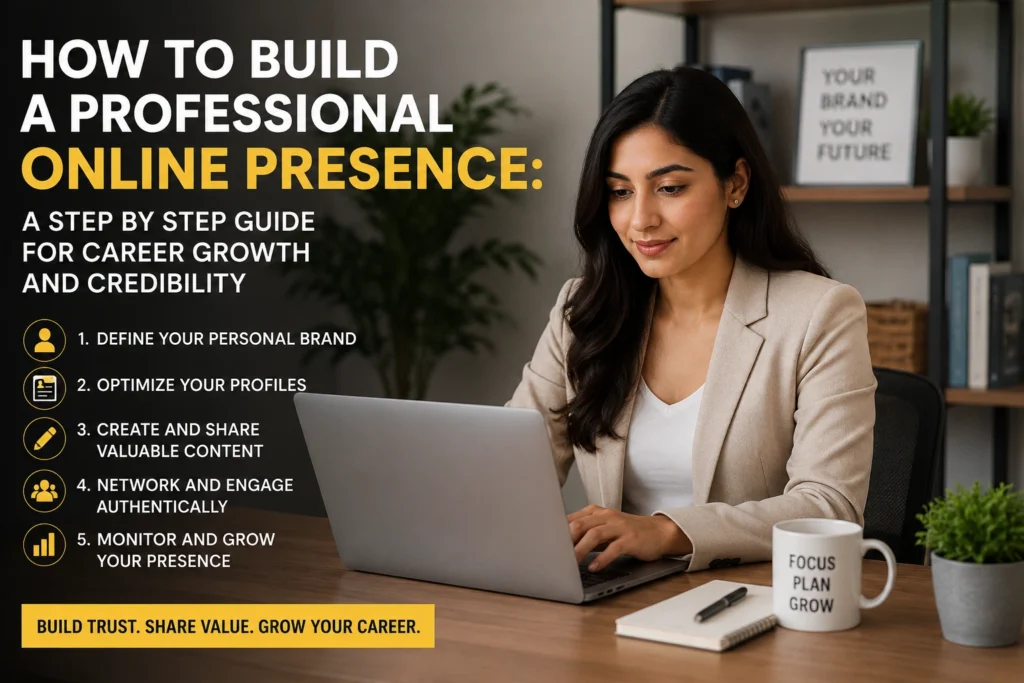
Understanding How to Build a Professional Online Presence is one of the most valuable career investments you can make. Your digital footprint influences how employers, clients, colleagues, and business partners perceive you long before direct interactions occur.
A successful online presence starts with a clear professional brand, optimized profiles, consistent messaging, valuable content, and active participation in professional communities. It requires ongoing maintenance, thoughtful engagement, and a commitment to providing value.
Start by reviewing your current online profiles today. Update outdated information, strengthen your professional branding, create useful content, and engage with your industry community. Small improvements made consistently can lead to stronger credibility, better networking opportunities, and long-term professional growth.
ALSO APPLY FOR: Vodacom Internships 2027
ALSO APPLY FOR: Samancor Learnership 2026
ALSO READ ABOUT: How Graduate Programmes Work