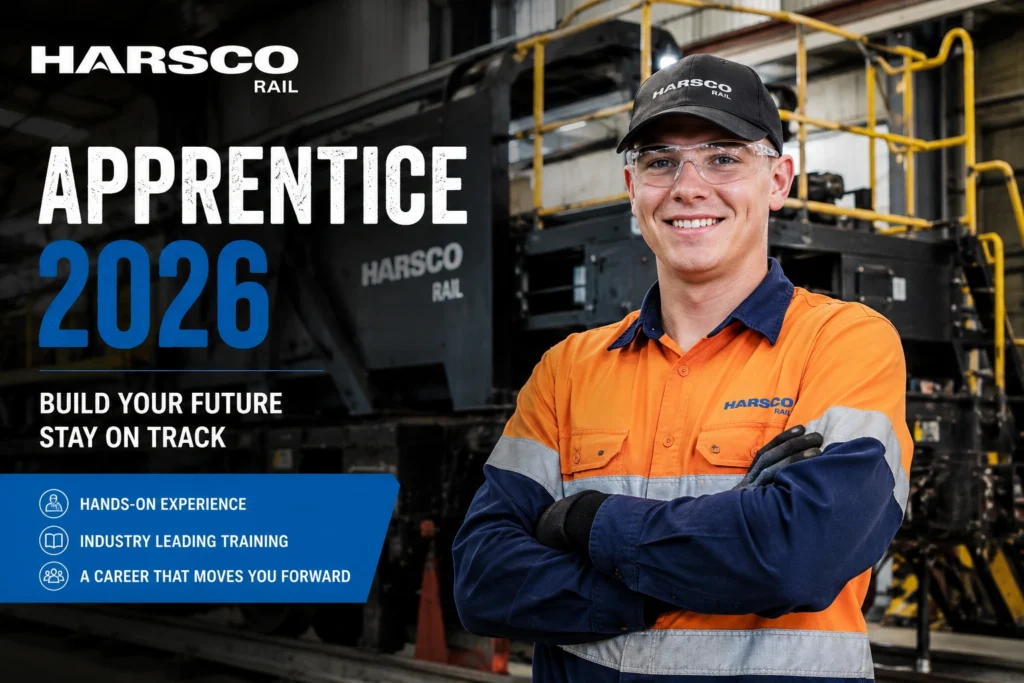

The Harsco Rail Apprentice 2026 opportunity is attracting attention at a time when railway infrastructure investment is accelerating across many parts of the world. While apprenticeships have always been an important route into technical careers, the growing demand for skilled maintenance professionals, machine operators, and rail engineering specialists has made programs like this especially relevant.
For many aspiring engineers and technical workers, railway maintenance is not usually the first career path that comes to mind. Yet behind every reliable rail network is a complex operation involving specialized equipment, safety systems, maintenance teams, and highly trained operators who keep tracks functioning efficiently.
That reality helps explain why the Harsco Rail Apprentice 2026 program is generating interest among job seekers looking for practical technical careers with long-term growth potential.
The Company Behind the Opportunity
Harsco Rail, a worldwide division of Enviri Corporation, has operated in the railway maintenance sector for more than a century. The company supplies Maintenance of Way (MoW) products, engineering solutions, specialized vehicles, and railway services across multiple continents.
Its operations span key markets including the United States, United Kingdom, Germany, India, Brazil, China, and Australia. Over the years, the organization has built a reputation around track maintenance technologies, rail grinding systems, inspection equipment, and operational support services.
As rail networks become more dependent on advanced maintenance technologies, companies like Harsco Rail increasingly require workers who can combine mechanical knowledge with operational expertise and strict safety awareness.
That industry shift provides important context for understanding the purpose of the apprenticeship.
How the Apprenticeship Fits Into Industry Trends
The railway sector is undergoing significant transformation.
Governments and infrastructure agencies are investing heavily in rail modernization projects. At the same time, many experienced rail workers are approaching retirement age, creating skills gaps across technical and operational positions.
Employers face a dual challenge:
- Replacing experienced workers
- Training a new generation on increasingly sophisticated equipment
The Harsco Rail Apprentice 2027 program appears designed to address both needs simultaneously.
Rather than expecting new recruits to arrive with extensive industry experience, the apprenticeship focuses on structured development. Participants learn through supervised training while gradually building competency in driving, operating, and maintaining On-Track Machines (OTMs).
This approach reflects a broader shift toward skills-based hiring and workforce development throughout engineering and transportation sectors.
What Makes This Apprenticeship Different?
One aspect that stands out is the combination of mechanical, operational, and safety-focused training.
Many apprenticeships concentrate primarily on workshop-based technical learning. The Harsco Rail Apprentice 2027 pathway, however, places trainees directly within a working rail environment.
Participants are expected to learn:
- OTM operation
- Mechanical maintenance
- Fault finding and diagnostics
- Route knowledge
- Rail safety procedures
- Operational communications
- Documentation systems
- Environmental compliance
This creates a more holistic development model.
Instead of training for a single narrow role, apprentices gradually build competencies across several interconnected functions that support railway maintenance operations.
The result is a broader understanding of how modern rail infrastructure is maintained and managed.
The Growing Importance of On-Track Machines
A major component of the apprenticeship revolves around On-Track Machines.
While passengers often focus on trains themselves, OTMs perform critical maintenance work behind the scenes. These machines inspect, repair, grind, align, and maintain railway tracks to ensure safe operations.
Without consistent maintenance, rail infrastructure deteriorates rapidly.
That makes OTM operators and maintainers essential contributors to railway reliability.
As maintenance technologies become more advanced, operators must understand not only how to drive equipment but also how to interpret diagnostics, identify faults, and carry out preventative maintenance.
The apprenticeship reflects this evolution by combining operational training with mechanical learning.
Recent Developments Driving Interest
Several developments have increased attention on rail-sector apprenticeships globally.
First, infrastructure investment remains a priority in many countries seeking to improve transportation efficiency and reduce congestion.
Second, sustainability goals continue encouraging greater use of rail transport due to its lower environmental impact compared with many road transport alternatives.
Third, employers increasingly report shortages of skilled technical workers.
These factors create favorable conditions for apprenticeship programs that can introduce new talent into the sector.
The Harsco Rail Apprentice 2027 initiative arrives at a moment when workforce development has become a strategic priority throughout transportation industries.
That timing is one reason the opportunity is attracting interest beyond traditional railway circles.
A Strong Focus on Safety Culture
One of the most striking features of the apprenticeship is the emphasis on safety.
Virtually every responsibility outlined within the program connects back to health, safety, environmental protection, or operational compliance.
This focus reflects the realities of railway operations.
Working around heavy machinery, live tracks, and infrastructure projects demands strict adherence to procedures. Even minor mistakes can have significant consequences.
As a result, apprentices are expected to develop habits that prioritize:
- Risk assessment
- PPE compliance
- Incident reporting
- Safe systems of work
- Environmental responsibility
- Operational discipline
For newcomers entering the industry, this emphasis may initially appear demanding.
However, many experienced railway professionals view safety culture as one of the most valuable skills an apprentice can acquire.
Technical knowledge can be taught over time. Safety mindset must become second nature.
Public Reaction and Industry Perspective
Within engineering and transportation circles, apprenticeship opportunities often generate positive reactions because they provide accessible entry points into skilled professions.
Industry observers frequently highlight concerns about declining technical skills pipelines and shortages of qualified workers.
Programs like Harsco Rail Apprentice 2027 are therefore often seen as part of the solution.
Many professionals appreciate that apprenticeships allow candidates to gain practical experience while developing recognized competencies.
Job seekers, meanwhile, are increasingly attracted to career paths that offer structured progression rather than requiring years of prior experience.
The appeal is especially strong among individuals who prefer hands-on learning environments over purely academic routes.
At the same time, some observers note that railway careers require flexibility.
Travel, shift work, and working in varied weather conditions are common realities of the profession.
For the right candidates, these challenges can be rewarding. For others, they may represent an adjustment from more traditional workplace environments.
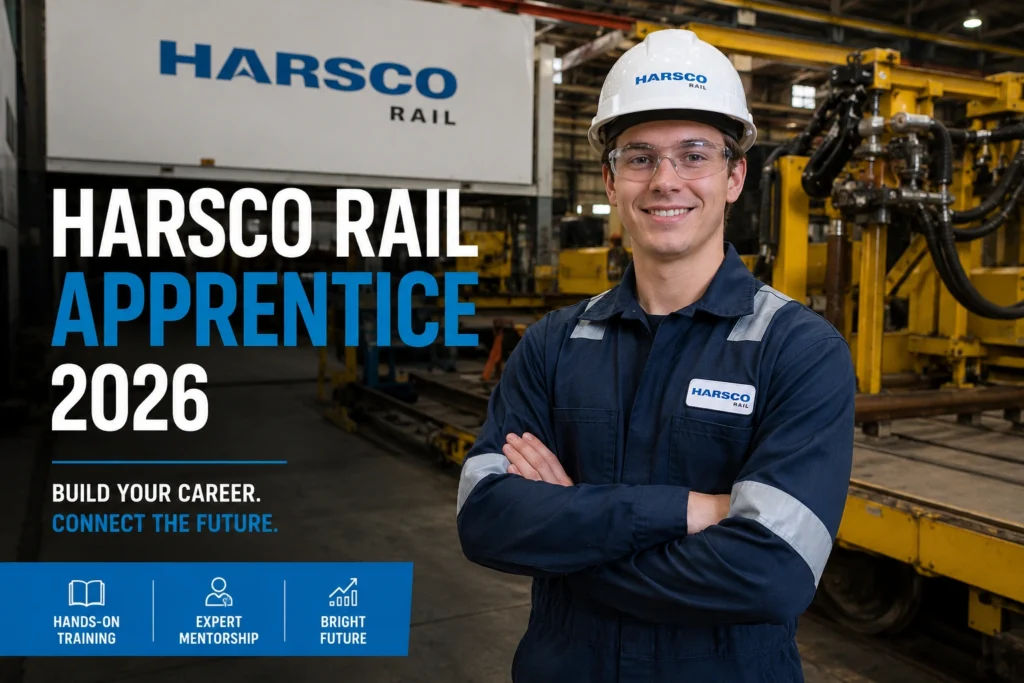
Why This Matters Right Now
The significance of the Harsco Rail Apprentice 2027 opportunity extends beyond a single recruitment program.
It highlights several broader workforce trends shaping the future of infrastructure industries.
The first is the growing recognition that technical careers remain essential despite rapid technological change.
Automation and digital systems continue expanding, but skilled workers are still needed to operate, maintain, inspect, and improve critical infrastructure.
The second trend is the increasing importance of apprenticeships as alternatives to conventional career pathways.
Many employers now prioritize practical capability alongside formal qualifications.
The third trend involves sustainability and transportation policy.
As rail networks play larger roles in national transportation strategies, demand for maintenance specialists and operational experts is likely to remain strong.
Viewed through this wider lens, the apprenticeship represents more than an entry-level position.
It reflects ongoing changes in how infrastructure industries recruit and develop talent.
APPLY HERE: Harsco Rail Apprentice 2026
ALSO APPLY FOR: Weir Minerals Mechanical Fitter Apprentice 2026
The Skills Candidates Will Gain
One reason apprenticeships remain valuable is the transferability of the skills they develop.
Participants in the Harsco Rail Apprentice 2026 program are likely to gain experience in areas such as:
- Mechanical maintenance
- Equipment diagnostics
- Technical problem solving
- Operational planning
- Safety compliance
- Team communication
- Documentation systems
- Digital workplace tools
- Route and logistics management
Many of these capabilities are relevant across engineering, transportation, manufacturing, and industrial sectors.
That versatility can support long-term career development beyond the apprenticeship itself.
Career Progression Potential
The stated objective of the program is to help apprentices achieve full Driver, Operator, and Maintainer status.
Reaching that level creates a foundation for future progression.
Within rail operations, experienced personnel may eventually move into areas such as:
- Senior machine operations
- Technical specialist roles
- Maintenance supervision
- Driver standards functions
- Operational management
- Training and competency assessment
- Engineering support services
Career advancement naturally depends on performance, qualifications, and business needs.
However, structured apprenticeships often provide clearer progression pathways than many entry-level positions.
That is one reason they continue attracting strong interest from ambitious candidates.
The Human Side of the Role
Beyond machinery and technical systems, the apprenticeship also emphasizes interpersonal qualities.
The role description highlights communication, reliability, adaptability, teamwork, and professionalism.
These attributes are increasingly important in modern infrastructure projects, where collaboration between contractors, customers, operations teams, and maintenance personnel is essential.
Successful railway professionals often combine technical competence with strong relationship-building skills.
The apprenticeship appears designed to develop both dimensions simultaneously.
This balanced approach reflects a growing understanding that technical expertise alone is not enough for long-term success.
What Could Happen Next
Looking ahead, several outcomes seem possible.
If infrastructure investment remains strong, demand for skilled railway maintenance professionals could continue rising over the coming years.
That would increase the value of apprenticeship programs that produce qualified operators and maintainers.
We may also see greater integration of digital technologies into maintenance operations, requiring future apprentices to develop stronger data analysis and software skills alongside traditional mechanical expertise.
Another possibility is the expansion of apprenticeship-based recruitment across transportation sectors as employers seek practical solutions to workforce shortages.
For Harsco Rail specifically, successful apprenticeship programs could strengthen talent pipelines while supporting operational growth in key markets.
For participants, the program could serve as a gateway into a specialized industry that many people overlook despite its critical role in modern transportation networks.
Final Thoughts
The Harsco Rail Apprentice 2026 opportunity stands out because it sits at the intersection of several important trends: infrastructure investment, skills development, workforce renewal, and technological modernization.
Rather than offering a conventional entry-level position, the program aims to build a complete operational and maintenance skill set through structured learning and practical experience.
For individuals interested in engineering, heavy equipment, railway operations, or technical careers, the apprenticeship offers insight into a sector that remains fundamental to economic growth and transportation efficiency.
As rail networks continue evolving, opportunities that combine hands-on learning with long-term career development are likely to remain highly relevant.
That helps explain why the Harsco Rail Apprentice 2026 program is attracting attention—not simply as a job opening, but as a reflection of where the future of railway workforce development may be heading.