

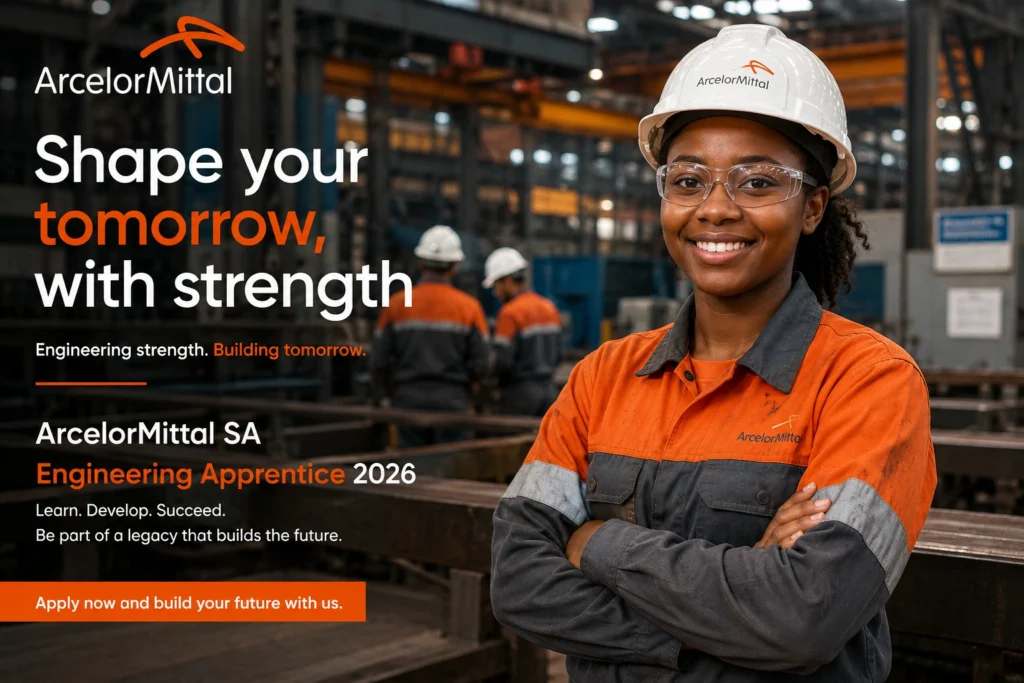
For many young South Africans, 2026 is already shaping up to be another difficult year in the job market. Graduate unemployment remains high, technical training opportunities are limited, and competition for artisan programmes continues to intensify across the country. That is exactly why the ArcelorMittal SA Engineering Apprentice 2026 programme is suddenly attracting major attention online.
The latest apprenticeship intake from ArcelorMittal South Africa is not just another training opportunity. For many applicants, it represents something far more important: a realistic pathway into stable industrial employment at a time when technical skills are becoming increasingly valuable again in South Africa’s economy.
Across social media, student forums, and career groups, young people are discussing artisan careers with renewed urgency. Trades such as welding, fitting, electrical work, and millwright engineering are no longer viewed only as “backup options.” Instead, they are increasingly being seen as practical, future-focused careers that offer genuine long-term earning potential.
And that shift in perception helps explain why this apprenticeship programme is generating so much interest right now.
A Growing Shift Back Toward Technical Careers
For years, South Africa’s education conversation heavily emphasized university degrees as the primary route to success. But economic realities have started reshaping that narrative.
Industries tied to manufacturing, infrastructure, mining, logistics, and energy still depend heavily on qualified artisans. Yet many companies continue reporting shortages of technically skilled workers. At the same time, thousands of graduates with general qualifications are struggling to secure employment.
That gap has pushed more young people toward engineering trades and practical workplace learning programmes.
The ArcelorMittal SA Engineering Apprentice 2026 intake arrives during this broader shift. Apprenticeships are increasingly viewed as one of the few opportunities where learners can gain:
- Structured training
- Workplace exposure
- Industry-recognized skills
- Technical mentorship
- Potential long-term employability
For many school leavers and N2 students, this matters more than ever.
Why ArcelorMittal Still Carries Weight in South Africa’s Industrial Sector
Despite ongoing economic pressures in the steel industry, ArcelorMittal South Africa remains one of the country’s most recognizable industrial employers.
The company’s operations continue playing a major role in steel production, manufacturing support, infrastructure supply chains, and industrial development. Its facilities have long been associated with artisan training and heavy engineering expertise.
That reputation gives apprenticeship opportunities additional credibility.
When applicants see programmes linked to large industrial employers, many view them as more valuable than smaller private training initiatives. The reason is simple: exposure to large-scale industrial systems often provides broader technical experience and stronger workplace discipline.
The Vanderbijlpark operation in particular has become closely associated with engineering training culture over the years.
Why Vanderbijlpark Remains Important
The apprenticeship programme will take place in Vanderbijlpark, one of South Africa’s best-known industrial hubs.
For decades, the region has been tied to steel manufacturing, engineering operations, and heavy industrial activity. While parts of the local economy have faced challenges over the years, Vanderbijlpark still remains an important technical and manufacturing center.
That environment matters for apprentices.
Unlike purely classroom-based programmes, industrial apprenticeships expose learners to real production systems, maintenance operations, safety standards, and engineering problem-solving under working conditions. This practical exposure often becomes one of the most valuable aspects of artisan development.
For many young applicants, the location itself signals authenticity and serious technical training.
The Trades Generating the Most Interest
The programme includes several artisan pathways that remain highly relevant in South Africa’s industrial economy:
- Boilermaker
- Welder
- Fitter
- Millwright
- Electrical
Each trade serves a different role within engineering and manufacturing environments, but all remain connected to sectors where technical skills are still consistently needed.
Millwright Training Is Drawing Particular Attention
Among the listed trades, millwright apprenticeships continue attracting especially strong interest nationwide.
That is partly because millwrights combine both mechanical and electrical expertise. In modern industrial environments where automation and production systems are becoming more advanced, this combination of skills can create wider career flexibility.
Many young applicants now see millwright training as one of the most adaptable artisan careers available.
Welding and Boilermaking Continue Holding Strong Value
Welding and boilermaking also remain highly respected trades, especially within mining, infrastructure, manufacturing, and plant maintenance industries.
Even during periods of economic slowdown, companies still require maintenance, fabrication, repairs, and structural work. That ongoing demand helps preserve the long-term relevance of these trades.
The Bigger Story Behind Youth Interest in Apprenticeships
The excitement surrounding the ArcelorMittal SA Engineering Apprentice 2026 programme reflects something bigger than a single application opportunity.
It reflects frustration.
Many young South Africans feel trapped between expensive education systems and shrinking employment opportunities. Apprenticeships offer an alternative route that feels more practical and skills-focused.
There is also growing awareness that artisan careers can eventually lead to:
- Specialized contracting work
- Supervisory positions
- Industrial maintenance careers
- Mining sector opportunities
- Entrepreneurship within technical services
That broader career potential is changing how young people think about engineering trades.
In previous years, artisan work was sometimes unfairly viewed as less prestigious than office-based careers. But rising unemployment and shifting economic realities have challenged that mindset.
Today, many families see technical skills as one of the more stable career directions available.
Minimum Requirements Keep the Programme Accessible
One reason the programme is attracting significant interest is that the minimum requirements are relatively accessible compared to many graduate programmes.
Applicants need:
- Grade 12 or N2 qualification
- Engineering-related subjects
- Willingness to complete apprenticeship training
This opens opportunities for both school leavers and technical college students.
Importantly, programmes like this can help bridge the gap between theoretical education and actual industrial employment. Many students complete technical studies but struggle to gain workplace exposure afterward.
Apprenticeships help address that challenge directly.
Why This Matters Right Now
South Africa’s unemployment crisis has made practical skills development more urgent than ever.
The conversation around employment is slowly shifting away from qualifications alone toward employability, workplace readiness, and technical capability. Employers increasingly want workers who can operate machinery, maintain systems, solve engineering problems, and adapt within industrial environments.
That is why apprenticeship programmes are becoming more important again.
The ArcelorMittal SA Engineering Apprentice 2026 programme arrives during a period where:
- Youth unemployment remains critically high
- Infrastructure and industrial sectors still need artisans
- Technical colleges are under pressure to improve graduate outcomes
- Companies face aging artisan workforces
- Skills shortages continue in engineering trades
There is also growing national discussion around rebuilding manufacturing capacity and industrial competitiveness. None of that can happen without skilled technical workers.
In that context, artisan training becomes more than individual career development. It becomes part of a broader economic conversation.
Public Reaction Online Has Been Strong
Career-focused social media pages and student communities have reacted positively to the apprenticeship announcement.
A common theme appearing in discussions is urgency.
Many applicants are encouraging others to apply early because engineering apprenticeship programmes often receive extremely high application volumes. Others are sharing advice about CV preparation, certified documents, and interview readiness.
There is also visible excitement among TVET students, particularly those studying electrical and mechanical engineering fields. Many see programmes like this as one of the few realistic ways to enter large industrial environments.
At the same time, some online discussions also reflect broader anxieties about competition.
With unemployment levels remaining high, even entry-level opportunities can attract thousands of applications. That pressure has created growing concern among young people about standing out during recruitment processes.
APPLY HERE: ArcelorMittal SA Engineering Apprentice 2026
ALSO APPLY FOR: Motus Daimler Trucks Apprentice Level Year 3
Safety, Discipline, and Industrial Culture Still Matter
One aspect sometimes overlooked in apprenticeship discussions is the demanding nature of industrial work itself.
Engineering apprenticeships are not only about technical ability. They also require:
- Consistency
- Workplace discipline
- Physical endurance
- Safety awareness
- Team coordination
- Attention to detail
Industrial environments can be highly structured and safety-focused. Apprentices are expected to follow procedures carefully and adapt to operational standards quickly.
This is why many employers prioritize attitude and willingness to learn alongside academic qualifications.
The Importance of Workplace Exposure
A major advantage of programmes like this is exposure to real industrial operations.
Classroom learning alone often cannot fully prepare learners for engineering environments. Apprenticeships allow candidates to see how systems operate in practice, how maintenance teams function, and how industrial problem-solving works under real conditions.
That exposure becomes valuable even beyond the apprenticeship itself.
Candidates who complete structured workplace training often become more competitive for future employment opportunities because they already understand industrial expectations and workflows.
What Could Happen Next
The strong interest surrounding the ArcelorMittal SA Engineering Apprentice 2026 programme may signal a wider revival of interest in artisan careers across South Africa.
If more large employers continue investing in technical training, several developments could follow:
Increased Demand for TVET Pathways
Technical and vocational education may continue gaining credibility as families and students prioritize employability-focused education.
More Competition for Apprenticeships
As awareness grows, apprenticeship programmes could become even more competitive in future years.
Greater Industry Focus on Skills Development
Companies facing artisan shortages may expand training pipelines to secure future technical talent.
Renewed Interest in Manufacturing Careers
Younger generations may begin viewing industrial and engineering careers differently as stable technical professions regain visibility.
However, challenges remain.
South Africa still needs significantly more apprenticeship opportunities overall. Many qualified students continue struggling to secure workplace placements after completing technical studies.
That means programmes like this remain valuable precisely because they are still relatively limited.
Application Advice for Candidates
Applicants interested in the programme should focus on preparation rather than rushing submissions at the last minute.
Strong applications typically include:
- A clear, professional CV
- Properly certified documents
- Accurate academic information
- Well-organized paperwork
- Evidence of technical interest
Candidates should also pay close attention to communication during any assessment or interview stages. Employers often evaluate professionalism, attitude, and willingness to learn alongside technical potential.
The closing date is listed as 28 June 2026, and late applications may not be considered.
Final Thoughts
The conversation surrounding the ArcelorMittal SA Engineering Apprentice 2026 programme reflects something deeper happening within South Africa’s employment landscape.
Young people are increasingly searching for career paths connected to practical skills, industrial relevance, and real workplace opportunities. Apprenticeships offer one of the clearest examples of that shift.
While competition will likely be intense, the programme still represents a meaningful opportunity for candidates serious about engineering and artisan development.
For many applicants, this is not simply about getting training.
It is about finding a foothold in an economy where technical capability, adaptability, and practical experience may matter more than ever.
And as South Africa continues debating jobs, industrial growth, and youth unemployment, programmes like this are likely to remain closely watched.