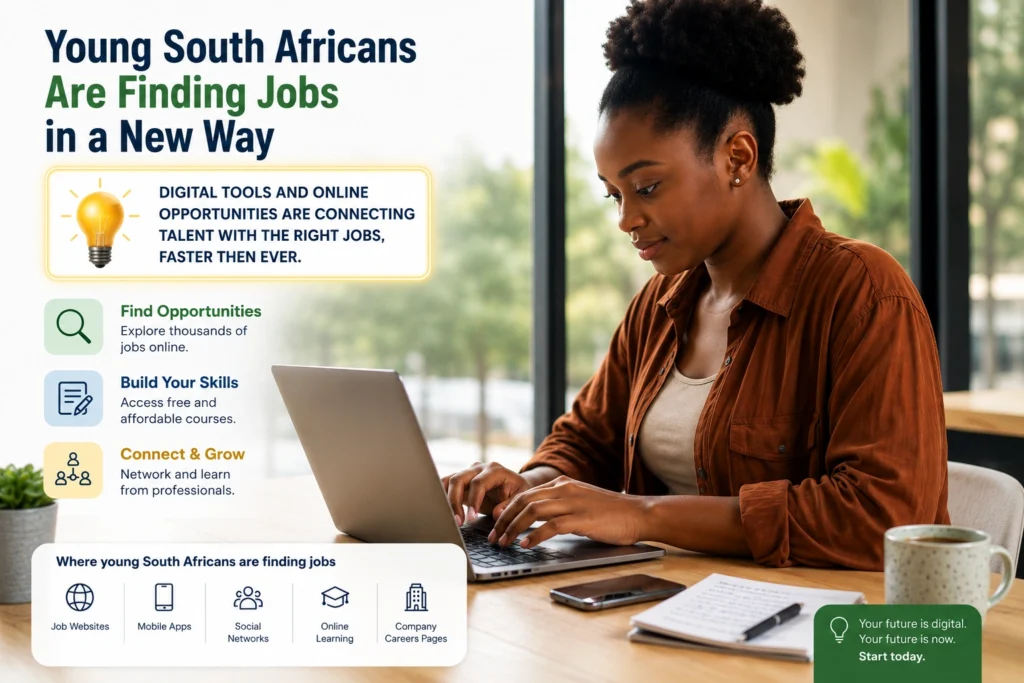

Finding work has become one of the biggest challenges facing young people in South Africa. Thousands of graduates, matriculants, and job seekers apply for positions every day, yet many never receive a response. Traditional methods like printing CVs, walking into businesses, or applying through overcrowded job portals are no longer enough on their own.
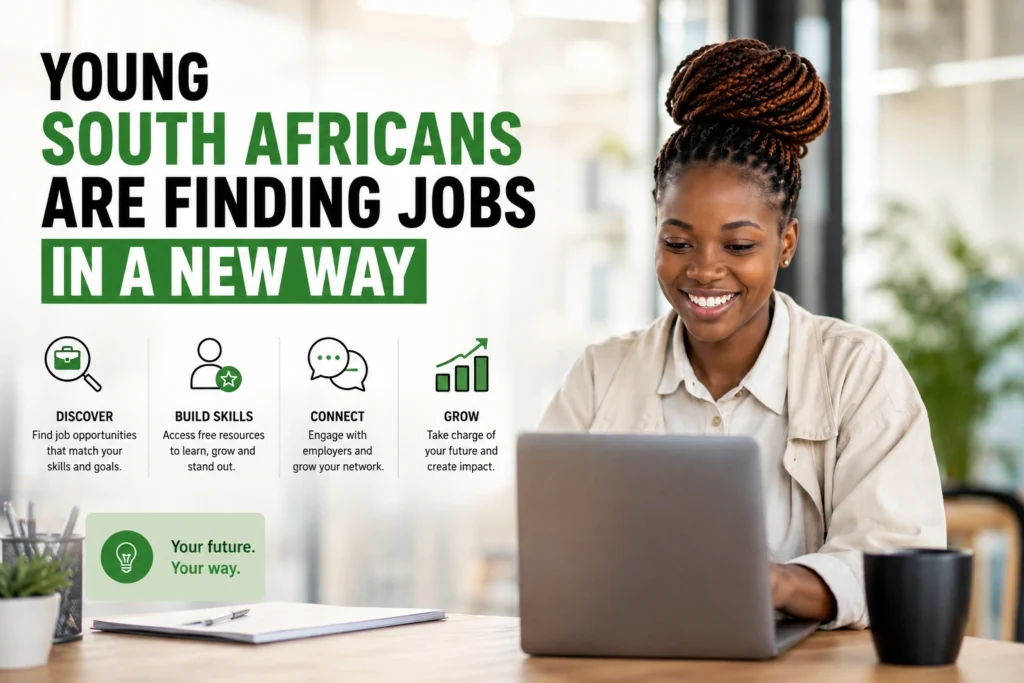
At the same time, employers are changing how they recruit. Companies increasingly search for candidates online, use digital hiring platforms, prefer skills-based hiring, and recruit through internships, learnerships, and networking communities. This shift means Young South Africans Are Finding Jobs in a New Way, often by combining technology, practical skills, and personal branding rather than relying only on formal qualifications.
For many young people, this new approach feels confusing at first. Some do not know where to start. Others waste time on fake vacancies, outdated application methods, or social media advice that does not lead anywhere. But those who understand the new job-search landscape are improving their chances significantly.
This guide explains how Young South Africans Are Finding Jobs in a New Way, why these changes matter, and what practical steps job seekers can take immediately to improve their opportunities.
Understanding How Young South Africans Are Finding Jobs in a New Way
The employment market has changed rapidly over the last few years. Several major trends are shaping how young people now access opportunities:
- Digital recruitment platforms are replacing paper applications.
- Employers increasingly value practical skills and work readiness.
- Learnerships and internships have become key entry points.
- Social media platforms are being used for recruitment.
- Networking has become more important than many people realize.
- Remote work and freelance opportunities are growing.
- Short online courses help candidates stand out quickly.
This means that job seekers who adapt to these changes often move ahead faster than those using only traditional methods.
For example, a candidate with a strong LinkedIn profile, basic digital skills, and active networking habits may receive more interview opportunities than someone with only a qualification but no online presence.
The modern job market rewards visibility, adaptability, and practical ability.
ALSO APPLY FOR: SkyNet Learnerships 2026
ALSO APPLY FOR: St Stithians College Internships 2026
Why This Issue Matters
South Africa continues to face extremely high youth unemployment levels. Many young people remain unemployed for months or even years after finishing school or university. This affects not only income, but also confidence, mental well-being, independence, and long-term career growth.
When young people cannot access employment opportunities:
- Families face greater financial pressure.
- Communities experience rising economic stress.
- Skills begin to decline through long-term unemployment.
- Young adults struggle to build work experience.
- Employers complain about “experience gaps.”
But the way young people search for work is evolving. More candidates are discovering opportunities through digital platforms, skills programmes, entrepreneurship, and professional networks rather than relying entirely on newspaper advertisements or walk-in applications.
This shift matters because it opens new pathways for people who previously felt excluded from the formal job market.
A person living in a township, rural area, or small town can now apply for remote opportunities, attend online training, build a digital portfolio, or connect directly with recruiters online.
The barriers are still real, especially around internet access and affordability, but the hiring landscape is broader than before.
The Biggest Changes in Modern Job Searching
1. Employers Are Hiring Through Social Media
Many companies now advertise vacancies on platforms like LinkedIn, Facebook, and even WhatsApp groups before posting them elsewhere.
Recruiters often search for candidates directly online. This means your digital presence matters more than ever.
Young job seekers are using social media to:
- Follow employers
- Join career groups
- Learn about vacancies quickly
- Network with professionals
- Showcase skills and projects
LinkedIn, in particular, has become an important platform for graduates and professionals.
2. Skills Are Becoming More Important
While qualifications still matter, many employers now focus heavily on practical abilities.
Candidates who can demonstrate skills in areas like:
- Customer service
- Data capturing
- Coding
- Digital marketing
- Graphic design
- Administration
- Communication
- Sales
- Project coordination
often gain an advantage.
Short online courses can sometimes help candidates stand out faster than waiting years for another formal qualification.
3. Learnerships and Internships Are Opening Doors
Many companies prefer hiring candidates who already understand workplace systems.
This is why internships, apprenticeships, graduate programmes, and learnerships are becoming major entry routes into employment.
Young people are increasingly using these programmes to:
- Gain work experience
- Build references
- Learn professional communication
- Understand workplace expectations
- Improve employability
In many cases, internships lead to permanent opportunities later.
Step-by-Step Guide: How to Adapt to the New Job Market
Step 1: Build a Professional Online Presence
One of the clearest signs that Young South Africans Are Finding Jobs in a New Way is the rise of online professional branding.
Start with these basics:
Create a LinkedIn Profile
Include:
- Professional photo
- Clear headline
- Skills section
- Educational background
- Volunteer experience
- Short personal summary
Even if you lack work experience, a strong profile helps recruiters discover you.
Clean Up Public Social Media
Employers often review public profiles. Remove inappropriate posts or content that may appear unprofessional.
Use a Professional Email Address
Avoid email names that appear informal or childish.
Good example:
Poor example:
Step 2: Focus on Skills That Employers Need
Many young people apply for hundreds of jobs without improving their employability.
Instead, identify practical skills that are in demand.
Popular entry-level skills include:
- Microsoft Office
- Excel
- Customer service
- Social media management
- Basic bookkeeping
- Digital communication
- Data analysis
- Graphic design
- Coding basics
Free and affordable courses are available online through many platforms.
Even completing one strong short course can strengthen your CV significantly.
Step 3: Apply Smarter, Not Just More
A major mistake many job seekers make is sending the same CV everywhere.
Modern employers expect targeted applications.
Customize Your CV
Adjust your CV for each role by highlighting relevant experience and skills.
Use Keywords
Many companies use automated systems to scan CVs. Include words from the job description naturally.
Write Better Cover Letters
Keep them concise and focused on:
- Why you fit the role
- Relevant skills
- What value you can offer
Step 4: Use Multiple Job Search Channels
Do not rely on one platform only.
Successful candidates often combine:
- Job websites
- Recruitment agencies
- WhatsApp vacancy groups
- Career fairs
- University career offices
- Company websites
- Networking events
Some opportunities are never publicly advertised.
Networking can uncover hidden vacancies before they become competitive.
Step 5: Treat Networking as a Real Skill
Many people think networking means “knowing important people.” In reality, it means building professional relationships over time.
Simple networking actions include:
- Attending industry events
- Asking professionals for advice
- Connecting respectfully online
- Participating in career webinars
- Joining professional groups
Networking works because employers often prefer trusted recommendations.
Step 6: Consider Freelancing and Side Income Opportunities
Not every young person will enter traditional full-time employment immediately.
Some are building income through:
- Freelance design
- Tutoring
- Content creation
- Photography
- Social media services
- Online assistance
- Delivery services
- Small businesses
These opportunities can build experience, confidence, and income while searching for permanent work.
ALSO READ ABOUT: Feeling Left Behind? Start With These Opportunities
Best Practices Experts Recommend
Career advisors and recruiters consistently recommend several habits that improve job-search success.
Stay Consistent
Job searching often takes time. Consistency matters more than occasional bursts of applications.
Create a weekly routine for:
- Searching vacancies
- Updating applications
- Networking
- Learning new skills
Keep Learning Continuously
The workplace changes rapidly.
Candidates who regularly improve their skills stay competitive.
Even one short course every few months can make a difference.
Track Applications Carefully
Use a spreadsheet or notebook to record:
- Company name
- Position
- Application date
- Follow-up status
This helps you stay organized and avoid confusion.
Prepare for Interviews Early
Do not wait until you receive an interview invitation.
Practice:
- Common interview questions
- Professional communication
- Online interview etiquette
- Workplace scenarios
Confidence improves with preparation.
Build Experience Anywhere Possible
Volunteer work, community projects, internships, and side jobs all build valuable experience.
Employers often value reliability and initiative as much as technical skills.
Mistakes People Often Make
Applying Without Reading Requirements
Many candidates apply for jobs they do not qualify for, wasting time and energy.
Focus on realistic opportunities that match your current skills.
Ignoring Learnerships and Entry-Level Roles
Some job seekers overlook internships or learnerships because the salaries are lower.
But these opportunities often provide the experience employers want.
Using Poorly Written CVs
Spelling mistakes, bad formatting, and outdated information reduce credibility immediately.
A clean, professional CV matters.
Falling for Job Scams
Unfortunately, fake vacancies are common.
Warning signs include:
- Requests for payment
- Unrealistic salaries
- No official company information
- Suspicious communication
Never pay money for guaranteed jobs.
Giving Up Too Quickly
Many successful candidates faced months of rejection before finding opportunities.
Persistence remains essential.
How Technology Is Reshaping Opportunities
Technology is one of the biggest reasons Young South Africans Are Finding Jobs in a New Way.
Digital platforms have changed how people:
- Learn skills
- Connect with employers
- Build portfolios
- Attend interviews
- Earn income
Remote work has also expanded access to international opportunities in fields like:
- Customer support
- Software development
- Digital marketing
- Writing
- Virtual assistance
- Design
While competition is global, technology also gives young people more ways to prove their abilities.
The Role of Soft Skills in Modern Hiring
Many candidates focus only on qualifications, but employers increasingly value soft skills.
Important soft skills include:
- Communication
- Time management
- Problem-solving
- Teamwork
- Adaptability
- Professionalism
- Emotional intelligence
A technically skilled candidate who cannot communicate well may struggle during interviews or in the workplace.
Soft skills often determine long-term career growth.
FAQ
1. Do I need a university degree to find work today?
Not always. Many industries now prioritize practical skills, experience, certifications, and work readiness alongside formal education.
2. Is LinkedIn really useful for South African job seekers?
Yes. Many recruiters actively search LinkedIn for candidates, especially for internships, graduate roles, and professional positions.
3. Are online courses worth it?
They can be very valuable when they teach relevant, practical skills employers need. Courses work best when combined with real projects or experience.
4. How can I avoid fake job advertisements?
Research companies carefully, avoid paying fees, and apply through trusted platforms or official company websites whenever possible.
Final Thoughts: Adapting Is Now Part of Career Growth
The employment market is changing quickly, and Young South Africans Are Finding Jobs in a New Way by adapting to digital recruitment, practical skills development, networking, and flexible career paths.
Traditional job searching alone is no longer enough for many people. Candidates who build online visibility, improve their skills continuously, and use multiple job-search strategies are placing themselves in a stronger position.
This does not mean the process becomes easy overnight. Competition remains intense, and unemployment is still a serious national challenge. But understanding how employers now recruit can improve your chances significantly.
Start with practical steps:
- Improve your CV
- Create a professional LinkedIn profile
- Learn one valuable skill
- Apply strategically
- Build professional connections
- Stay consistent even during setbacks
Small improvements made consistently over time often lead to opportunities that once felt unreachable.
ALSO APPLY FOR: SkyNet Learnerships 2026
ALSO APPLY FOR: St Stithians College Internships 2026
ALSO READ ABOUT: Feeling Left Behind? Start With These Opportunities