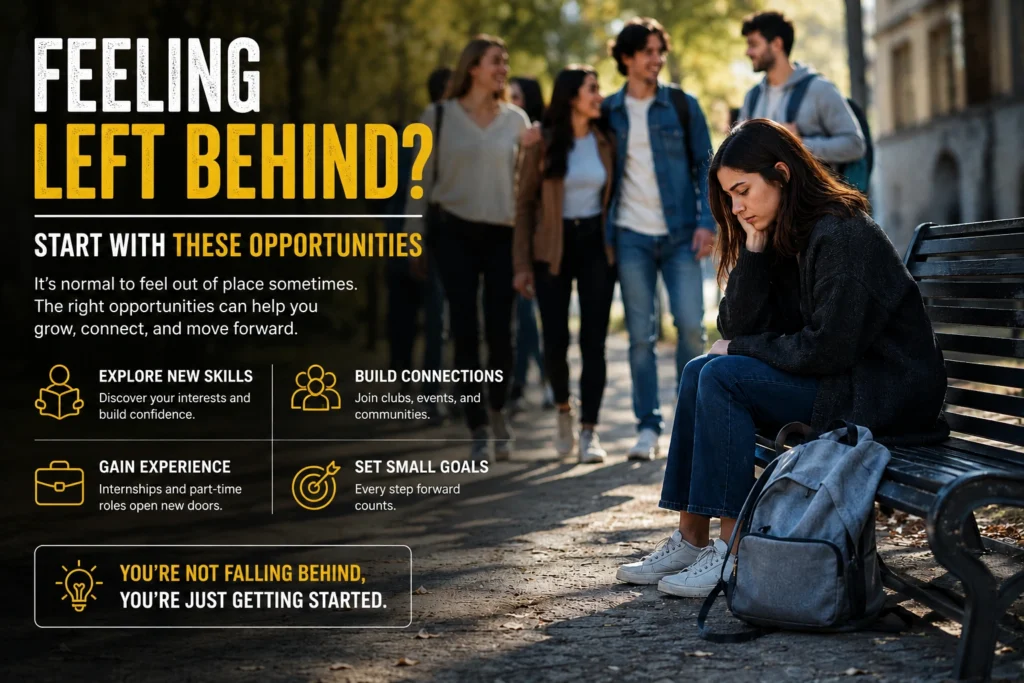

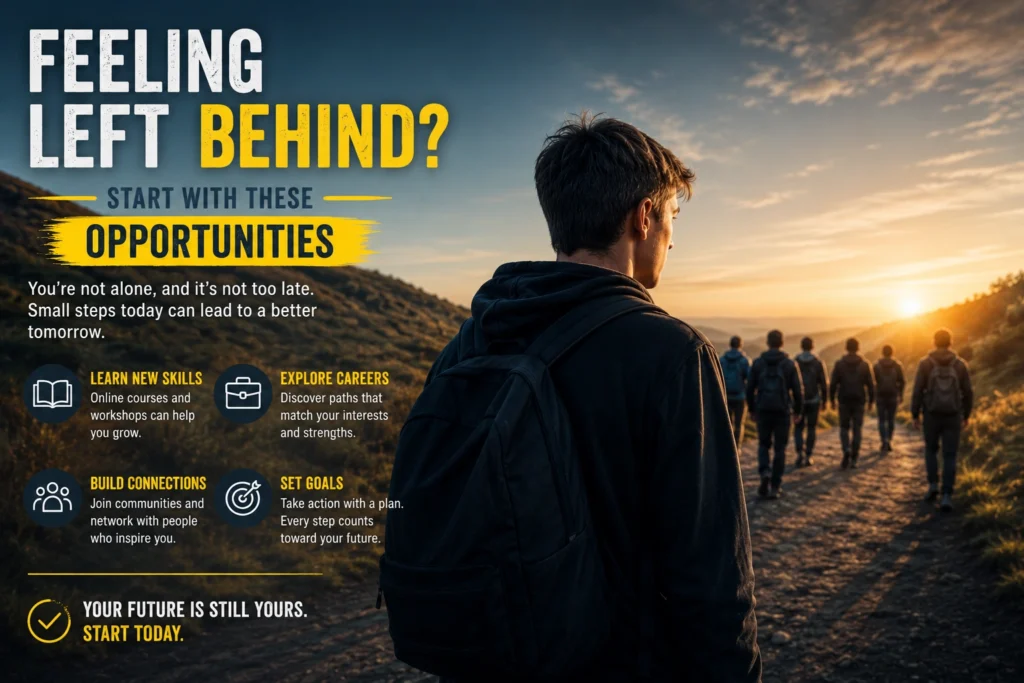
There are moments when it feels like everyone else is moving forward while you remain stuck in the same place. Friends are getting jobs, classmates are graduating, colleagues are building careers, and social media constantly reminds people of what they have not achieved yet. For many young adults and even working professionals, this feeling can become overwhelming.
The truth is that millions of people experience the same struggle. Rising unemployment, limited work experience, economic pressure, skill gaps, and uncertainty about the future make it difficult to know where to begin. Many people are not lazy or unmotivated — they simply do not know which opportunities are realistic, accessible, and worth pursuing.
That is why “Feeling Left Behind? Start With These Opportunities” is more than just motivational advice. It is about practical steps that can help people rebuild confidence, gain experience, and create momentum again.
Whether you are unemployed, recently graduated, changing careers, or simply unsure about your next move, there are opportunities available right now that can help you move forward one step at a time.
Understanding Why People Feel Left Behind
Before looking at solutions, it is important to understand the problem clearly.
People often feel left behind because they compare their progress to others. This comparison becomes worse when opportunities seem unequal. Some people have financial support, connections, or access to better education. Others must build everything from scratch.
Common reasons people feel stuck include:
- Lack of work experience
- Repeated job rejection
- Financial stress
- Fear of failure
- Limited professional networks
- Uncertainty about career direction
- Gaps in education or training
- Pressure from family or society
The important thing to remember is that feeling behind does not mean your future is finished. Progress is rarely linear. Many successful people experienced long periods of uncertainty before finding the right opportunity.
The key is not trying to fix everything overnight. The key is starting somewhere practical.
ALSO APPLY FOR: UNFPA Internship 2026
ALSO APPLY FOR: Rio Tinto 2026 Artisan Learnership
Why This Issue Matters
Feeling stuck affects more than income or employment status. It impacts mental health, confidence, motivation, and long-term career growth.
When people remain inactive for long periods, they may begin doubting their abilities entirely. This can lead to isolation, anxiety, and missed opportunities simply because they stop applying or trying.
On a larger scale, unemployment and underemployment affect families and communities. Young people without opportunities often struggle financially for years, delaying important life milestones such as independent living, further education, or supporting relatives.
That is why small opportunities matter more than many people realize.
A learnership, internship, online course, volunteer programme, or entry-level job may not seem life-changing at first. But these experiences help people:
- Build confidence
- Gain practical skills
- Create professional networks
- Improve CVs
- Learn workplace communication
- Earn references
- Discover career interests
- Open doors to future opportunities
Momentum matters. One opportunity often leads to another.
Feeling Left Behind? Start With These Opportunities
If you feel uncertain about your future, these are some of the most practical starting points available today.
1. Learnerships and Apprenticeships
Learnerships are among the best opportunities for people with limited work experience. They combine training with practical workplace exposure and often provide monthly stipends.
Apprenticeships are especially valuable for technical careers such as:
- Electrical work
- Plumbing
- Diesel mechanics
- Welding
- Fitting and turning
- Automotive repair
These programmes help people develop real-world skills while earning recognized qualifications.
Why they matter:
- Employers value practical experience
- Skilled trades remain in demand
- Many programmes lead to permanent employment
- You earn while learning
If you are unsure where to start, focus on industries with skills shortages, including engineering, logistics, renewable energy, healthcare support, and technology.
2. Internships for Graduates and First-Time Job Seekers
Internships help bridge the gap between education and employment. Many employers prefer candidates who understand workplace systems, communication, and professional expectations.
Internships are available in areas such as:
- Administration
- Finance
- Human resources
- Marketing
- Information technology
- Public relations
- Supply chain management
- Data analysis
Even short-term internships can improve your employability significantly.
Practical tip:
Do not only apply to large companies. Smaller organizations often provide broader hands-on experience because interns assist with multiple responsibilities.
3. Online Skills Courses
Digital learning has made career development more accessible than ever before.
You can now learn valuable skills from home, including:
- Graphic design
- Coding
- Data analytics
- Digital marketing
- Copywriting
- Customer support
- Video editing
- Social media management
- Artificial intelligence tools
- Project management
Many platforms offer free or affordable certifications.
The advantage of online learning is flexibility. You can build skills while job searching or working part-time.
Focus on skills that solve real business problems. Employers increasingly value practical ability over formal qualifications alone.
4. Remote Work Opportunities
Remote work has expanded rapidly across many industries. Companies now hire freelancers, virtual assistants, writers, designers, and customer support agents from different countries.
Remote opportunities may include:
- Freelance writing
- Virtual assistance
- Online tutoring
- Transcription
- Graphic design
- Social media moderation
- Customer support
- Data entry
While remote work requires discipline, it can provide income and experience even when local job markets are difficult.
Start by building a simple portfolio showing examples of your work or skills.
5. Volunteer Work and Community Projects
Many people underestimate the value of volunteering.
Volunteer experience can strengthen your CV, especially when you lack formal employment history. It also helps develop soft skills such as teamwork, leadership, communication, and problem-solving.
Examples include:
- Assisting local NGOs
- Community tutoring
- Youth mentorship
- Event coordination
- Administrative support
- Social media management for charities
Volunteer work often creates networking opportunities that lead to paid roles later.
6. Entrepreneurship and Side Hustles
Not everyone needs to wait for a traditional job.
Small businesses and side hustles can become powerful income sources over time. Many successful entrepreneurs started with limited resources.
Examples include:
- Selling products online
- Tutoring students
- Freelance services
- Mobile car washing
- Baking
- Photography
- Social media services
- Phone repairs
- Clothing resale
Start small. The goal is not instant wealth but consistent progress and learning.
ALSO READ ABOUT: Remote Jobs: A Practical Guide to Finding Legitimate Online Work and Building a Stable Career
Step-by-Step Strategy to Move Forward
Feeling overwhelmed often comes from trying to solve everything at once. Instead, follow a structured approach.
Step 1: Assess Your Current Situation
Write down:
- Your education level
- Existing skills
- Interests
- Available resources
- Financial needs
- Access to internet or transport
This helps identify realistic next steps.
Step 2: Choose One Focus Area
Avoid applying for every opportunity randomly.
Pick one main direction first:
- Technical skills
- Office administration
- Remote work
- Healthcare support
- Digital careers
- Entrepreneurship
Focused effort usually produces better results.
Step 3: Improve Your CV
Your CV should:
- Be clear and easy to read
- Highlight skills, not only qualifications
- Include volunteer work and projects
- Mention certifications and short courses
Tailor your CV for each opportunity instead of sending the same version everywhere.
Step 4: Apply Consistently
Many people quit too early after rejection.
Set weekly goals:
- Number of applications
- Networking messages
- Skills lessons completed
- Companies researched
Consistency matters more than occasional motivation.
Step 5: Build a Professional Online Presence
Employers increasingly search online before hiring.
Create or improve:
- LinkedIn profile
- Professional email address
- Basic portfolio
- Online project examples
Even simple online visibility can improve opportunities.
Step 6: Keep Learning While Waiting
Do not pause growth while job searching.
Continue:
- Practicing skills
- Completing certifications
- Networking
- Reading industry trends
- Improving communication abilities
Small improvements compound over time.
Best Practices Experts Recommend
Career experts and recruiters often recommend these strategies for long-term success.
Focus on Transferable Skills
Skills such as communication, adaptability, teamwork, and time management are valuable across industries.
Even informal experiences can demonstrate these abilities.
Network Before You Need Help
Networking is not only for experienced professionals.
Connect with:
- Former classmates
- Lecturers
- Recruiters
- Industry groups
- Internship coordinators
- Community leaders
Many opportunities come through relationships rather than public advertisements.
Apply Even If You Do Not Meet Every Requirement
Many applicants avoid opportunities because they lack one or two requirements.
Employers often prioritize attitude, willingness to learn, and potential.
Do not disqualify yourself too early.
Build Experience Through Projects
If you lack formal work experience, create practical examples.
For example:
- Writers can publish sample articles
- Designers can create mock projects
- Coders can build simple applications
- Marketers can manage small social media pages
Practical demonstrations help employers trust your abilities.
Protect Your Mental Health
Job searching can become emotionally exhausting.
Maintain routines that support your well-being:
- Exercise regularly
- Sleep properly
- Limit unhealthy comparison
- Take breaks from social media
- Celebrate small progress
Mental resilience is essential during difficult transitions.
Mistakes People Often Make
Waiting for the “Perfect” Opportunity
Many people delay action because they want ideal jobs immediately.
Smaller opportunities often create pathways to bigger ones.
Ignoring Entry-Level Roles
Some applicants avoid internships or junior roles because the pay seems low.
However, experience often becomes more valuable than short-term income early in a career.
Applying Without Preparation
Sending rushed applications with poor CVs reduces success rates significantly.
Take time to prepare professional documents.
Depending Only on One Strategy
Relying only on online job boards can limit opportunities.
Combine:
- Networking
- Direct applications
- Social media
- Volunteer work
- Skills development
Giving Up Too Quickly
Rejection is normal.
Many successful professionals applied for dozens or even hundreds of opportunities before securing stable employment.
Persistence matters.
Frequently Asked Questions
How do I stop feeling discouraged while job searching?
Focus on progress you can control rather than outcomes you cannot. Completing applications, learning new skills, and improving your CV are all signs of progress even before employment arrives.
Are online certifications actually useful?
Yes, especially when paired with practical skills. Employers increasingly value candidates who continuously learn and adapt to changing industries.
What if I have no experience at all?
Start with internships, volunteering, freelancing, or small personal projects. Experience can be built gradually through consistent effort.
Is it too late to change careers?
No. Many people successfully change careers in their 30s, 40s, and beyond. The transition may require patience and retraining, but it is possible.
Final Thoughts: Small Steps Create Momentum
The feeling of being stuck can make the future seem hopeless, but progress often begins with small, consistent actions rather than dramatic breakthroughs.
The most important lesson behind Feeling Left Behind? Start With These Opportunities is that waiting passively rarely changes circumstances. Action does.
You do not need to have your entire future figured out today.
Start with:
- One application
- One new skill
- One internship
- One volunteer project
- One networking conversation
- One practical improvement
Momentum builds gradually.
Every career begins somewhere, and many successful people once felt uncertain, overlooked, or behind in life. What separated them was not perfection — it was persistence.
Choose one opportunity, commit to growth, and keep moving forward.
ALSO APPLY FOR: UNFPA Internship 2026
ALSO APPLY FOR: Rio Tinto 2026 Artisan Learnership
ALSO READ ABOUT: Remote Jobs: A Practical Guide to Finding Legitimate Online Work and Building a Stable Career