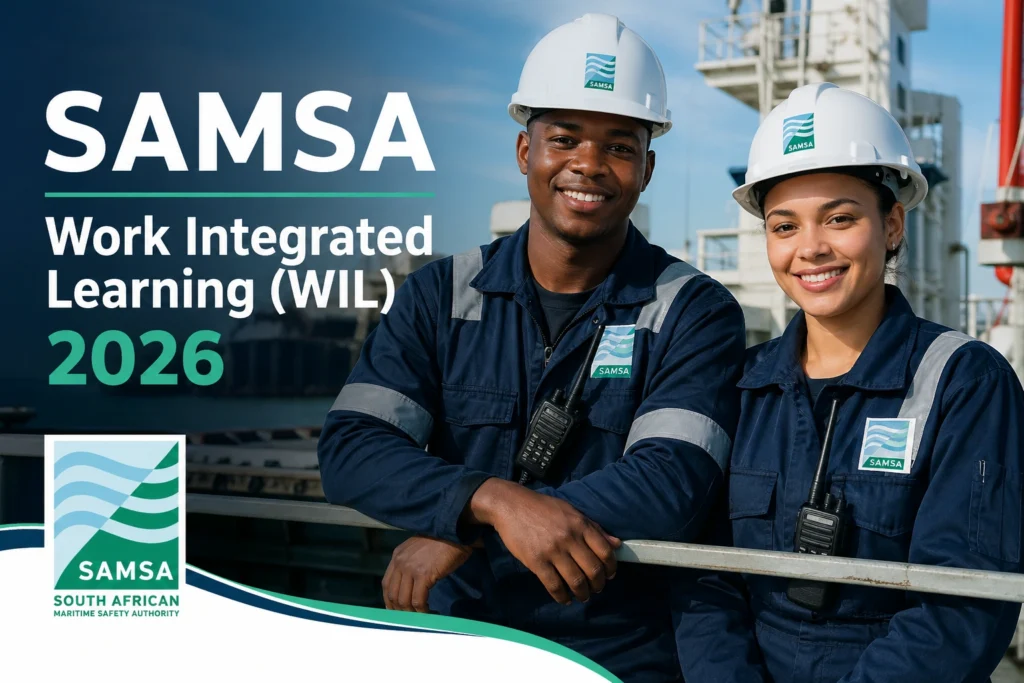

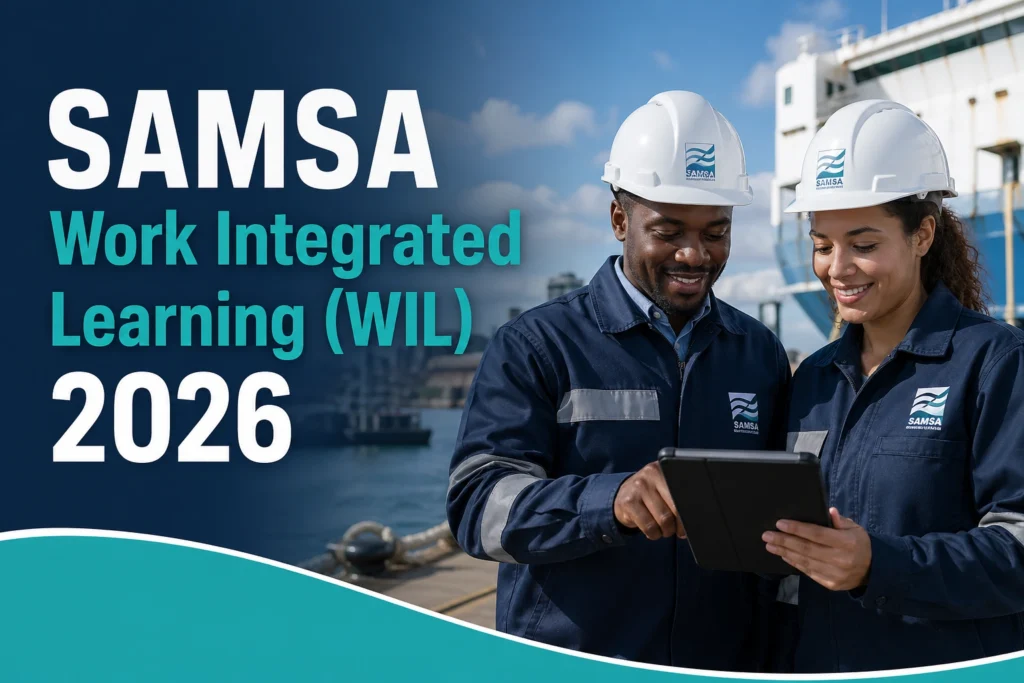
Breaking into the maritime industry can feel frustratingly out of reach—especially for young, qualified seafarers who have the theory but lack real-world experience. Many graduates sit with maritime qualifications yet struggle to meet the “experience required” barrier that employers demand. If that sounds familiar, the SAMSA Work Integrated Learning (WIL) 2026 programme could be exactly the bridge you need—but only if you understand how to position yourself effectively.
This guide unpacks everything you need to know about the programme, how it works, and—most importantly—how to improve your chances of getting selected.
What Is the SAMSA Work Integrated Learning (WIL) 2026 Programme?
The SAMSA Work Integrated Learning (WIL) 2026 programme is a 24-month structured training initiative offered by the Department of Transport in partnership with the South African Maritime Safety Authority (SAMSA).
It is designed to give unemployed seafarers hands-on, practical exposure in maritime safety, vessel inspection, and compliance monitoring.
Key programme details:
- Duration: 24 months (fixed-term training contract)
- Stipend: R10,000 per month
- Application deadline: 06 May 2026
- Primary location: Gqeberha (Port Elizabeth), with placements across coastal cities
Possible placement cities:
- Richards Bay
- Durban
- East London
- Gqeberha
- Mossel Bay
This is not just an internship—it’s a structured pathway into maritime operations, offering mentorship and real field exposure.
APPLY HERE: SAMSA Work Integrated Learning (WIL) 2026
Why This Issue Matters
South Africa’s maritime sector is growing, but access remains unequal. Many aspiring seafarers are locked out due to lack of practical training opportunities.
The SAMSA Work Integrated Learning (WIL) 2026 programme addresses a critical gap:
- It bridges education and employment
- It builds scarce maritime skills
- It creates access to industry networks
- It improves employability in both public and private sectors
Without programmes like this, many qualified candidates remain stuck in a cycle of unemployment. With it, you gain experience that employers actually recognize.
Who Should Apply?
This programme is specifically designed for early-career maritime professionals.
Minimum eligibility:
- Certificate of Proficiency (COP), Diploma in Maritime Studies, or related qualification
- Must be an unemployed seafarer or maritime graduate
- Age between 18 and 35 years
- Medically fit according to maritime standards
- Basic understanding of maritime safety regulations
Advantageous:
- BSc in Nautical Science
- Strong communication and report writing skills
- Ability to work in coastal and port environments
If you meet most of these criteria, you’re already a strong candidate—but selection is competitive.
What You’ll Actually Do in the Programme
Understanding the real day-to-day work can help you decide if this is the right path—and prepare accordingly.
Core responsibilities include:
- Assisting with small vessel inspections and surveys
- Supporting maritime compliance monitoring
- Participating in safety awareness campaigns
- Writing inspection and compliance reports
- Working under experienced mentors in operational settings
You won’t just observe—you’ll actively participate in maritime safety operations.
Step-by-Step: How to Apply Successfully
1. Prepare Your Documents Properly
You’ll need:
- A detailed, updated CV
- Certified copy of your ID
- Certified copies of qualifications
Tip: Certification should be recent (within 3 months).
APPLY HERE: SAMSA Work Integrated Learning (WIL) 2026
2. Tailor Your CV for Maritime Roles
Avoid generic CVs. Highlight:
- Sea time (if any)
- Safety training
- Technical maritime skills
- Report writing or inspection-related tasks
Use clear, practical language—not just academic descriptions.
3. Emphasize Compliance Knowledge
The programme focuses heavily on maritime safety and regulation.
Include:
- Knowledge of safety standards
- Exposure to inspections or audits
- Any coursework related to maritime law or compliance
4. Apply Before the Deadline
Late applications will not be considered. Submit well before 06 May 2026 to avoid technical issues.
5. Prepare for Assessments
Shortlisted candidates may go through:
- Psychometric testing
- Interviews
- Technical evaluations
Prepare by reviewing:
- Maritime safety basics
- Vessel inspection processes
- Communication scenarios
ALSO APPLY FOR: Motus YES Learnership 2026
Best Practices Experts Recommend
1. Show Practical Readiness
Employers prefer candidates who can adapt quickly in the field. Demonstrate:
- Problem-solving ability
- Attention to detail
- Willingness to learn
2. Highlight Real-World Exposure (Even Small Ones)
Even limited experience counts:
- Training simulations
- Practical modules
- Volunteer maritime work
3. Focus on Communication Skills
A big part of the role involves report writing and inspections. Strong communication can set you apart.
4. Be Location-Flexible
Willingness to work in any coastal city increases your chances significantly.
5. Demonstrate Professional Discipline
Maritime environments require:
- Punctuality
- Safety awareness
- Responsibility
Show this through your CV and interview responses.
APPLY HERE: SAMSA Work Integrated Learning (WIL) 2026
Mistakes People Often Make
1. Submitting Generic Applications
A one-size-fits-all CV reduces your chances. Tailor your application to maritime work.
2. Ignoring Medical Fitness Requirements
Many applicants overlook this, but it’s essential. If you’re not medically fit, you may be disqualified later.
3. Applying Without Understanding the Role
Some candidates apply without knowing what vessel inspection or compliance involves. This shows in interviews.
4. Missing the Deadline
Late submissions are automatically rejected—no exceptions.
5. Weak Documentation
Uncertified or outdated documents can disqualify your application instantly.
SAMSA Work Integrated Learning (WIL) 2026: How to Stand Out
To truly stand out in the SAMSA Work Integrated Learning (WIL) 2026 selection process:
- Position yourself as job-ready, not just qualified
- Show clear interest in maritime safety
- Demonstrate discipline and reliability
- Provide evidence of practical exposure, even if limited
Think like an employer: they’re not just selecting students—they’re selecting future maritime professionals.
Frequently Asked Questions (FAQs)
1. Does the programme guarantee a permanent job?
No. The programme provides training and experience, but does not guarantee employment after completion.
2. Can I apply without sea experience?
Yes. As long as you meet the qualification requirements, you can apply—even without sea time.
3. What happens if I don’t hear back?
If you don’t receive feedback within one month after the closing date, consider your application unsuccessful.
4. Is the stipend enough to live on?
The R10,000 monthly stipend is meant to support trainees, but cost of living will depend on your placement location and personal circumstances.
Is This Opportunity Worth It?
The SAMSA Work Integrated Learning (WIL) 2026 programme is one of the most practical entry points into South Africa’s maritime industry. While it doesn’t guarantee employment, it offers something arguably more valuable: real, recognized experience.
If you’re serious about a maritime career, this is not an opportunity to approach casually. Prepare thoroughly, apply strategically, and present yourself as someone ready to step into the field—not just learn about it.
Practical takeaway:
- Start preparing your documents now
- Tailor your CV specifically for maritime roles
- Apply early and double-check everything
- Be ready to prove your practical understanding
Opportunities like this don’t come often—and when they do, preparation is what separates selected candidates from everyone else.
ALSO APPLY FOR: Motus YES Learnership 2026
APPLY HERE: SAMSA Work Integrated Learning (WIL) 2026