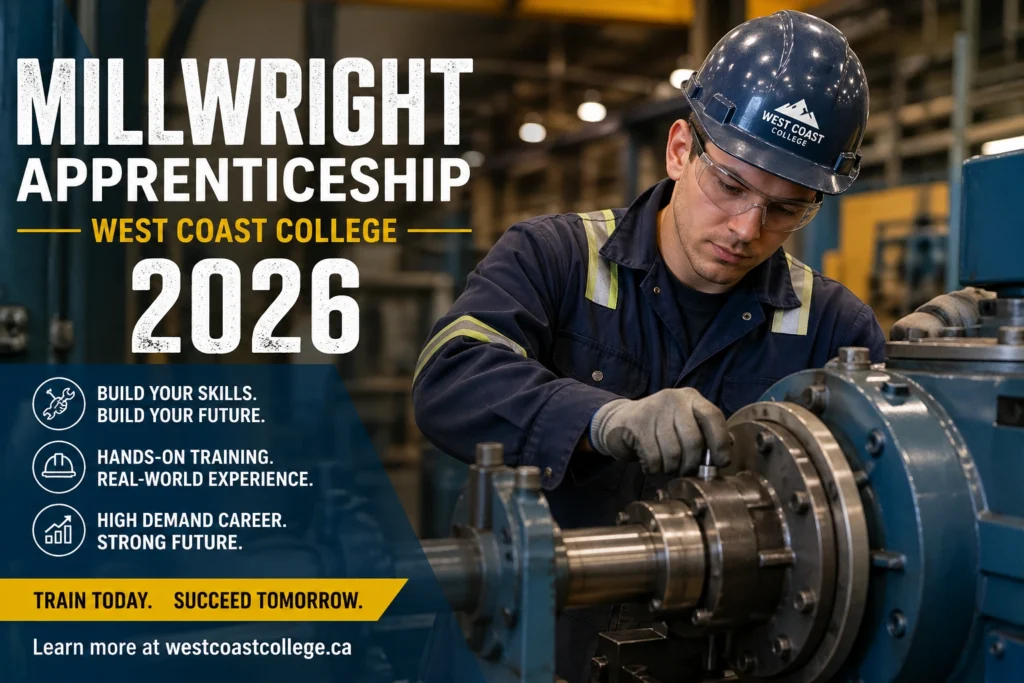

There’s a quiet shift happening in South Africa’s education and employment landscape—and it’s not coming from universities or corporate graduate programmes. Instead, it’s emerging from workshops, training campuses, and artisan pipelines. The Millwright Apprenticeship – West Coast College 2026 has suddenly become one of the most talked-about opportunities among young job seekers, and for good reason.
At a time when traditional academic routes are becoming increasingly expensive—and often uncertain in terms of employment outcomes—this programme offers something refreshingly concrete: a direct path into a skilled trade, a monthly stipend, and entry requirements that don’t shut out those without Matric.
It’s not just another training programme. It’s part of a broader recalibration of how careers begin.
The Backstory: How Artisan Training Made a Comeback
For years, artisan careers—millwrights, electricians, fitters—were quietly sidelined in favour of degrees perceived as more prestigious. But that narrative has been steadily unraveling.
South Africa has been grappling with a persistent skills shortage in technical and engineering fields. Industries like manufacturing, agriculture, and infrastructure maintenance rely heavily on artisans, yet the pipeline of qualified workers hasn’t kept pace.
That’s where programmes like the Millwright Apprenticeship – West Coast College 2026 come in. Backed by AGRISETA funding, this initiative reflects a deliberate push to rebuild the artisan workforce from the ground up.
What makes this programme particularly noteworthy is its accessibility. By allowing entry from Grade 9, it challenges long-held assumptions about who gets to pursue technical careers. It signals a shift toward skills-based inclusion rather than qualification-based exclusion.
APPLY HERE: Millwright Apprenticeship – West Coast College 2026
A Closer Look at the Programme
At its core, the apprenticeship is designed to produce multi-skilled artisans capable of handling both mechanical and electrical systems—a defining feature of millwright work.
This is not classroom-heavy learning. Instead, it’s rooted in hands-on training:
- Mechanical systems and machinery
- Electrical systems and diagnostics
- Workshop safety practices
- Maintenance and troubleshooting
- Real-world engineering applications
The programme leads to an Occupational Certificate: Millwright (NQF Level 4 – Year 1), a recognized qualification that can open doors across multiple industries.
But perhaps the most compelling aspect is the structure: only 15 learners will be selected. That limited intake transforms the programme from a general opportunity into a highly competitive gateway.
The Financial Reality: Why the R3 500 Stipend Matters
It would be easy to dismiss the R3 500 monthly stipend as modest. But context matters.
For many young South Africans—especially those unemployed or from low-income households—this stipend is the difference between access and exclusion. It helps cover transport, meals, and basic living expenses, making participation feasible.
More importantly, it reflects a growing recognition that training should not come at the cost of survival.
In a country where unpaid internships are still common, funded apprenticeships stand out. They signal a more equitable approach to skills development—one that values the learner’s time and commitment.
Why Grade 9 Entry Is a Bigger Deal Than It Seems
One of the most talked-about aspects of the Millwright Apprenticeship – West Coast College 2026 is its minimum requirement: Grade 9.
On the surface, it’s about accessibility. But on a deeper level, it challenges the hierarchy of education pathways.
For years, the absence of Matric has been treated as a dead end. This programme disrupts that narrative by offering a credible, structured alternative.
It also aligns with global trends where vocational training is gaining renewed respect. Countries with strong apprenticeship systems—like Germany—have long demonstrated that technical skills can be just as valuable as academic credentials.
South Africa appears to be moving in a similar direction, albeit gradually.
Public Reaction: Opportunity or Oversubscription?
Unsurprisingly, the response to the programme has been intense.
Online forums, career platforms, and social media spaces are buzzing with discussions about application strategies, document preparation, and eligibility. For many, the programme represents a rare chance to break into a stable career path.
But there’s also a note of caution.
With only 15 positions available, the demand far exceeds supply. This raises questions about scalability. If thousands are applying for a handful of spots, what happens to those who don’t make the cut?
Some observers argue that while programmes like this are valuable, they need to be expanded significantly to make a meaningful dent in unemployment.
Others point out that the competitive nature ensures quality and commitment among selected learners.
Both perspectives highlight the same reality: the appetite for practical training is enormous.
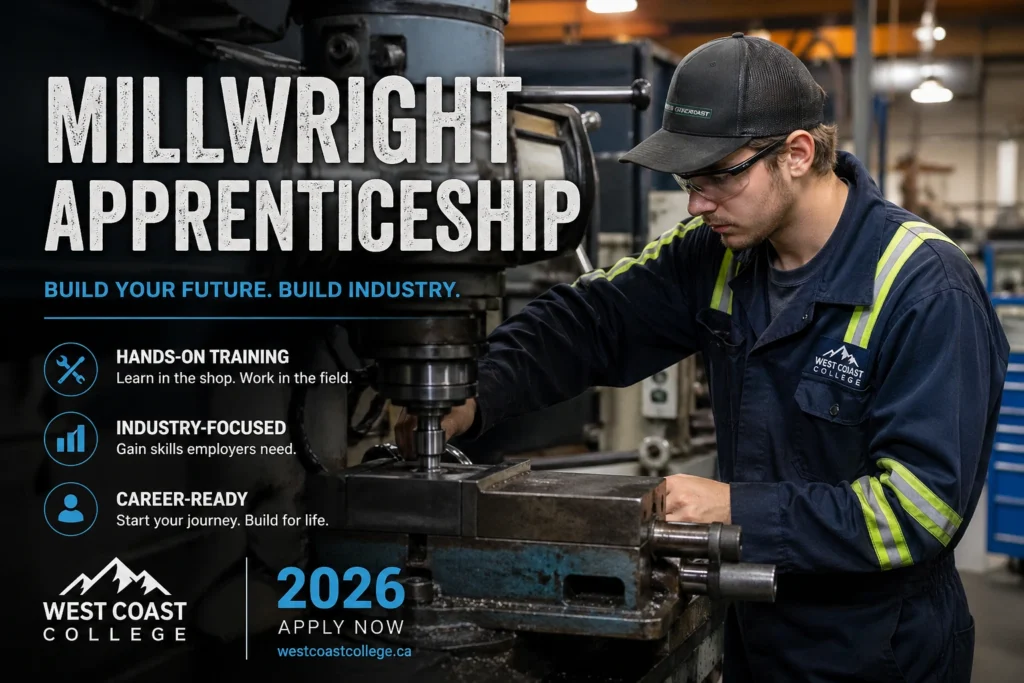
APPLY HERE: Millwright Apprenticeship – West Coast College 2026
The Application Pressure: Small Details, Big Consequences
One of the less glamorous—but crucial—aspects of the apprenticeship is the application process itself.
Applicants are required to submit:
- An updated CV
- Certified ID copy
- Proof of address
- Highest qualification
And there’s a catch: all documents must be certified within the last three months.
This might seem like a minor administrative detail, but it has real implications. Many applications are rejected not because candidates lack potential, but because of incomplete or outdated documentation.
In a competitive pool, small errors can be decisive.
This has led to a surge in advice-sharing among applicants—tips on certification, CV formatting, and highlighting technical interests.
Interestingly, this peer-driven support network is becoming an informal part of the application ecosystem.
Why This Matters Right Now
The timing of the Millwright Apprenticeship – West Coast College 2026 couldn’t be more relevant.
South Africa is facing a dual challenge: high youth unemployment and a shortage of technical skills. Traditional education pathways alone are not solving this mismatch.
This programme sits at the intersection of those two issues.
It offers:
- A direct entry into a high-demand field
- Financial support during training
- A qualification with industry relevance
But beyond the immediate benefits, it represents a shift in mindset.
There’s growing recognition that economic resilience depends not just on degrees, but on diversified skills. Artisan training is no longer a fallback option—it’s becoming a strategic choice.
For young people navigating uncertain career landscapes, that shift is significant.
Industry Implications: More Than Just One Programme
While the focus is on this specific apprenticeship, its implications extend further.
If successful, it could:
- Encourage more SETA-funded programmes
- Increase investment in TVET colleges
- Strengthen partnerships between training institutions and industry
It also raises questions about how technical careers are marketed and perceived.
For years, artisan work has struggled with image issues. Programmes like this, especially when publicly funded and structured, help reposition these careers as viable and respectable.
That perception shift could have long-term effects on workforce development.
APPLY HERE: Millwright Apprenticeship – West Coast College 2026
ALSO APPLY FOR: Hitachi Energy Electrical Apprenticeships 2026
What Could Happen Next
Looking ahead, several scenarios could unfold.
1. Expansion of Similar Programmes
If demand continues to surge, there may be pressure to increase the number of available positions or replicate the model in other regions.
2. Increased Competition and Selectivity
As awareness grows, future intakes could become even more competitive, placing greater emphasis on application quality and demonstrated interest.
3. Stronger Industry Linkages
Employers may begin to engage more directly with training programmes, creating clearer pathways from apprenticeship to employment.
4. Policy-Level Changes
Success stories from initiatives like this could influence education and labour policies, leading to broader support for vocational training.
5. A Shift in Career Narratives
Perhaps most importantly, more young people may begin to view artisan careers not as alternatives, but as first-choice options.
The Bigger Picture: A Blueprint in Motion
The Millwright Apprenticeship – West Coast College 2026 is, in many ways, a microcosm of a larger transformation.
It reflects a move toward:
- Practical, skills-based education
- Inclusive entry requirements
- Funded training opportunities
- Industry-aligned qualifications
But it also highlights ongoing challenges—limited capacity, high demand, and the need for systemic expansion.
For applicants, the message is clear: preparation matters. From ensuring documents are properly certified to showcasing genuine technical interest, every detail counts.
For policymakers and institutions, the takeaway is equally clear: the demand for this kind of opportunity is not going away.
Final Thoughts
In a landscape often dominated by uncertainty, the Millwright Apprenticeship – West Coast College 2026 stands out for its clarity of purpose.
It doesn’t promise instant success. It doesn’t rely on abstract outcomes. Instead, it offers something tangible: skills, experience, and a foothold in the world of work.
That’s why it’s trending.
Not because it’s flashy—but because it’s real.
And for many young South Africans, that’s exactly what they’ve been waiting for.
ALSO APPLY FOR: Hitachi Energy Electrical Apprenticeships 2026
APPLY HERE: Millwright Apprenticeship – West Coast College 2026