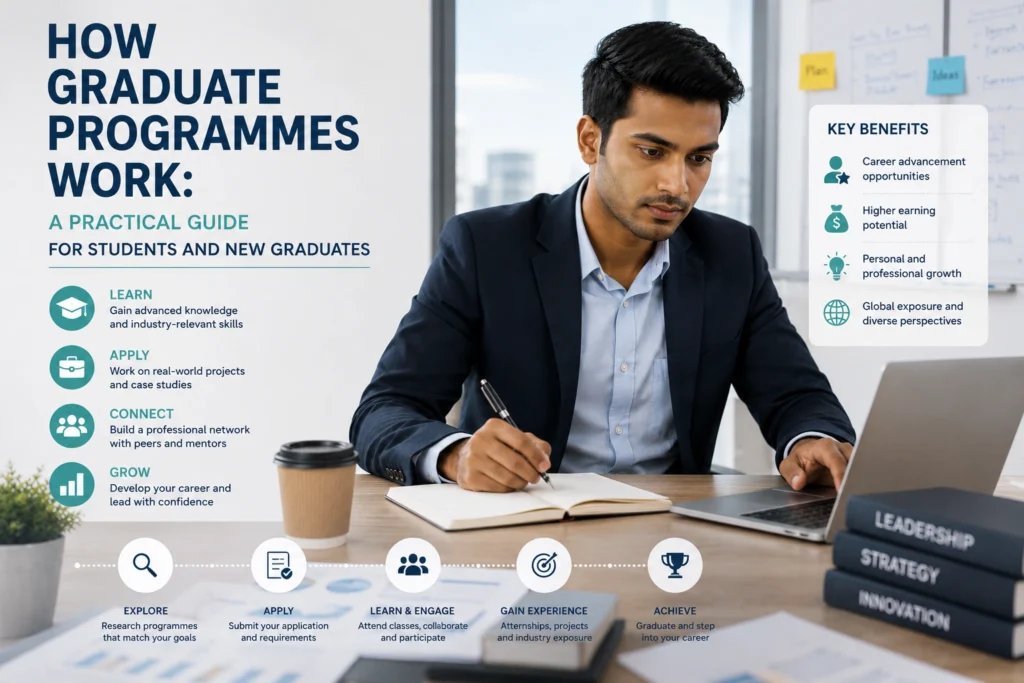

Graduating from university is exciting, but it can also feel overwhelming. Many graduates struggle to understand how to transition from academic life into a professional career. Job advertisements often mention graduate programmes, graduate schemes, rotational programmes, and trainee opportunities, leaving many applicants confused about what these programmes actually involve and whether they are worth pursuing.
Understanding How Graduate Programmes Work is essential for anyone who wants to build a strong career foundation. These programmes are designed to help graduates gain practical experience, develop professional skills, and prepare for long-term career growth. However, many graduates miss valuable opportunities because they do not fully understand the application process, programme structure, or employer expectations.
This guide explains How Graduate Programmes Work, why they matter, how to apply successfully, and the best practices experts recommend for maximizing your chances of success.
What Are Graduate Programmes?
Graduate programmes are structured employment and training opportunities designed specifically for recent university graduates. Unlike standard entry-level jobs, these programmes combine practical work experience with formal learning, mentorship, and professional development.
Large corporations, government departments, financial institutions, engineering firms, technology companies, and multinational organizations commonly offer graduate programmes to identify and develop future leaders.
Most graduate programmes typically last between 12 and 36 months, depending on the industry and employer.
Common features include:
- Structured training plans
- Rotational placements across departments
- Mentorship from experienced professionals
- Performance evaluations
- Leadership development opportunities
- Technical and professional skills training
- Networking opportunities
ALSO APPLY FOR: Old Mutual Learnership 2026
ALSO APPLY FOR: Truworths Learnerships 2026
Graduate programmes provide a bridge between academic learning and workplace performance.
How Graduate Programmes Work in Practice
The Recruitment Phase
The first stage involves attracting and selecting suitable candidates.
Employers typically recruit graduates several months before the programme starts. Some companies open applications nearly a year in advance.
The recruitment process often includes:
- Online application forms
- CV submission
- Academic record review
- Psychometric assessments
- Video interviews
- Assessment centres
- Final interviews
Because graduate programmes attract large numbers of applicants, competition can be intense.
The Onboarding Phase
Successful candidates usually begin with a structured onboarding programme.
During onboarding, graduates learn about:
- Company culture
- Business operations
- Policies and procedures
- Workplace systems
- Professional expectations
This phase helps graduates adapt more quickly to the professional environment.
Training and Development
A major component of understanding How Graduate Programmes Work is recognizing their focus on learning.
Employers invest heavily in developing graduate talent through:
- Classroom training
- Online learning modules
- Technical certifications
- Industry workshops
- Leadership development sessions
- Project-based learning
The goal is to accelerate professional growth beyond what a standard entry-level role might provide.
Rotational Assignments
Many graduate programmes use rotations to expose participants to different parts of the business.
For example, a finance graduate might spend time in:
- Financial planning
- Internal auditing
- Risk management
- Treasury operations
Similarly, engineering graduates may rotate through:
- Operations
- Maintenance
- Project management
- Quality assurance
Rotations help graduates discover their strengths and gain a broader understanding of the organization.
Mentorship and Coaching
Most successful graduate programmes assign mentors or supervisors.
Mentors provide:
- Career guidance
- Technical advice
- Workplace insights
- Professional support
This guidance can significantly improve a graduate’s confidence and career progression.
Permanent Placement
At the end of the programme, successful participants are often placed into permanent roles.
Employers use graduate programmes as talent pipelines, meaning they frequently hire graduates into long-term positions after completion.
However, permanent employment is usually based on:
- Performance
- Attendance
- Learning progress
- Organizational needs
Why This Issue Matters
Understanding How Graduate Programmes Work can have a significant impact on a graduate’s career trajectory.
Many employers use graduate programmes to identify future managers, specialists, and leaders. Graduates who enter these programmes often gain faster career progression compared to individuals who begin in unstructured entry-level roles.
The real-world benefits include:
- Accelerated career development
- Greater exposure to business operations
- Stronger professional networks
- Enhanced technical skills
- Increased employability
- Better long-term earning potential
For employers, graduate programmes help build a skilled workforce and ensure succession planning. For graduates, they provide a structured pathway into competitive industries.
Failing to understand these opportunities may result in missed career advancement prospects.
Types of Graduate Programmes
Not all graduate programmes are the same.
Corporate Graduate Programmes
Large companies often recruit graduates across multiple disciplines.
Examples include:
- Finance
- Marketing
- Human resources
- Supply chain management
- Information technology
These programmes often include departmental rotations.
Engineering Graduate Programmes
Engineering graduates receive technical training combined with practical project experience.
Common fields include:
- Mechanical engineering
- Electrical engineering
- Civil engineering
- Chemical engineering
Government Graduate Programmes
Government departments often offer graduate development opportunities focused on public service and policy implementation.
These programmes may provide broad exposure to government operations and administration.
Technology Graduate Programmes
Technology firms frequently offer structured programmes for graduates in:
- Software development
- Data analytics
- Cybersecurity
- Cloud computing
- Artificial intelligence
These programmes often emphasize technical certifications and project work.
Financial Services Graduate Programmes
Banks, investment firms, and insurance companies regularly recruit graduates through structured schemes.
Participants typically receive training in:
- Banking operations
- Financial analysis
- Risk management
- Compliance
- Investment strategies

ALSO READ ABOUT: How Competitive Bursaries Are
Step-by-Step Guide to Applying for Graduate Programmes
Step 1: Start Researching Early
Many students wait until graduation before searching for opportunities.
A better approach is to begin researching during your final year.
Look for:
- Application deadlines
- Eligibility requirements
- Required qualifications
- Programme duration
- Career pathways
Early preparation gives you a significant advantage.
Step 2: Build a Strong CV
Your CV should highlight:
- Academic achievements
- Leadership experience
- Volunteer work
- Internships
- Part-time employment
- Technical skills
Employers often seek evidence of initiative and problem-solving abilities.
Step 3: Tailor Every Application
Avoid sending the same application to every employer.
Instead:
- Customize your CV
- Adjust your cover letter
- Research the company
- Align your skills with programme requirements
Personalized applications typically perform better.
Step 4: Prepare for Assessments
Many graduate programmes use aptitude tests and psychometric assessments.
Practice commonly tested areas such as:
- Numerical reasoning
- Verbal reasoning
- Logical thinking
- Situational judgment
Preparation can significantly improve performance.
Step 5: Develop Interview Skills
Graduate programme interviews often focus on:
- Leadership experiences
- Teamwork
- Problem solving
- Communication
- Career motivation
Practice answering competency-based questions using real examples.
Step 6: Build Professional Networks
Networking remains one of the most effective career strategies.
Connect with:
- Alumni
- Industry professionals
- Recruiters
- Career advisors
Professional relationships can provide valuable insights and opportunities.
Step 7: Stay Organized
Track:
- Application deadlines
- Interview dates
- Assessment schedules
- Follow-up communications
Organization prevents missed opportunities.
Skills Employers Look For
Understanding employer expectations is a critical part of learning How Graduate Programmes Work.
While academic performance matters, employers also prioritize workplace skills.
Highly valued skills include:
Communication
Graduates must communicate clearly with colleagues, managers, and clients.
Problem Solving
Organizations value candidates who can identify issues and develop practical solutions.
Adaptability
Workplaces change rapidly, making flexibility an important quality.
Teamwork
Most graduate programmes involve collaborative projects and cross-functional teams.
Leadership Potential
Employers often seek graduates who demonstrate initiative and future leadership capability.
Digital Literacy
Technology skills are increasingly important across nearly every industry.
Best Practices Experts Recommend
Career development specialists consistently recommend several strategies for graduate programme success.
Focus on Long-Term Growth
Do not choose a programme solely based on salary.
Consider:
- Training quality
- Career progression
- Mentorship opportunities
- Industry exposure
Research the Employer Thoroughly
Understand the company’s:
- Values
- Culture
- Business model
- Industry position
Well-informed candidates perform better during interviews.
Gain Experience Before Applying
Internships, volunteer work, and student leadership roles strengthen applications significantly.
Develop Soft Skills
Technical knowledge alone is rarely enough.
Employers increasingly value:
- Emotional intelligence
- Collaboration
- Professionalism
- Resilience
Continue Learning
Stay updated through:
- Online courses
- Industry publications
- Professional certifications
- Networking events
Continuous learning demonstrates commitment and ambition.
Mistakes People Often Make
Many graduates reduce their chances of success through avoidable errors.
Applying Too Late
Graduate programmes often close applications months before graduation.
Late applications frequently miss important opportunities.
Ignoring Eligibility Requirements
Always verify:
- Qualification requirements
- Citizenship requirements
- Academic thresholds
- Graduation dates
Sending Generic Applications
Recruiters can easily recognize copied applications.
Tailored applications are usually more effective.
Neglecting Interview Preparation
Strong academic results do not guarantee interview success.
Preparation remains essential.
Focusing Only on Big Brands
Many graduates apply exclusively to famous companies.
Smaller organizations often provide excellent graduate development opportunities and less competition.
Underestimating Networking
Building professional relationships can uncover opportunities that are not widely advertised.
Frequently Asked Questions
1. Are graduate programmes only for recent graduates?
Most programmes target graduates who completed their qualifications within the previous one to three years. However, eligibility varies by employer.
2. Do graduate programmes guarantee permanent employment?
Not always. Many employers intend to hire successful participants permanently, but final placement usually depends on performance and business requirements.
3. Are graduate programmes paid?
Most reputable graduate programmes provide a salary or stipend. Compensation varies depending on the industry, location, and employer.
4. What is the difference between a graduate programme and an internship?
Internships are generally shorter and may occur while studying. Graduate programmes are typically longer, more structured, and designed for individuals who have already completed their qualifications.
Final Thoughts: Building a Strong Career Through Graduate Programmes
Understanding How Graduate Programmes Work can help graduates make informed career decisions and maximize professional opportunities. These programmes provide structured learning, practical workplace experience, mentorship, and career development that can significantly accelerate long-term success.
The most successful applicants begin preparing early, research opportunities thoroughly, develop strong professional skills, and tailor their applications carefully. They view graduate programmes not simply as jobs but as strategic career-building opportunities.
If you are approaching graduation or have recently completed your studies, start researching programmes now, strengthen your CV, practice assessment tests, and actively build your professional network. Small actions taken today can create opportunities that shape your career for years to come.
ALSO APPLY FOR: Old Mutual Learnership 2026
ALSO APPLY FOR: Truworths Learnerships 2026
ALSO READ ABOUT: How Competitive Bursaries Are