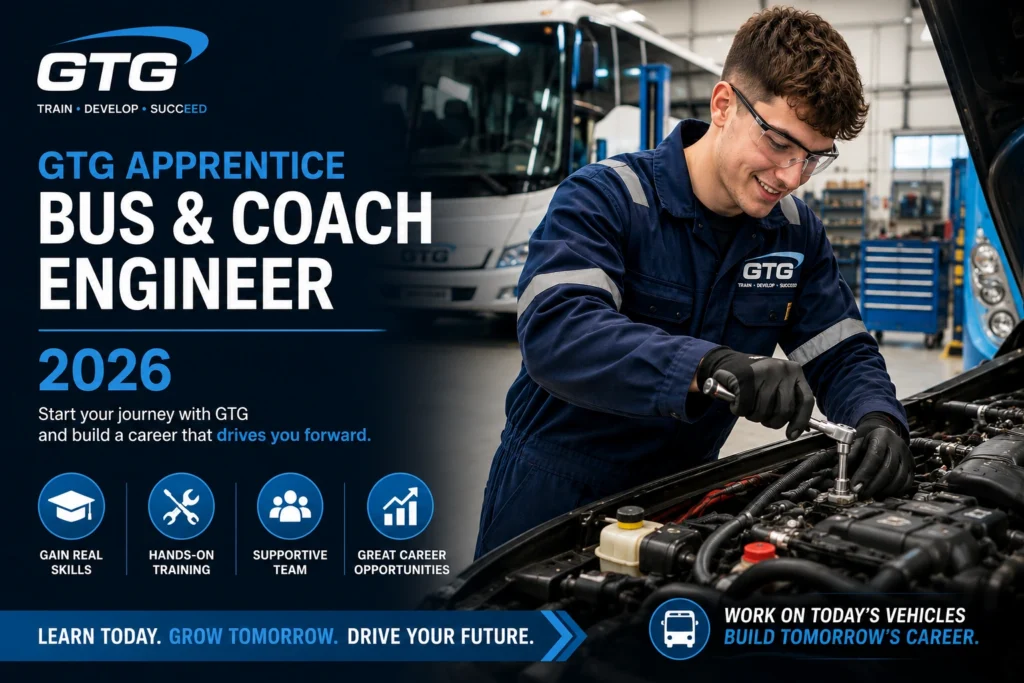

In a year where skilled trades are becoming increasingly valuable, the GTG Apprentice Bus and Coach Engineer programme in Motherwell is emerging as one of the more interesting apprenticeship opportunities in the transport engineering sector.
The reason is simple: while many young people and career changers continue to debate whether university is the only route to success, employers across the automotive and transport industries are facing a growing demand for qualified technicians and engineers.
Against that backdrop, GTG Training’s apprenticeship partnership with JMB Travel arrives at a particularly important moment.
Rather than offering classroom learning alone, the programme combines paid employment, industry-recognised qualifications, practical workshop experience, and a direct pathway into a profession that remains essential to public transport infrastructure.
For aspiring engineers, mechanics, and vehicle enthusiasts, this apprenticeship represents more than just a job vacancy. It reflects a wider shift taking place across the automotive sector—one where technical skills are increasingly in demand and apprenticeships are becoming a preferred route into long-term careers.
Understanding the Opportunity
The apprenticeship is being delivered by GTG Training on behalf of JMB Travel, an independent family-owned bus operator that has been serving communities across North and South Lanarkshire and Greater Glasgow since 2009.
Over the years, JMB Travel has expanded significantly, growing its workforce and investing in modern transport operations.
That growth has created a need for the next generation of skilled engineers.
The GTG Apprentice Bus and Coach Engineer role is designed to develop those future specialists through a structured modern apprenticeship programme leading to an SCQF Level 7 qualification in Heavy Goods and Public Service Vehicle Maintenance and Repair.
Unlike many entry-level positions that offer limited progression, this programme is built around professional development from day one.
Apprentices receive practical training, ongoing assessments, mentorship, and exposure to real-world engineering challenges within a working transport operation.
How the Transport Industry Reached This Point
The growing popularity of engineering apprenticeships is not happening by accident.
Over the last decade, transport operators across the United Kingdom have experienced a changing workforce profile. Many experienced engineers are approaching retirement age, while fleets are becoming more technologically advanced.
Modern buses now incorporate sophisticated electronics, computerised diagnostics, advanced braking systems, and increasingly, electric vehicle technology.
As a result, employers are searching for technicians who can work comfortably across both traditional mechanical systems and emerging technologies.
This skills gap has prompted many transport companies to invest heavily in apprenticeship programmes.
Instead of competing for a limited pool of experienced engineers, businesses are developing talent internally.
The JMB Travel apprenticeship fits directly into this broader industry strategy.
By training apprentices from the ground up, companies can build a workforce equipped for the future of public transport maintenance.
What Makes This Apprenticeship Different?
Many apprenticeship advertisements promise training and development.
What makes this programme stand out is the combination of benefits being offered alongside the qualification.
Successful applicants will earn while they learn, receiving a wage above the standard apprentice minimum.
That financial support can make a significant difference for individuals who want to gain qualifications without accumulating educational debt.
There is also the opportunity to receive assistance with essential starter tools—a practical advantage often overlooked by first-time apprentices entering technical trades.
Another noteworthy feature is support toward obtaining a Passenger Service Vehicle (PSV) licence.
This additional credential can strengthen long-term career prospects and open doors to broader opportunities within the transport industry.
Perhaps most importantly, apprentices gain direct access to experienced engineers who can provide mentorship and guidance throughout the programme.
In technical professions, learning from skilled practitioners remains one of the most valuable forms of training available.
Inside the Workshop: What Daily Life Could Look Like
One of the biggest attractions of the apprenticeship is the variety of work involved.
Apprentices will not spend their days performing repetitive tasks.
Instead, they will encounter a wide range of engineering challenges.
Routine servicing forms an important part of the role, ensuring buses and coaches remain safe, reliable, and roadworthy.
Beyond maintenance, apprentices will assist with diagnosing faults across engines, transmissions, electrical systems, braking components, and chassis assemblies.
They will also gain experience preparing vehicles for inspections and MOT testing requirements.
For many applicants, one particularly exciting aspect will be exposure to electric vehicle systems.
As transport operators continue introducing electric buses into their fleets, engineers must develop new skills involving high-voltage systems, safety procedures, and advanced diagnostics.
This means apprentices entering the industry today are likely to gain experience that aligns with the future direction of public transport.
Recent Developments Making Engineering Apprenticeships More Attractive
Over the past few years, perceptions around apprenticeships have evolved dramatically.
They are no longer viewed solely as alternatives to university.
Increasingly, they are seen as strategic career choices.
Employers are placing greater value on practical experience, workplace readiness, and technical competence.
At the same time, industries facing skills shortages are enhancing apprenticeship programmes with better wages, clearer progression pathways, and stronger professional qualifications.
The transport sector has been particularly active in this regard.
Investment in electric vehicles, sustainability initiatives, and modern workshop technologies has created demand for workers with up-to-date technical expertise.
As these developments accelerate, apprentices entering engineering fields today may find themselves in stronger positions than many previous generations.
Public Reaction: Why Applicants Are Paying Attention
Among school leavers, career changers, and automotive enthusiasts, opportunities like this are generating significant interest.
One reason is the increasing awareness that vocational routes can provide direct access to stable employment.
For many young people, the prospect of earning an income while gaining recognised qualifications is highly appealing.
Parents and educators are also showing growing support for apprenticeship pathways.
The traditional assumption that academic routes automatically provide better outcomes has weakened as employers place greater emphasis on practical skills.
Within industry circles, apprenticeships are often viewed as one of the most effective ways to address workforce shortages.
That means programmes offering strong training structures and employer support are attracting considerable attention.
The Motherwell opportunity appears positioned within this trend.
Why This Matters Right Now
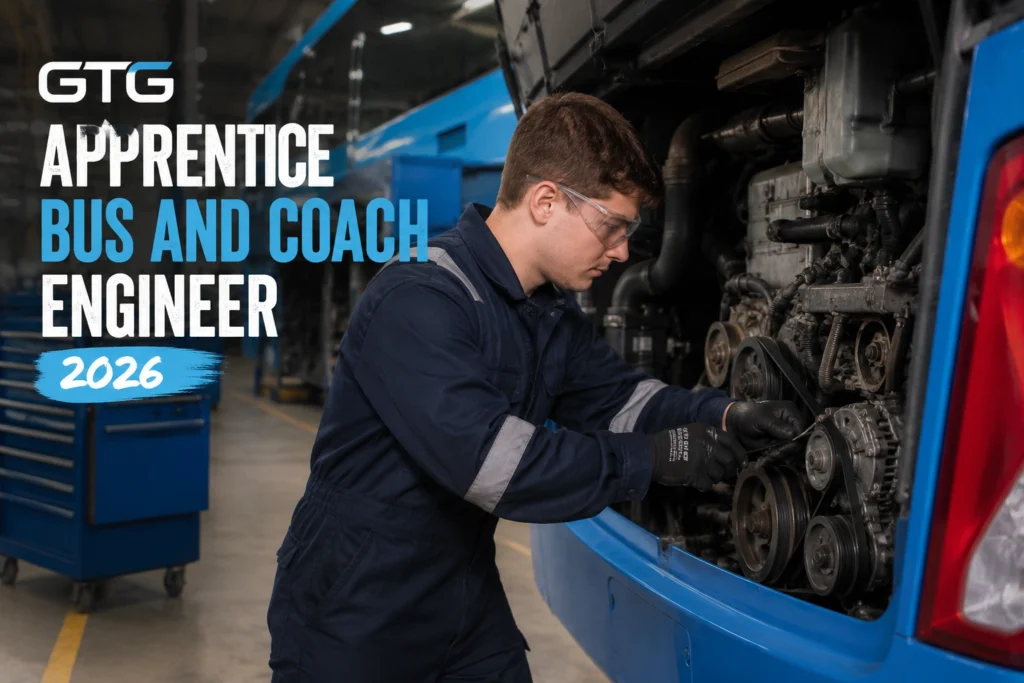
The timing of the GTG Apprentice Bus and Coach Engineer programme is particularly significant.
Transport systems are undergoing major transformation.
Electric vehicles are becoming more common.
Digital diagnostics continue to replace older maintenance methods.
Sustainability targets are influencing fleet investment decisions.
All of these changes require a workforce capable of adapting to new technologies.
For aspiring engineers, entering the industry during this transition could provide unique advantages.
Rather than learning outdated systems and adapting later, today’s apprentices are developing skills that align with the industry’s future direction.
There is also the broader economic context.
Across many sectors, employers continue reporting shortages of qualified technical professionals.
That reality means skilled engineers are likely to remain highly sought after for years to come.
For individuals considering career options, this apprenticeship offers an entry point into a profession where demand is expected to remain strong.
APPLY HERE: GTG Apprentice2026
ALSO APPLY FOR: Goldi Junior Millwright Apprenticeship 2026
The Long-Term Career Potential
One of the most compelling aspects of engineering apprenticeships is what happens after qualification.
The apprenticeship itself is only the beginning.
Qualified bus and coach engineers often progress into specialist technical roles, workshop supervisory positions, fleet maintenance management, and training roles.
Some eventually move into engineering consultancy, manufacturer support positions, or technical leadership roles within large transport organisations.
The skills gained are also highly transferable.
Knowledge of heavy vehicle systems, diagnostics, electrical engineering principles, and maintenance procedures can open doors across multiple sectors.
That flexibility provides valuable career security in a rapidly changing labour market.
For those who enjoy problem-solving and hands-on technical work, the opportunities can extend far beyond the workshop floor.
Challenges Applicants Should Understand
While the benefits are substantial, applicants should approach the opportunity with realistic expectations.
Engineering apprenticeships require commitment.
The work can be physically demanding.
Workshop environments involve tools, machinery, and safety procedures that require constant attention.
The learning curve can also be steep.
Apprentices must balance practical responsibilities with formal training and assessments.
Success depends not only on technical ability but also on reliability, discipline, and a willingness to learn.
Those who enter the programme expecting immediate results may find the experience challenging.
Those prepared to invest time and effort, however, often discover significant rewards over the long term.
What Could Happen Next
Several possible outcomes make this apprenticeship worth watching.
If demand for transport engineers continues to rise, programmes like this may become even more competitive.
Applicants could face increased competition as awareness grows around the career benefits associated with technical apprenticeships.
The integration of electric vehicles is also likely to expand.
Future cohorts may receive even greater exposure to advanced diagnostic systems, battery technologies, and sustainable transport engineering practices.
For JMB Travel, continued growth could create additional progression opportunities for successful apprentices.
As companies invest in larger fleets and modern facilities, demand for qualified internal talent often increases as well.
For successful applicants, that could translate into a clearer route toward long-term employment and career advancement.
Final Thoughts
The GTG Apprentice Bus and Coach Engineer apprenticeship in Motherwell arrives at a moment when skilled engineering careers are attracting renewed attention.
It combines paid work, structured training, recognised qualifications, and exposure to an industry undergoing significant transformation.
What makes the opportunity particularly compelling is its alignment with broader workforce trends. Technical skills remain in demand. Transport technology continues evolving. Employers are investing heavily in apprenticeship pathways.
For school leavers looking for an alternative to traditional academic routes, or career changers seeking a practical profession with growth potential, this programme represents more than an entry-level role.
It is a chance to develop specialist skills, gain recognised credentials, and build a career within an industry that remains essential to everyday life.
As engineering apprenticeships continue gaining prominence in 2026, opportunities like this may become increasingly valuable for those willing to take the first step.