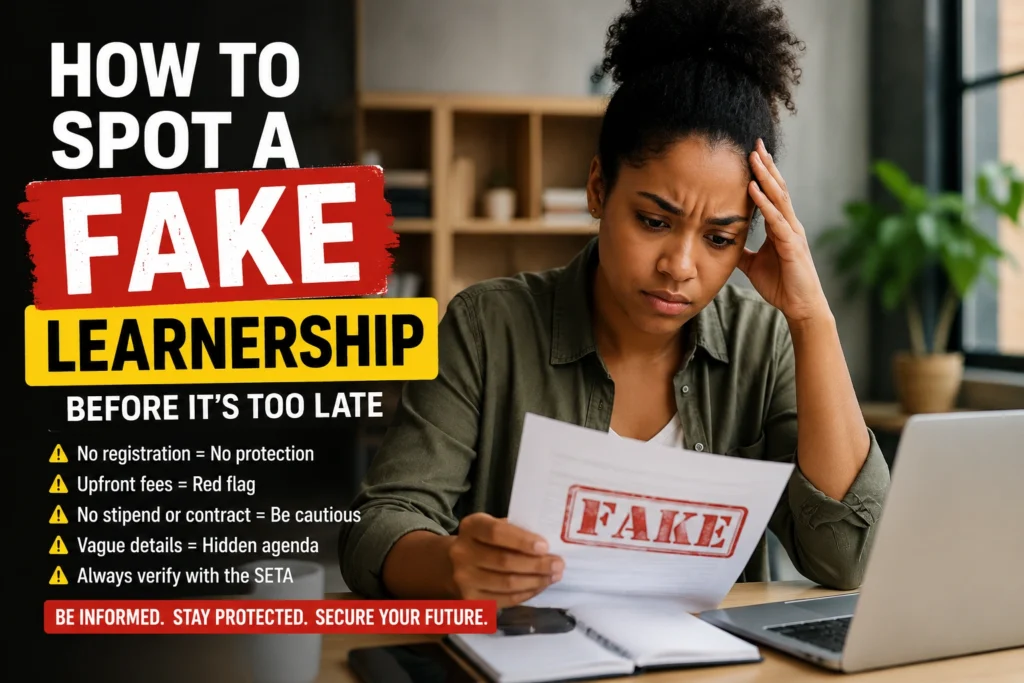

Every year, thousands of South Africans search for learnerships hoping to gain valuable workplace experience, earn a qualification, and improve their chances of finding permanent employment. Unfortunately, scammers know this too. As unemployment remains high, fake learnership advertisements have become increasingly common across social media platforms, messaging apps, and unofficial job websites.
Many job seekers only realize they have been targeted after losing money, sharing personal information, or missing genuine opportunities while pursuing fraudulent ones. The consequences can be financially and emotionally damaging.
Learning How to Spot a Fake Learnership Before It’s Too Late is no longer optional—it is an essential skill for anyone applying for internships, apprenticeships, graduate programmes, or learnerships. By understanding the warning signs and knowing how legitimate programmes operate, you can protect yourself and focus your efforts on real opportunities that can advance your career.
Understanding Fake Learnership Scams
A fake learnership is a fraudulent opportunity designed to trick applicants into providing money, personal information, banking details, or other sensitive data. In some cases, scammers pretend to represent well-known companies, government departments, or training providers.
These scams often appear convincing because they use company logos, professional-looking advertisements, and urgent application deadlines. Some even copy legitimate job postings and make minor changes to deceive applicants.
Common targets include:
- Recent matriculants
- Unemployed youth
- College students
- University graduates
- First-time job seekers
- Individuals desperately seeking employment
The goal of scammers is usually one of the following:
- Collect application fees
- Obtain identity information
- Access banking details
- Sell fake training courses
- Commit identity theft
- Generate traffic to fraudulent websites
ALSO APPLY FOR: Dynamic DNA Learnership 2026
ALSO APPLY FOR: Rohlig-Grindrod Learnership 2026
Understanding these tactics is the first step in learning How to Spot a Fake Learnership Before It’s Too Late.
Why This Issue Matters
Fake learnerships are not merely an inconvenience. They can have serious real-world consequences.
When a job seeker falls victim to a scam, they may lose money they cannot afford to lose. Some applicants pay registration fees, processing fees, or supposed placement charges believing they are securing employment.
Identity theft is another major concern. Scammers often request copies of:
- ID documents
- Academic certificates
- Proof of residence
- Banking information
- Personal contact details
Once obtained, this information can be misused for fraudulent activities.
There is also an opportunity cost. Time spent pursuing fake opportunities is time that could have been invested in applying for genuine programmes.
Beyond financial losses, victims often experience disappointment, stress, and reduced confidence in legitimate opportunities.
For unemployed youth already facing difficult economic conditions, these impacts can be significant and long-lasting.
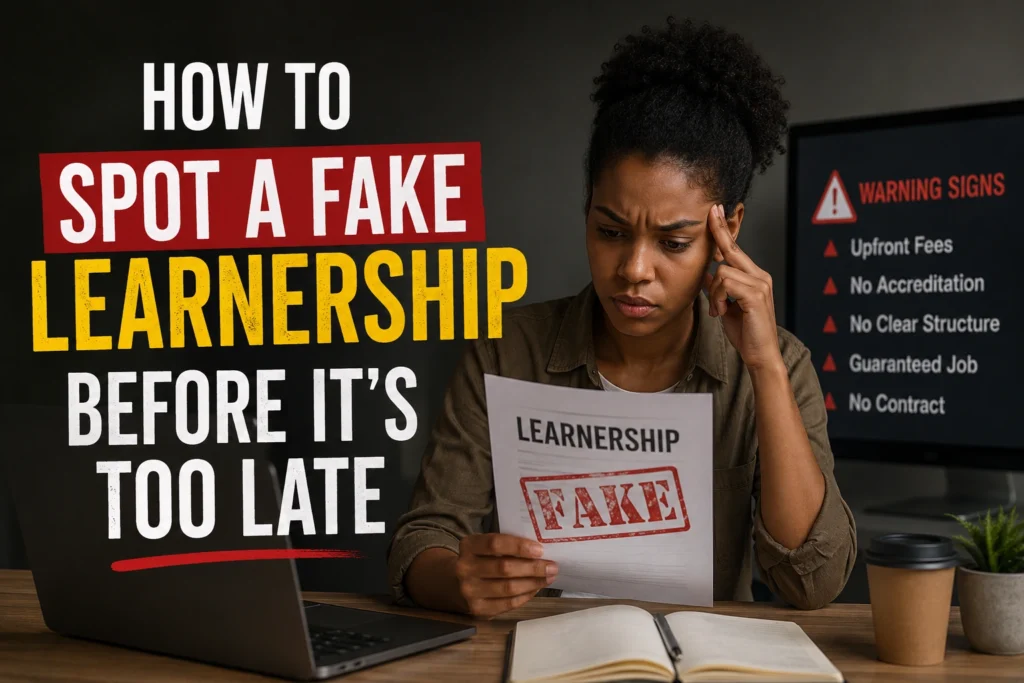
The Biggest Red Flags of a Fake Learnership
Before submitting an application, carefully evaluate the opportunity for warning signs.
1. They Ask for Money Upfront
One of the clearest warning signs is a request for payment.
Legitimate learnership programmes do not charge applicants to apply.
Be cautious if an organization requests:
- Registration fees
- Administration fees
- Processing fees
- Interview fees
- Placement fees
- Training activation fees
In most cases, genuine learnerships provide training and may even pay a monthly stipend.
2. The Salary Sounds Unrealistic
Scammers often use extremely high stipends to attract applicants.
Examples include promises such as:
- No experience required
- Immediate employment guaranteed
- Extremely high monthly income
- Instant acceptance
If an opportunity sounds too good to be true, it deserves closer scrutiny.
3. Poor Grammar and Unprofessional Communication
Many scam advertisements contain:
- Spelling mistakes
- Grammar errors
- Inconsistent information
- Unprofessional email communication
While legitimate employers occasionally make minor errors, multiple mistakes throughout an advertisement should raise concerns.
4. No Official Company Website
Always verify the organization behind the opportunity.
Ask yourself:
- Does the company have a professional website?
- Are contact details available?
- Is the learnership listed on official company channels?
If you cannot find any evidence that the organization exists, proceed with caution.
5. Suspicious Email Addresses
Legitimate companies generally communicate through official business domains.
Examples:
Be cautious of emails using free services such as:
- Gmail
- Yahoo
- Outlook
- Hotmail
A free email address does not automatically indicate fraud, but it should encourage additional verification.
6. Pressure to Act Immediately
Scammers often create urgency.
You may see messages such as:
- Apply within the next two hours
- Limited spaces available
- Pay today to secure placement
- Immediate acceptance guaranteed
This pressure is designed to stop applicants from conducting proper research.
7. No Interview or Assessment Process
Most genuine learnerships involve a recruitment process.
This may include:
- Application screening
- Document verification
- Interviews
- Assessments
- Reference checks
Instant acceptance without any evaluation can be a warning sign.
ALSO READ ABOUT: Highest Paying Graduate Programmes
How to Verify a Learnership Before Applying
Knowing How to Spot a Fake Learnership Before It’s Too Late involves more than recognizing red flags. It also requires verifying opportunities properly.
Step 1: Research the Company
Search for:
- Official website
- LinkedIn page
- Business registration information
- Previous learnership programmes
- News articles
Established organizations usually leave a digital footprint.
Step 2: Visit Official Career Pages
Never rely solely on social media posts.
Visit the employer’s official careers page and confirm that the opportunity appears there.
If the learnership cannot be found on the company’s website, contact the organization directly.
Step 3: Check Contact Information
Verify:
- Telephone numbers
- Physical addresses
- Email domains
A legitimate organization should have verifiable contact details.
Step 4: Confirm Through Direct Communication
If you have doubts, call the company directly.
Ask:
- Is this learnership currently available?
- Is the advertisement genuine?
- What is the official application process?
A five-minute phone call can prevent significant problems.
Step 5: Search for Scam Reports
Use search engines to look for phrases such as:
- Company name scam
- Learnership scam review
- Fake recruitment warning
- Fraud complaints
Past victims often share their experiences online.
Step 6: Verify Training Providers
If a learnership involves a training provider, verify that the provider is properly accredited.
Check whether:
- The provider has a valid website
- Accreditation details are available
- Previous learners have completed programmes successfully
How Scammers Use Social Media
Social media platforms have become popular channels for fake recruitment advertisements.
Common tactics include:
- Fake Facebook pages
- Fraudulent WhatsApp groups
- Impersonation accounts
- Sponsored scam advertisements
- Fake Telegram channels
Scammers frequently copy company logos and branding to appear legitimate.
Before applying through a social media post:
- Visit the organization’s official website.
- Verify the advertisement independently.
- Confirm that the social media account is genuine.
- Check whether the opportunity appears on multiple trusted sources.
Never assume an opportunity is legitimate simply because it has many likes, comments, or shares.
Protecting Your Personal Information
One of the most important aspects of How to Spot a Fake Learnership Before It’s Too Late is safeguarding your personal information.
Only provide documents when necessary and through verified channels.
Be cautious when sharing:
- ID copies
- Bank statements
- Banking details
- Tax numbers
- Passwords
- One-time PINs
Legitimate employers will never ask for:
- Online banking passwords
- ATM PINs
- Payment to secure employment
If someone requests this information, stop communicating immediately.
Best Practices Experts Recommend
Career advisors and recruitment professionals often recommend several practical habits that reduce the risk of fraud.
Verify Before You Apply
Spend a few minutes researching every opportunity before submitting documents.
Use Trusted Job Sources
Rely on:
- Official company websites
- Government employment platforms
- Reputable recruitment portals
- Established educational institutions
Keep Records
Save:
- Job advertisements
- Email correspondence
- Application confirmations
These records can help if concerns arise later.
Create a Verification Checklist
Before applying, confirm:
- The company exists.
- The website is legitimate.
- No payment is required.
- Contact information is valid.
- The learnership appears on official channels.
Ask Questions
Legitimate recruiters welcome reasonable questions about:
- Programme duration
- Stipend information
- Training requirements
- Selection processes
Scammers often avoid detailed answers.
Mistakes People Often Make
Even careful applicants can make errors. Here are common mistakes to avoid.
Applying Without Research
Many applicants rush to submit applications because they fear missing deadlines.
Always verify first.
Trusting Social Media Alone
A Facebook post or WhatsApp message is not proof that an opportunity is genuine.
Paying Fees to Secure Placement
No legitimate learnership requires payment to guarantee acceptance.
Ignoring Warning Signs
Applicants sometimes overlook suspicious details because they desperately need employment.
Desperation can make scams appear more convincing.
Sharing Too Much Information Too Soon
Do not send sensitive documents until you have verified the opportunity.
Assuming Famous Company Names Guarantee Legitimacy
Scammers frequently impersonate large organizations.
Always verify opportunities directly through official channels.
What to Do If You Suspect a Scam
If you believe a learnership advertisement may be fraudulent:
- Stop communication immediately.
- Do not send money.
- Do not provide additional personal information.
- Verify the opportunity directly with the company.
- Report suspicious advertisements to the platform where they appear.
- Warn friends and family who may encounter the same scam.
If personal information has already been shared, act quickly to protect your identity and financial accounts.
Frequently Asked Questions
1. Do legitimate learnerships ever charge application fees?
No. Genuine learnerships generally do not require applicants to pay registration, processing, or placement fees. Requests for payment are one of the strongest indicators of a scam.
2. Is a WhatsApp recruitment message automatically fake?
Not necessarily. Some organizations use WhatsApp for communication. However, you should always verify the opportunity through the employer’s official website before responding.
3. Can scammers use real company logos?
Yes. Fraudsters frequently copy logos, branding, and company names to make fake advertisements appear authentic. Always verify opportunities through official company channels.
4. What should I do if I already sent my ID copy?
Contact the organization you believed was recruiting and verify the opportunity immediately. Monitor your personal information carefully and report suspected fraud to the appropriate authorities if necessary.
Final Thoughts
Learning How to Spot a Fake Learnership Before It’s Too Late is one of the most valuable skills for today’s job seekers. Scammers continue to target unemployed youth, students, and graduates by exploiting the demand for employment opportunities.
The good news is that most fake learnerships reveal warning signs when examined carefully. Requests for money, unrealistic promises, suspicious communication, missing company information, and pressure tactics should always trigger caution.
Before applying for any opportunity, take time to research the organization, verify the advertisement through official channels, and protect your personal information. A few minutes of verification can save months of frustration and potential financial loss.
Stay patient, stay informed, and remember: legitimate employers recruit talent—they do not charge people for the chance to work.
ALSO APPLY FOR: Dynamic DNA Learnership 2026
ALSO APPLY FOR: Rohlig-Grindrod Learnership 2026
ALSO READ ABOUT: Highest Paying Graduate Programmes