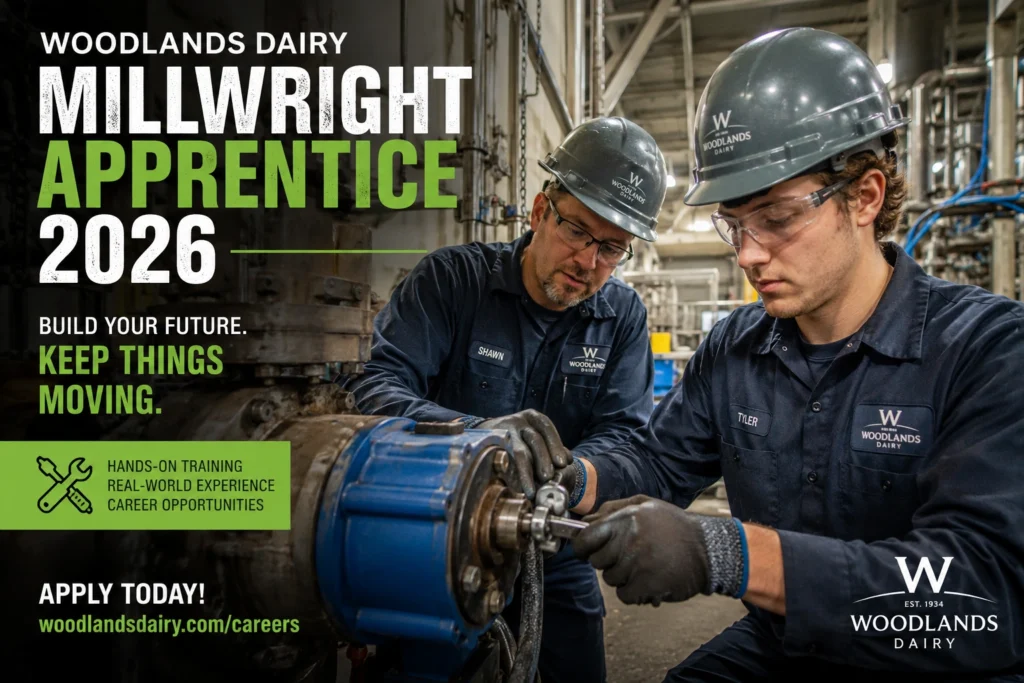

There is growing interest around the Woodlands Dairy Millwright Apprentice programme for 2026 — and it is not difficult to understand why.
At a time when thousands of South African youth are struggling to convert qualifications into real industrial experience, technical apprenticeships are suddenly becoming some of the most valuable entry points into stable careers. While many graduates continue chasing office-based opportunities, industries linked to manufacturing, engineering and production are quietly rebuilding demand for artisans who can keep factories running.
That shift is one reason the Woodlands Dairy apprenticeship in Humansdorp, Eastern Cape, is drawing attention online.
Unlike short-term workplace exposure programmes, this is a structured 36-month technical training route aligned with FoodBev SETA standards. It combines formal theoretical learning with practical industrial exposure in both mechanical and electrical environments — the exact mix many employers increasingly want from artisan candidates.
For young people interested in becoming qualified Millwrights, the timing of this programme matters almost as much as the opportunity itself.
Why Technical Apprenticeships Are Trending Again
Over the last few years, South Africa’s employment conversation has changed dramatically.
University degrees still matter, but industries tied to manufacturing, FMCG production, logistics, energy and maintenance have started placing renewed focus on technical trades. Companies are facing aging artisan workforces, equipment modernisation demands and ongoing maintenance challenges inside production facilities.
That has pushed apprenticeships back into the spotlight.
The modern Millwright role is also evolving. Today’s industrial environments require technicians who understand both mechanical systems and electrical systems, especially in automated production facilities. Employers increasingly prefer multi-skilled artisans who can troubleshoot machinery, support maintenance teams and reduce operational downtime.
This is exactly where the Woodlands Dairy Millwright Apprentice programme fits into the conversation.
Instead of offering generic workplace exposure, the company is building a structured pathway toward trade testing and long-term technical development.
For many aspiring artisans, that distinction matters.
APPLY HERE: Woodlands Dairy Millwright Apprentice
What Makes The Woodlands Dairy Millwright Apprentice Different?
One reason this apprenticeship is attracting attention is because it follows a more comprehensive training structure than many short-term programmes currently available.
According to the listing, successful candidates will spend 36 months undergoing formal and practical apprenticeship development within a real industrial environment. The programme is linked to Operations, Maintenance Services, FMCG and Engineering functions.
That means learners are not simply observing processes from the sidelines.
They are expected to participate in:
- Theoretical technical training
- Mechanical maintenance exposure
- Electrical maintenance exposure
- Installation work
- Workplace safety compliance
- SETA-aligned assessments
- Skills development progression toward trade testing
This blend of classroom learning and industrial application is often what separates strong apprenticeships from weaker entry-level programmes.
In many industries, employers value candidates who have already worked inside operational factory environments because they understand production pressure, safety procedures and equipment reliability expectations.
Woodlands Dairy appears to be positioning this apprenticeship around that exact philosophy.
The Bigger Story Behind Artisan Demand
The renewed focus on artisan development is not happening in isolation.
South Africa’s manufacturing sector has spent years dealing with technical skills shortages. Companies frequently report difficulty finding experienced artisans with modern troubleshooting abilities, especially in sectors using increasingly automated systems.
Millwrights are especially important because the trade sits at the intersection of mechanics and electrical engineering.
A qualified Millwright may work on:
- Production machinery
- Conveyor systems
- Pumps and motors
- PLC-linked equipment
- Industrial electrical systems
- Preventative maintenance programmes
- Fault finding and repairs
As factories modernise, technicians capable of handling multiple systems become more valuable.
That is why apprenticeship programmes tied to recognised training structures are becoming highly competitive.
For many young South Africans, apprenticeships now represent something broader than workplace experience. They represent access to industries that still offer long-term technical career growth.
Why FMCG Training Environments Matter
Another reason the Woodlands Dairy Millwright Apprentice opportunity stands out is the FMCG environment attached to it.
Fast-moving consumer goods facilities operate under constant production pressure. Downtime costs money, which means maintenance teams often work in fast-paced conditions where reliability and precision are critical.
For apprentices, this can be both challenging and beneficial.
Training inside FMCG operations exposes learners to:
- High-volume production systems
- Strict hygiene standards
- Preventative maintenance schedules
- Industrial troubleshooting under pressure
- Team-based engineering operations
- Real operational accountability
These environments often accelerate technical growth because apprentices are exposed to practical problem-solving daily.
That kind of experience can later improve employability across manufacturing sectors beyond food production.
Public Reaction: Why Young Job Seekers Are Paying Attention
Online discussions around apprenticeships have increasingly shifted toward programmes that offer genuine trade progression rather than vague work exposure.
Many young applicants are becoming more selective.
Instead of applying for every opportunity available, candidates now look for programmes connected to:
- Recognised certifications
- SETA alignment
- Long-term career pathways
- Real technical skills
- Trade testing potential
The Woodlands Dairy apprenticeship checks several of those boxes.
The fact that it combines mentorship, practical exposure and structured learning has helped generate positive reactions among technical job seekers and students with engineering-related backgrounds.
There is also growing awareness that artisan careers can provide stronger long-term stability than some oversaturated graduate sectors.
That perception is reshaping how young people view apprenticeships.
Who Is Most Likely To Benefit?
The programme appears particularly suited to candidates with:
- Technical Grade 12
- N3 qualifications
- Electrical Engineering exposure
- Mechanical Engineering exposure
- Workshop experience
- Practical training backgrounds
But qualifications alone may not determine success.
Millwright training is demanding.
It requires discipline, patience, technical curiosity and the ability to work safely around industrial machinery. Apprentices often spend years building competence before qualifying for trade testing.
That is why employers frequently prioritise attitude alongside academic results.
Candidates who genuinely enjoy understanding how machines operate may adapt better to the programme than those applying purely for employment purposes.
APPLY HERE: Woodlands Dairy Millwright Apprentice
Why This Matters Right Now
South Africa’s youth unemployment crisis has created intense competition for entry-level opportunities, but technical industries are simultaneously warning about future artisan shortages.
That contradiction is becoming impossible to ignore.
Many companies still struggle to recruit experienced technical workers even while millions remain unemployed. One reason is that industrial trades require specialised development pipelines that cannot be replaced overnight.
Apprenticeships help close that gap.
The Woodlands Dairy Millwright Apprentice programme arrives during a period when:
- Technical skills are regaining value
- Manufacturing industries need maintenance talent
- Artisan development is receiving renewed focus
- SETA-linked training remains important
- Employers increasingly seek practical experience over theory alone
For young people uncertain about traditional career routes, artisan training is starting to look more attractive again.
The conversation is no longer only about finding “a job.”
It is increasingly about building skills that remain useful across multiple industries.
The Pressure Facing Applicants
While opportunities like this create optimism, they also highlight another reality: competition is likely to be intense.
Apprenticeship programmes connected to recognised employers often attract large numbers of applicants because they offer something many entry-level opportunities do not — structured progression.
The 36-month contract period suggests Woodlands Dairy is investing significant time and resources into candidate development. That typically increases application volume.
Applicants therefore need more than a basic CV.
Strong candidates will likely show:
- Technical interest
- Practical exposure
- Reliability
- Safety awareness
- Long-term commitment
- Mechanical curiosity
- Evidence of workshop or maintenance involvement
Even school or college projects involving tools, machinery or electrical systems may strengthen applications.
APPLY HERE: Woodlands Dairy Millwright Apprentice
ALSO APPLY FOR: Manpower SA Industrial Engineer Apprentice
The Eastern Cape Factor
The Humansdorp location is another interesting aspect of this opportunity.
While many job seekers focus heavily on Gauteng or Cape Town, technical opportunities in smaller industrial regions can sometimes offer stronger practical exposure because operations rely heavily on stable maintenance teams.
Regional industrial employers often invest deeply in technical continuity.
That can create valuable long-term growth environments for apprentices willing to relocate or commit to opportunities outside major metros.
It also reflects how South Africa’s technical economy extends far beyond urban office sectors.
Manufacturing, food production and engineering operations remain essential parts of the broader employment landscape.
What Could Happen Next
The growing popularity of artisan development programmes may push more companies to rethink how they approach technical recruitment.
If programmes like the Woodlands Dairy Millwright Apprentice continue attracting strong interest, several trends could accelerate:
More SETA-Aligned Apprenticeships
Companies may increasingly partner with sector education bodies to develop structured artisan pipelines rather than relying only on external recruitment.
Greater Demand For Multi-Skilled Technicians
Millwrights who understand automation, electrical systems and mechanical maintenance could become even more valuable across industries.
Increased Competition Among Applicants
As awareness grows around the value of technical careers, apprenticeship programmes may become more selective.
Expansion Of Industrial Training Opportunities
Manufacturing employers facing future artisan shortages may invest more heavily in apprenticeships and technical mentorship.
Shift In Career Perceptions
Younger South Africans may increasingly view artisan careers as respected, future-focused professions rather than secondary alternatives to university pathways.
That cultural shift is already beginning in some sectors.
The Long-Term Career Potential
One of the most important aspects of the Woodlands Dairy Millwright Apprentice programme is what it could lead to after completion.
Qualified Millwrights may later pursue opportunities in:
- FMCG manufacturing
- Mining operations
- Packaging plants
- Automotive production
- Utilities and infrastructure
- Food processing facilities
- Maintenance contracting
- Industrial automation environments
Some artisans later move into:
- Supervisory roles
- Technical specialist positions
- Maintenance planning
- Engineering support functions
- Training and mentorship roles
The apprenticeship itself is only the starting point.
What matters most is the long-term technical foundation being built during those 36 months.
Final Thoughts
The Woodlands Dairy Millwright Apprentice programme reflects a larger shift happening inside South Africa’s employment landscape.
While many industries continue facing uncertainty, technical trades are quietly regaining strategic importance. Employers need reliable maintenance expertise, factories need multi-skilled technicians and industrial sectors still depend heavily on artisan development.
That makes structured apprenticeships more valuable than they may first appear.
For candidates with Technical Grade 12, N3 or engineering-related backgrounds, this opportunity offers more than workplace exposure. It offers a potential route into a recognised trade with long-term industrial relevance.
The programme will not suit everyone.
Millwright training demands commitment, consistency and genuine technical interest. But for applicants willing to commit to the process, the combination of mentorship, SETA alignment, practical exposure and trade progression could become a major career turning point.
And in today’s economy, opportunities that build both skills and employability are attracting attention for a reason.
APPLY HERE: Woodlands Dairy Millwright Apprentice
ALSO APPLY FOR: Manpower SA Industrial Engineer Apprentice