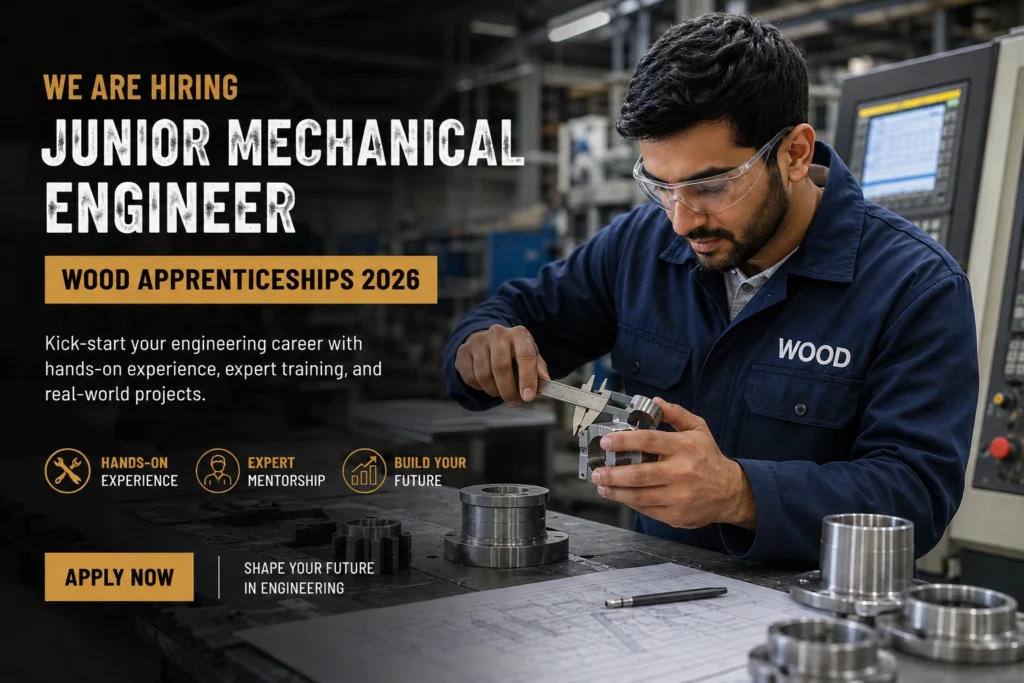

Graduate engineering jobs have become increasingly competitive, making every high-quality opportunity attract significant attention. That explains why the (Junior Mechanical Engineer) Wood Apprenticeships 2026 opportunity is generating interest among recent mechanical engineering graduates across South Africa.
Unlike many entry-level vacancies that offer limited exposure or short-term contracts, this position places graduates inside one of the world’s most recognised engineering organisations. With projects spanning energy, mining, infrastructure and industrial sectors, Wood provides young engineers with an opportunity to gain experience that many professionals spend years trying to secure.
The vacancy has already attracted hundreds of interested applicants online, and that momentum reflects a wider trend in today’s graduate employment market. Young engineers are increasingly looking beyond salary alone. They want structured learning, professional mentorship, international exposure and employers that invest in long-term career development.
For graduates hoping to build a meaningful engineering career rather than simply find their first job, Wood’s latest recruitment drive arrives at exactly the right moment.
A Changing Engineering Landscape Creates New Opportunities
The engineering profession has undergone significant transformation over the past decade.
Traditional engineering companies are no longer focused solely on designing equipment or delivering construction projects. Today’s organisations combine digital technologies, sustainability strategies, automation and data-driven decision-making to solve increasingly complex industrial challenges.
Wood has evolved alongside this transformation.
Operating with approximately 33,000 employees across around 50 countries, the company supports clients throughout the complete asset lifecycle—from feasibility studies and engineering design through construction support, commissioning, operations and optimisation.
As part of the Energy & Materials pillar of Sidara, Wood works with organisations seeking to improve operational efficiency while reducing environmental impact.
For graduates entering the profession in 2026, this creates an environment where learning extends well beyond textbooks and university laboratories.
Instead of working in isolation, junior engineers become part of multidisciplinary teams tackling real-world engineering problems.
Why Graduates Are Paying Close Attention
Several features make this opportunity stand out in an increasingly crowded graduate recruitment market.
First is the employer itself.
Large international engineering firms typically provide structured development programmes that expose graduates to recognised industry standards and established engineering practices.
Second is the hybrid working model.
Engineering roles have traditionally required full-time office attendance. Wood’s hybrid approach reflects the changing expectations of modern professionals while maintaining opportunities for collaboration and mentorship.
Third is professional growth.
The company encourages graduates to register as Candidate Engineers with the Engineering Council of South Africa (ECSA), helping establish a pathway toward professional registration.
For many engineering graduates, that professional journey is just as valuable as immediate employment.
What Makes This Position Different?
Although the vacancy is titled Junior Mechanical Engineer, the role functions much like an advanced graduate development opportunity.
Rather than assigning repetitive administrative work, Wood introduces graduates to multiple aspects of engineering delivery.
Responsibilities include:
- Supporting technical calculations and engineering specifications
- Reviewing engineering drawings
- Understanding project lifecycle stages
- Participating in design reviews
- Reviewing supplier documentation
- Assisting with Factory Acceptance Tests
- Learning engineering standards used on mining and industrial projects
- Contributing to safe engineering practices
This broad exposure allows graduates to understand how engineering decisions affect every stage of project delivery.
Instead of specialising too early, successful candidates gain a well-rounded technical foundation.
Learning Beyond the Classroom
University teaches engineering theory.
Industry teaches engineering judgement.
That distinction explains why employers value practical workplace experience so highly.
Graduates joining Wood are expected to develop technical competence while also learning commercial awareness, project communication, documentation standards and interdisciplinary collaboration.
These practical skills often determine how quickly young engineers progress into larger project responsibilities.
Understanding project budgets, timelines, client expectations and safety requirements cannot be fully replicated in an academic environment.
Wood’s graduate environment aims to bridge that gap.
The Skills Wood Appears to Value Most
Looking beyond academic qualifications, the advertised requirements reveal something interesting.
Technical ability is only part of the equation.
Wood is clearly searching for graduates who demonstrate:
- Adaptability
- Initiative
- Professional integrity
- Strong communication
- Time management
- Teamwork
- Curiosity
- Willingness to learn
These qualities have become increasingly important across engineering industries.
Modern engineering projects involve collaboration between mechanical, electrical, civil, structural, process and digital specialists.
Graduates who communicate effectively often become valuable contributors much earlier in their careers.
Why Midrand Continues to Attract Engineering Talent
The position is based in Midrand, Gauteng, an area that has steadily developed into one of South Africa’s important engineering and corporate hubs.
Many multinational engineering firms operate from Gauteng because of its proximity to major clients, industrial operations and infrastructure networks.
For graduates, this location creates opportunities beyond the immediate role.
Working within such an environment often leads to networking opportunities, exposure to multiple industries and interaction with experienced professionals from different engineering disciplines.
That wider ecosystem can significantly influence long-term career growth.
Recent Developments Driving Interest
Graduate recruitment has become one of the most discussed topics among engineering students during 2026.
Several factors explain why opportunities like this receive immediate attention.
Companies have become increasingly selective, preferring graduates who demonstrate both technical capability and adaptability.
At the same time, young professionals are prioritising employers with strong development cultures rather than simply accepting the first available position.
Wood’s emphasis on mentoring, structured learning and professional registration aligns well with those changing expectations.
Another noticeable trend is sustainability.
Engineering companies are increasingly recruiting graduates who want to contribute to projects supporting operational efficiency, cleaner technologies and lower-carbon industrial solutions.
This aligns with Wood’s public commitment to supporting resilient operations and a lower carbon future.
Public Reaction
The online response reflects growing enthusiasm among engineering graduates.
Many applicants see this role as an opportunity to enter a globally recognised organisation without requiring years of previous experience.
Career advisers frequently encourage graduates to target employers that provide structured learning rather than focusing solely on starting salaries.
Professional engineers have also highlighted the value of gaining experience within organisations that follow internationally recognised engineering standards.
While competition for roles like this remains intense, many observers believe these positions provide stronger long-term career value than less structured graduate employment.
Who Is Best Positioned to Apply?
The advertised criteria suggest the opportunity suits graduates who have completed:
- BSc Mechanical Engineering
- BEng Mechanical Engineering
- BTech Mechanical Engineering
Applicants should also possess:
- Microsoft Office proficiency
- Working knowledge of at least one CAD application
- Strong organisational skills
- Effective written and verbal communication
- Willingness to register with ECSA
Importantly, previous extensive industry experience is not listed as a requirement.
That makes the opportunity especially attractive for recent graduates entering the workforce.

Preparing a Competitive Application
Graduate recruitment often involves large applicant pools.
Small improvements can therefore make a meaningful difference.
Applicants should tailor their CV specifically to the position rather than using a generic engineering résumé.
Projects completed during university deserve particular attention.
Final-year design projects, CAD experience, laboratory work, group engineering assignments and internship experience all demonstrate practical capability.
A concise cover letter explaining genuine interest in Wood’s engineering work can also strengthen an application.
Recruiters frequently appreciate applicants who understand the organisation’s business rather than simply applying to every available vacancy.
APPLY HERE: Wood Apprenticeships 2026
ALSO APPLY FOR: Assistant Mechanic (Apprentice)
Why This Matters Right Now
Graduate employment remains one of the biggest concerns facing newly qualified professionals in South Africa.
Engineering graduates often invest years developing specialised technical skills, yet many still struggle to secure opportunities offering meaningful career progression.
That makes vacancies like the (Junior Mechanical Engineer) Wood Apprenticeships 2026 especially significant.
They represent more than employment.
They represent access to mentorship, professional registration pathways, international engineering standards and practical experience that can shape an entire career.
At the same time, industries across energy, mining and manufacturing continue adapting to digital technologies and sustainability goals.
Graduates entering these sectors today will likely help design the next generation of industrial infrastructure.
Opportunities that combine technical learning with exposure to modern engineering practices therefore carry lasting career value.
What Could Happen Next
With no official application closing date announced, interested candidates should avoid delaying their submissions.
Graduate vacancies with internationally recognised employers often remain open only until suitable candidates are identified.
If recruitment follows Wood’s typical process, shortlisted applicants may progress through several stages that could include:
- CV screening
- Technical review
- Behavioural interviews
- Engineering discussions
- Potential assessments
Successful candidates would then begin developing practical engineering experience while working alongside experienced professionals.
Looking further ahead, graduates who perform well could eventually pursue professional registration through ECSA and move into larger technical or project leadership responsibilities.
For many engineers, careers are built one opportunity at a time.
This role has the potential to become that important first step.
Final Thoughts
The (Junior Mechanical Engineer) Wood Apprenticeships 2026 opportunity reflects the qualities many graduates now prioritise: structured development, meaningful engineering work, professional mentorship and long-term career growth.
Rather than promising instant success, the role offers something arguably more valuable—a foundation.
Working with experienced engineers, contributing to real projects and understanding global engineering standards can create opportunities that extend far beyond an entry-level position.
Competition is expected to remain strong, particularly given Wood’s international reputation and commitment to developing engineering talent.
Graduates who meet the qualification requirements should prepare a focused application, demonstrate genuine enthusiasm for engineering and apply as early as possible while the opportunity remains available.
For aspiring mechanical engineers ready to move from university into industry, this could be one of the standout graduate opportunities of 2026.