
Many students believe that earning a degree alone is enough to secure a great job after graduation. Unfortunately, today’s job market is far more competitive. Employers increasingly look beyond academic qualifications and expect graduates to demonstrate practical experience, digital literacy, communication abilities, leadership, and problem-solving skills.
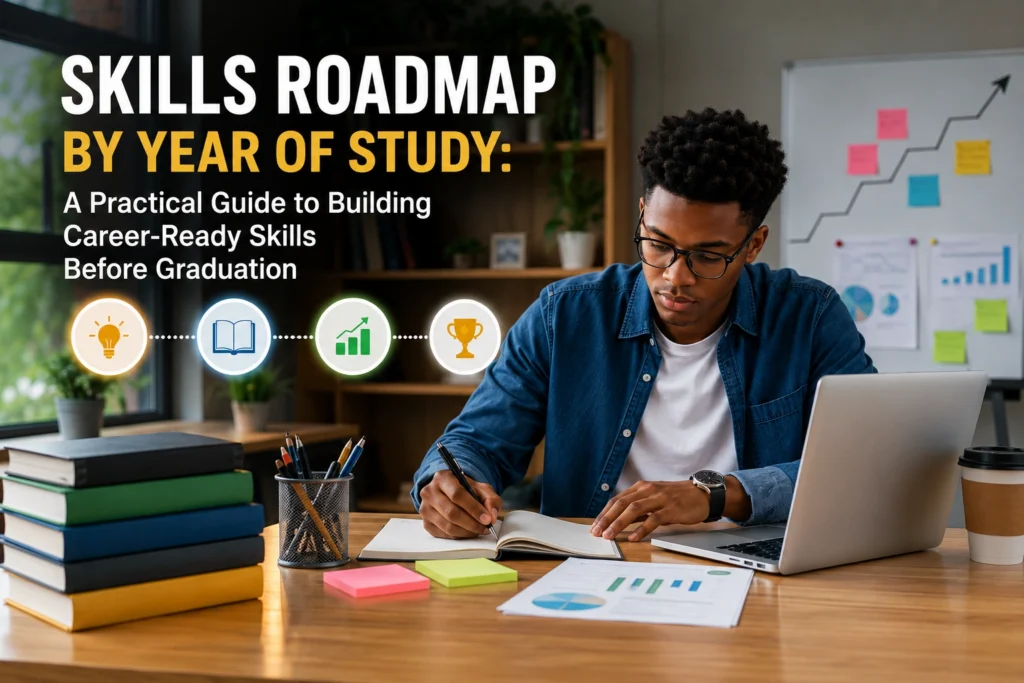
This is why having a Skills roadmap by year of study is one of the smartest investments you can make during your education. Rather than trying to learn everything in your final year, a structured roadmap helps you build valuable skills gradually, making each academic year count.
Whether you are studying at a university, college, or TVET institution, this guide explains how to develop the right skills at every stage of your education so that you graduate with confidence, experience, and a competitive advantage.
What Is a Skills Roadmap by Year of Study?
A Skills roadmap by year of study is a structured plan that outlines which skills students should prioritize during each academic year.
Instead of waiting until graduation to think about employment, the roadmap encourages continuous personal and professional development throughout your studies.
The roadmap combines several important areas, including:
- Academic success
- Digital skills
- Communication abilities
- Leadership development
- Networking
- Career planning
- Workplace readiness
- Industry experience
- Financial literacy
- Personal growth
By following a yearly plan, students avoid feeling overwhelmed while steadily becoming more employable.
ALSO APPLY FOR: (SAEP) Bursary 2026
ALSO APPLY FOR: Cliffe Dekker Hofmeyr Bursary 2027
Why This Issue Matters
The employment market has changed dramatically over the past decade.
Many graduates struggle to find work not because they lack qualifications, but because they have limited practical experience and few transferable skills.
Employers now value candidates who can demonstrate:
- Critical thinking
- Adaptability
- Teamwork
- Communication
- Time management
- Technology proficiency
- Emotional intelligence
- Initiative
- Problem-solving
Building these skills throughout your education provides several advantages:
- Better internship opportunities
- Stronger CVs
- Higher confidence during interviews
- Improved academic performance
- Greater professional networks
- Increased employability after graduation
Students who begin preparing early often face far less stress during their final year because they already possess experience that employers value.
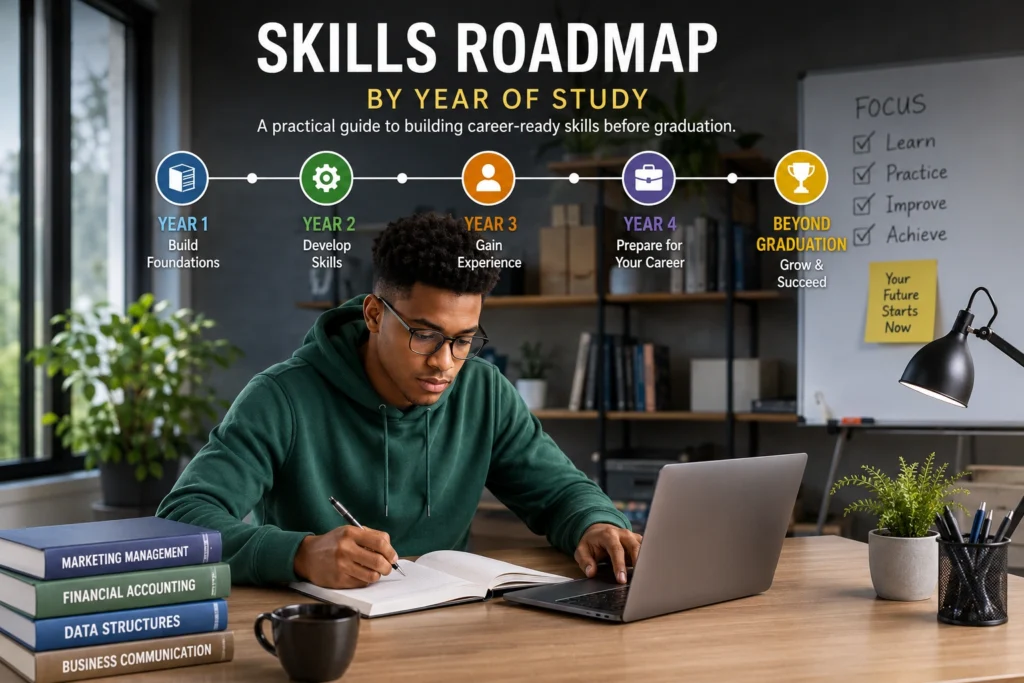
Skills Roadmap by Year of Study: A Step-by-Step Guide
First Year: Build Strong Foundations
The first year is about adjustment and establishing good habits.
Many students focus only on passing exams, but this is also the ideal time to develop lifelong learning skills.
Priorities include:
Develop Effective Study Habits
Learn how to:
- Take structured notes
- Manage deadlines
- Organize assignments
- Prepare for exams
- Avoid procrastination
Good study habits improve both academic results and future workplace performance.
Improve Digital Skills
Modern employers expect graduates to use technology confidently.
Learn to use:
- Microsoft Word
- Excel
- PowerPoint
- Google Workspace
- Cloud storage
- Online collaboration platforms
Basic digital literacy is becoming essential across almost every profession.
Practice Communication
Start participating in:
- Group discussions
- Class presentations
- Debates
- Student organizations
Communication skills improve through regular practice.
Build Professional Habits
Simple habits make a lasting difference:
- Arrive on time
- Meet deadlines
- Respond professionally to emails
- Keep digital files organized
These habits transfer directly into the workplace.
Second Year: Develop Practical Skills
Second year is the ideal time to begin applying classroom knowledge to real-world situations.
Learn Industry Software
Depending on your field, this may include:
- Accounting software
- Design programs
- Programming languages
- Data analysis tools
- Engineering software
- Marketing platforms
Learning these tools early increases internship opportunities.
Strengthen Teamwork
Employers consistently rank teamwork among the most valuable workplace skills.
Volunteer for:
- Group projects
- Student committees
- Community initiatives
- Academic societies
These experiences teach collaboration, conflict resolution, and leadership.
Build a Professional Online Presence
Create and update:
- Professional CV
- Portfolio
- LinkedIn profile
- Personal website (if relevant)
Start documenting your achievements instead of trying to remember them years later.
Begin Networking
Networking doesn’t mean asking people for jobs.
Instead:
- Attend career events
- Meet lecturers
- Join professional associations
- Connect with alumni
- Participate in workshops
Strong professional relationships often create future opportunities.
Third Year: Gain Real Experience
By third year, employers expect students to begin applying their knowledge in practical settings.
Pursue Internships
Even short internships provide valuable experience.
Benefits include:
- Workplace exposure
- Industry knowledge
- Professional references
- Career clarity
- Practical skills
Paid or unpaid, internships demonstrate initiative.
Build a Portfolio
Instead of simply listing skills, collect evidence.
Include:
- Projects
- Research
- Designs
- Reports
- Coding work
- Marketing campaigns
- Presentations
- Volunteer achievements
A strong portfolio often impresses employers more than grades alone.
Improve Problem-Solving
Employers value graduates who can think independently.
Practice:
- Case studies
- Research projects
- Innovation competitions
- Business simulations
These activities strengthen analytical thinking.
Learn Financial Skills
Students should understand:
- Budgeting
- Saving
- Tax basics
- Credit management
- Salary negotiation
Financial literacy supports long-term career success.
Final Year: Prepare for Employment
The final year should focus on converting your education into career opportunities.
Refine Your CV
Update it with:
- Internships
- Leadership roles
- Volunteer work
- Certifications
- Technical skills
- Projects
- Awards
Tailor your CV for each application rather than sending the same version everywhere.
Practice Interview Skills
Conduct mock interviews covering:
- Behavioural questions
- Technical questions
- Problem-solving exercises
- Salary discussions
Confidence improves through preparation.
Expand Your Professional Network
Stay connected with:
- Lecturers
- Internship supervisors
- Alumni
- Industry professionals
- Recruiters
Many graduate opportunities arise through professional relationships.
Continue Learning
Graduation is not the end of learning.
Consider:
- Online certifications
- Industry workshops
- Professional licences
- Short courses
- Conferences
Continuous learning helps graduates remain competitive as industries evolve.
ALSO READ ABOUT: How to Replace a Lost Matric Certificate
Essential Skills Every Student Should Build
Regardless of your qualification, these skills remain valuable across almost every profession.
Communication
Being able to explain ideas clearly is vital in meetings, interviews, and teamwork.
Practice both written and verbal communication regularly.
Critical Thinking
Employers value people who analyse situations instead of waiting for instructions.
Develop this skill through research, discussion, and problem-solving activities.
Time Management
Balancing assignments, exams, internships, and personal responsibilities prepares students for workplace expectations.
Use calendars, planners, or digital scheduling tools.
Adaptability
Technology and industries continue changing rapidly.
Students who embrace learning and change remain more employable.
Leadership
Leadership isn’t limited to management positions.
You can develop leadership by:
- Leading group projects
- Organizing events
- Mentoring classmates
- Coordinating volunteers
Emotional Intelligence
Understanding emotions helps students:
- Resolve conflicts
- Communicate effectively
- Build relationships
- Handle workplace pressure
Emotional intelligence is increasingly recognised as a key career skill.
Digital Literacy
Every profession now involves technology.
Continue improving:
- Data analysis
- Artificial intelligence awareness
- Cybersecurity basics
- Online collaboration
- Digital communication
Best Practices Experts Recommend
Career development specialists often recommend several habits that consistently improve graduate employability.
Start earlier than you think necessary. Building skills gradually is more effective than trying to catch up during your final year.
Focus on quality rather than quantity. A few meaningful experiences are often more valuable than joining dozens of activities without genuine involvement.
Keep a record of achievements. Save certificates, project reports, presentations, and examples of your work in one organised folder. These become useful when updating your CV or preparing for interviews.
Seek constructive feedback. Lecturers, mentors, internship supervisors, and classmates can help you identify strengths and areas for improvement.
Balance academics with practical experience. Strong grades remain important, but combining them with internships, volunteering, leadership, or part-time work creates a more compelling graduate profile.
Review your progress regularly. Every semester, assess which skills you have developed and identify the next areas to improve.
Mistakes People Often Make
Many students unintentionally delay their career preparation. Avoid these common mistakes.
Waiting until the final year to build employability skills. Career development should begin from your first year of study.
Ignoring networking opportunities. Building professional relationships early can lead to internships, mentorship, and job referrals.
Focusing only on grades. Academic performance matters, but employers also look for practical experience and transferable skills.
Failing to document achievements. Projects, volunteer work, and leadership roles are much easier to showcase when you keep records as you go.
Neglecting digital skills. Technology is part of almost every industry, making digital competence essential regardless of your field.
Avoiding challenges. Taking on unfamiliar responsibilities helps you grow faster than staying within your comfort zone.
Frequently Asked Questions
1. Why is a Skills roadmap by year of study important?
A structured roadmap helps students develop academic, technical, and professional skills gradually instead of rushing during their final year. This approach improves confidence, employability, and career readiness.
2. Can I follow this roadmap if I study at a TVET college?
Yes. The principles apply to university students, TVET college students, and other higher education learners. You can adapt the roadmap to suit your programme and career goals.
3. What if I am already in my final year?
You can still make significant progress by focusing on internships, networking, interview preparation, professional certifications, and building a strong portfolio. While starting earlier offers advantages, meaningful improvements can still be achieved before graduation.
4. Which skills do employers value the most?
While requirements vary by industry, employers consistently seek communication, teamwork, digital literacy, adaptability, critical thinking, problem-solving, leadership, and time management alongside technical knowledge.
Final Summary
Following a Skills roadmap by year of study allows students to develop career-ready abilities step by step instead of leaving everything until graduation. By building strong study habits in the first year, gaining practical experience in the middle years, and focusing on employability in the final year, you create a well-rounded profile that appeals to employers and prepares you for long-term success.
The most important step is to begin now, regardless of your current year of study. Set clear goals for the next semester, identify one or two skills to strengthen, seek opportunities to apply what you learn, and keep track of your achievements. Small, consistent actions taken throughout your education can make a significant difference when it is time to launch your career.
ALSO APPLY FOR: (SAEP) Bursary 2026
ALSO APPLY FOR: Cliffe Dekker Hofmeyr Bursary 2027
ALSO READ ABOUT: How to Replace a Lost Matric Certificate