

For thousands of young South Africans, not having a matric certificate can feel like a locked door to opportunity. Job listings often list “Grade 12 required” as a minimum, and most bursaries or internships follow the same rule. This creates a frustrating cycle: you can’t get experience without qualifications, and you can’t gain qualifications without access to opportunities.
But here’s the reality many people miss—there are learnerships and training programmes that quietly accept candidates without matric. These are not always widely advertised, and they’re often overlooked because they don’t follow the traditional academic route.
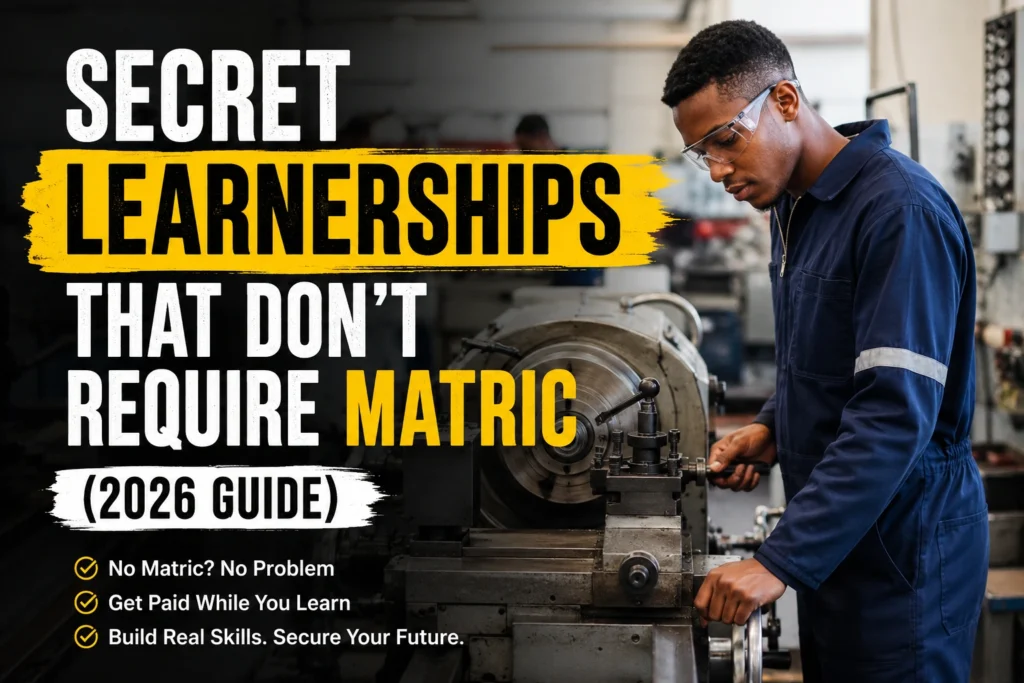
This Secret Learnerships That Don’t Require Matric (2026 Guide) is designed to break that barrier. It will show you where to find these opportunities, how they work, and exactly how to position yourself to get selected—even without Grade 12.
What Are Learnerships (And Why Some Don’t Require Matric)?
A learnership is a structured training programme that combines classroom learning with practical work experience. In South Africa, learnerships are usually registered with a SETA (Sector Education and Training Authority), and many lead to a nationally recognised qualification.
While some learnerships require matric, others are designed for entry-level skills development. These programmes focus more on potential, attitude, and basic literacy than formal academic results.
Types of Learnerships That Often Don’t Require Matric:
- General worker or entry-level operator programmes
- Wholesale and retail learnerships
- Cleaning, security, and hospitality training
- Construction and artisan assistant roles
- Call centre and customer service programmes
- Community health and social support learnerships
These programmes are often called “hidden” or “secret” because:
- They are advertised locally (not on big job sites)
- They recruit through NGOs or community centres
- They don’t always clearly state “no matric required”—but accept equivalent skills
ALSO APPLY FOR: Northlink College Internship 2026
ALSO APPLY FOR: Foschini Group (TFG) Graduate Internships 2026
Why This Issue Matters
Not having matric doesn’t just limit job options—it affects long-term income, confidence, and career growth.
The Real-World Impact:
- Higher unemployment risk: Youth without matric face significantly fewer formal job opportunities
- Lower earning potential: Many entry-level jobs pay less without structured training
- Missed career pathways: Learnerships often lead to permanent employment or further study
- Social inequality: Limited access to education widens economic gaps
But when you access the right learnership, everything can change. You gain:
- Work experience
- A recognised qualification (NQF Level 1–3)
- A monthly stipend
- A pathway into industries like retail, logistics, or construction
That’s why understanding Secret Learnerships That Don’t Require Matric (2026 Guide) is not just helpful—it can be life-changing.
Where to Find Secret Learnerships That Don’t Require Matric (2026 Guide)
These opportunities exist—you just need to know where to look.
1. Local Municipal Offices and Community Centres
Many municipalities run Expanded Public Works Programme (EPWP) projects or partner with training providers. These often include:
- Maintenance training
- Environmental programmes
- Community service roles
👉 Visit your local municipal office or ward councillor’s office regularly.
2. NGOs and Youth Development Organisations
Non-profits often run funded learnerships targeting unemployed youth.
Look for:
- Skills development programmes
- Community outreach training
- Short-term learnerships leading to certification
These programmes usually prioritise need and willingness to learn over formal education.
3. Retail and Wholesale Companies
Large retail chains frequently offer learnerships that require only:
- Basic reading and writing
- Ability to communicate in English
- Willingness to work shifts
Common roles:
- Shop assistant
- Cashier trainee
- Stock controller
4. Security and Cleaning Services
Security companies and cleaning contractors regularly train new recruits.
Requirements often include:
- Grade 10 or equivalent (sometimes not enforced)
- Physical fitness
- Clear criminal record
These sectors are among the most accessible entry points without matric.
5. Construction and Trade Training Centres
Skills programmes in construction often accept candidates without matric.
Examples include:
- Bricklaying
- Plumbing assistant training
- Electrical helper programmes
These can later lead to artisan apprenticeships.
6. Online Platforms (Used Strategically)
While major job portals often filter by matric, you can still find opportunities by:
- Searching “no matric learnership 2026”
- Using terms like “entry-level training programme”
- Following company social media pages
Step-by-Step Strategy to Get Accepted
Finding opportunities is one thing—getting selected is another. Here’s how to improve your chances.
Step 1: Build a Simple but Strong CV
Even without matric, your CV matters.
Include:
- Personal details
- Any school history (even if incomplete)
- Volunteer work or informal jobs
- Skills (communication, teamwork, reliability)
Keep it clean, honest, and easy to read.
Step 2: Highlight Practical Skills
Employers often value:
- Punctuality
- Willingness to learn
- Physical ability (for manual roles)
- Customer service attitude
If you’ve helped in a family business or done casual work, include it.
Step 3: Apply Consistently (Volume Matters)
Many people apply once and stop. That’s a mistake.
Set a weekly goal:
- Apply to at least 5–10 opportunities
- Visit 2–3 local offices or centres
- Follow up where possible
Step 4: Prepare for Basic Interviews
You may be asked simple questions like:
- Why do you want this opportunity?
- Are you willing to learn?
- Can you work under pressure?
Focus on showing commitment, not perfection.
Step 5: Be Available and Responsive
Opportunities move fast. If you miss a call, you may lose the chance.
- Keep your phone on
- Check messages regularly
- Respond professionally
ALSO READ ABOUT: Highest Paying Apprenticeships in South Africa (2026)
Best Practices Experts Recommend
Professionals in skills development consistently highlight a few key habits that improve success rates.
1. Focus on Attitude Over Qualifications
Training providers often say:
“We can teach skills, but we can’t teach attitude.”
Be reliable, respectful, and eager to learn.
2. Start Small and Build Up
Your first learnership may not be your dream job—and that’s okay.
Use it to:
- Gain experience
- Build references
- Move into better opportunities
3. Network in Your Community
Opportunities often spread through word of mouth.
- Talk to friends and family
- Join local WhatsApp job groups
- Attend community meetings
4. Consider Adult Education (ABET)
While applying, consider upgrading your education through:
- Adult Basic Education and Training (ABET)
- TVET bridging programmes
This increases your future options.
5. Stay Consistent, Not Perfect
Success comes from persistence, not one perfect application.
Mistakes People Often Make
Avoiding these common errors can significantly improve your chances.
1. Assuming “No Matric = No Opportunity”
This mindset stops many people before they even try.
2. Ignoring Small Opportunities
Some people only apply for big, well-known programmes.
Smaller programmes often have:
- Less competition
- Faster selection processes
3. Submitting Poor CVs
Even for entry-level roles, a messy CV can hurt your chances.
4. Not Following Up
Opportunities are competitive. A simple follow-up can show initiative.
5. Giving Up Too Early
Many applicants stop after a few rejections.
In reality, success often comes after dozens of applications.
FAQs
1. Can I really get a learnership without matric?
Yes. Many entry-level learnerships focus on basic skills and potential rather than formal qualifications.
2. Do these learnerships pay a stipend?
Most do. Stipends vary but typically cover basic transport and living costs.
3. Can a learnership lead to a permanent job?
Yes. Many employers use learnerships to recruit future employees.
4. What if I failed matric—can I still apply?
Absolutely. You can still qualify for many programmes, especially those requiring only Grade 10 or equivalent skills.
Conclusion: Turning Hidden Opportunities Into Real Progress
The truth is simple: not having matric does not mean you are out of options—it just means you need a different strategy.
This Secret Learnerships That Don’t Require Matric (2026 Guide) shows that opportunities exist in places many people don’t think to look: community programmes, small training providers, retail chains, and local networks.
Practical Steps You Can Take Today:
- Update your CV (even without matric)
- Visit local municipal and community offices
- Apply consistently every week
- Stay open to entry-level opportunities
- Build experience step by step
Progress may not happen overnight—but with persistence, the right information, and a willingness to start small, you can build a path forward.
ALSO APPLY FOR: Northlink College Internship 2026
ALSO APPLY FOR: Foschini Group (TFG) Graduate Internships 2026
ALSO READ ABOUT: Highest Paying Apprenticeships in South Africa (2026)