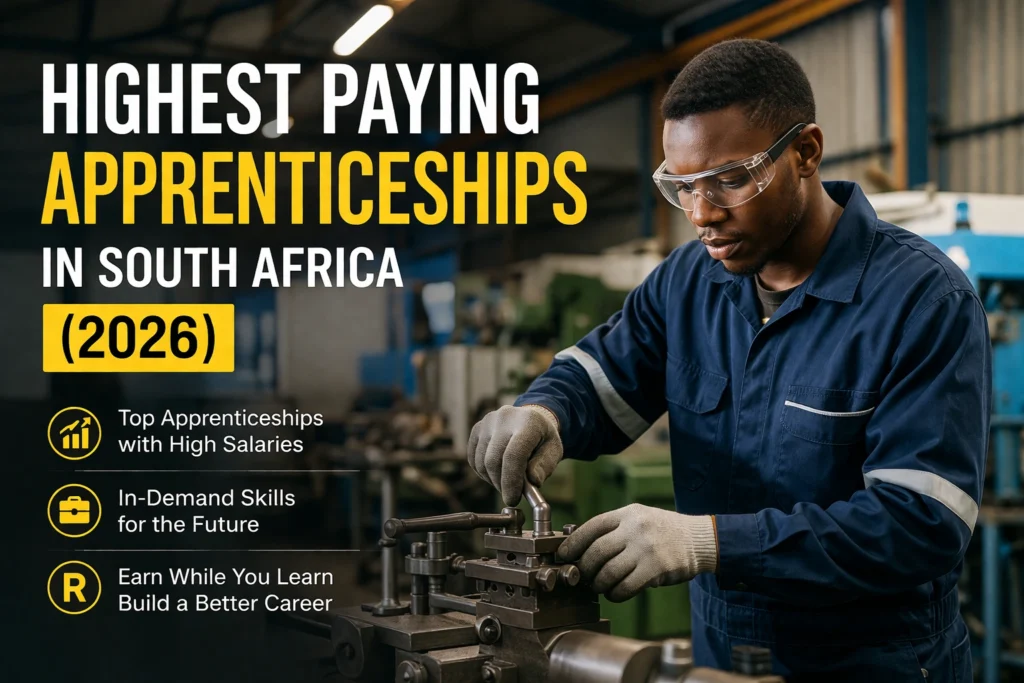

For many young South Africans, the biggest frustration isn’t a lack of ambition—it’s the gap between education and employment. You finish matric or even a qualification, only to face a job market that demands experience you don’t yet have. On the other hand, going to university isn’t always affordable or the right fit for everyone.
That’s where apprenticeships come in—but not all apprenticeships are equal. Some offer modest stipends, while others can put you on a path to earning a strong salary within just a few years.
This guide breaks down the Highest Paying Apprenticeships in South Africa (2026), showing you where the real opportunities are, what they pay, and how to position yourself to secure one.
What Are Apprenticeships—and Why Do They Matter?
An apprenticeship is a structured training programme that combines on-the-job experience with formal learning. Unlike internships, apprenticeships are usually tied to technical or trade careers and lead to a recognised qualification.
In South Africa, apprenticeships are especially common in sectors like:
- Engineering
- Mining
- Energy and utilities
- Automotive and manufacturing
- Construction
Most apprentices earn a monthly stipend, which increases as they gain experience. By the time they qualify as artisans, many step directly into well-paying jobs.
ALSO APPLY FOR: SAA Technical – Apprentice Training
ALSO APPLY FOR: VKB Oil Millwright Apprenticeship 2026
Why This Issue Matters
South Africa continues to face high youth unemployment, particularly among people aged 18–35. At the same time, industries are struggling to find skilled artisans.
This creates a paradox:
- Thousands of young people are jobless
- Companies are short of qualified technical workers
Apprenticeships bridge this gap.
Choosing one of the Highest Paying Apprenticeships in South Africa (2026) isn’t just about income—it’s about:
- Building in-demand skills
- Reducing long-term unemployment risk
- Entering industries with clear career progression
- Gaining financial independence earlier
For many, it’s one of the most practical and reliable ways to build a career without taking on student debt.
Highest Paying Apprenticeships in South Africa (2026)
Not every apprenticeship leads to high earnings. The best-paying ones are usually in scarce-skill sectors where demand is high.
Here are some of the top-paying options:
1. Millwright Apprenticeship
Estimated stipend: R8,000 – R18,000/month
Qualified salary: R25,000 – R45,000/month
Millwrights are multi-skilled artisans who work with both mechanical and electrical systems. They are critical in factories, mines, and processing plants.
Why it pays well:
- Combines multiple technical skills
- High demand in manufacturing and mining
- Essential for keeping production running
2. Electrician Apprenticeship
Estimated stipend: R7,000 – R15,000/month
Qualified salary: R20,000 – R40,000+/month
Electricians work in residential, industrial, and commercial environments. With the rise of solar energy, demand is increasing even further.
Why it pays well:
- Energy sector growth (especially renewables)
- Opportunities for self-employment
- High demand across industries
3. Diesel Mechanic Apprenticeship
Estimated stipend: R8,000 – R16,000/month
Qualified salary: R25,000 – R50,000/month
Diesel mechanics maintain trucks, buses, and heavy machinery—especially in logistics, mining, and construction.
Why it pays well:
- Critical role in transport and mining
- Skills shortage in heavy vehicle maintenance
- Opportunities to work internationally
4. Boilermaker Apprenticeship
Estimated stipend: R9,000 – R18,000/month
Qualified salary: R30,000 – R55,000/month
Boilermakers fabricate and repair metal structures and pressure vessels.
Why it pays well:
- High-risk, high-skill work
- Strong demand in mining and energy
- Often includes overtime and site allowances
5. Fitter and Turner Apprenticeship
Estimated stipend: R7,500 – R16,000/month
Qualified salary: R25,000 – R45,000/month
These artisans manufacture and assemble precision parts used in machinery.
Why it pays well:
- Precision engineering is highly valued
- Essential for industrial operations
- Opportunities in multiple sectors
6. Instrumentation Technician Apprenticeship
Estimated stipend: R10,000 – R20,000/month
Qualified salary: R35,000 – R60,000/month
This is one of the most technical apprenticeships, involving sensors, control systems, and automation.
Why it pays well:
- Advanced technical skillset
- Critical in automated industries
- Limited supply of qualified professionals
7. Welding Apprenticeship (Specialised Welding)
Estimated stipend: R6,000 – R14,000/month
Qualified salary: R20,000 – R50,000+/month
Highly skilled welders, especially in underwater or coded welding, can earn significantly more.
Why it pays well:
- Specialisation drives income
- Global demand for skilled welders
- Opportunities in oil, gas, and construction

ALSO READ ABOUT: Underrated Bursaries That Accept Average Marks (You Can Still Qualify)
Step-by-Step: How to Secure a High-Paying Apprenticeship
Getting into one of the Highest Paying Apprenticeships in South Africa (2026) requires more than just applying randomly.
Step 1: Choose the Right Trade
Focus on industries with:
- Skills shortages
- Strong salary growth
- Long-term demand
Engineering and energy-related trades are currently the safest bets.
Step 2: Meet Minimum Requirements
Most apprenticeships require:
- Matric (with Maths and Science preferred)
- N2–N6 engineering certificates (in some cases)
- Basic technical aptitude
If you don’t meet these yet, consider enrolling in a TVET college.
Step 3: Target the Right Employers
Look for opportunities with:
- Large corporations (mining, logistics, manufacturing)
- Government entities
- Energy companies
These employers usually offer better stipends and structured training.
Step 4: Prepare a Strong Application
Your CV should highlight:
- Technical subjects
- Any hands-on experience
- Willingness to learn
Include a short, clear motivation letter explaining why you chose that trade.
Step 5: Apply Early and Consistently
Apprenticeships are competitive. Apply to multiple programmes and track deadlines carefully.
Step 6: Pass Assessments and Interviews
Employers often test:
- Problem-solving ability
- Mechanical reasoning
- Work ethic
Practice aptitude tests beforehand—it makes a big difference.
Best Practices Experts Recommend
If you want to stand out and eventually earn top salaries, focus on these strategies:
1. Specialise Early
General skills are good, but specialised skills (like automation or renewable energy systems) increase your earning potential.
2. Be Reliable on the Job
Employers value apprentices who show up on time, follow instructions, and take initiative.
3. Keep Learning Beyond the Programme
Short courses in areas like PLC programming, solar installation, or advanced diagnostics can boost your value.
4. Network in Your Industry
Many job opportunities come through connections, especially in technical fields.
5. Think Long-Term
Your first stipend may be modest, but your earning potential grows rapidly after qualification.
Mistakes People Often Make
Even strong candidates miss out because of avoidable errors:
1. Chasing “Easy” Trades Instead of High-Demand Ones
Some choose paths with less competition but also lower pay and fewer opportunities.
2. Ignoring Maths and Science
These subjects are critical for most high-paying technical trades.
3. Applying Without Preparation
Generic CVs and weak applications reduce your chances significantly.
4. Giving Up Too Early
Rejection is common. Many successful artisans applied multiple times before getting accepted.
5. Not Understanding the Work Environment
Some trades involve physically demanding or hazardous conditions—know what you’re signing up for.
FAQ
1. Do apprenticeships really pay well?
Yes—especially in technical trades. While stipends start lower, qualified artisans often earn competitive salaries, with some exceeding R50,000 per month depending on experience and specialisation.
2. Do I need university to qualify for these apprenticeships?
No. Most apprenticeships require matric and sometimes TVET college qualifications. They are designed as alternatives to university.
3. Which apprenticeship is best for long-term income?
Trades like instrumentation, millwright, and boilermaking tend to offer the highest long-term earnings due to their technical complexity and demand.
4. How long does an apprenticeship take?
Typically 2 to 4 years, depending on the trade and programme structure.
Final Thoughts: Turning Opportunity Into Income
The idea that success only comes through university is outdated. In today’s economy, skilled artisans are not just in demand—they are essential.
Choosing from the Highest Paying Apprenticeships in South Africa (2026) gives you a clear advantage:
- You earn while you learn
- You gain real-world experience
- You enter industries that need your skills
The key is to be strategic. Choose a high-demand trade, prepare properly, and stay committed through the process.
If you take the right steps now, an apprenticeship can move you from uncertainty to a stable, well-paying career faster than many traditional paths.
ALSO APPLY FOR: SAA Technical – Apprentice Training
ALSO APPLY FOR: VKB Oil Millwright Apprenticeship 2026
ALSO READ ABOUT: Underrated Bursaries That Accept Average Marks (You Can Still Qualify)