
Finding meaningful work experience after matric can be difficult, especially for young people who want to enter specialized careers such as emergency response and fire fighting. Many applicants struggle to identify legitimate opportunities that provide both accredited training and practical workplace exposure. Competition is often high, and understanding the requirements can be confusing.
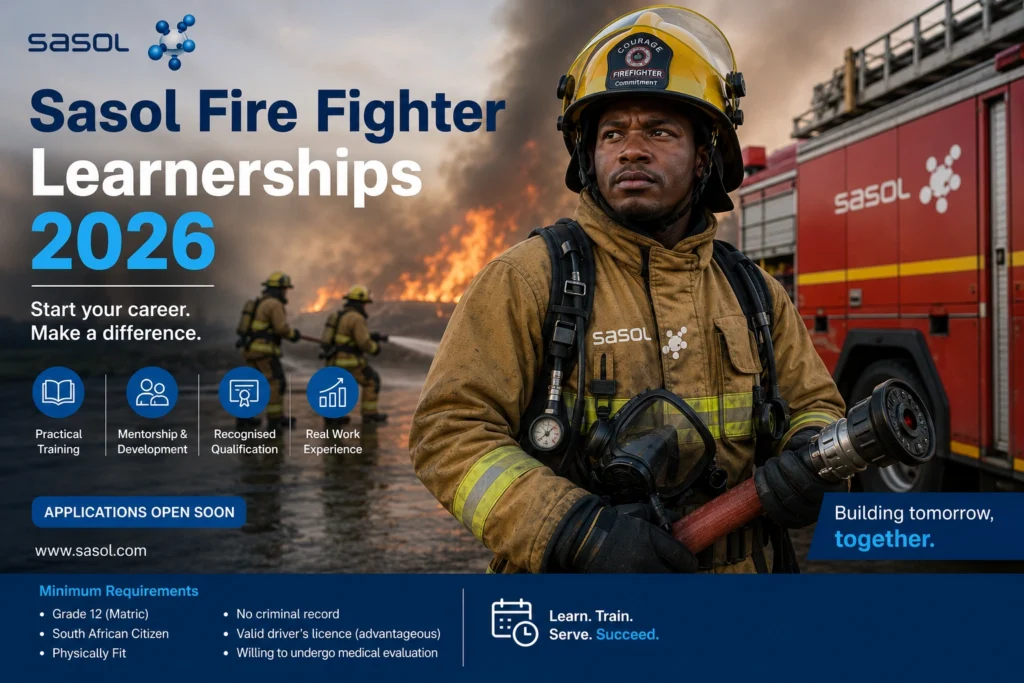
The ( Fire Fighter )-Sasol Learnerships 2026 programme offers a valuable opportunity for young South Africans living in Sasol host communities to gain practical experience while receiving structured training in the fire fighting field. For candidates who meet the requirements and have a passion for safety, emergency services, and community protection, this learnership can be an important stepping stone toward a rewarding career.
This guide explains everything prospective applicants need to know about the ( Fire Fighter )-Sasol Learnerships 2026, including eligibility requirements, application preparation strategies, common mistakes to avoid, and expert recommendations for improving your chances of success.
Understanding the ( Fire Fighter )-Sasol Learnerships 2026
Sasol is a globally recognized integrated chemicals and energy company with decades of experience operating large industrial facilities. Safety remains one of the company’s highest priorities, making fire fighters and emergency response professionals critical members of its operations.
The ( Fire Fighter )-Sasol Learnerships 2026 programme is designed to equip young people with workplace skills, practical training, and theoretical knowledge required in the fire fighting profession.
Successful learners will participate in:
- Structured learning programmes
- Workplace training activities
- Practical fire fighting exercises
- Workplace readiness programmes
- Assessment and evaluation processes
- Emergency response training
The programme combines classroom-based learning with hands-on experience, ensuring participants develop both technical and practical competencies.
Learnership Overview
Here are the key details applicants should know:
Company: Sasol
Position: Learner Fire Fighter
Job Reference: 12330
Closing Date: 19 June 2026
Locations: Secunda and Sasolburg
Contract Type: Fixed-term learnership contract
Available Positions: 12
- 4 positions in Secunda
- 8 positions in Sasolburg
The programme specifically targets individuals residing within Sasol’s local communities.
Why This Issue Matters
Youth unemployment remains one of South Africa’s most pressing challenges. Many matriculants struggle to gain practical work experience because employers often prefer candidates who already possess industry exposure.
Learnership programmes such as the ( Fire Fighter )-Sasol Learnerships 2026 help bridge this gap by combining learning and work experience in a structured environment.
The real-world benefits include:
Career Development
Participants gain valuable workplace exposure that can strengthen future job applications within emergency services, industrial safety, and related sectors.
Skills Acquisition
Learners develop technical, physical, and operational skills that are difficult to obtain without formal training opportunities.
Industry Experience
Exposure to real industrial environments helps candidates understand professional standards and workplace expectations.
Community Safety
Trained fire fighters contribute directly to protecting people, infrastructure, and the environment from fire-related emergencies.
Economic Empowerment
Learnerships can improve long-term employability and create pathways into permanent employment opportunities.
For many young South Africans, programmes like these can become the first major step toward a stable and meaningful career.
Minimum Requirements for Applicants
Before applying for the ( Fire Fighter )-Sasol Learnerships 2026, candidates should carefully review all eligibility requirements.
Applicants must possess:
Educational Requirements
A completed National Senior Certificate (Matric) with passes in:
- Technical Mathematics, Mathematics, or Mathematical Literacy
- English or Business English
- Technical Science or Physical Science
Driver’s License Requirement
Candidates must have:
- A valid Code B driver’s license or higher
This requirement is important because emergency response roles often involve operating vehicles and equipment.
Age Requirement
Applicants must be:
- Between 18 and 29 years old
Residency Requirement
Candidates must reside within Sasol local communities, specifically:
- Secunda
- Sasolburg
Physical and Psychological Fitness
Applicants must be able to:
- Pass a fire fighter fitness assessment
- Work at heights
- Operate in confined spaces
- Handle exposure to fire training environments
- Complete stress and fear assessments
- Navigate cat ladders and elevated structures
These requirements reflect the demanding nature of fire fighting work.
What Does a Fire Fighter Learner Actually Do?
Many applicants understand the title but may not fully appreciate the responsibilities involved.
A learner fire fighter may be expected to:
- Attend training sessions
- Learn emergency response procedures
- Participate in drills and simulations
- Understand fire prevention strategies
- Assist during training exercises
- Learn rescue techniques
- Study safety regulations
- Develop teamwork and communication skills
- Complete workplace assignments
The role requires discipline, commitment, physical fitness, and a willingness to learn continuously.
Step-by-Step Guide to Applying Successfully
Step 1: Confirm Your Eligibility
Before starting your application, verify that you meet every listed requirement.
Check your:
- Age
- Educational qualifications
- Driver’s license status
- Residential eligibility
- Physical fitness readiness
APPLY HERE: ( Fire Fighter )-Sasol Learnerships 2026
Applying without meeting the requirements may result in automatic disqualification.
Step 2: Gather Supporting Documents
Prepare clear copies of:
- South African ID
- Matric certificate
- Driver’s license
- Updated CV
- Proof of residence if required
Having documents ready early prevents last-minute problems.
Step 3: Update Your CV
Your CV should include:
- Personal information
- Educational history
- Driver’s license details
- Volunteer experience
- Leadership activities
- Sports participation
- Community involvement
Even if you lack formal work experience, highlighting responsibility and teamwork can strengthen your application.
Step 4: Prepare for Physical Assessments
The ( Fire Fighter )-Sasol Learnerships 2026 involve fitness evaluations.
Focus on improving:
- Cardiovascular endurance
- Strength
- Stamina
- Flexibility
- Overall physical conditioning
Regular exercise before assessment dates can significantly improve performance.
Step 5: Submit Your Application Early
Avoid waiting until the final day.
Submitting early allows time to:
- Correct errors
- Upload missing documents
- Resolve technical issues
Many strong candidates miss opportunities simply because they submit incomplete applications.
Step 6: Prepare for Possible Assessments
Candidates may undergo:
- Physical evaluations
- Aptitude assessments
- Behavioural assessments
- Fear and stress tolerance testing
Research the fire fighting profession beforehand to better understand what employers expect.
ALSO APPLY FOR: DRDGOLD Learnerships 2026
Skills That Can Improve Your Chances
While not always mandatory, certain qualities can make applicants stand out.
Teamwork
Fire fighting relies heavily on coordinated teamwork. Demonstrating examples of team participation can strengthen your profile.
Leadership
Sports captains, peer leaders, and community volunteers often develop leadership skills valued by employers.
Communication Skills
Emergency situations require clear communication and quick decision-making.
Discipline
Punctuality, responsibility, and reliability are highly regarded in safety-critical environments.
Problem-Solving
Fire fighters frequently encounter unpredictable situations that require rapid thinking and practical solutions.
Best Practices Experts Recommend
Candidates interested in the ( Fire Fighter )-Sasol Learnerships 2026 can benefit from the following best practices.
Research the Fire Fighting Profession
Understand the realities of the career rather than focusing only on the learnership opportunity.
Learn about:
- Emergency response operations
- Industrial fire fighting
- Hazard management
- Safety procedures
Build Physical Fitness Early
Do not wait until assessment invitations arrive.
Develop a fitness routine that includes:
- Running
- Walking
- Strength training
- Stair climbing
- Core exercises
Maintain Professional Conduct
Ensure your application reflects professionalism through:
- Accurate information
- Correct contact details
- Clear documentation
- Proper communication
Demonstrate Commitment to Safety
Safety awareness is highly valued in industrial environments.
Highlight:
- Safety-related school activities
- Community service
- Leadership roles
- First aid exposure if applicable
Stay Informed
Regularly monitor communication channels and email accounts after applying.
Missing an assessment invitation can cost you the opportunity.
Mistakes People Often Make
Many otherwise qualified candidates fail because of avoidable errors.
Submitting Incomplete Applications
Missing documents remain one of the most common reasons applications are rejected.
Providing Incorrect Information
False information may lead to immediate disqualification.
Sasol specifically warns applicants that inaccurate information can render an application null and void.
Ignoring Fitness Preparation
Some candidates underestimate the physical demands of fire fighting and arrive unprepared for assessments.
Applying Without Reading Requirements
Applicants sometimes submit applications despite lacking key requirements such as a driver’s license or residency qualification.
Missing Deadlines
Waiting until the last moment increases the risk of technical problems and incomplete submissions.
Using Unprofessional Contact Information
An unprofessional email address can create a poor first impression.
Use a simple email format that includes your name whenever possible.
Career Opportunities After a Fire Fighting Learnership
One reason the ( Fire Fighter )-Sasol Learnerships 2026 attract significant interest is the potential career development they offer.
Possible future pathways include:
- Industrial fire fighter
- Emergency response officer
- Safety officer
- Fire and rescue services
- Disaster management support
- Occupational health and safety roles
- Municipal fire services
- Emergency preparedness positions
The skills gained during the learnership can also support broader careers in safety management and industrial operations.
Frequently Asked Questions
1. Do I need previous fire fighting experience to apply?
No. The learnership is designed to provide structured training and workplace learning. However, candidates must meet all stated minimum requirements.
2. Can I apply if I live outside Secunda or Sasolburg?
The opportunity is specifically aimed at candidates residing within Sasol local communities in Secunda and Sasolburg. Applicants should carefully review residency requirements before applying.
3. Why is a driver’s license required?
Fire fighters often work with emergency vehicles and equipment. A valid Code B driver’s license or higher demonstrates mobility and readiness for operational responsibilities.
4. What happens if I am not contacted after applying?
According to the programme notice, applicants who do not receive feedback within 60 days after the closing date should consider their application unsuccessful.
Final Thoughts and Practical Advice
The ( Fire Fighter )-Sasol Learnerships 2026 present an excellent opportunity for young South Africans who want to build careers in emergency response, industrial safety, and fire fighting. With 12 available positions across Secunda and Sasolburg, the programme offers structured training, practical experience, and exposure to one of South Africa’s leading industrial employers.
If you plan to apply, start preparing immediately. Confirm that you meet all eligibility requirements, update your CV, gather supporting documents, and begin improving your physical fitness. Pay close attention to deadlines and ensure all information submitted is accurate and truthful.
Most importantly, approach the opportunity with a long-term mindset. A fire fighting learnership is not simply a temporary training programme—it can become the foundation for a career dedicated to safety, service, and protecting communities.