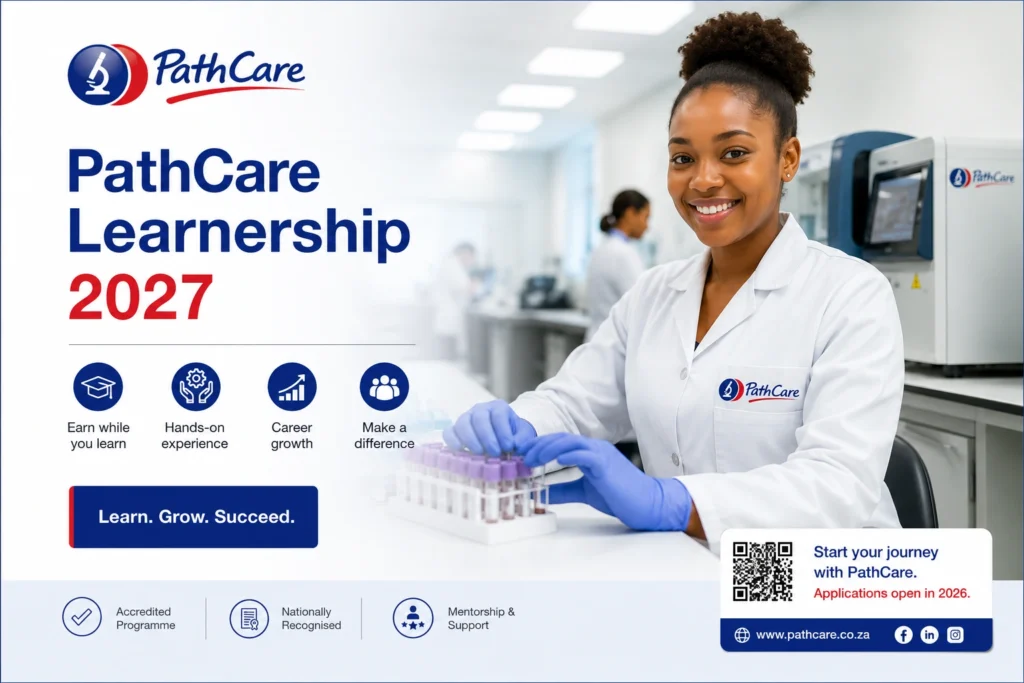

If you’ve completed Grade 12 and dream of working in healthcare, finding the right opportunity can feel overwhelming. Many entry-level healthcare careers require experience, while gaining that experience often seems impossible without first getting a job. This creates a frustrating cycle for thousands of young South Africans looking to enter the medical field.
The (Phlebotomy Technician) PathCare Learnership 2027 offers a practical solution. Instead of requiring years of prior experience, the programme combines structured classroom learning with supervised workplace training, allowing successful applicants to earn while developing valuable healthcare skills.
This guide explains everything prospective applicants need to know—from eligibility requirements and the application process to career opportunities after qualification. Whether you’re considering diagnostic healthcare for the first time or looking for a recognised healthcare qualification, this article will help you prepare a stronger application and understand what to expect.
What Is the (Phlebotomy Technician) PathCare Learnership 2027?
The (Phlebotomy Technician) PathCare Learnership 2027 is a two-year paid healthcare training programme offered through PathCare Academy.
The programme leads to the Further Education and Training Certificate: Phlebotomy Techniques (NQF Level 4), a qualification approved by the South African Qualifications Authority (SAQA) and recognised by the Health Professions Council of South Africa (HPCSA).
Rather than focusing only on classroom learning, the programme combines:
- Formal theoretical instruction
- Practical laboratory training
- Workplace experience
- Professional healthcare development
- Patient care and communication skills
Successful learners are employed on a two-year training contract and receive a training allowance while completing the programme.
This combination of education and paid work experience makes it one of the more attractive healthcare learnership opportunities available to Grade 12 graduates.
Why This Issue Matters
South Africa continues to need skilled healthcare professionals who can support hospitals, clinics and pathology laboratories.
Medical professionals rely on accurate laboratory results to diagnose illnesses, monitor chronic diseases and guide treatment decisions. None of this happens without correctly collected patient samples.
That is where phlebotomy technicians play a critical role.
Every blood sample collected must be:
- Correctly identified
- Safely handled
- Properly labelled
- Collected according to medical standards
- Delivered without contamination
Mistakes during sample collection can delay treatment or even lead to incorrect diagnoses.
By training competent phlebotomy technicians, programmes like the (Phlebotomy Technician) PathCare Learnership 2027 help strengthen South Africa’s healthcare system while creating employment opportunities for young people.
How the Learnership Works
The programme is designed to balance academic learning with practical experience.
Learners spend time developing theoretical knowledge before applying these skills in real healthcare environments under supervision.
During the programme, participants learn about:
- Human anatomy
- Physiology
- Medical terminology
- Infection prevention
- Laboratory safety
- Blood collection techniques
- Specimen handling
- Medical ethics
- Patient communication
- Blood transfusion procedures
- Quality assurance
- Professional conduct
Because learners gain workplace exposure throughout the programme, they develop confidence before qualifying.
How Long Does the Programme Last?
The learnership runs over two years.
Throughout this period, learners remain employed under a fixed-term training contract while completing both academic and workplace requirements.
This gives participants enough time to:
- Build practical confidence
- Learn healthcare procedures
- Prepare for professional examinations
- Develop workplace professionalism
Healthcare employers generally value candidates who already understand clinical environments, making this practical experience particularly valuable.
Where Does Training Take Place?
The programme includes both classroom learning and workplace placements.
Theory Training
PathCare Academy provides classroom instruction at campuses including:
- Cape Town
- Bloemfontein
- Pretoria
Workplace Training
Practical training takes place at various:
- Pathology laboratories
- Collection depots
- Diagnostic centres
Placements depend on available training positions and operational requirements.
Who Can Apply?
Applicants must satisfy the academic requirements before submitting an application.
Minimum requirements include:
- National Senior Certificate (Grade 12)
- South African identity document
Subject requirements include:
- Life Sciences or Biology: 50% or above
OR
- Human and Social Biology (HBM): 60% or above
Plus either:
- Mathematics: 40% or above
OR
- Mathematical Literacy: 60% or above
Applicants who do not meet these subject requirements are unlikely to progress through the selection process.
Personal Skills That Improve Your Chances
Academic results are only one part of the selection process.
Healthcare employers also look for applicants who demonstrate professionalism and maturity.
Strong candidates usually show:
- Good communication skills
- Respect for patients
- Attention to detail
- Reliability
- Emotional maturity
- Teamwork
- Ability to remain calm under pressure
- Strong organisational skills
- Professional behaviour
- Willingness to work shifts
Because phlebotomy technicians interact directly with patients, customer service skills are highly valued.
Step-by-Step Guide to Applying Successfully
Applying for the (Phlebotomy Technician) PathCare Learnership 2027 is straightforward if you prepare properly.
Step 1: Check Your Academic Results
Before doing anything else, compare your Grade 12 results against the official requirements.
Pay particular attention to:
- Life Sciences
- Biology
- Mathematics
- Mathematical Literacy
- HBM where applicable
If you do not meet the minimum percentages, your application may not proceed.
Step 2: Prepare Your Documents
Gather all required documentation before beginning the online application.
Typically you should prepare:
- Updated CV
- Certified matric certificate
- South African ID
- Academic transcript if required
- Supporting certificates
- Volunteer experience certificates (if available)
Ensure all scanned copies are clear and readable.
Step 3: Create a Professional CV
Your CV should focus on relevant strengths rather than unnecessary personal details.
Include:
- Education
- Languages
- Computer skills
- Volunteer work
- Customer service experience
- Leadership activities
- Community involvement
Healthcare recruiters appreciate organised, easy-to-read CVs.
Step 4: Complete the Online Application Carefully
Take your time.
Double-check:
- Phone number
- Email address
- Uploaded documents
- Subject percentages
- Personal details
APPLY HERE: PathCare Learnership 2027
Simple typing mistakes can prevent recruiters from contacting you.
Step 5: Prepare for Assessments
Shortlisted applicants may complete:
- Aptitude tests
- Proficiency assessments
- Interviews
Prepare by learning about:
- PathCare
- Healthcare ethics
- Basic laboratory work
- Patient care
- Professional conduct
ALSO APPLY FOR: Bokamoso Learnership 2026
Understanding the Selection Process
The programme is competitive because it offers both recognised training and paid workplace experience.
The selection process may include:
- Application screening
- Academic evaluation
- Skills assessments
- Interviews
- Final selection
Meeting the minimum requirements does not guarantee admission.
Recruiters also consider motivation, communication ability and overall suitability for healthcare work.
Career Opportunities After Qualification
Completing the (Phlebotomy Technician) PathCare Learnership 2027 can open several career opportunities.
Qualified phlebotomy technicians may work in:
- Medical pathology laboratories
- Blood collection centres
- Private healthcare facilities
- Public healthcare institutions
- Diagnostic laboratories
- Blood transfusion services
- Medical research facilities
As healthcare continues expanding, diagnostic services remain an important part of patient care.
Best Practices Experts Recommend
Healthcare educators consistently recommend several habits that improve success during training.
Develop Professional Communication
Patients often feel anxious about blood collection.
Learning how to communicate calmly and respectfully improves patient confidence.
Build Excellent Study Habits
Healthcare qualifications involve continuous learning.
Review class material regularly instead of studying only before assessments.
Pay Attention to Detail
Small mistakes can affect laboratory results.
Always verify:
- Patient identity
- Labels
- Collection tubes
- Documentation
Accuracy is one of the most valuable skills in pathology.
Practise Infection Control
Follow hygiene procedures consistently.
Healthcare professionals should never take shortcuts with infection prevention.
Maintain Professional Conduct
Professional behaviour includes:
- Punctuality
- Respect
- Confidentiality
- Ethical decision-making
- Appropriate appearance
These qualities often influence future employment opportunities.
Mistakes People Often Make
Many applicants reduce their chances because of avoidable errors.
Common mistakes include:
Applying Without Meeting Requirements
Always confirm your subject percentages before applying.
Submitting Poor-Quality Documents
Blurred or incomplete documents can delay or disqualify applications.
Ignoring Closing Dates
Applications submitted after the deadline are generally not considered.
Prepare your documents early.
Writing an Unfocused CV
Avoid including unrelated information.
Keep your CV relevant to healthcare, education and transferable skills.
Underestimating Interviews
Some candidates prepare only academically.
Interviewers also evaluate:
- Professionalism
- Communication
- Confidence
- Motivation
- Customer service attitude
Practice answering common interview questions beforehand.
Frequently Asked Questions
1. Is the PathCare learnership paid?
Yes. Successful learners are employed on a two-year training contract and receive an allowance while completing the programme.
2. Can I apply without Life Sciences?
Applicants generally need either:Life Sciences or Biology at the required percentage, or
HBM at the specified minimum percentage.
3. What qualification will I receive?
Successful learners complete the Further Education and Training Certificate: Phlebotomy Techniques (NQF Level 4) and, after passing the HPCSA board examination, may register as qualified Phlebotomy Technicians.
4. What happens after completing the learnership?
Graduates may pursue employment in pathology laboratories, blood collection services, diagnostic healthcare facilities and other medical environments that require trained phlebotomy professionals.
Summary
The (Phlebotomy Technician) PathCare Learnership 2027 provides an excellent opportunity for Grade 12 graduates who want to build a career in diagnostic healthcare without first needing years of experience.
Its combination of structured classroom education, practical workplace training and a paid learning contract makes it one of the more accessible pathways into the healthcare sector. Beyond technical skills, learners gain valuable experience in patient care, laboratory procedures, professional ethics and workplace communication—qualities that remain in demand across medical pathology services.
If you meet the academic requirements, start preparing your application well before the closing date. Organise your documents, tailor your CV to highlight relevant strengths, carefully verify every detail before submission and be ready for possible assessments or interviews. Careful preparation can significantly improve your chances in what is expected to be a competitive selection process.