
Breaking into the information technology industry can be difficult, especially for young job seekers who have completed Matric or started studying IT but lack professional work experience. Many employers expect practical knowledge of technical support, networking, customer service, and troubleshooting—even for entry-level roles. This creates a frustrating cycle where candidates need experience to get hired but need a job to gain that experience.
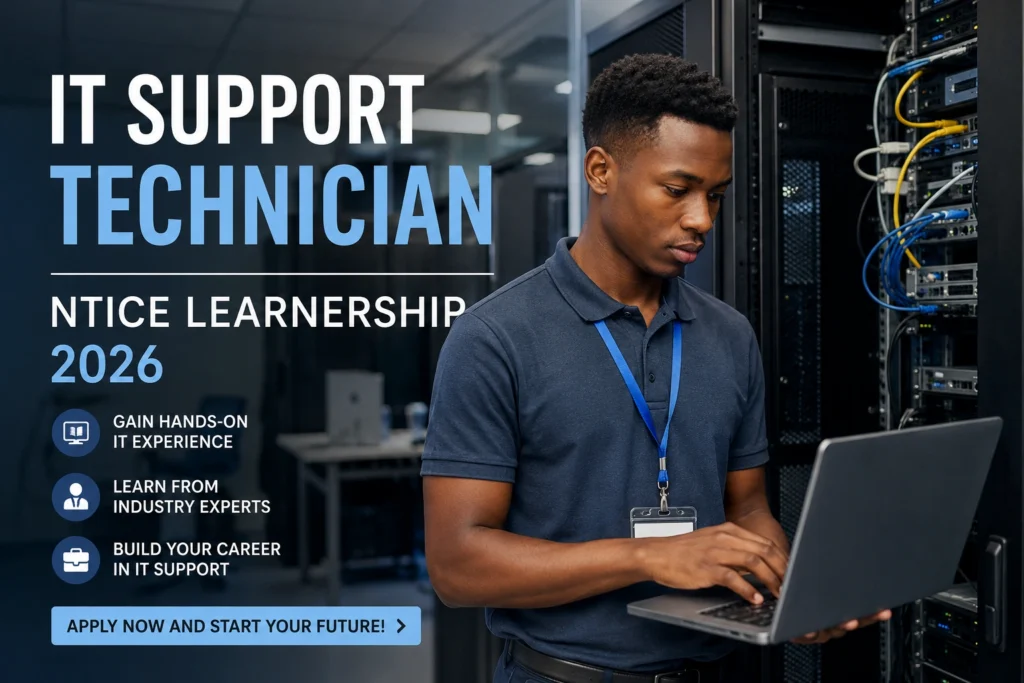
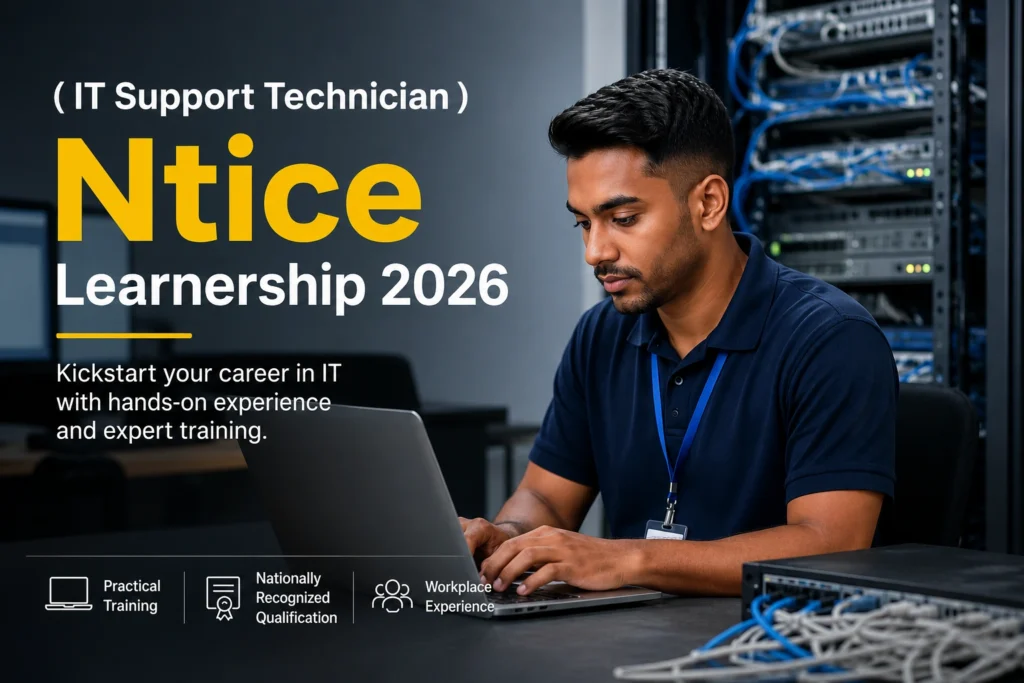
The ( IT Support Technician ) Ntice Learnership 2026 offers a practical solution to this challenge. Instead of expecting applicants to already have years of experience, the programme combines structured workplace learning with internal training in a real Internet Service Provider (ISP) environment. Participants receive exposure to customer support, networking basics, router configuration, ticket management, and communication while earning an approximate monthly salary of R5,241.
For anyone considering a career in technical support, networking, or systems administration, this learnership can provide valuable workplace experience while developing skills that employers actively seek. This guide explains everything you need to know, from eligibility requirements to application preparation and strategies for increasing your chances of success.
Understanding the ( IT Support Technician ) Ntice Learnership 2026
The ( IT Support Technician ) Ntice Learnership 2026 is a Level 1 IT Support learnership recruited through Ntice Search for a client operating within the ISP industry.
Unlike classroom-only learning, this programme places learners inside a working technical support environment where they assist real customers experiencing internet, connectivity, router, and voice communication issues.
The opportunity includes:
- Level 1 IT Support Learnership
- Hybrid working arrangement
- Practical workplace exposure
- Internal technical training
- Approximately R5,241 monthly salary
- Potential permanent employment depending on performance and business needs
The position is based in Umhlanga Ridge and follows a structure consisting of a three-month probation period before the commencement of a 12-month learnership contract.
This combination of formal learning and workplace experience makes the programme particularly valuable for candidates hoping to build long-term careers in IT support or networking.
Why This Issue Matters
South Africa continues to experience growing demand for skilled IT professionals across industries including telecommunications, banking, education, healthcare, retail, and government.
However, employers increasingly value practical experience alongside academic qualifications. Even candidates studying Information Technology often struggle to demonstrate workplace readiness.
Programmes like the ( IT Support Technician ) Ntice Learnership 2026 help bridge this gap by allowing learners to:
- Gain recognised workplace experience
- Build confidence solving real technical problems
- Improve communication with customers
- Learn professional support processes
- Develop teamwork skills
- Understand modern IT service environments
For many participants, a learnership becomes the first significant step toward permanent employment in the technology sector.
Who Should Apply for the ( IT Support Technician ) Ntice Learnership 2026?
This opportunity is suitable for motivated individuals who enjoy technology and solving problems.
Ideal applicants include:
- Recent Grade 12 graduates studying IT
- Students completing Information Technology qualifications
- Candidates with CompTIA A+ certification
- Candidates with Network+ (N+) certification
- Individuals interested in networking careers
- Future helpdesk technicians
- Aspiring technical support specialists
Importantly, applicants do not need years of professional experience.
Instead, recruiters are looking for people who demonstrate:
- Curiosity
- Technical interest
- Willingness to learn
- Professional communication
- Customer service skills
- Reliability
These qualities are often more valuable at entry level than advanced technical expertise.
Minimum Requirements You Should Meet
Before applying, carefully compare your qualifications with the advertised requirements.
Applicants should have:
- Grade 12 (Matric)
- Currently studying toward an IT qualification or
- A+ certification
- N+ certification (where applicable)
- Basic computer knowledge
- Basic networking understanding
- Knowledge of internet connectivity
- Good communication skills
While previous support experience is advantageous, it is not mandatory.
Recruiters understand that this is an entry-level learnership designed to develop future professionals.
What Will You Learn During the Programme?
One of the biggest advantages of the ( IT Support Technician ) Ntice Learnership 2026 is the opportunity to gain practical experience across multiple technical areas.
Learners will receive exposure to:
Technical Support
Providing first-line remote support to customers experiencing technical issues.
This includes diagnosing problems before escalating complex cases.
Networking Fundamentals
Understanding internet connectivity, routers, IP addresses, wireless connections, and network troubleshooting.
Router Configuration
Many home and business internet problems involve incorrect router settings.
Learners will gain experience configuring and supporting routers.
VOIP Systems
Internet-based telephone systems continue growing in popularity.
Participants will learn the basics of Voice over Internet Protocol (VOIP) support.
Ticket Management
Professional IT support relies heavily on organised ticketing systems.
Learners will gain experience logging, updating, monitoring, and resolving support tickets efficiently.
Daily Responsibilities
The role combines customer service with technical troubleshooting.
Typical duties include:
- Answering inbound support calls
- Responding to customer emails
- Managing WhatsApp support queries
- Logging technical support tickets
- Monitoring network connectivity
- Troubleshooting internet issues
- Assisting with router setup
- Supporting VOIP configurations
- Updating customers on progress
- Escalating complex technical problems
- Working with experienced support technicians
- Meeting response time targets
Each day provides opportunities to develop both technical and interpersonal skills.
Step-by-Step Guide to Preparing Your Application
Applying successfully involves much more than uploading a CV.
Step 1: Update Your CV
Include:
- Educational background
- IT studies
- Technical certifications
- Computer knowledge
- Networking knowledge
- Customer service experience
- Contact details
Keep your CV clean, professional, and easy to read.
Step 2: Highlight Your Technical Interest
If you have repaired computers, configured home Wi-Fi, installed software, or helped friends with technical problems, mention this experience.
APPLY HERE: Ntice Learnership 2026
Practical interest demonstrates initiative.
Step 3: Include Relevant Certifications
If you hold:
- CompTIA A+
- Network+
- IT college certificates
- Online technical courses
Include them clearly.
Even ongoing studies should be listed.
Step 4: Prepare Supporting Documents
Gather:
- Updated CV
- Certified ID copy (if requested)
- Matric certificate
- Academic records
- Proof of IT studies
- Technical certificates
Preparing these early avoids last-minute mistakes.
Step 5: Submit Through the Official Portal
Applications should be submitted through the official online recruitment platform.
Double-check:
- Contact number
- Email address
- Uploaded documents
- Spelling errors
Incomplete applications can reduce your chances significantly.
ALSO APPLY FOR: GCC Skills Development Learnership 2026
Skills That Will Help You Stand Out
Technical knowledge is important, but employers also value workplace behaviour.
Strong candidates typically demonstrate:
- Problem-solving ability
- Patience
- Active listening
- Professional communication
- Teamwork
- Accountability
- Adaptability
- Time management
- Attention to detail
- Customer-focused thinking
Many successful IT professionals begin with excellent communication rather than advanced technical expertise.
Understanding the Hybrid Work Environment
One attractive feature of the programme is its hybrid working model.
The advertised schedule includes:
- Two weeks working in the office
- Two weeks working remotely
This arrangement helps learners develop skills in both traditional workplace environments and remote support settings.
Remote work requires:
- Self-discipline
- Strong communication
- Reliable internet
- Good time management
- Independent problem-solving
These are increasingly valuable skills across today’s technology industry.
Career Opportunities After Completing the Learnership
The experience gained during the programme can open doors to various technology careers.
Potential future roles include:
- IT Support Technician
- Helpdesk Analyst
- Desktop Support Technician
- Network Support Technician
- Service Desk Agent
- Technical Support Consultant
- Junior Systems Administrator
- ISP Support Technician
The advertisement also notes that permanent employment may be offered depending on business needs and individual performance.
Even where permanent placement is unavailable, the workplace experience strengthens future job applications.
Best Practices Experts Recommend
Candidates who perform well in IT support environments often share several professional habits.
Continue learning beyond your daily tasks. Technology changes rapidly, so reading about networking, operating systems, and troubleshooting techniques can help you grow faster.
Take accurate notes. Recording solutions to recurring technical problems improves efficiency and builds confidence.
Communicate clearly. Customers appreciate technicians who explain technical issues using simple language rather than complicated terminology.
Stay calm under pressure. Technical support often involves frustrated customers. Remaining professional helps resolve issues more effectively.
Be punctual and reliable. Consistency builds trust with supervisors and colleagues.
Ask thoughtful questions. Showing genuine interest in learning demonstrates initiative and helps you develop practical knowledge more quickly.
Mistakes People Often Make
Many applicants reduce their chances by making avoidable errors.
Some common mistakes include:
Submitting a generic CV. Your application should clearly highlight IT studies, certifications, and technical interests.
Ignoring soft skills. Customer service is a major part of technical support. Communication skills matter.
Applying without checking documents. Missing certificates or incorrect contact information can delay or prevent your application.
Overstating technical knowledge. Be honest about your current abilities while showing enthusiasm for learning.
Failing to research the employer. Understanding the role of an ISP demonstrates preparation during interviews.
Waiting too long to apply. Popular learnerships often receive many applications shortly after being advertised.
Frequently Asked Questions
1. Do I need previous IT work experience?
No. The learnership is designed for entry-level candidates. Basic IT knowledge, relevant studies, or certifications are more important than professional experience.
2. Is the monthly salary paid during the learnership?
Yes. The advertised starting monthly salary is approximately R5,241, allowing learners to earn while gaining practical workplace experience.
3. Will I receive technical training?
Yes. Internal training includes router configuration, VOIP systems, ticket management, CRM systems, support processes, and escalation procedures.
4. Can the learnership lead to permanent employment?
Potentially. Permanent employment depends on individual performance, workplace requirements, and business needs after completing the programme.
Final Thoughts
The ( IT Support Technician ) Ntice Learnership 2026 represents an excellent opportunity for aspiring IT professionals seeking practical experience in a growing industry. Rather than focusing solely on academic qualifications, the programme allows learners to develop real workplace skills through hands-on exposure to technical support, networking fundamentals, customer service, and ISP operations.
The combination of internal training, hybrid work experience, professional mentorship, and a monthly starting salary of approximately R5,241 makes this learnership particularly valuable for candidates looking to establish long-term careers in information technology.
If you meet the minimum requirements, begin preparing your application as early as possible. Update your CV, organise your supporting documents, highlight your IT studies and certifications, and demonstrate your genuine interest in technical support. Small details such as a well-structured CV, accurate contact information, and evidence of practical computer knowledge can make a meaningful difference during the recruitment process.
Whether your goal is to become a network technician, systems administrator, service desk analyst, or IT support specialist, this learnership offers an excellent starting point toward building valuable skills and opening future career opportunities.