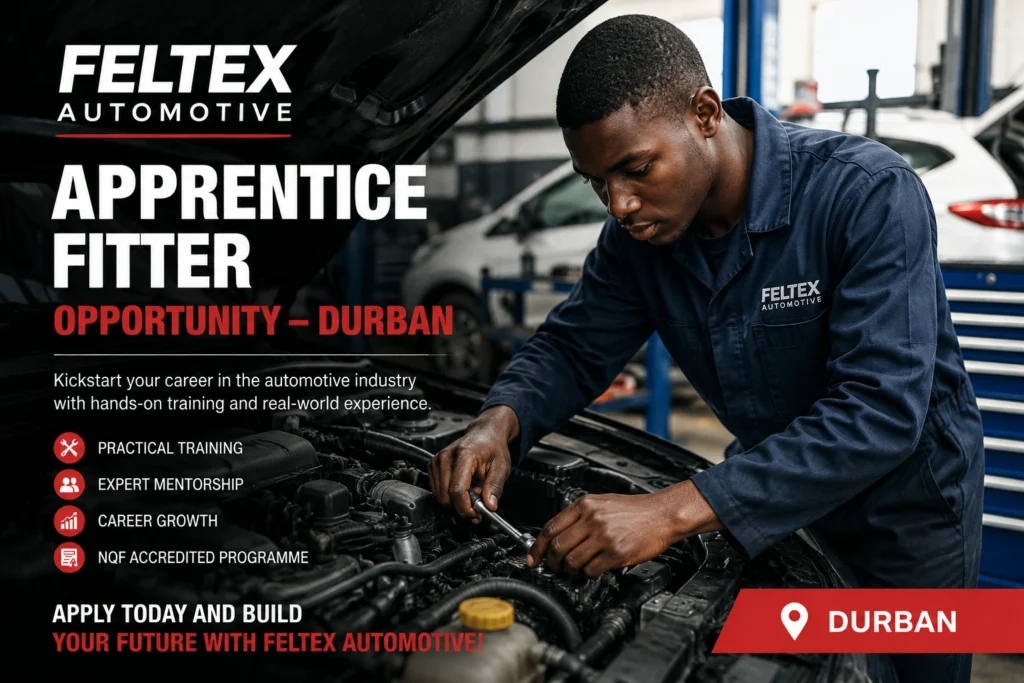

The Feltex Automotive Apprentice Fitter opportunity has become one of the most talked-about technical apprenticeship openings among young South Africans looking to enter the manufacturing sector. At a time when artisan skills remain in high demand across automotive production, engineering, and industrial maintenance, opportunities like this are attracting significant interest from school leavers and technical college graduates alike.
The growing attention surrounding this apprenticeship is not simply because it offers workplace experience. It reflects a broader shift in South Africa’s labour market, where practical technical qualifications are increasingly becoming valuable pathways into stable careers. As industries continue investing in automation, equipment reliability, and production efficiency, skilled fitters remain essential to keeping factories running.
For many aspiring artisans, the Feltex Automotive Apprentice Fitter programme represents something increasingly difficult to find: structured workplace training within an established manufacturing company that has built its reputation over decades of supplying components to major vehicle manufacturers.
The Growing Importance of Apprenticeships in Manufacturing
Over the past several years, South Africa has experienced renewed focus on artisan development. Government initiatives, industry partnerships, and manufacturing employers have all highlighted the shortage of qualified technical professionals.
While university education remains important, many employers continue reporting shortages of qualified artisans in trades such as fitting, electrical work, welding, toolmaking, and millwright services.
This changing landscape has elevated apprenticeship programmes from being alternative career routes to becoming highly respected professional development pathways.
The Feltex Automotive Apprentice Fitter opportunity fits squarely within this trend.
Rather than expecting candidates to arrive fully qualified, the programme combines classroom-based technical development with practical workplace exposure, allowing apprentices to gradually build the competencies required for a successful career.
A Company That Understands Technical Excellence
Feltex Automotive has established itself as one of South Africa’s recognised automotive component manufacturers, producing interior textile and trim products supplied to leading vehicle manufacturers.
Operating within the country’s competitive automotive manufacturing industry means maintaining exceptionally high standards.
Production equipment cannot afford extended downtime.
Machines require regular servicing.
Mechanical systems must operate safely and efficiently.
These realities explain why skilled fitters play such a critical role inside modern manufacturing plants.
Behind every smoothly operating production line is a maintenance team responsible for inspections, repairs, preventative maintenance, troubleshooting, and equipment optimisation.
Developing future artisans therefore becomes more than a recruitment exercise—it becomes an investment in long-term operational excellence.
Why This Apprenticeship Is Generating Interest
Several factors explain why many applicants have shown interest in the Apprentice Fitter position.
First, opportunities offering structured technical training within recognised manufacturing companies are often limited compared to demand.
Secondly, apprenticeships provide something many graduates struggle to obtain: genuine workplace experience.
Employers increasingly value candidates who understand factory environments, maintenance planning, safety procedures, and equipment operation.
Finally, apprenticeships often create long-term career opportunities beyond the initial training period.
Although apprenticeship contracts are temporary by nature, completing one successfully significantly strengthens an individual’s employability throughout the manufacturing sector.
That long-term value makes programmes like this particularly attractive.
What the Apprentice Fitter Role Involves
The role extends well beyond simply assisting qualified artisans.
Apprentices become active participants in maintenance operations while developing technical competence under supervision.
Typical responsibilities include supporting maintenance work orders, assisting with equipment repairs, participating in machinery installations, identifying mechanical faults, performing inspections, and learning preventative maintenance techniques.
Documentation also forms part of daily responsibilities.
Accurate maintenance records, inspection reports, and repair documentation help organisations monitor equipment performance and schedule future servicing.
Safety remains another major component.
Modern manufacturing facilities operate under strict health and safety standards, making compliance an essential skill every apprentice must develop from day one.
Who Can Apply?
Feltex has outlined several educational pathways for applicants.
Eligible candidates may qualify through:
- Grade 12 with Mathematics and Science
- N3 qualification including Fitter Trade Theory, Mathematics, and Engineering Science
- NCV Level 3 or Level 4 qualification in Fitting or Maintenance
These requirements demonstrate that the apprenticeship targets individuals who already possess a technical foundation while still requiring workplace-based practical development.
Academic qualifications provide theoretical knowledge.
The apprenticeship bridges the gap between theory and real industrial application.
Learning Beyond the Classroom
One of the biggest advantages of apprenticeship programmes lies in experiential learning.
Textbooks can explain mechanical systems.
Lecturers can demonstrate fitting principles.
However, working alongside experienced artisans inside a functioning manufacturing plant exposes apprentices to challenges impossible to replicate in classrooms.
Unexpected equipment failures.
Production pressures.
Preventative maintenance scheduling.
Component replacements.
Fault diagnosis.
Each situation contributes to developing judgement and confidence that only practical experience can provide.
This learning environment often becomes the defining element of successful artisan development.
Skills That Modern Fitters Need
Today’s fitters perform far more sophisticated work than many people realise.
Industrial machinery has become increasingly automated, requiring artisans to combine mechanical understanding with analytical thinking.
Successful fitters typically demonstrate:
- Mechanical aptitude
- Attention to detail
- Strong safety awareness
- Communication skills
- Teamwork
- Problem-solving ability
- Willingness to learn continuously
- Reliability under pressure
These competencies become increasingly valuable as manufacturing technology evolves.
Companies seek artisans capable of adapting to changing production systems rather than relying solely on traditional maintenance techniques.
Recent Developments Driving Interest in Technical Careers
South Africa’s manufacturing sector continues emphasising skills development despite economic challenges.
Automotive manufacturing remains one of the country’s most important industrial sectors, supporting thousands of direct and indirect jobs.
Manufacturers increasingly recognise that developing internal technical talent helps improve productivity while addressing artisan shortages.
Consequently, apprenticeship programmes have become strategic investments rather than simple recruitment initiatives.
Young people have also become more aware of alternative career pathways.
Instead of viewing apprenticeships as second-choice options, many now see them as practical routes toward recognised qualifications, industry experience, and long-term employment prospects.
This broader shift partly explains why opportunities like the Feltex Automotive Apprentice Fitter programme attract considerable attention whenever applications open.
Public Reaction
Among career seekers, technical college students, and recent matriculants with Mathematics and Science, apprenticeship announcements generally receive positive responses.
Many appreciate that employers continue investing in structured training despite economic uncertainty.
Career advisers also frequently encourage technically inclined students to consider artisan careers because they combine practical learning with recognised qualifications.
Online discussions around apprenticeship opportunities often highlight recurring themes.
Applicants value opportunities that offer:
- Workplace exposure
- Mentorship from experienced artisans
- Recognised industry experience
- Skills development
- Long-term career potential
There is also growing recognition that technical careers provide opportunities for continuous professional growth.
Qualified artisans frequently progress into supervisory positions, maintenance planning, technical specialist roles, or even engineering support positions after gaining experience.
Why This Matters Right Now
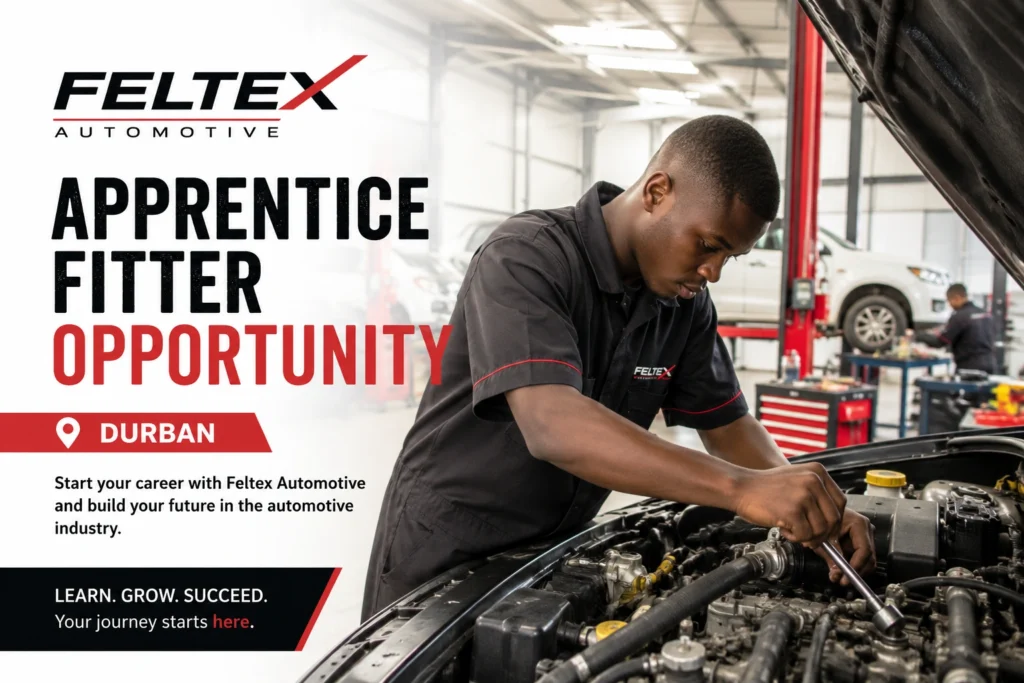
The conversation surrounding the Feltex Automotive Apprentice Fitter opportunity extends beyond a single recruitment advertisement.
South Africa continues facing youth unemployment challenges while many industries simultaneously report shortages of qualified technical professionals.
Closing that gap requires more than classroom education.
It requires employers willing to invest in structured workplace learning.
Every successful apprenticeship contributes to strengthening the country’s artisan pipeline.
For young job seekers, programmes like this represent practical opportunities to develop marketable skills rather than remaining trapped in the cycle of requiring experience before gaining employment.
For industry, apprenticeships help preserve institutional knowledge by allowing experienced artisans to mentor the next generation.
For the economy, expanding technical skills contributes to improved manufacturing productivity and industrial competitiveness.
APPLY HERE: Feltex Automotive Apprentice Fitter
ALSO APPLY FOR: GST Fitter Apprenticeship 2026
The Importance of Safety Culture
One often overlooked aspect of apprenticeship training involves workplace safety.
Manufacturing environments contain heavy machinery, rotating equipment, hydraulic systems, compressed air, electrical installations, and moving production lines.
Learning technical skills without simultaneously developing strong safety habits would be incomplete.
Apprentices therefore spend significant time understanding safe operating procedures, hazard identification, equipment isolation processes, and personal protective equipment requirements.
These habits remain valuable throughout an artisan’s entire career.
Standing Out During the Application Process
Competition for apprenticeship positions can be significant.
Applicants hoping to strengthen their applications should present clear evidence of genuine interest in mechanical work.
A well-organised CV highlighting Mathematics, Science, technical subjects, engineering projects, workshop exposure, or practical training can make a positive impression.
Candidates should also demonstrate enthusiasm for learning rather than focusing solely on securing employment.
Employers investing in apprenticeships often look for long-term potential, curiosity, reliability, and commitment to completing the full programme.
Preparing thoroughly for interviews also matters.
Applicants should understand basic fitting concepts, research the employer, and be ready to explain why they chose a technical career path.
What Could Happen Next
Looking ahead, programmes like the Feltex Automotive Apprentice Fitter opportunity may become increasingly important as manufacturing continues modernising.
Industrial automation does not eliminate the need for artisans.
Instead, it often increases demand for technically skilled professionals capable of maintaining more advanced equipment.
Future apprentices may therefore find themselves working with increasingly sophisticated production technologies while continuing to apply traditional fitting principles.
Successful completion of recognised apprenticeship programmes also positions artisans for future specialisation.
Some may pursue trade testing and artisan certification.
Others may progress into maintenance supervision, reliability engineering support, planning roles, or further technical studies.
As South Africa continues investing in industrial development, qualified artisans are likely to remain valuable contributors across manufacturing, mining, logistics, infrastructure, and engineering sectors.
Final Thoughts
The Feltex Automotive Apprentice Fitter opportunity illustrates why apprenticeships continue attracting attention across South Africa’s technical education landscape.
It combines structured learning, workplace exposure, mentorship, and the possibility of building a rewarding artisan career within a respected automotive manufacturing environment.
While competition is expected, applicants who meet the educational requirements and demonstrate genuine commitment to technical excellence will be well positioned to benefit from this type of opportunity.
More importantly, the programme reflects a wider trend that extends beyond one employer.
As industries place increasing value on practical technical skills, apprenticeships continue proving that hands-on learning remains one of the strongest foundations for long-term career success.
For aspiring fitters, opportunities like this are not simply temporary contracts—they are stepping stones toward becoming highly skilled professionals capable of supporting one of South Africa’s most important industrial sectors.