
Finding an entry point into the South African IT industry can be difficult when you have Matric but little or no formal work experience. Many entry-level technology jobs ask for previous experience, while tertiary qualifications can take several years and may be expensive. This is where a structured learnership can make a meaningful difference.
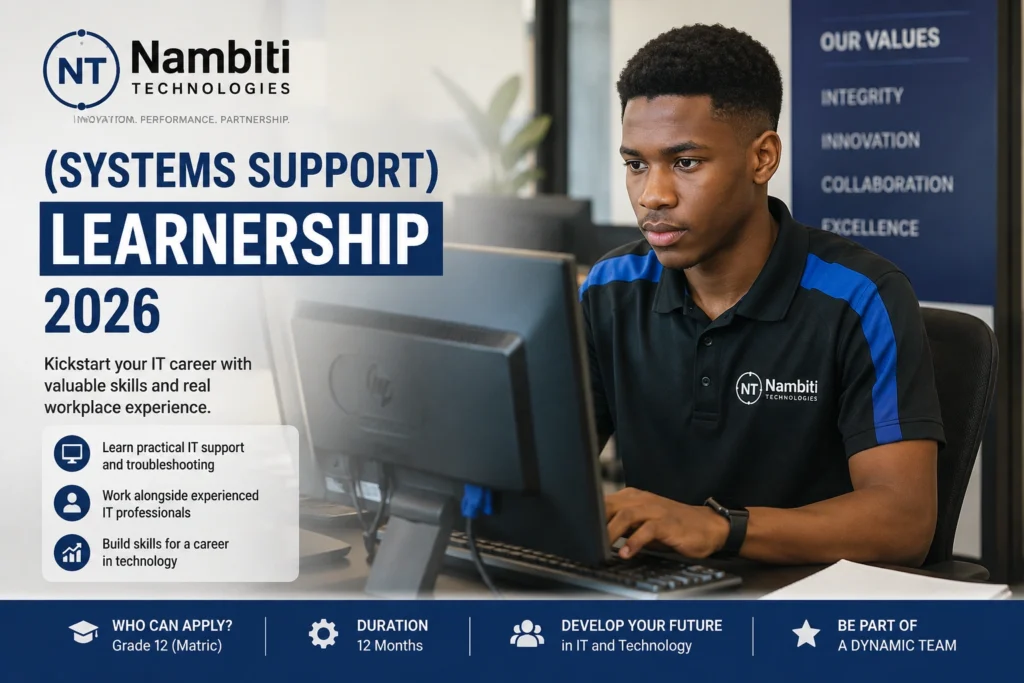
The Nambiti Technologies (NT) Learnership 2026 offers unemployed South African youth an opportunity to build practical Information Technology skills while working towards a recognised Systems Support NQF Level 5 qualification.
Nambiti Technologies is offering 25 Systems Support learnership opportunities in Randburg, Gauteng. The 12-month programme combines classroom-based learning with workplace exposure, giving participants an opportunity to develop both technical knowledge and practical experience.
Importantly, this is not simply a short training course. The programme is structured around a qualification and workplace learning, making it particularly relevant to young people who want to establish a career in IT, technical support, systems administration or related technology fields.
What Is the Nambiti Technologies (NT) Learnership 2026?
The Nambiti Technologies (NT) Learnership 2026 is a full-time, 12-month Systems Support programme aimed at unemployed South African youth.
According to the opportunity information provided, successful applicants will work towards a Systems Support – NQF Level 5 qualification. The learning structure is divided between theoretical training and practical workplace experience.
The programme follows an approximate:
- 30% theoretical learning
- 70% workplace experience
- 12-month duration
- Full-time participation
- Randburg, Gauteng location
- 25 available opportunities
This combination is valuable because employers generally want candidates who can demonstrate more than academic knowledge. Workplace exposure allows learners to practise what they have been taught in a real working environment.
The programme is also described as Pivotal, which places it within the broader skills-development environment designed to develop occupational capabilities.
Opportunity at a glance
| Detail | Information |
|---|---|
| Organisation | Nambiti Technologies |
| Programme | Systems Support Learnership |
| Qualification | Systems Support – NQF Level 5 |
| Opportunities | 25 |
| Duration | 12 months |
| Location | Randburg, Gauteng |
| Study mode | Full-time |
| Training | 30% theory / 70% workplace experience |
| Target group | Unemployed South African youth |
| Closing date | Not specified |
| Application | Online |
| Funding restriction | Applicants must not already be on another SETA-funded learnership |
Why This Issue Matters
For an unemployed young person, getting the first opportunity can be harder than developing the skills themselves.
A candidate may understand basic computer concepts but still struggle to convince an employer to hire them without workplace experience. A learnership can help bridge that gap by combining formal learning with practical exposure.
The Systems Support field is particularly useful because organisations across different industries depend on technology every day. Businesses need people who can assist users, troubleshoot technical problems, maintain systems, support hardware and software, and help keep IT environments operational.
Completing a relevant qualification does not automatically guarantee employment. However, it can strengthen a candidate’s profile by giving them a combination of:
- A recognised qualification
- Practical workplace exposure
- Technical knowledge
- Professional workplace experience
- A better understanding of IT support environments
- Evidence that they can work within organisational procedures
For someone starting from limited experience, these can be important building blocks.
Who Qualifies for the Nambiti Technologies Learnership?
Applicants should carefully compare their circumstances with the stated requirements before applying.
The minimum requirements provided include:
- You must be a South African citizen.
- You must be currently unemployed.
- You must have a National Senior Certificate (Matric) or an equivalent NQF Level 4 qualification.
- You must have an interest in Information Technology and Systems Support.
- You must be available for the programme on a full-time basis.
- You must be able to commit to the entire 12-month programme.
- You must not currently be participating in another SETA-funded learnership.
- You must provide a certified copy of your South African ID.
Meeting the minimum requirements is important, but it does not necessarily mean that every applicant will be selected. With only 25 opportunities available, applicants should treat the application as a competitive recruitment process.
What Will You Actually Learn?
Systems Support is broader than simply fixing computers.
Depending on the workplace training and qualification structure, learners entering this field can expect exposure to areas associated with IT support and technical operations.
This may include learning how to:
- Identify and troubleshoot common technical problems.
- Assist computer users with hardware and software issues.
- Install or configure technology equipment.
- Follow IT support procedures.
- Record and manage technical incidents.
- Understand basic networking concepts.
- Support operating systems and applications.
- Communicate technical information to non-technical users.
- Follow information-security and workplace policies.
- Work effectively as part of an IT support team.
The practical component is especially important. Someone interested in Systems Support should be prepared to spend substantial time applying technical knowledge rather than simply attending classes.
Who Should Apply?
This opportunity may suit you particularly well if you are interested in technology but do not yet have extensive professional IT experience.
Consider applying if you:
- Enjoy solving computer-related problems.
- Are curious about how technology works.
- Like helping people solve technical issues.
- Want a structured entry route into IT.
- Are comfortable learning new software and systems.
- Can communicate clearly with users.
- Are prepared to learn in a professional workplace.
- Can commit to full-time participation for 12 months.
You do not need to present yourself as an IT expert if you are applying at entry level. Instead, demonstrate genuine interest, reliability and willingness to learn.
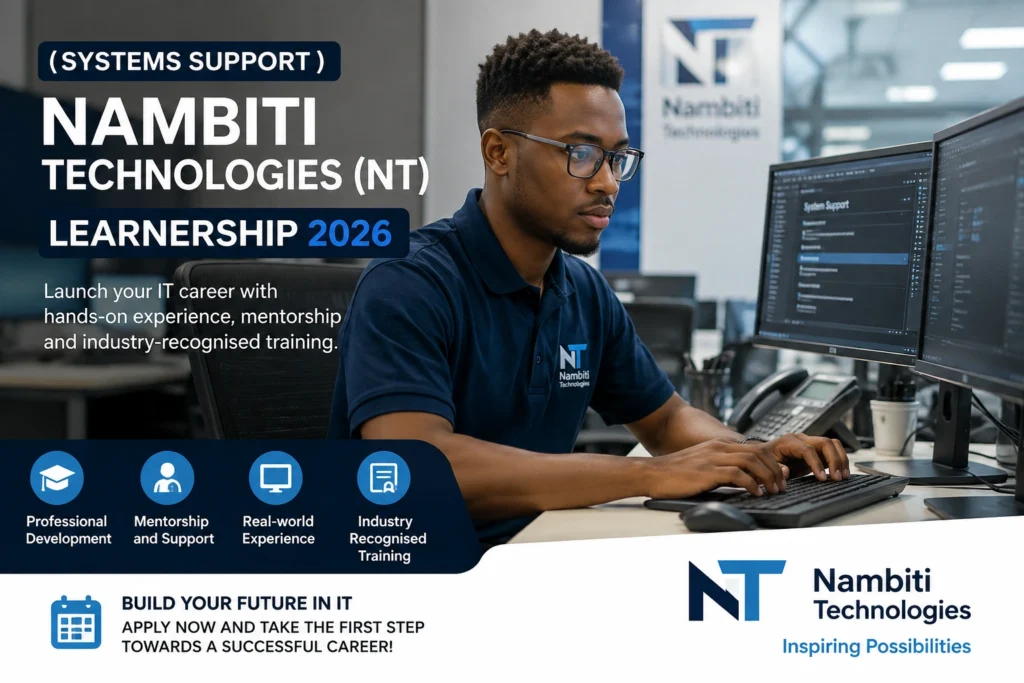
How to Apply: Step-by-Step Strategy
Because the closing date is listed as not specified, applicants should avoid waiting until a later date. Recruitment opportunities can close once sufficient applications have been received.
Step 1: Confirm your eligibility
Before starting the application, check that you are South African, unemployed, have Matric or an equivalent NQF Level 4 qualification, and are not participating in another SETA-funded learnership.
Step 2: Prepare your documents
Have your identification and education documents ready before beginning the online application.
At minimum, the opportunity information states that a certified copy of your South African ID is required.
It is also sensible to have your Matric certificate or equivalent qualification available, together with an updated CV if requested during the application process.
Step 3: Update your CV
Your CV does not need to be extremely long. For an entry-level learnership, focus on relevant information such as:
- Personal and contact details
- Matric or highest qualification
- Computer-related subjects or training
- Technical skills
- School projects
- Volunteer experience
- Previous temporary work
- Communication and problem-solving abilities
If you have completed computer courses, coding programmes, digital-skills training or other technology-related learning, include them.
Step 4: Complete the online application carefully
Use the official application route provided by Nambiti Technologies
APPLY HERE: (NT) Learnership 2026
Step 5: Review before submitting
Before clicking submit, check:
- Your name is spelled correctly.
- Your ID number is correct.
- Your contact details work.
- Your education information is accurate.
- Required documents are attached.
- Your CV is readable.
- You have answered all mandatory questions.
Save evidence of your submission where possible.
Step 6: Monitor your communication channels
After applying, check your email, phone and other communication channels regularly.
Do not assume that no immediate response means your application has failed. Recruitment processes can take time, particularly where a large number of applications are received.
ALSO APPLY FOR: Liberty Learnership 2026
Best Practices Experts Recommend
A strong application is usually about accuracy and relevance rather than filling your CV with unnecessary information.
Show evidence of your interest in IT. If you have repaired computers, completed online technology courses, helped family members with technical problems or worked on school technology projects, these experiences can help demonstrate genuine interest.
Keep your CV professional. Avoid excessive graphics, long paragraphs and irrelevant personal information.
Explain transferable skills. Communication, patience, problem-solving, teamwork and attention to detail are useful in technical support roles.
Prepare for an assessment or interview. You may be asked basic questions about computers, customer service, troubleshooting or your reasons for choosing IT.
Be honest about your experience. Do not claim to have technical qualifications or work experience you do not possess.
Mistakes People Often Make
Several avoidable errors can weaken an otherwise suitable application.
Applying without checking eligibility
If you are already participating in another SETA-funded learnership, this opportunity may not be suitable. Read the requirements before submitting.
Using an outdated CV
A CV containing an old telephone number or email address can prevent recruiters from contacting you.
Submitting incomplete documents
If certification or supporting documentation is required, prepare it before applying rather than assuming you can provide it later.
Ignoring the location
The programme is based in Randburg, Gauteng. Applicants should consider whether they can realistically attend and participate in a full-time programme at the required location.
Waiting because there is no closing date
“Closing date not specified” should not be interpreted as “applications will remain open indefinitely.” Apply as soon as possible if you meet the requirements.
Paying someone to secure a place
Applicants should be cautious of anyone claiming they can guarantee selection in exchange for money. Legitimate recruitment processes should be treated with care, particularly when requests for payment or sensitive banking information are made.
Application Checklist
Before submitting your application, make sure you can answer “yes” to these questions:
- I am a South African citizen.
- I am currently unemployed.
- I have Matric or an equivalent NQF Level 4 qualification.
- I am interested in IT and Systems Support.
- I am not currently on another SETA-funded learnership.
- I can commit to the full 12-month programme.
- I can participate full-time.
- I have a certified copy of my South African ID.
- My CV is updated.
- My contact details are correct.
- I have checked the application information before submitting.
Frequently Asked Questions
1. How many positions are available?
Nambiti Technologies is offering 25 Systems Support learnership opportunities.
2. Where is the learnership based?
The programme is based in Randburg, Gauteng, South Africa.
3. What qualification does the programme offer?
Successful learners will work towards a Systems Support NQF Level 5 qualification.
4. How long does the learnership last?
The programme has a 12-month duration and combines theoretical learning with practical workplace experience.
What Happens After the Learnership?
Completing the programme should be viewed as a starting point rather than the end of your career-development journey.
A learner who successfully gains Systems Support experience can potentially use that foundation when applying for entry-level roles such as IT support technician, help-desk support, junior systems support or related technical positions, depending on their skills and future qualifications.
The strongest candidates will continue developing their skills after the programme. Additional certifications, further studies, networking knowledge, cybersecurity fundamentals and practical technology projects can all help build a stronger IT career profile.
Final Advice for Applicants
The Nambiti Technologies (NT) Learnership 2026 is a potentially useful entry route for unemployed South African youth who want to move into Information Technology without already having extensive professional experience.
The combination of a Systems Support NQF Level 5 qualification, theoretical training and approximately 70% workplace experience makes the opportunity particularly relevant to applicants who want practical exposure rather than classroom learning alone.
However, applicants should remain realistic. There are only 25 opportunities, so meeting the basic requirements does not guarantee selection. Your best approach is to apply early, submit accurate information, prepare a professional CV and make sure all required documentation is available.
Since the closing date is currently listed as not specified, eligible applicants should not delay. Before submitting, verify the latest application instructions and ensure that the programme still accepts applications.
For someone determined to establish a career in technology, the most important first step is not waiting for the perfect IT job. It is finding a legitimate opportunity to build skills, qualifications and workplace experience—and then using those foundations to pursue the next stage of their career.