
A young engineering graduate can spend years learning how machines, electrical systems and industrial equipment work, only to face one difficult question after college: Where do I get the workplace experience needed to become a qualified artisan?
That is the gap an apprenticeship is designed to fill.
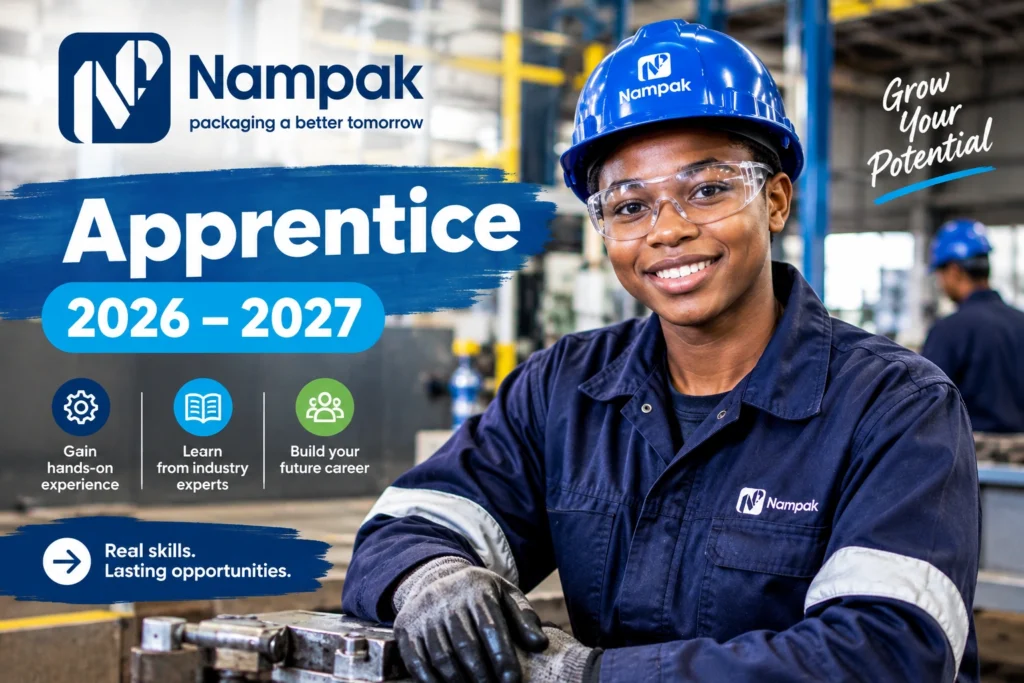
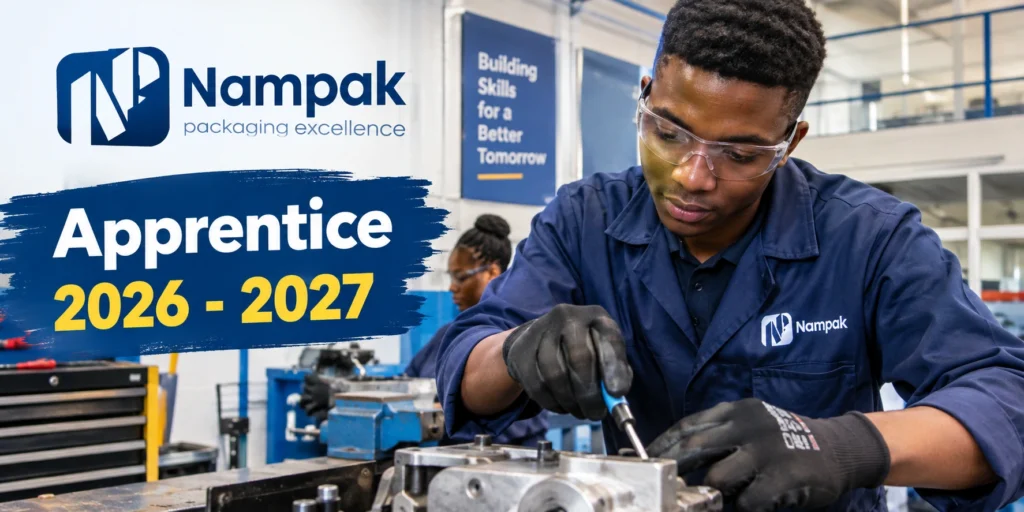
The Nampak Apprentice 2026-2027 intake offered four technical training opportunities at Nampak Metals in Epping, Cape Town. Two positions were available for Electrical apprentices and two for Fitter & Turner apprentices.
The programme was aimed at candidates who had already built a technical foundation through Matric and NTC3 Engineering studies and were ready to take their knowledge into an industrial environment.
For future applicants, however, the opportunity provides a useful example of what employers look for when recruiting aspiring artisans.
What was available through the Nampak apprenticeship?
The intake was divided between two trades:
| Apprenticeship | Places | Location | Expected start |
|---|---|---|---|
| Electrical | 2 | Nampak Metals, Epping | 2027 |
| Fitter & Turner | 2 | Nampak Metals, Epping | 2027 |
| Total | 4 | Cape Town | 2027 |
These are not generic learnership positions. They are technical apprenticeship opportunities connected to an engineering and manufacturing environment.
That distinction matters.
An apprentice entering an industrial engineering department is expected to develop practical competence while continuing with the theoretical requirements associated with the chosen trade.
The workplace component can expose apprentices to equipment maintenance, fault-finding, installations, problem-solving, safety procedures and the everyday discipline required in a production environment.
For someone interested in becoming an artisan, this type of experience can be an important bridge between college training and a long-term technical career.
Electrical vs Fitter & Turner
Applicants should not choose between the two trades simply because one sounds more attractive.
The Electrical route is suited to candidates interested in electrical systems, equipment, maintenance, installations and diagnosing electrical faults.
The Fitter & Turner route is more closely associated with mechanical equipment, fitting, machining, components and mechanical maintenance.
A good starting point is to compare the trade with your existing studies.
Ask yourself:
- Which trade theory have I already completed?
- Which practical subjects did I perform best in?
- Do I enjoy electrical troubleshooting or mechanical work more?
- Does my NTC3 transcript support the trade I want?
- Am I comfortable working around industrial machinery?
Choosing the trade that matches your technical background can make the apprenticeship more meaningful and help you build on knowledge you already possess.
Nampak Apprentice 2026-2027 requirements explained
One of the most important details about this intake was that Matric alone was not enough.
Applicants were required to have Matric with:
- Mathematics
- Physical Science
- English as a second language
- At least 50% in the required subjects
Candidates also needed NTC3 Engineering or higher, together with relevant trade theory.
The application required the NTC3 certificate and transcript, with subjects and marks clearly shown.
This requirement immediately separates the opportunity from entry-level programmes aimed at unemployed Matriculants.
Nampak was looking for applicants who had already progressed into technical engineering education and were ready to develop those skills through workplace training.
Why your NTC3 transcript matters
An NTC3 certificate tells an employer that you have reached a particular level of technical education. The transcript provides more detail about what you actually studied and the marks you achieved.
That is why applicants should not treat the transcript as an optional extra.
If an employer specifically requests both documents, submit both.
Before applying, check that:
- Your name appears correctly on the documents.
- Your subjects are clearly visible.
- Your marks can be read.
- Your NTC3 qualification is clearly identified.
- Your relevant trade theory is shown.
- Scanned copies are clear and not cut off.
A poor-quality scan can create an unnecessary problem when the employer is reviewing hundreds of applications.
What makes an apprenticeship valuable?
The most important benefit of an apprenticeship is not simply having another item to add to a CV.
It is the opportunity to move from knowing how something should work to understanding what to do when it does not work.
That difference is enormous in engineering.
A textbook might explain how an electrical circuit operates. A workplace may present a machine that has stopped unexpectedly, forcing a technician to work through the problem systematically.
Likewise, mechanical theory may explain components and tolerances, but an industrial environment teaches the apprentice how those components behave under real operating conditions.
Expert insight: technical careers are built through evidence
For aspiring artisans, qualifications provide evidence of learning, but practical exposure provides evidence of application.
Employers need people who can follow safety procedures, work with experienced technicians, identify problems, communicate clearly and perform technical tasks consistently.
That is why apprentices should approach workplace training as a serious professional development opportunity rather than simply a way to gain temporary employment.
The habits developed during an apprenticeship can influence the quality of an artisan’s career long after the training period ends.
ALSO VISIT: https://www.nampak.com
How to apply for the Nampak apprenticeship
Step 1: Confirm that you meet the requirements
Before preparing an application, compare your qualifications with the vacancy.
You should have the required Matric subjects and marks, as well as NTC3 Engineering or higher and relevant trade theory.
Do not apply simply because you have an interest in engineering. The academic requirements determine whether you meet the initial criteria.
Step 2: Choose the correct trade
Decide whether your background is better aligned with Electrical or Fitter & Turner.
Your qualification and trade theory should support the position you are applying for.
Avoid sending a generic application that does not make your preferred technical direction clear.
Step 3: Prepare a focused CV
Keep your CV concise and relevant.
For a technical apprenticeship, include:
- Full name and contact details
- Matric subjects and results
- NTC3 Engineering qualification
- Relevant trade theory
- Workshop or practical experience
- Technical skills
- Computer skills
- Any relevant certificates
- Previous workplace exposure, if applicable
If you completed practical projects at college, mention them briefly. Practical experience does not have to come from a previous full-time job to demonstrate that you have worked with technical equipment or processes.
Step 4: Gather your supporting documents
Create a folder containing clear copies of:
- Matric certificate
- NTC3 certificate
- NTC3 transcript
- Updated CV
Check every document before sending it.
If the employer requests additional documents in a future advertisement, include those as well.
Step 5: Follow the application instructions exactly
Applications are submitted by email.
Send your complete application to:
Find Paid Internships
Use the following subject line:
Application Apprentice Intake 2026
Step 6: Check the closing date
Do not leave an apprenticeship application until the final evening.
Technical recruitment can attract many applicants, and missing the deadline can eliminate an otherwise suitable candidate.
For this intake, the closing date was 23 September 2026.
Because that deadline has passed, candidates should verify the current status through Nampak’s official recruitment channels.
ALSO APPLY FOR: Sappi Apprentice 2026
Application checklist before you press send
Use this quick checklist:
Qualifications
- Matric completed
- Mathematics included
- Physical Science included
- English as required
- Minimum required marks achieved
- NTC3 Engineering or higher
- Relevant trade theory
Documents
- CV attached
- Matric certificate attached
- NTC3 certificate attached
- NTC3 transcript attached
- All documents are readable
Application
- Correct trade selected
- Correct email address verified
- Correct subject line used
- Closing date checked
This takes only a few minutes but can prevent avoidable application mistakes.
Protect yourself from apprenticeship scams
Technical opportunities can attract fraudulent recruiters, particularly when young jobseekers are desperate for workplace experience.
Be cautious if somebody claims they can guarantee a Nampak apprenticeship in exchange for money.
You should never assume that a WhatsApp message, Facebook post or forwarded advertisement is genuine simply because it uses a company’s name and logo.
Before sending sensitive documents or responding to payment requests:
- Verify the vacancy through Nampak’s official recruitment channels.
- Check that the application instructions match the legitimate advertisement.
- Do not pay a person to secure an apprenticeship.
- Be suspicious of requests for “registration”, “processing” or “placement” fees.
- Avoid sending banking information to unverified recruiters.
A genuine opportunity should not require applicants to purchase their way into the selection process.
Frequently asked questions
How many positions were available?
Four positions are advertised: two Electrical apprenticeship places and two Fitter & Turner places at Nampak Metals in Epping, Cape Town.
Can someone with Matric only apply?
Not for the advertised intake. Candidates also needed NTC3 Engineering or higher with relevant trade theory, in addition to the specified Matric requirements.
Final thoughts
The Nampak apprenticeship illustrates why technical careers require more than simply collecting certificates.
A student may complete Matric, progress to NTC3 and understand the theory behind electrical or mechanical systems. The next challenge is learning how that knowledge works inside a real industrial environment.
That is where structured apprenticeship training becomes valuable.
The four positions advertised for the Nampak Apprentice 2026-2027 intake were limited, and the published deadline of 18 September 2026 has already passed. Nevertheless, the requirements offer useful guidance for anyone preparing for future artisan opportunities.
Keep your certificates organised. Maintain an updated technical CV. Know which trade matches your qualifications. Follow application instructions precisely and verify vacancies through legitimate company channels.
For aspiring Electrical and Fitter & Turner artisans, preparation should begin before the next vacancy appears—not when the deadline is already approaching.