
Imagine finishing an engineering degree after years of lectures, assignments and laboratory work, only to discover that the first major challenge is finding an opportunity where those technical skills can be used on real projects.
That transition from university to the workplace is exactly where internships can make a difference. Instead of learning only from textbooks, graduates begin to see how schedules are built, how project risks are tracked, how procurement affects delivery dates and how engineers, project managers, suppliers and customers work together to keep a project moving.
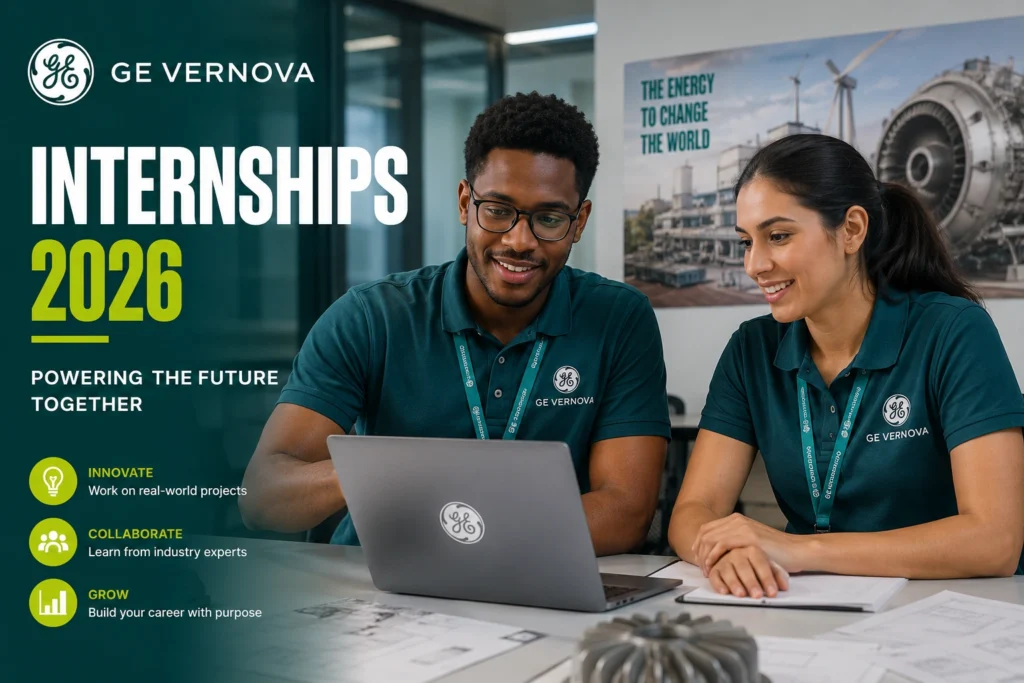
The GE Vernova Internships 2026 opportunity in Johannesburg is aimed at engineering graduates who want that kind of exposure. The company is recruiting for a full-time Project Management Intern position, with the role supporting Senior Project Managers and wider project teams.
The advertised closing date is 16 August 2026, giving interested candidates a limited period to prepare and submit their applications.
For graduates in South Africa, the opportunity is notable because it sits at the intersection of engineering and project management. It is not simply about having an engineering qualification. Candidates also need to demonstrate that they can organise information, work with schedules, prepare professional documentation and communicate effectively with different stakeholders.
What the GE Vernova Internships 2026 opportunity involves
The Johannesburg internship is structured around practical project-management support.
A successful intern will work alongside experienced project professionals and contribute to different stages of project execution. That can include project planning, project meetings, reporting, documentation, risk management, procurement coordination and project close-out.
In practical terms, this means an intern could spend part of a working day helping prepare a project meeting, updating documentation or reviewing a schedule, and another part assisting with project coordination or risk information.
This is important because project management in an engineering environment is rarely a single-discipline activity. A technically sound project can still encounter problems if materials arrive late, documentation is incomplete, risks are not identified early or communication between teams breaks down.
The internship therefore offers exposure to the less visible side of engineering delivery: making sure different pieces of a project fit together.
The advertised position is:
- Company: GE Vernova
- Position: Project Management Intern
- Location: Johannesburg, Gauteng
- Employment type: Full-time internship
- Job requisition: R5047221
- Closing date: 16 August 2026
- Application method: Online
The advertisement does not state the stipend or salary. Candidates should therefore avoid relying on unofficial figures circulating online and confirm remuneration information through the recruitment process if they progress further.
The qualification is important, but so are the practical skills
The vacancy is specifically aimed at engineering graduates. Applicants are expected to hold one of the following:
- BEng in Engineering
- BSc in Engineering
- BTech in Engineering
However, the qualification is only one part of the candidate profile.
Experience with project-planning software such as Microsoft Project or Primavera is listed as a requirement. Strong Microsoft Word and Excel skills are also expected.
This combination tells prospective applicants something useful about the position. GE Vernova is not looking only for someone who understands engineering theory. It wants someone who can use common workplace tools to organise, monitor and communicate project information.
For a recent graduate, this means the application should make those practical capabilities easy to see.
If Microsoft Project was used during university, for example, a candidate should not simply write “computer literate” on the CV. It is much more useful to identify the actual software and, where appropriate, explain how it was used.
The same principle applies to Excel. A graduate who has used spreadsheets for cost calculations, project tracking, data analysis or reporting has relevant evidence that can strengthen an application.
From project plans to risk registers: what the intern will actually learn
One of the more interesting aspects of this opportunity is the breadth of project-management exposure.
The intern will support Senior Project Managers with project setup, execution and close-out activities. They may participate in daily management discussions, attend project meetings and help coordinate project documentation.
That may sound administrative at first glance, but project documentation is central to large engineering projects.
A project can involve technical teams, procurement specialists, suppliers, customers, quality personnel, safety professionals and project administrators. Everyone needs access to accurate information. An outdated document or missed action can have consequences beyond the office.
The role also involves supporting environmental, health and safety planning alongside the relevant EHS Manager or Site Safety Officer.
That provides an important lesson for graduates entering engineering workplaces: safety is not a separate consideration that appears only on a construction or industrial site. It is incorporated into project planning and execution.
The intern will also work with quality professionals on documents such as quality plans and Inspection and Test Plans. This creates exposure to the formal processes used to ensure that project work meets specified requirements.
Another important area is project scheduling.
The intern may assist with project execution plans, communication plans and project schedules, while also helping monitor progress. Understanding schedules is valuable because engineering projects depend heavily on timing. A delay in one activity can affect procurement, installation, testing, commissioning and ultimately delivery.
The position also introduces graduates to contract management and procurement coordination.
Contract Management experience is described as advantageous rather than compulsory. The intern may assist with contract reviews and work with procurement teams to help ensure equipment and resources arrive when required.
That is a useful glimpse into the commercial side of engineering. Engineers entering project environments eventually discover that technical decisions and commercial realities are closely connected.
Risk management is another major learning opportunity
The internship also includes support for project risk management.
The successful candidate may help prepare and update project risk registers, identify risks and prepare early warnings where required.
For a graduate, this is an opportunity to understand how organisations move from simply reacting to problems to identifying potential problems before they become expensive or disruptive.
A risk register, for example, is not merely a spreadsheet. It can provide a structured way of recording what might go wrong, how significant the risk could be, who is responsible for addressing it and what actions should be taken.
This kind of experience can become valuable later when graduates apply for project engineering, project coordination, planning or project management positions.
Why this Johannesburg opportunity matters for South African engineering graduates
South Africa has a large engineering ecosystem spanning energy, infrastructure, manufacturing, mining, construction and industrial services. Johannesburg, in particular, remains an important commercial centre where engineering projects often involve multiple suppliers, contractors and professional disciplines.
For graduates, the challenge is that an engineering degree does not automatically translate into workplace experience.
This is why structured internships can be significant. They allow graduates to demonstrate capabilities that cannot always be proven through academic results alone.
An employer can see whether an intern can attend a meeting and record useful minutes, communicate professionally, keep documentation organised, follow a schedule and work with colleagues from different backgrounds.
These are transferable skills.
A graduate who eventually wants to move into project management may also benefit from understanding how different functions interact. Procurement, quality, safety, contracts, scheduling and engineering are interconnected in major projects.
The GE Vernova role provides exposure to precisely that environment.
Expert insight: the real value may be the project-management foundation
The deeper value of this internship is not necessarily the title itself. It is the opportunity to understand how engineering work gets delivered.
University teaches graduates how to solve technical problems. Project environments add another layer: how to deliver those solutions within constraints involving time, cost, quality, safety, resources and stakeholder expectations.
That distinction can shape a graduate’s career.
Someone who develops both technical engineering knowledge and practical project-management experience may eventually be better positioned for roles involving project engineering, planning, coordination, contracts or project management.
The lesson for applicants is therefore straightforward: do not treat this as an ordinary graduate application. Demonstrate an interest in the delivery side of engineering.

How applicants can strengthen their application
Candidates should begin with the basics: make sure the CV clearly reflects the qualification, technical exposure and software skills requested in the vacancy.
The application should be concise, but it should provide enough evidence for a recruiter to understand what the candidate can actually do.
Relevant university projects can be useful, especially where they involved planning, scheduling, technical reporting, teamwork or data analysis.
Applicants should also review their use of Microsoft Project, Primavera, Word and Excel before applying. If they have used these tools, they should be prepared to discuss what they did with them.
The same applies to communication. The role involves meetings, reporting, stakeholder interaction and documentation. Graduates should therefore be prepared to demonstrate that they can communicate technical information clearly.
Those qualities matter because project teams are collaborative environments. A technically strong graduate who cannot work effectively with others can struggle just as much as someone who lacks technical knowledge.
Candidates should also prepare the documents likely to be requested during the recruitment process. These may include an updated CV, engineering qualification certificate, academic transcript and South African identification where required.
However, applicants should follow the official recruitment portal’s instructions rather than uploading unnecessary personal documents.
APPLY HERE: GE Vernova Internships 2026
ALSO APPLY FOR: SAS Marketing Intern 2026
Application details and deadline
Applications for the Project Management Intern position must be submitted online through GE Vernova’s careers platform.
The relevant job requisition is R5047221, and the advertised closing date is 16 August 2026.
Because online recruitment systems can require candidates to create profiles and complete several fields, waiting until the final day is risky. A technical problem, missing document or incomplete application can prevent a candidate from being considered.
Applicants should also carefully check that the information entered in the application matches their CV.
Most importantly, meeting the minimum requirements does not guarantee selection. The employer will still assess candidates against the wider needs of the position and the applicant pool.
Frequently asked questions
1. Who can apply for the GE Vernova Project Management Internship?
The opportunity is aimed at engineering graduates with a BEng, BSc in Engineering or BTech in Engineering. Applicants should also have experience with Microsoft Project or Primavera and strong Microsoft Word and Excel skills.
2. Where is the internship based?
The position is based in Johannesburg, Gauteng, South Africa, and is advertised as a full-time internship.
3. What is the closing date?
The advertised application deadline is 16 August 2026. Candidates should submit their applications before the deadline and ensure that all required fields and documents are completed.
Final thoughts
The GE Vernova Internships 2026 opportunity illustrates an important reality for engineering graduates: entering the profession is about more than obtaining a qualification.
Employers need graduates who can translate technical knowledge into organised project work. They need people who understand schedules, documentation, communication, risk, quality, safety and coordination.
That is what makes this particular internship worth considering for eligible graduates.
The Johannesburg role offers exposure to the mechanics of project delivery while working alongside experienced project professionals. It could give a graduate a clearer understanding of how engineering projects move from planning to execution and eventual close-out.
For candidates who meet the qualification and software requirements, the sensible next step is to review the official vacancy carefully, prepare an accurate CV and submit a complete online application before 16 August 2026.
The strongest applications are unlikely to be those that simply repeat the vacancy wording. They will be the ones that show, with concrete evidence, that the graduate is ready to learn, contribute and grow within a professional engineering project environment.