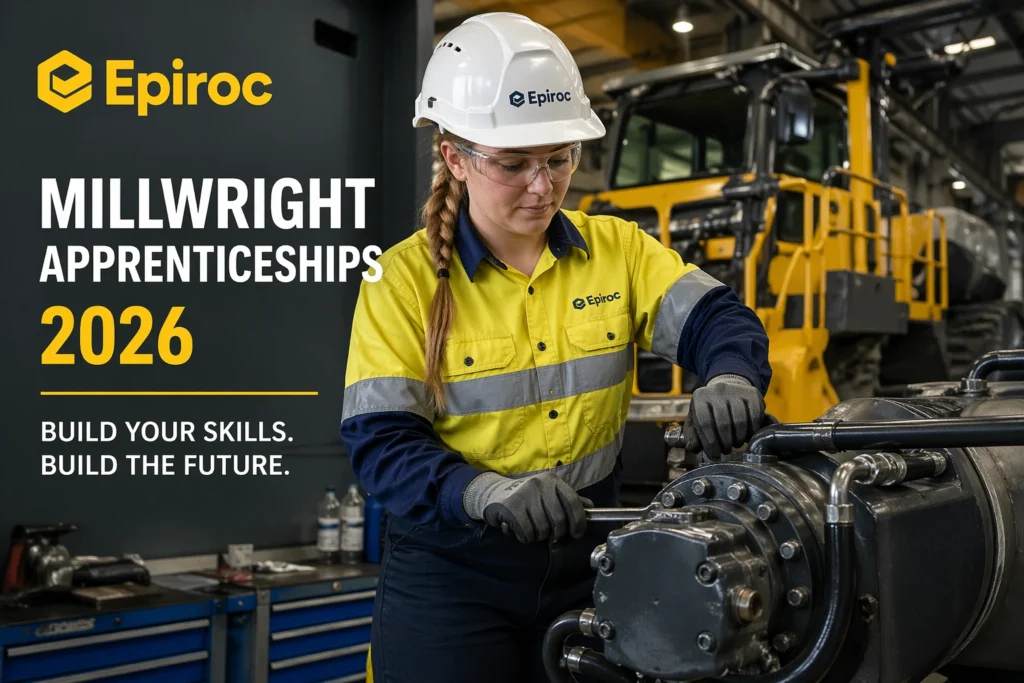

There’s a reason Epiroc Millwright Apprenticeships 2026 are quietly trending among South Africa’s job-seeking youth this April—and it’s not just because the application deadline is days away. In a country where youth unemployment remains stubbornly high, opportunities that combine real-world training, industry exposure, and a clear path into skilled work don’t just attract applicants—they spark urgency.
And this particular programme, offered by Epiroc Manufacturing South Africa, arrives at a moment when technical skills are back in the spotlight. Not as an alternative to university—but as a powerful, practical route into long-term careers.
So why is this apprenticeship gaining traction now, and what does it say about the direction of South Africa’s workforce?
A Quiet Shift Toward Skills-Based Careers
For years, South Africa’s employment narrative has leaned heavily toward academic qualifications. Degrees were positioned as the primary gateway to opportunity. But reality has complicated that story.
Industries like mining, manufacturing, and engineering are facing a shortage of skilled artisans—millwrights, electricians, technicians—roles that are essential to keeping operations running. At the same time, thousands of young people with matric certificates and even diplomas are struggling to find work.
Programmes like the Epiroc Millwright Apprenticeships 2026 sit right at this intersection.
They offer something increasingly valuable: structured, industry-recognised training paired with actual job experience.
This isn’t just about learning theory. It’s about learning how machines work, how production systems are maintained, and how technical problems are solved in real time.
APPLY HERE: Epiroc Millwright Apprenticeships 2026
What the Programme Really Offers (Beyond the Brochure)
On paper, the apprenticeship looks straightforward. It’s based in Krugersdorp, combines practical and formal training, and aligns with merSETA requirements. But the real appeal goes deeper.
Participants don’t just “train”—they enter a working ecosystem.
They rotate across production departments. They learn under qualified artisans. They get exposed to real operational challenges—not simulations.
This matters because technical skills are best learned in context.
A millwright isn’t just someone who understands mechanical and electrical systems—they’re someone who can troubleshoot under pressure, adapt to different machinery, and maintain efficiency in a live environment.
And that’s exactly what this programme aims to build.
The Timing: Why April 2026 Feels Different
The closing date—24 April 2026—has added urgency, but timing goes beyond deadlines.
South Africa’s labour market is going through subtle shifts:
- Increased demand for artisans in mining and manufacturing
- Renewed focus on vocational training pathways
- Public conversations about “degrees vs skills” gaining momentum
Against this backdrop, apprenticeships are no longer seen as a fallback option. They’re becoming strategic career moves.
The Epiroc programme lands at a moment when more young people are actively reconsidering what “success” looks like.
Inside the Requirements: Who Gets In?
The eligibility criteria are clear but telling:
- Grade 12 with Mathematics and Physical Sciences
- N2 Electrical or Mechanical qualification
This signals something important.
The programme isn’t entry-level in the broadest sense—it’s targeted. It’s designed for individuals who have already taken a step toward technical education but need a bridge into industry.
And that bridge is often the missing piece.
Many students complete N2 or similar qualifications but struggle to transition into employment because they lack practical experience. Apprenticeships like this fill that gap.
The Human Element: More Than Just Technical Training
Beyond qualifications, Epiroc is looking for something less tangible:
- Willingness to learn
- Professionalism
- Teamwork
- Commitment
These aren’t just “nice-to-haves.” In technical environments, attitude can be just as critical as skill.
A millwright doesn’t work in isolation—they’re part of a system. They collaborate with engineers, operators, and maintenance teams. They respond to breakdowns that affect entire production lines.
That’s why mentorship is built into the programme.
Learning from experienced artisans isn’t just about technical guidance—it’s about absorbing workplace culture, problem-solving approaches, and professional discipline.
Public Reaction: A Mix of Hope and Pressure
Among job seekers, the response has been predictable but significant: high interest, limited slots, rising competition.
On social media and career forums, conversations around apprenticeships have shifted tone. Instead of passive interest, there’s urgency—questions about requirements, deadlines, and how to stand out.
But there’s also a layer of pressure.
Opportunities like this highlight a broader issue: there are far more applicants than positions available.
That imbalance fuels both hope and anxiety.
For some, this programme represents a real chance at stability. For others, it’s a reminder of how competitive the job market has become.
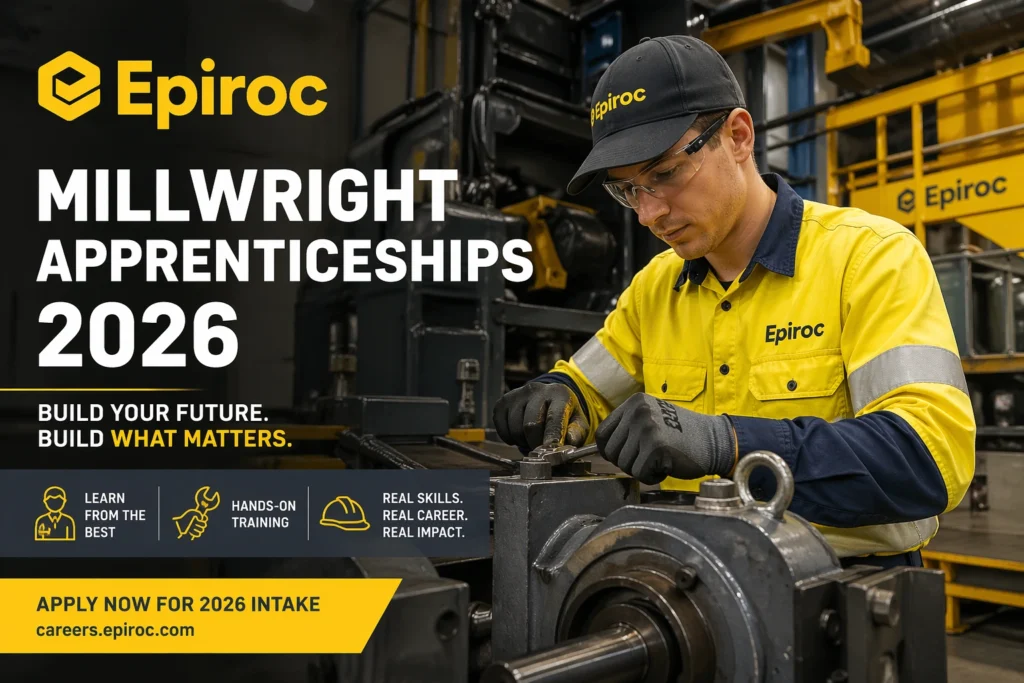
APPLY HERE: Epiroc Millwright Apprenticeships 2026
The Bigger Picture: Apprenticeships in South Africa’s Economy
It’s easy to view the Epiroc Millwright Apprenticeships 2026 as a single opportunity. But it’s more useful to see it as part of a larger trend.
South Africa’s economy depends heavily on sectors like mining and manufacturing. These industries require a steady pipeline of skilled workers.
Yet for years, that pipeline has been inconsistent.
Apprenticeships are one of the most effective ways to fix that.
They:
- Align training with industry needs
- Reduce the gap between education and employment
- Create job-ready candidates
And when companies invest in apprenticeships, they’re not just training workers—they’re securing their own future workforce.
Why This Matters Right Now
The relevance of the Epiroc Millwright Apprenticeships 2026 goes beyond one intake cycle.
It speaks to three critical realities:
1. Youth unemployment isn’t just about lack of jobs—it’s about mismatch of skills.
Many young people have qualifications that don’t align with industry demand. Apprenticeships directly address this gap.
2. Technical careers are regaining value.
There’s a growing recognition that skilled trades offer stability, growth, and long-term opportunities—often without the debt associated with university education.
3. Employers are taking a more active role in training.
Instead of expecting “ready-made” employees, companies like Epiroc are investing in developing talent from the ground up.
In that sense, this programme isn’t just an opportunity—it’s part of a broader shift in how careers are built.
ALSO APPLY FOR: OVK Apprenticeship 2026
APPLY HERE: Epiroc Millwright Apprenticeships 2026
What Could Happen Next
Looking ahead, several outcomes are possible—not just for this programme, but for the apprenticeship landscape in general.
Increased Competition
As awareness grows, future intakes could become even more competitive. Applicants may need stronger academic results, additional certifications, or prior exposure to technical environments.
Expansion of Similar Programmes
If initiatives like this prove successful, more companies could follow suit, expanding apprenticeship opportunities across sectors.
Greater Policy Support
Government and industry bodies may increase support for vocational training, recognising its role in reducing unemployment and boosting economic productivity.
Changing Career Perceptions
Perhaps the most significant shift could be cultural. As more young people enter skilled trades and build successful careers, the perception of apprenticeships may continue to evolve—from “alternative” to “aspirational.”
The Reality Check: What Applicants Should Understand
While the opportunity is promising, it’s not effortless.
Apprenticeships demand:
- Discipline
- Consistency
- Technical focus
- Long-term commitment
This isn’t a quick path to income—it’s a structured journey that requires patience.
But for those who complete it, the payoff can be substantial: a recognised trade, practical experience, and a foothold in a critical industry.
Final Thoughts
The buzz around Epiroc Millwright Apprenticeships 2026 isn’t accidental. It reflects deeper shifts in South Africa’s job market, education system, and economic priorities.
At its core, this programme represents something increasingly rare: a clear, structured pathway from learning to earning.
And in a landscape where many career paths feel uncertain, that clarity is exactly what makes it stand out.
ALSO APPLY FOR: OVK Apprenticeship 2026
APPLY HERE: Epiroc Millwright Apprenticeships 2026