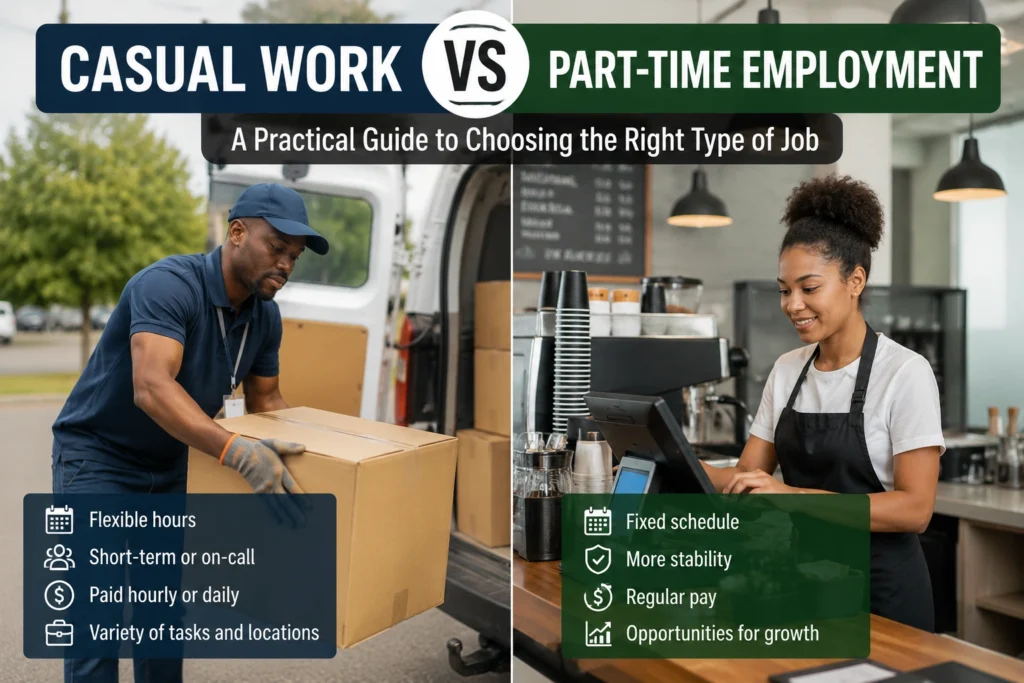

Many job seekers, especially students, graduates, parents, and people looking for extra income, often assume that casual work and part-time employment are the same thing. Job advertisements sometimes use the terms interchangeably, making it even more confusing. As a result, people may accept a position without fully understanding their working hours, income stability, employee benefits, or legal rights.
Understanding Casual Work vs Part-Time Employment is important because the differences can affect your earnings, work-life balance, career growth, and financial security. Whether you’re looking for your first job, searching for flexible work while studying, or considering a second source of income, knowing how these employment types differ can help you make smarter decisions.
This practical guide explains what casual work and part-time employment mean, highlights their key differences, outlines their advantages and disadvantages, and provides practical advice to help you choose the option that best fits your circumstances.
What Is Casual Work?
Casual work refers to employment where there is usually no guaranteed number of working hours. Employers call workers in when needed, depending on business demand.
Casual workers may work:
- Weekends
- Public holidays
- Seasonal periods
- Busy retail days
- Special events
- During staff shortages
The amount of work can vary dramatically. One week you might work five days, while the next week you may receive no shifts at all.
Examples include:
- Promotional staff
- Event assistants
- Waiters during busy seasons
- Warehouse pickers
- Retail assistants during holiday sales
- Delivery assistants
- Hospitality staff
Casual work is often attractive because it offers flexibility and allows workers to accept or decline shifts depending on availability.
ALSO APPLY FOR: AVBOB Learnerships 2026
ALSO APPLY FOR: Tiger Brands Learnerships 2026
What Is Part-Time Employment?
Part-time employment involves working fewer hours than a full-time employee, but with a more predictable schedule.
Instead of working 40–45 hours each week, a part-time employee might work:
- 15 hours
- 20 hours
- 25 hours
- 30 hours
These hours are usually agreed upon in an employment contract.
For example:
- Every Monday, Wednesday and Friday
- Every afternoon
- Weekends only
- Morning shifts
- Fixed evening shifts
Unlike casual work, part-time employees often know their schedules well in advance.
Casual Work vs Part-Time Employment: Understanding the Main Differences
Although both involve fewer hours than traditional full-time jobs, there are important differences.
Working Hours
Casual work usually has irregular hours that depend on business needs.
Part-time employment generally follows a regular weekly schedule.
Income Stability
Casual workers may experience income fluctuations because their shifts depend on demand.
Part-time employees usually earn a more predictable monthly income because their working hours remain relatively consistent.
Flexibility
Casual employment offers greater flexibility.
Workers may:
- Accept shifts
- Decline shifts
- Work for multiple employers
Part-time jobs are less flexible because employees are expected to work their agreed schedule consistently.
Job Security
Part-time employees often enjoy greater job stability.
Casual workers may receive fewer shifts during slow business periods.
Career Development
Many employers provide:
- Additional training
- Promotion opportunities
- Performance reviews
These opportunities are generally more common for part-time employees than casual workers.
Why This Issue Matters
Choosing between casual work and part-time employment affects more than just your weekly paycheck.
It can influence:
- Monthly budgeting
- Financial planning
- Career progression
- Study schedules
- Family responsibilities
- Mental wellbeing
- Access to workplace benefits
For example, someone saving for university fees or rent may prefer the predictability of a part-time position. On the other hand, a student whose class timetable changes each semester may value the flexibility of casual work.
Understanding these differences helps you avoid accepting a job that doesn’t align with your personal or financial goals.
Advantages of Casual Work
Casual employment offers several benefits.
Greater Flexibility
Many casual workers choose when they are available.
This works well for:
- University students
- Freelancers
- Parents
- People running small businesses
Opportunity to Gain Experience
Casual jobs can help people build work experience in industries such as:
- Retail
- Hospitality
- Tourism
- Events
- Customer service
- Logistics
Easier Entry into the Workforce
Many employers hire casual workers with little or no previous experience.
This makes casual work an excellent starting point for first-time job seekers.
Potential Variety
Some casual workers perform different tasks every week, helping them develop multiple workplace skills.
Disadvantages of Casual Work
Despite the flexibility, casual work has challenges.
Unpredictable Income
Your monthly earnings may vary significantly.
This can make budgeting difficult.
Limited Working Hours
There is often no guarantee of receiving enough shifts.
Less Career Progression
Some employers reserve promotions for permanent staff.
Last-Minute Scheduling
Workers may receive shifts on short notice.
Advantages of Part-Time Employment
Part-time work provides benefits that many people value.
Stable Income
Regular hours make budgeting easier.
Better Routine
Knowing your schedule helps you plan:
- Classes
- Family time
- Medical appointments
- Transport
Greater Employment Stability
Part-time employees often remain with one employer for longer periods.
Improved Career Growth
Employers frequently invest more in employees who work regular shifts.
This may include:
- Skills training
- Internal promotions
- Leadership opportunities
Disadvantages of Part-Time Employment
Part-time work also has limitations.
Less Flexibility
Changing your availability may require employer approval.
Lower Total Income
Working fewer hours than full-time employees means overall earnings may be lower.
Fixed Commitments
Employees are generally expected to work every scheduled shift.
ALSO READ ABOUT: Prompt Engineering Explained
How to Decide Which Option Is Right for You
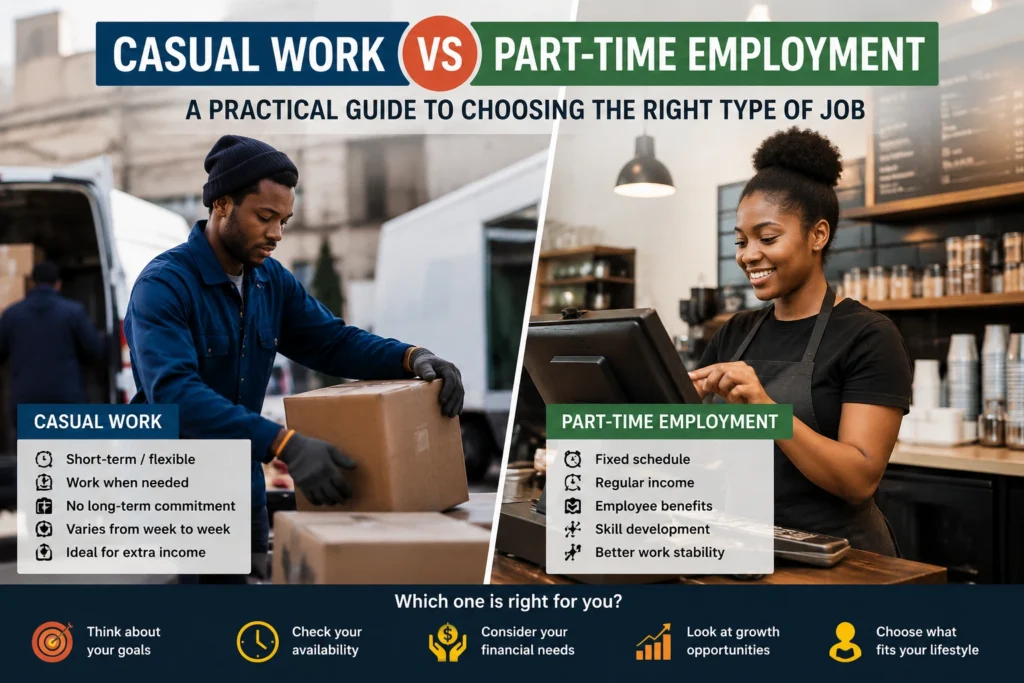
Choosing between Casual Work vs Part-Time Employment depends on your goals.
Step 1: Assess Your Financial Needs
Ask yourself:
- Do I need consistent monthly income?
- Am I saving for something important?
- Can I manage irregular earnings?
If financial stability is your priority, part-time work may be a better option.
Step 2: Consider Your Schedule
Students often need flexibility.
Parents may require shifts that fit around childcare.
Think about how much control you need over your working hours.
Step 3: Think About Long-Term Career Goals
If you’re trying to enter a specific industry, a part-time role could offer better opportunities for growth.
If you’re simply looking for temporary income, casual work may be enough.
Step 4: Read the Employment Contract Carefully
Before accepting any job:
- Understand your hours.
- Ask about overtime.
- Clarify pay rates.
- Confirm scheduling expectations.
- Understand leave arrangements.
- Learn about notice periods.
Never assume two jobs operate the same way.
Step 5: Calculate the Real Earnings
Don’t only compare hourly wages.
Also consider:
- Number of guaranteed hours
- Travel costs
- Parking expenses
- Uniform costs
- Weekend rates
- Public holiday pay
- Overtime opportunities
A higher hourly rate may not always result in higher monthly earnings.
Best Practices Experts Recommend
Employment specialists and career advisers generally suggest the following:
- Clearly understand your employment status before signing a contract.
- Keep copies of all employment documents and payslips.
- Track your working hours to ensure you’re paid correctly.
- Maintain good communication with your employer about your availability.
- Build reliable workplace habits by arriving on time and completing tasks professionally.
- Continue developing your skills through training and certifications, regardless of your employment type.
- Review your financial goals regularly to determine whether your current job arrangement still meets your needs.
- Stay informed about labour laws and workplace rights in your country, as these can affect pay, leave, and working conditions.
Mistakes People Often Make
Many workers unintentionally create problems because they misunderstand their employment arrangements.
Some common mistakes include:
Assuming Casual Means Temporary
Casual work can continue for months or even years depending on the employer.
Not Reading the Contract
Some people accept verbal explanations without reviewing the written agreement.
Only Comparing Hourly Pay
Higher hourly wages do not always mean higher overall income.
Ignoring Career Development
Choosing only the highest-paying casual shifts may delay long-term career growth.
Accepting Every Shift
Working excessive hours without balancing study, health or family commitments can lead to burnout.
Not Asking Questions
Always clarify:
- Expected hours
- Shift notice periods
- Payment dates
- Overtime rules
- Workplace policies
Which Type of Worker Benefits Most from Each Option?
Casual work often suits:
- University students
- Seasonal workers
- People wanting flexible hours
- Individuals seeking additional income
- Workers exploring different industries
Part-time employment often suits:
- Parents
- People needing predictable income
- Individuals building long-term careers
- Workers seeking greater employment stability
- Employees balancing work with ongoing education
Neither option is automatically better. The right choice depends on your personal goals, financial situation, and lifestyle.
Frequently Asked Questions
1. Is casual work better than part-time employment?
Not necessarily. Casual work offers flexibility, while part-time employment usually provides greater income stability and predictable schedules. The better option depends on your individual needs and priorities.
2. Can casual work become permanent?
Yes. Some employers offer permanent or part-time positions to reliable casual workers after they have demonstrated good performance and commitment.
3. Which option is better for students?
Many students prefer casual work because it allows them to fit shifts around changing class schedules. However, students who need consistent income may find part-time employment more suitable.
4. What should I ask before accepting either type of job?
Ask about expected working hours, pay rates, scheduling practices, overtime, leave arrangements, contract terms, training opportunities, and how shifts are allocated. Understanding these details upfront helps you avoid misunderstandings later.
Final Thoughts
Understanding Casual Work vs Part-Time Employment is about more than learning employment terminology—it is about making informed decisions that support your finances, career goals, and lifestyle.
Casual work offers flexibility and can be an excellent way to gain experience or earn extra income, particularly for students or people with changing schedules. Part-time employment, on the other hand, provides greater predictability, making it easier to budget, maintain a routine, and pursue long-term career development.
Before accepting any position, take time to compare more than just the hourly wage. Consider the reliability of working hours, opportunities for growth, scheduling expectations, and how the role fits with your personal commitments. Reading your employment contract carefully and asking questions before signing can help you avoid surprises later.
The best employment choice is the one that aligns with your current circumstances while also supporting your future ambitions. By understanding the practical differences between casual work and part-time employment, you will be better equipped to choose opportunities that provide both immediate value and long-term benefits.
ALSO APPLY FOR: AVBOB Learnerships 2026
ALSO APPLY FOR: Tiger Brands Learnerships 2026
ALSO READ ABOUT: Prompt Engineering Explained