
Finding your first job in South Africa can feel like an impossible task. Many employers ask for previous work experience, but gaining that experience is often the biggest challenge for unemployed young people. Without practical workplace exposure, even motivated job seekers can struggle to secure interviews.
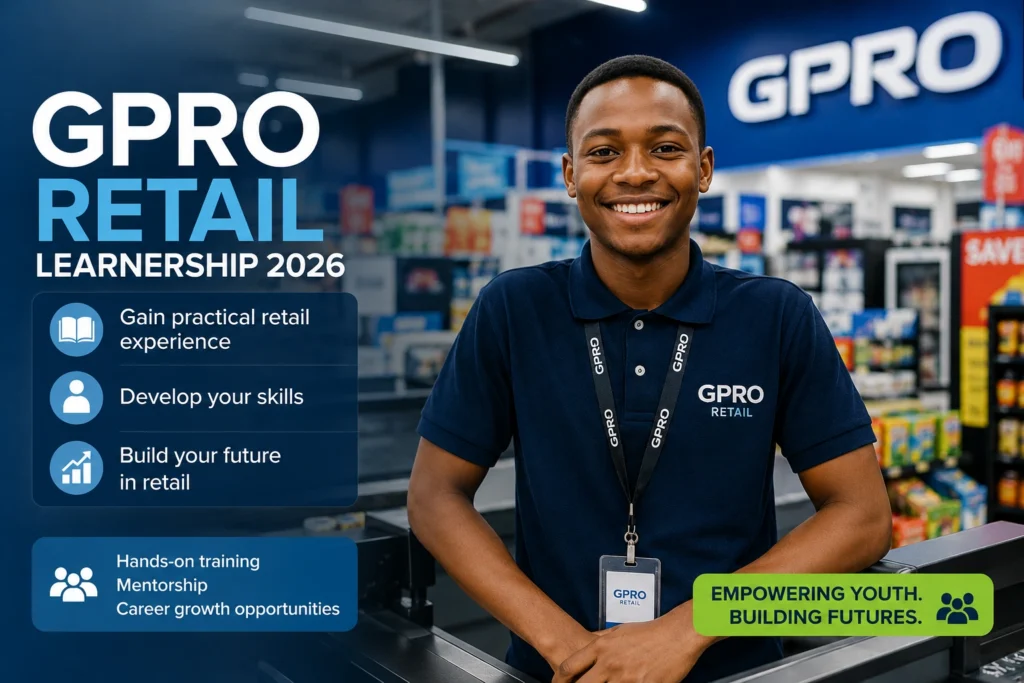
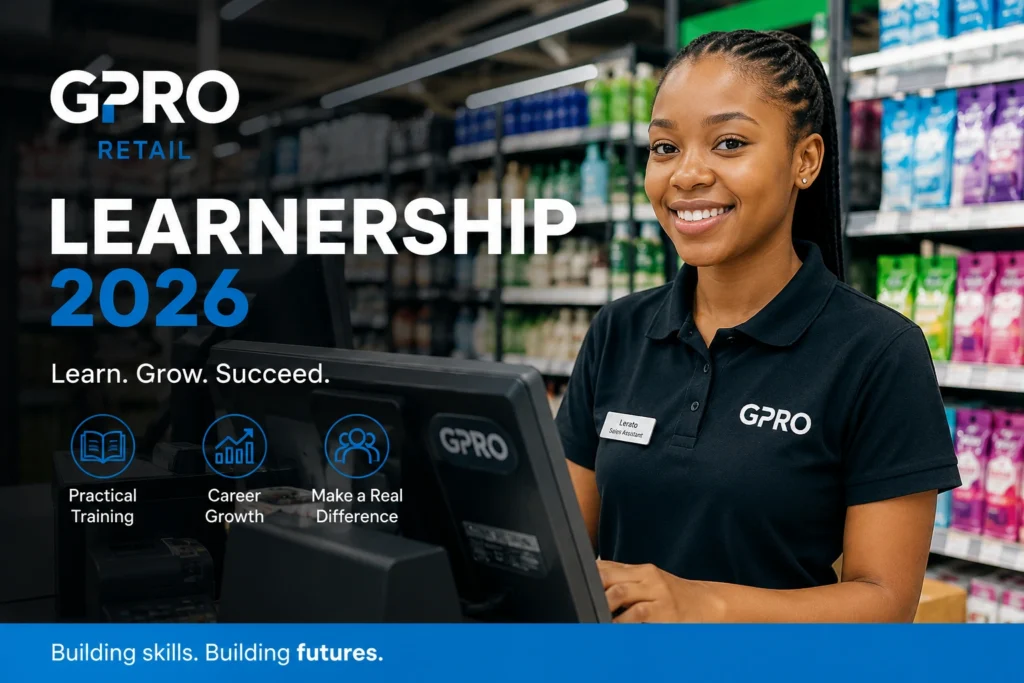
This is where the GPRO Retail Learnership 2026 offers a valuable opportunity. Instead of expecting applicants to arrive with years of experience, the programme combines accredited learning with practical workplace training inside real retail environments. Participants receive a monthly allowance of approximately R4,800 while building skills that employers across the retail and wholesale industries actively look for.
If you are looking for a way to gain recognised experience, improve your employability, and start building a long-term career in retail, this guide explains everything you need to know about the GPRO Retail Learnership 2026, including eligibility requirements, expected duties, application preparation, and practical advice to improve your chances of being shortlisted.
What Is the GPRO Retail Learnership 2026?
The GPRO Retail Learnership 2026 is a structured workplace learning programme aimed at unemployed South Africans who want to enter the retail and wholesale sector.
Unlike traditional classroom education, a learnership allows participants to spend most of their time working in an actual retail environment while completing an accredited qualification. Learners receive guidance from experienced supervisors and store managers while learning the daily operations of a retail business.
Expected programme highlights include:
| Programme Feature | Details |
|---|---|
| Programme | GPRO Retail Learnership 2026 |
| Industry | Retail & Wholesale |
| Duration | Approximately 12 months |
| Monthly Allowance | R4,800 |
| Qualification | Accredited Retail Qualification |
| Minimum Education | Grade 11 Passed |
| Experience Required | None |
| Employment Type | Fixed-Term Learnership |
| Availability | Expected across all nine provinces |
| Expected Applications | Q3 2026 |
The programme is designed to prepare learners for future employment by combining workplace experience with nationally recognised training.
Why This Issue Matters
South Africa continues to experience high youth unemployment, with many entry-level candidates struggling to gain their first opportunity because they lack practical work experience.
Retail remains one of the country’s largest employers, offering opportunities in supermarkets, clothing stores, pharmacies, wholesalers, home improvement retailers, and distribution centres. Employers in these industries often prefer applicants who understand customer service, stock management, workplace professionalism, and point-of-sale systems.
A learnership helps bridge this gap by allowing participants to:
- Gain recognised workplace experience.
- Earn a monthly allowance while learning.
- Develop practical customer service skills.
- Build confidence in a professional environment.
- Improve future employment opportunities.
For many participants, a retail learnership becomes the first step toward permanent employment or further career development.
What You’ll Learn During the GPRO Retail Learnership 2026
The programme is expected to provide practical exposure across multiple retail functions.
Customer Service
Retail businesses rely heavily on customer satisfaction. Learners develop skills such as:
- Greeting customers professionally.
- Answering product questions.
- Handling complaints respectfully.
- Providing accurate information.
- Building positive customer relationships.
These communication skills are valuable across almost every industry.
Point-of-Sale Operations
Participants receive practical training on:
- Operating cash registers.
- Processing card and cash payments.
- Issuing receipts.
- Following cash-handling procedures.
- Reducing transaction errors.
Modern retail employers expect staff to understand these systems.
Merchandising
Visual presentation influences customer buying decisions.
Learners gain experience in:
- Shelf organisation.
- Promotional displays.
- Product pricing.
- Store presentation standards.
- Stock rotation.
These skills contribute directly to improved store performance.
Stock Control
Retail stores depend on accurate inventory management.
Training may include:
- Receiving deliveries.
- Checking invoices.
- Counting inventory.
- Identifying damaged stock.
- Preventing stock losses.
Workplace Safety
Every retail workplace follows health and safety procedures.
Participants learn:
- Safe lifting techniques.
- Hazard reporting.
- Emergency procedures.
- Workplace cleanliness.
- Basic occupational health and safety practices.
Daily Responsibilities During the Learnership
Although duties may vary between participating retailers, learners typically assist with everyday store operations.
Responsibilities often include:
- Helping customers locate products.
- Restocking shelves.
- Receiving deliveries.
- Organising storerooms.
- Maintaining clean shopping areas.
- Assisting during stock counts.
- Operating tills after receiving training.
- Completing workplace logbooks.
- Attending classroom learning sessions.
- Completing assessments within required deadlines.
The aim is to expose learners to multiple aspects of retail operations rather than a single task.
GPRO Retail Learnership 2026 Eligibility Requirements
Applicants are generally expected to meet the following minimum criteria.
Citizenship
Applicants should be South African citizens or permanent residents with a valid identity document.
Age
Applicants should generally be at least 18 years old when the programme begins.
Education
A passed Grade 11 certificate is expected as the minimum academic requirement.
Candidates with Grade 12 may also apply.
Employment Status
Applicants should:
- Be unemployed.
- Not currently participate in another learnership.
- Not be enrolled in full-time tertiary studies.
Experience
No previous retail experience is required.
This makes the programme suitable for first-time job seekers.
Personal Qualities That Can Improve Your Chances
Recruiters often look beyond academic qualifications.
Strong candidates usually demonstrate:
- Good communication skills.
- Reliability.
- Willingness to learn.
- Professional behaviour.
- Basic computer literacy.
- Time management.
- Ability to work in teams.
- Flexibility to work weekends and public holidays.
Being punctual and maintaining a positive attitude during interviews can also make a strong impression.
How to Apply for the GPRO Retail Learnership 2026
Preparing properly before applications open can save valuable time.
Step 1: Prepare Your Documents
Gather clear certified copies of:
- South African ID
- Updated CV
- Grade 11 or Grade 12 certificate
- Proof of residence
Certification is often required within the previous three months.
Step 2: Update Your CV
Your CV should include:
- Personal information
- Educational history
- Computer skills
- Languages spoken
- Volunteer work
- Community involvement
- Leadership activities
- Contactable references (if available)
Keep the CV concise and free from spelling mistakes.
Step 3: Monitor Official Recruitment Channels
When applications officially open, apply only through legitimate recruitment platforms.
Never pay application fees.
Legitimate learnerships are free.
Step 4: Complete the Application Carefully
Double-check:
- Contact details
- Email address
- Phone number
- Educational information
- Uploaded documents
APPLY HERE: GPRO Retail Learnership 2026
Small mistakes can delay or prevent your application from being processed.
Step 5: Apply Early
Avoid waiting until the final day.
Online systems often experience heavy traffic close to closing dates, increasing the risk of technical problems.
ALSO APPLY FOR: Standard Bank Learnership 2026
Best Practices Experts Recommend
Career advisers and recruitment specialists often recommend several practical steps that can improve your application.
Tailor your CV
Highlight communication skills, teamwork, volunteering, school leadership, or customer-facing activities rather than submitting a generic CV.
Use a professional email address
Avoid informal email names that may appear unprofessional.
Answer calls promptly
Recruiters often contact shortlisted candidates by phone.
Research retail employers
Understanding customer service principles and store operations demonstrates genuine interest during interviews.
Practice interview questions
Prepare answers explaining:
- Why you want to work in retail.
- How you solve problems.
- How you work with others.
- How you handle customers.
Confidence often comes from preparation.
Mistakes People Often Make
Many applications fail because of avoidable errors.
Common mistakes include:
- Waiting until the closing date.
- Uploading unclear or incomplete documents.
- Providing incorrect phone numbers.
- Using outdated CVs.
- Ignoring application instructions.
- Applying through unofficial websites.
- Paying scammers claiming to guarantee placement.
- Failing to check email regularly after applying.
Avoiding these mistakes can significantly improve your chances of being shortlisted.
Career Opportunities After Completing the Learnership
Completing an accredited retail learnership can open several entry-level career paths.
Possible opportunities include:
- Retail Sales Assistant
- Cashier
- Customer Service Representative
- Stock Controller
- Receiving Clerk
- Merchandising Assistant
- Store Administrator
- Warehouse Assistant
- Floor Supervisor Trainee
With additional experience, employees may progress into supervisory, assistant management, or store management positions.
Retail experience can also transfer into logistics, wholesale operations, customer support, and supply chain careers.
Financial Support During the Programme
The learnership includes a monthly allowance of approximately R4,800.
While it is not a full salary, the allowance is intended to help cover essential expenses such as:
- Transport
- Daily meals
- Study materials
- Basic living costs while participating in the programme
Learners should budget carefully throughout the 12-month period.
Frequently Asked Questions
Can I apply with only Grade 11?
Yes. A passed Grade 11 qualification is expected to meet the minimum academic requirement, while applicants with Matric may also be eligible.
Is previous retail experience required?
No. The programme is designed for entry-level applicants, and full workplace training is provided.
Does completing the learnership guarantee permanent employment?
No. Completing the programme improves your employability and may lead to future opportunities, but permanent employment is not guaranteed.
Do I have to pay to apply?
No. Genuine learnership applications are free. Be cautious of anyone requesting payment for an application or promising guaranteed placement.
Final Thoughts
The GPRO Retail Learnership 2026 offers an excellent opportunity for unemployed South Africans who want to gain practical workplace experience while earning a monthly allowance. By combining accredited learning with hands-on retail training, the programme helps participants develop the technical and interpersonal skills needed to succeed in one of South Africa’s largest employment sectors.
Competition for quality learnerships can be strong, so preparation is essential. Update your CV, organise certified supporting documents, monitor official application announcements, and submit your application well before the closing date. At the same time, continue applying for other learnerships and entry-level opportunities rather than relying on a single application.
For motivated applicants with a willingness to learn and grow, the GPRO Retail Learnership 2026 could be an important first step toward building a rewarding career in retail and wholesale operations.