

In today’s competitive job market, many job seekers believe that having the right degree, diploma, or certificate is enough to secure employment. Yet thousands of qualified candidates submit applications every day and never receive an interview invitation. This leaves many people wondering why employers choose one applicant over another when their qualifications appear similar on paper.
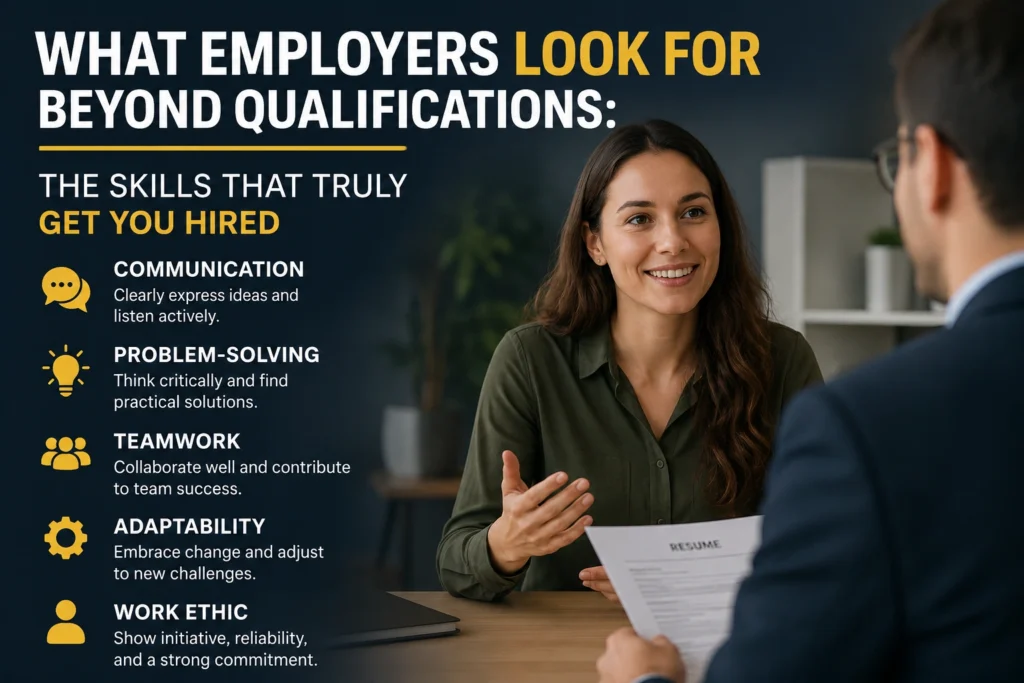
The reality is that qualifications help you meet the minimum requirements for a position, but they rarely guarantee a job offer. Employers are increasingly looking for qualities that demonstrate how well a person will perform, collaborate, adapt, and contribute within the workplace. Understanding What Employers Look for Beyond Qualifications can help job seekers stand out and improve their chances of success.
This guide explains the qualities employers value most, why they matter, and how you can develop and demonstrate them throughout your job search and career.
Understanding What Employers Look for Beyond Qualifications
Qualifications prove that you have acquired certain knowledge or technical skills. However, employers also need to know whether you can apply that knowledge effectively in real-world situations.
For example, two graduates may hold the same degree, but one may have stronger communication skills, better problem-solving abilities, and a more professional attitude. In many cases, the employer will choose the candidate who demonstrates those qualities.
When hiring managers evaluate applicants, they often assess factors such as:
- Communication skills
- Work ethic
- Adaptability
- Emotional intelligence
- Teamwork abilities
- Problem-solving skills
- Initiative
- Reliability
- Leadership potential
- Cultural fit
These qualities often determine long-term success more than academic achievements alone.
ALSO APPLY FOR: Momentum Internship 2026
ALSO APPLY FOR: Old Mutual Learnership 2026
Why This Issue Matters
Understanding What Employers Look for Beyond Qualifications is important because the modern workplace has changed significantly.
Technology evolves rapidly, industries transform, and job responsibilities shift. Employers need workers who can learn new skills, adapt to change, and collaborate effectively with others.
Candidates who focus only on obtaining qualifications may overlook the personal and professional qualities that employers value most.
The impact is significant:
- Qualified candidates may struggle to secure interviews.
- Employees may find it difficult to progress in their careers.
- Organizations may lose productivity if workers lack essential soft skills.
- Career growth opportunities may be missed despite strong academic performance.
Recognizing these expectations helps job seekers prepare more effectively and compete successfully in the employment market.
Communication Skills Remain a Top Priority
One of the most important answers to the question of What Employers Look for Beyond Qualifications is strong communication.
Every workplace relies on communication. Employees must share ideas, ask questions, explain problems, and work with colleagues, customers, and managers.
Good communication includes:
- Speaking clearly
- Writing professionally
- Listening actively
- Understanding instructions
- Presenting ideas confidently
Employers often assess communication skills during interviews. The way you answer questions, maintain conversations, and express yourself can influence hiring decisions.
How to Improve Communication Skills
- Practice speaking confidently in professional settings.
- Improve your email writing skills.
- Participate in group discussions.
- Seek feedback on presentations.
- Read regularly to expand vocabulary and comprehension.
Employers Value a Strong Work Ethic
Work ethic refers to your attitude toward responsibilities and performance.
Employers want individuals who:
- Arrive on time
- Meet deadlines
- Take responsibility for mistakes
- Complete tasks thoroughly
- Remain committed during challenges
A strong work ethic demonstrates reliability and professionalism.
Even entry-level candidates can showcase work ethic through volunteer work, internships, academic projects, part-time jobs, or extracurricular activities.
Adaptability Is Increasingly Important
Workplaces today change faster than ever before. New software, new processes, and changing business needs require employees who can adapt quickly.
Employers often prefer candidates who show flexibility and a willingness to learn.
Adaptable employees typically:
- Embrace change
- Learn new skills quickly
- Handle unexpected situations calmly
- Remain productive during transitions
- Seek solutions rather than resist change
Candidates who demonstrate adaptability often become valuable long-term employees.
Teamwork and Collaboration Matter
Most jobs require employees to work with others.
Regardless of industry, employers seek individuals who can:
- Cooperate with colleagues
- Respect diverse perspectives
- Contribute positively to group goals
- Resolve conflicts professionally
- Share knowledge and support others
Strong teamwork helps organizations achieve better outcomes while creating healthier workplace environments.
When discussing your experience during interviews, highlight examples of successful collaboration, group projects, or team achievements.
Problem-Solving Skills Make Candidates Stand Out
Employers do not simply hire people to perform tasks. They hire people who can solve problems.
Problem-solving involves:
- Identifying challenges
- Analyzing information
- Evaluating options
- Making informed decisions
- Implementing solutions
Candidates who can demonstrate practical problem-solving abilities often gain a competitive advantage.
For example, rather than simply listing responsibilities on a CV, describe how you improved a process, resolved a customer issue, or contributed to a successful project outcome.
Emotional Intelligence Is Becoming More Valuable
Emotional intelligence refers to the ability to understand and manage emotions while interacting effectively with others.
High emotional intelligence helps employees:
- Build positive relationships
- Handle criticism professionally
- Manage workplace stress
- Demonstrate empathy
- Navigate conflicts constructively
Many employers recognize that technical skills can be taught, but emotional intelligence often has a significant impact on workplace performance and leadership potential.
Initiative and Self-Motivation Impress Employers
Another important aspect of What Employers Look for Beyond Qualifications is initiative.
Employers appreciate individuals who:
- Take ownership of their work
- Identify opportunities for improvement
- Learn independently
- Seek solutions without constant supervision
- Demonstrate enthusiasm for growth
Showing initiative indicates that you are proactive rather than reactive.
You can demonstrate this quality by pursuing online courses, volunteering, taking on additional responsibilities, or completing personal projects related to your field.
Reliability Builds Trust
Reliability is one of the most valued workplace characteristics.
Employers need employees they can depend on consistently.
Reliable workers:
- Follow through on commitments
- Deliver quality work
- Meet expectations
- Maintain professionalism
- Build trust with colleagues and managers
Trust often becomes a key factor when employers consider promotions and leadership opportunities.
Positive Attitude Can Influence Hiring Decisions
Technical skills are important, but attitude often shapes workplace culture.
Employers generally prefer candidates who:
- Remain positive during challenges
- Show enthusiasm for learning
- Demonstrate resilience
- Accept feedback constructively
- Contribute to a supportive environment
A positive attitude can make a significant difference when employers compare similarly qualified candidates.
Leadership Potential Is Not Just for Managers
Leadership is not limited to executive roles.
Employers often seek candidates who can:
- Take responsibility
- Influence others positively
- Support team success
- Make informed decisions
- Demonstrate accountability
Even graduates and entry-level applicants can show leadership through student organizations, volunteer activities, community projects, or workplace experiences.
ALSO READ ABOUT: Why Companies Leave Vacancies Open for Months
Step-by-Step Strategies to Demonstrate These Qualities
Understanding What Employers Look for Beyond Qualifications is only the first step. You must also demonstrate these qualities effectively.
Step 1: Audit Your Current Strengths
Make a list of your:
- Technical skills
- Soft skills
- Achievements
- Experiences
Identify examples that showcase communication, teamwork, leadership, and problem-solving.
Step 2: Update Your CV Strategically
Instead of only listing duties, highlight accomplishments.
For example:
Less effective:
- Assisted customers with inquiries.
More effective:
- Resolved customer issues efficiently, contributing to improved satisfaction levels.
Focus on results and contributions.
Step 3: Build Relevant Experience
If you lack professional experience:
- Volunteer
- Complete internships
- Join community projects
- Participate in student organizations
- Take freelance opportunities
These experiences often provide valuable evidence of workplace skills.
Step 4: Prepare for Behavioral Interviews
Many employers use behavioral questions to evaluate soft skills.
Examples include:
- Tell us about a challenge you overcame.
- Describe a time you worked in a team.
- Explain a situation where you demonstrated leadership.
Prepare specific examples using the STAR method:
- Situation
- Task
- Action
- Result
Step 5: Invest in Continuous Learning
Employers appreciate candidates who pursue growth independently.
Consider developing:
- Digital skills
- Industry knowledge
- Communication abilities
- Project management skills
- Data literacy
Continuous learning demonstrates adaptability and initiative.
Step 6: Strengthen Your Professional Brand
Your professional reputation matters.
Ensure your:
- LinkedIn profile is updated
- Online presence is professional
- Networking efforts are consistent
- Communication remains respectful and polished
Employers increasingly evaluate candidates beyond traditional application documents.
Best Practices Experts Recommend
Career experts consistently recommend the following approaches:
Focus on Transferable Skills
Transferable skills such as communication, teamwork, leadership, and problem-solving are valuable across industries.
Show Evidence, Not Just Claims
Instead of saying you are hardworking, provide examples that demonstrate your work ethic.
Learn Continuously
Industries evolve rapidly. Ongoing development helps you remain competitive.
Seek Constructive Feedback
Feedback helps identify strengths and areas for improvement.
Develop Professional Relationships
Networking often creates opportunities that qualifications alone cannot provide.
Maintain Professionalism Everywhere
Professional behavior should extend to interviews, emails, networking events, and social media interactions.
Mistakes People Often Make
Many job seekers unintentionally weaken their applications by making avoidable mistakes.
Focusing Only on Qualifications
Degrees and certificates are important, but employers evaluate the complete candidate.
Ignoring Soft Skills
Many applicants fail to showcase communication, teamwork, or leadership abilities.
Using Generic CVs
Submitting the same CV for every role often reduces effectiveness.
Underestimating Professional Conduct
Poor interview behavior, late responses, or unprofessional communication can harm opportunities.
Failing to Provide Examples
Employers want evidence of skills rather than unsupported claims.
Resisting Feedback
Candidates who ignore feedback miss opportunities for growth and improvement.
Frequently Asked Questions
1. Are qualifications still important?
Yes. Qualifications often help candidates meet minimum job requirements. However, employers usually consider qualifications alongside experience, soft skills, attitude, and workplace readiness.
2. Can soft skills outweigh academic achievements?
In some situations, yes. When candidates have similar qualifications, employers often choose the person with stronger communication, teamwork, adaptability, and problem-solving abilities.
3. How can graduates demonstrate workplace skills without experience?
Graduates can use examples from internships, volunteer work, student projects, leadership positions, community activities, and academic assignments to demonstrate valuable skills.
4. What is the most important quality employers look for?
There is no single answer because requirements vary by role. However, communication, reliability, adaptability, problem-solving, and a positive attitude consistently rank among the most valued qualities.
Conclusion
Understanding What Employers Look for Beyond Qualifications can significantly improve your chances of securing employment and advancing your career. While degrees, diplomas, and certifications remain important, employers increasingly evaluate qualities such as communication, adaptability, teamwork, emotional intelligence, reliability, initiative, and problem-solving ability.
The strongest candidates combine technical knowledge with professional behaviors that help organizations succeed. By developing these skills, gaining practical experience, showcasing achievements effectively, and demonstrating a commitment to growth, you can stand out in a crowded job market.
Start by assessing your strengths, identifying areas for improvement, and actively seeking opportunities to build the qualities employers value most. Over time, these efforts can make a meaningful difference in your employability and long-term career success.
ALSO APPLY FOR: Momentum Internship 2026
ALSO APPLY FOR: Old Mutual Learnership 2026
ALSO READ ABOUT: Why Companies Leave Vacancies Open for Months