
On a typical weekday morning, hundreds of employees arrive at a corporate office expecting everything to work seamlessly. The lights switch on, security systems operate without interruption, meeting rooms are available, air conditioning functions properly, and maintenance issues are resolved before they become major problems.
Most people rarely stop to think about the professionals responsible for making that happen.
Behind every efficient workplace is a team coordinating buildings, contractors, maintenance schedules, compliance requirements, safety standards, and operational systems. For graduates looking to enter this often-overlooked but highly important field, the Momentum Internship 2026 presents an opportunity to gain practical experience inside one of South Africa’s established corporate environments.
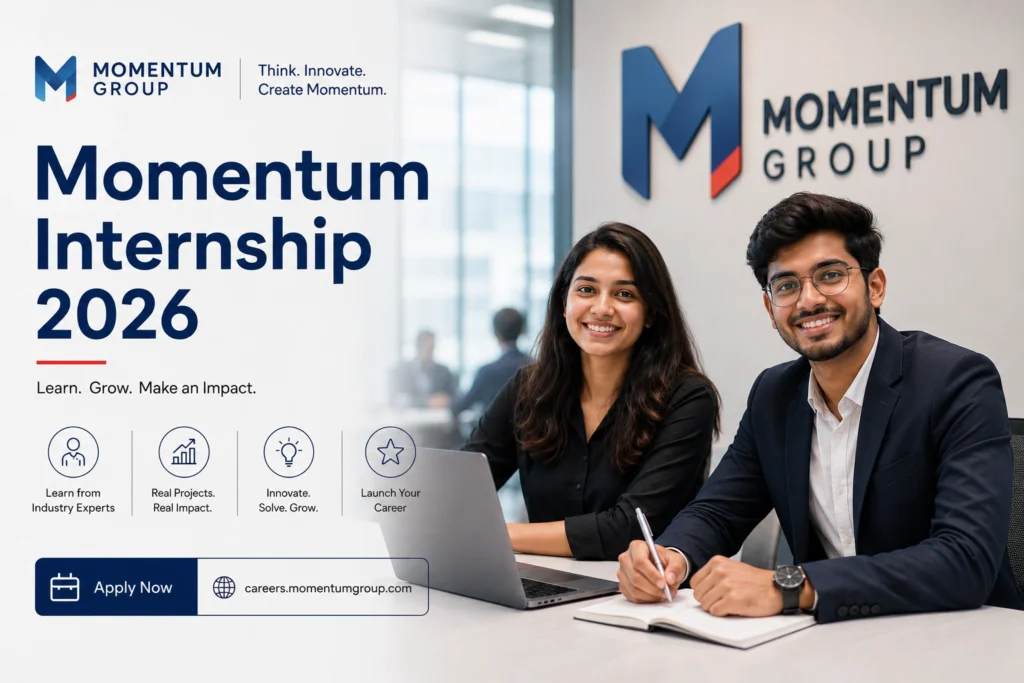
Momentum Group has opened applications for a Facilities Intern position within its Group Facilities Management cluster. Based in Centurion, Gauteng, the internship offers graduates exposure to the operational side of business, where infrastructure, people, services, and workplace efficiency come together.
For many young professionals struggling to bridge the gap between academic qualifications and workplace experience, this internship could provide the practical foundation needed to launch a long-term career.
Why Facilities Management Is Becoming More Important Than Ever
When graduates think about corporate careers, they often picture finance, marketing, information technology, or human resources.
Facilities management rarely receives the same attention.
Yet modern businesses depend heavily on facilities teams to ensure that workplaces remain safe, compliant, efficient, and productive.
The role of facilities professionals has expanded significantly over the last decade. Today’s facilities departments are no longer focused only on repairs and maintenance. They now contribute to sustainability initiatives, workplace wellbeing, energy efficiency, contractor management, project delivery, and operational risk management.
Across South Africa, organisations face growing pressure to optimise costs while maintaining safe and productive work environments. This has increased demand for professionals who understand both the technical and operational aspects of managing facilities.
The Momentum internship arrives at a time when these skills are becoming increasingly valuable.
The Momentum Internship 2026: More Than Administrative Experience
One of the most attractive aspects of the Momentum Internship 2026 is that it goes beyond traditional office administration.
According to the role description, the Facilities Intern will support daily facilities operations while gaining exposure to maintenance planning, inspections, project coordination, contractor engagement, compliance processes, and sustainability initiatives.
This means interns are likely to experience multiple aspects of facilities management rather than focusing on a single narrow responsibility.
The role sits within Momentum Group’s Operations function, giving successful candidates a closer look at how large corporate environments are managed behind the scenes.
Momentum Group operates through several well-known brands including Momentum, Metropolitan, Multiply, Guardrisk, and Eris Property Group. Supporting these operations requires effective workplace management and reliable infrastructure systems.
For graduates, this creates an opportunity to observe how facilities management contributes directly to business continuity and service delivery.
Who Could Benefit Most from This Opportunity?
Not every graduate is drawn to careers that involve coordination, inspections, maintenance planning, and operational problem-solving.
However, for those who enjoy practical environments where every day presents different challenges, facilities management can be both rewarding and diverse.
The internship may be particularly suitable for graduates with qualifications in:
- Facilities Management
- Project Management
- Engineering
- Built Environment disciplines
- Infrastructure-related fields
- Property and operations management
What makes facilities management unique is its combination of technical knowledge and people skills.
A facilities professional may spend part of the day reviewing maintenance schedules, another part coordinating contractors, and later attending meetings with internal stakeholders regarding workplace improvements.
Graduates who enjoy variety, organisation, and problem-solving often find the field appealing.
Looking Beyond the Job Description
Many internship advertisements focus heavily on qualifications and duties. However, the bigger value often lies in what participants learn indirectly.
A facilities internship inside a major corporate environment exposes graduates to systems and processes that universities cannot fully replicate.
They learn how projects move from planning to execution.
They gain exposure to service-level agreements.
They understand how contractors are managed and evaluated.
They see how budgets, compliance requirements, and operational priorities influence decision-making.
These lessons become valuable regardless of whether someone remains in facilities management or later moves into operations, project management, property management, or infrastructure leadership roles.
In South Africa’s competitive graduate job market, practical workplace exposure often becomes a distinguishing factor when applying for future positions.
Employers frequently seek candidates who understand how organisations function in practice, not just in theory.
That is one reason internships remain an important stepping stone for graduates entering the workforce.
The Skills Momentum Appears to Value
The role description suggests that Momentum is looking beyond academic qualifications alone.
Several personal and professional qualities stand out.
Strong organisational skills appear essential because facilities environments involve multiple moving parts. Maintenance schedules, inspections, service providers, project timelines, and compliance activities must all be tracked accurately.
Attention to detail is equally important.
A missed inspection, overlooked maintenance issue, or incomplete report can create larger operational challenges later.
Communication skills also matter. Facilities professionals regularly interact with contractors, employees, management teams, suppliers, and service providers.
The ability to communicate clearly often determines how effectively problems are resolved.
Another notable requirement is a willingness to learn.
Facilities management continues to evolve through technology, sustainability requirements, and changing workplace expectations. Graduates who demonstrate curiosity and adaptability may gain the most from the internship experience.
Expert Insight: Why Facilities Experience Can Create Unexpected Career Paths
Career development specialists often point out that some of the most versatile professionals start in operational roles.
Facilities management sits at the intersection of property, engineering, project delivery, compliance, health and safety, sustainability, and business operations.
This means graduates frequently develop a broader understanding of organisational systems than many entry-level positions provide.
Over time, professionals who begin in facilities environments may progress into project management, property management, operations leadership, workplace strategy, asset management, or infrastructure planning.
The exposure gained during an internship can therefore open doors that extend far beyond the initial role itself.
Working in Centurion’s Corporate Environment
The internship is based in Centurion, Gauteng, and is not structured as a remote opportunity.
For many graduates, location matters.
Centurion has become one of South Africa’s significant business hubs, hosting numerous corporate offices, financial institutions, technology firms, and professional service providers.
Working in this environment allows graduates to experience the pace and expectations of modern corporate operations.
It also provides opportunities to build professional networks, observe industry practices, and gain exposure to workplace cultures that can shape future career growth.
Graduates considering the role should think carefully about transportation arrangements and daily commuting requirements before submitting an application.
Practical considerations often influence internship success just as much as professional qualifications.

Preparing a Strong Application
Competition for graduate opportunities remains high across South Africa.
While meeting the minimum requirements is important, applicants who clearly demonstrate alignment with the role often stand out more effectively.
Candidates should ensure their CV reflects relevant experiences, even if those experiences came from academic projects, practical training, volunteer work, or previous internships.
Skills worth highlighting include:
- Maintenance coordination exposure
- Project administration
- Facilities-related coursework
- Microsoft Office proficiency
- Health and safety awareness
- Reporting and documentation experience
- Contractor coordination exposure
- Infrastructure-related projects
Recruiters frequently spend limited time reviewing applications. A clear and targeted CV can make it easier for hiring teams to identify suitable candidates quickly.
Applicants should also verify that all supporting documents are current and correctly uploaded before submitting their applications.
APPLY HERE: Momentum Internship 2026
ALSO APPLY FOR: District Municipality Frances Baard Intern 2026
Why Opportunities Like This Matter in 2026
South Africa continues to face challenges around graduate employment and workplace readiness.
Many young professionals complete qualifications but struggle to gain the practical experience employers seek.
Internships help address this gap by allowing graduates to apply academic knowledge within real business environments.
At the same time, organisations benefit by developing future talent pipelines and introducing graduates to industry practices early in their careers.
The facilities management sector itself is evolving rapidly.
Sustainability goals, energy management priorities, workplace optimisation initiatives, and compliance requirements are creating demand for professionals with both technical understanding and operational awareness.
Internships such as this one help prepare graduates for these changing workplace realities.
Rather than entering the job market with theoretical knowledge alone, participants gain direct exposure to the practical challenges organisations face every day.
Frequently Asked Questions
What is the closing date for the Momentum Internship 2026?
Applications for the Facilities Intern opportunity are scheduled to close on 30 September 2026. Candidates are encouraged to apply as early as possible.
Which qualifications are eligible?
Applicants should hold a National Diploma or Degree in Facilities Management, Project Management, Engineering, Built Environment disciplines, or a related qualification.
Is the internship remote or office-based?
The internship is office-based in Centurion, Gauteng. The role is not listed as a remote opportunity.
Final Thoughts
The Momentum Internship 2026 reflects a growing recognition that successful businesses depend on more than visible front-line functions. Behind every productive workplace is a network of professionals ensuring buildings, infrastructure, contractors, safety systems, and operational processes work together effectively.
For graduates interested in facilities management, project coordination, engineering support, or workplace operations, this internship offers a practical introduction to a field that continues to grow in importance.
More importantly, it provides something many young professionals are searching for: meaningful workplace exposure.
In a labour market where experience often becomes the deciding factor between candidates, opportunities like this can serve as valuable launchpads. They allow graduates to move beyond theory, develop practical skills, build professional confidence, and gain insight into how major organisations operate every day.
While the internship itself may be temporary, the lessons learned and networks developed could influence a graduate’s career trajectory for years to come.