

Finding a job can be frustrating, especially when you see the same position advertised week after week with no visible progress. Many job seekers spend time tailoring applications, writing cover letters, and preparing for interviews, only to discover that the vacancy remains open for months. This situation often leads people to wonder whether companies are actually hiring or simply collecting resumes.
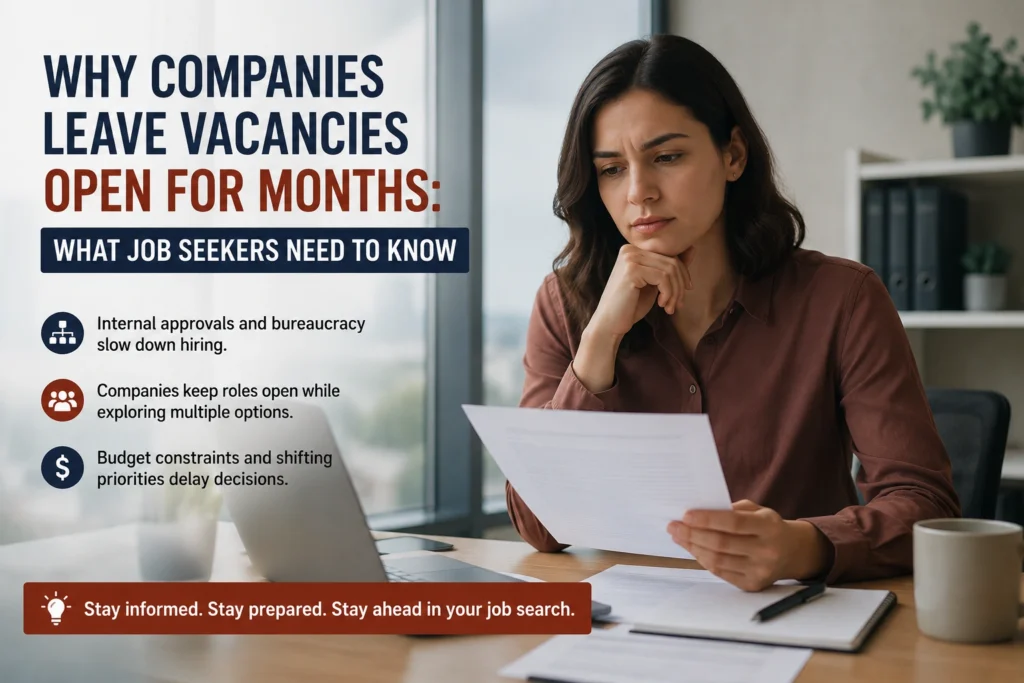
The reality is that there are many reasons why organizations leave vacancies open for extended periods. Some reasons are legitimate business challenges, while others relate to recruitment strategies, budget decisions, or changing workforce needs. Understanding Why Companies Leave Vacancies Open for Months can help job seekers make smarter decisions, manage expectations, and improve their chances of success.
This guide explains the most common reasons vacancies stay open, what it means for applicants, and practical strategies you can use to navigate the modern hiring process more effectively.
Understanding Why Companies Leave Vacancies Open for Months
At first glance, a vacancy that remains advertised for several months may appear unusual. After all, if a company urgently needs someone, shouldn’t it hire quickly?
In practice, recruitment is rarely that simple. Hiring involves multiple departments, budget approvals, candidate evaluations, compliance requirements, and long-term workforce planning. A vacancy may stay open even when interviews are taking place behind the scenes.
Companies are increasingly focused on finding the right candidate rather than simply filling a position quickly. While this approach can improve hiring outcomes for employers, it often creates uncertainty for job seekers.
Understanding the reasons behind these delays can help you avoid taking prolonged recruitment processes personally.
ALSO APPLY FOR: Sasol Learnerships 2026
ALSO APPLY FOR: (SANParks) Internships 2026
Common Reasons Why Companies Leave Vacancies Open for Months
1. They Cannot Find the Right Candidate
One of the most common reasons is a skills mismatch.
Employers may receive hundreds of applications but find that very few candidates meet their requirements. This is especially common in fields such as:
- Information technology
- Engineering
- Finance
- Data analytics
- Healthcare
- Specialized trades
A company may decide to continue advertising the role while searching for someone with specific qualifications, certifications, or experience.
From the employer’s perspective, hiring the wrong person can be more expensive than waiting longer for the right candidate.
2. Internal Approval Delays
Many hiring managers do not have complete authority to hire immediately.
Before a candidate receives an offer, approvals may be required from:
- Human resources departments
- Finance teams
- Senior management
- Department heads
- Executive leadership
If budgets change or leadership priorities shift, recruitment can slow down significantly.
In some cases, the vacancy remains posted even though hiring decisions are temporarily paused.
3. Budget Uncertainty
Economic conditions can affect recruitment plans.
A company may advertise a position expecting strong business growth, only to face:
- Reduced revenue
- Market uncertainty
- Project delays
- Cost-cutting initiatives
Instead of removing the vacancy, employers sometimes leave it active while they evaluate whether they can still afford to fill the role.
This creates a situation where the position technically exists but hiring activity slows considerably.
4. Building a Talent Pipeline
Some organizations continuously collect applications even when they do not need to hire immediately.
This strategy allows them to:
- Build a database of potential candidates
- Prepare for future vacancies
- Reduce future recruitment costs
- Respond quickly when opportunities arise
Large corporations often use ongoing recruitment campaigns for this purpose.
As a result, applicants may apply to positions that are not actively being filled at that exact moment.
5. High Employee Turnover
Certain industries experience frequent staff departures.
Examples include:
- Customer service
- Retail
- Hospitality
- Call centers
- Sales positions
Companies in these sectors may leave vacancies open continuously because employees leave regularly.
Even after hiring someone, the employer may continue accepting applications to prepare for future turnover.
6. Unrealistic Hiring Expectations
Sometimes employers create overly ambitious job descriptions.
They may seek candidates who possess:
- Extensive experience
- Multiple certifications
- Advanced technical skills
- Leadership capabilities
- Industry-specific knowledge
All while offering compensation that does not match those expectations.
When qualified professionals are unwilling to accept the offered salary, the vacancy can remain open for months.
7. Changes in Business Priorities
Organizations evolve constantly.
A role that seemed essential in January may become less urgent by March due to:
- New business strategies
- Department restructuring
- Automation projects
- Mergers or acquisitions
- Management changes
Rather than closing the vacancy immediately, companies sometimes keep it listed while reassessing their workforce needs.
8. Compliance and Legal Requirements
In some organizations, recruitment must follow strict procedures.
This may involve:
- Public advertising requirements
- Equal opportunity processes
- Internal candidate reviews
- Government regulations
- Union agreements
These requirements can extend recruitment timelines significantly, even when suitable candidates have already applied.
Why This Issue Matters
Understanding Why Companies Leave Vacancies Open for Months is important because it affects how job seekers approach their search.
Many applicants assume that a delayed response means rejection or personal failure. In reality, prolonged vacancies often have little to do with candidate quality.
The impact includes:
Emotional Impact
Extended hiring processes can create:
- Stress
- Anxiety
- Self-doubt
- Frustration
- Reduced confidence
Recognizing that delays are often organizational rather than personal can help maintain motivation.
Financial Impact
Job seekers may remain unemployed longer than expected while waiting for responses.
This can affect:
- Household budgets
- Career progression
- Professional development opportunities
Career Planning
Understanding recruitment realities allows candidates to make better decisions about:
- Following up on applications
- Pursuing additional opportunities
- Expanding job search strategies
- Developing new skills
Rather than waiting for one employer, candidates can maintain momentum and improve their overall prospects.
ALSO READ ABOUT: Jobs That Are Disappearing Fast
How Job Seekers Should Respond
Step 1: Apply Broadly
One of the biggest mistakes job seekers make is relying on a single opportunity.
Even if a role seems perfect, continue applying elsewhere until you have accepted a formal offer.
A diverse application strategy reduces dependence on any one employer’s timeline.
Step 2: Track Your Applications
Create a simple system to monitor:
- Company name
- Position title
- Application date
- Follow-up dates
- Interview status
This helps you stay organized and identify patterns in your job search.
Step 3: Follow Up Professionally
If several weeks have passed since applying, consider sending a polite follow-up message.
Keep it brief and professional.
Ask whether recruitment is still ongoing and express continued interest in the role.
Avoid sending repeated messages that may appear aggressive or impatient.
Step 4: Improve Your Skills Continuously
Long hiring cycles provide an opportunity for professional growth.
Focus on:
- Online certifications
- Industry training
- Portfolio development
- Networking
- Volunteer experience
Additional qualifications can strengthen future applications.
Step 5: Optimize Your CV
Many vacancies receive large numbers of applications.
Ensure your CV:
- Highlights relevant achievements
- Uses clear formatting
- Includes measurable results
- Matches job requirements
- Remains concise and professional
A stronger CV improves your chances of reaching the interview stage.
Step 6: Build Professional Networks
Many positions are filled through referrals before public advertisements receive significant attention.
Expand your network through:
- Professional associations
- Industry events
- Alumni groups
- LinkedIn engagement
- Community organizations
Networking often uncovers opportunities that are not widely advertised.
Step 7: Manage Expectations
Recruitment timelines are frequently longer than candidates expect.
Some hiring processes take:
- Several weeks
- Multiple months
- Entire financial quarters
Maintaining realistic expectations can reduce unnecessary stress.
Best Practices Experts Recommend
Career professionals and recruitment specialists often recommend the following approaches:
Focus on Quality and Quantity
Submit well-tailored applications while maintaining a consistent application volume.
Applying to many positions without customization may reduce success rates, while applying to too few positions limits opportunities.
Customize Every Application
Review each job description carefully and align your CV with the employer’s needs.
Employers are more likely to notice candidates who clearly demonstrate relevance.
Prepare Before Interviews
Do not wait for interview invitations before preparing.
Research:
- Industry trends
- Company information
- Common interview questions
- Role-specific challenges
Preparation improves confidence and performance.
Continue Networking During the Search
Networking should not stop after submitting applications.
Building professional relationships can accelerate job opportunities significantly.
Stay Visible Online
Employers increasingly review professional profiles before making hiring decisions.
Maintain a professional online presence that reflects your skills and experience.
Mistakes People Often Make
Waiting for One Employer
Many candidates stop applying after reaching an interview stage.
This can be risky because hiring decisions may take months or change unexpectedly.
Taking Delays Personally
Recruitment delays often reflect organizational issues rather than candidate shortcomings.
Avoid assuming that silence automatically means rejection.
Ignoring Skill Development
Some job seekers pause professional growth while searching for work.
Continuous learning demonstrates initiative and adaptability.
Applying Without Research
Generic applications often struggle to stand out.
Understanding the employer and role improves application quality.
Failing to Follow Up
While excessive follow-up can be harmful, reasonable follow-up demonstrates professionalism and genuine interest.
Frequently Asked Questions
1. Does a vacancy being open for months mean the company is not hiring?
Not necessarily. The company may still be interviewing candidates, awaiting approvals, reassessing budgets, or searching for highly specialized skills.
2. Should I apply for a job that has been advertised for a long time?
Yes. A long-running advertisement does not automatically mean the position is filled. Many employers continue reviewing applications throughout the recruitment process.
3. How long should I wait before following up?
A professional follow-up after two to four weeks is generally reasonable, unless the employer provided a specific timeline.
4. Why do companies repost the same vacancy repeatedly?
Companies may repost jobs to increase visibility, attract new candidates, maintain talent pipelines, or replace candidates who withdrew from the process.
Final Thoughts: What Job Seekers Should Remember
Understanding Why Companies Leave Vacancies Open for Months can make the job search process less confusing and less discouraging. Long-running vacancies are often caused by recruitment challenges, budget considerations, approval processes, skill shortages, or strategic hiring decisions rather than a lack of interest in applicants.
The most effective approach is to remain proactive. Continue applying for relevant opportunities, improve your skills, expand your professional network, and maintain realistic expectations about hiring timelines. Avoid putting all your hopes into a single vacancy, no matter how promising it appears.
By treating your job search as an ongoing process rather than waiting for one employer’s response, you can improve your chances of securing meaningful employment and maintain momentum even when recruitment moves slowly.
ALSO APPLY FOR: Sasol Learnerships 2026
ALSO APPLY FOR: (SANParks) Internships 2026
ALSO READ ABOUT: Jobs That Are Disappearing Fast