
On a cold Johannesburg morning, hundreds of graduates will once again sit in taxis heading toward Sandton with the same thought running through their minds: How do you get experience when every job asks for experience first?
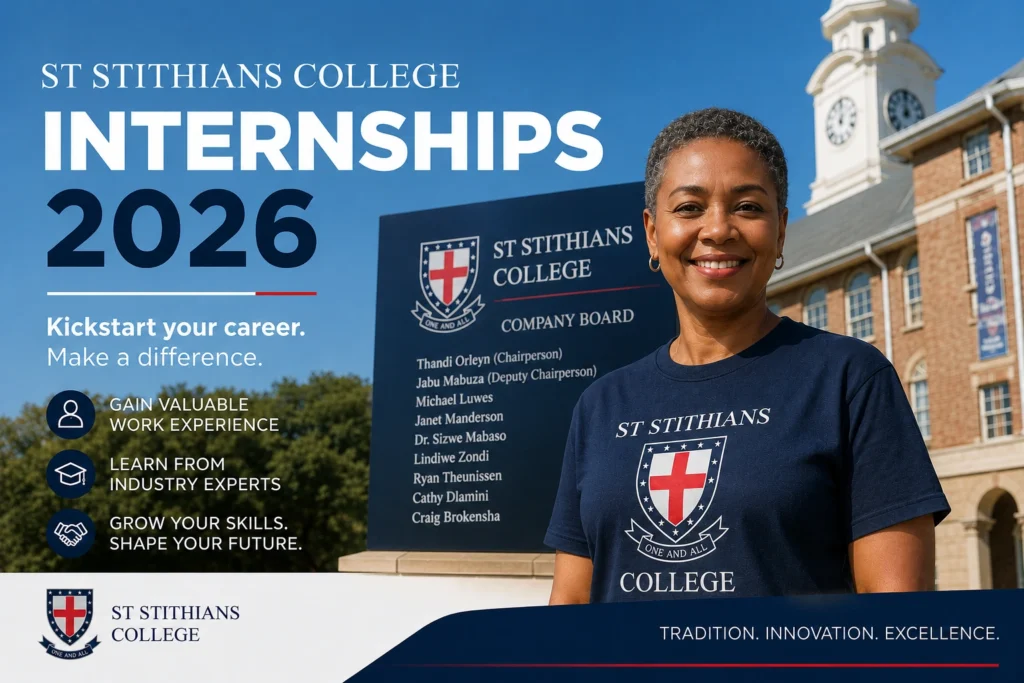
For many young South Africans, that question has become one of the defining frustrations of post-university life. Degrees are completed, qualifications are printed, yet the bridge between education and employment often feels impossibly narrow. That is why programmes like the St Stithians College Internships 2026 matter far beyond a single institution.
The internship programme offered through the Thandulwazi Trust Maths and Science Academy, in partnership with the FirstRand FirstJob Programme, arrives at a time when graduate unemployment remains one of the country’s biggest economic and social concerns. Instead of promising quick success or unrealistic career transformations, the programme focuses on something far more practical: structured workplace exposure.
And in South Africa’s current labour market, that alone can change the direction of a young person’s future.
Why the St Stithians College Internships 2026 stand out
Many internship programmes in South Africa focus narrowly on one department or technical field. What makes this opportunity different is the breadth of exposure available within a respected educational institution that operates almost like a mid-sized corporate environment.
The programme offers placements in:
- End User Computer Engineering
- Procurement
- Finance
- Project Management
- Admissions and Marketing
- Human Resources
- Risk and Compliance
- Diversity, Equity, Inclusion and Belonging
This range matters because today’s graduates are not entering a predictable economy. Young professionals increasingly need transferable workplace skills — communication, administration, project coordination, digital literacy, compliance awareness and stakeholder management — regardless of their qualification background.
At St Stithians College in Johannesburg North, interns are not simply expected to observe. According to the programme outline, participants will contribute to operational work, projects and administrative functions connected to real business activities.
That distinction is important. South African graduates often complain that internships sometimes reduce them to photocopying, filing or sitting idle. Employers, meanwhile, argue that graduates lack workplace readiness. Structured programmes that place interns inside functioning departments help close that gap.
A programme rooted in a broader South African reality
The internship arrives during a difficult economic period for many young people. Statistics South Africa has repeatedly highlighted the disproportionate unemployment burden carried by citizens under 35. Even graduates with diplomas and degrees are increasingly competing for limited entry-level opportunities.
In Gauteng especially, thousands of graduates migrate toward economic hubs like Sandton, Rosebank and Midrand hoping proximity will improve their chances. Yet transport costs, housing pressures and competition remain major barriers.
That is partly why the programme’s 50km residential requirement around the St Stithians campus matters. It reflects the practical realities employers face regarding transport reliability, punctuality and daily commuting challenges in Johannesburg.
At the same time, the initiative demonstrates how private educational institutions are increasingly becoming active participants in skills development rather than operating solely as academic spaces.
The Thandulwazi Trust itself has long focused on educational upliftment, particularly in maths and science development. Linking that educational mission with graduate workplace readiness creates a more sustainable pipeline between learning and employability.
Inside the internship experience
A graduate entering the St Stithians College Internships 2026 programme will likely encounter something many South Africans experience for the first time during internships: professional culture.
That includes seemingly small but career-shaping lessons:
Arriving on time for meetings.
Responding professionally to emails.
Learning workplace reporting structures.
Handling confidential information responsibly.
Understanding deadlines under pressure.
Collaborating across departments.
These are not always taught formally at universities or colleges, yet employers consistently rank them among the most valuable workplace attributes.
The shared services environment at St Stithians may also expose interns to how large institutions coordinate finance, compliance, procurement and administration behind the scenes. For graduates who studied theory-heavy qualifications, that operational visibility can become incredibly valuable.
An HR intern, for example, may learn how recruitment systems function in practice rather than only in textbooks. A finance graduate may gain firsthand exposure to budgeting processes, reconciliations and reporting systems. Marketing interns could observe how institutions communicate with families, students and stakeholders in a highly competitive education sector.
Even graduates who eventually move into completely different industries often carry these early lessons throughout their careers.
The FirstJob partnership adds credibility
South African graduates have become increasingly cautious about internship advertisements because not every programme delivers meaningful development. Some offer minimal mentoring, vague responsibilities or limited growth opportunities.
The involvement of the FirstRand FirstJob Programme strengthens the credibility of this initiative.
Corporate-backed graduate development programmes tend to place stronger emphasis on measurable outcomes, professional standards and structured support. While internships never guarantee permanent employment, programmes linked to major corporate ecosystems often provide stronger professional networks and more recognisable experience on a CV.
That matters when graduates later apply elsewhere.
Recruiters frequently look for evidence that candidates can operate within professional systems. Experience connected to reputable institutions often signals reliability, exposure and workplace discipline.
More than a line on a CV
One of the biggest misconceptions around internships is that their value lies only in future employment applications. In reality, internships often influence confidence and professional identity just as much as employability.
Many graduates enter the workforce carrying uncertainty about whether they truly belong in professional spaces. South Africa’s inequality patterns mean some candidates arrive with years of networking exposure and polished workplace familiarity, while others enter corporate environments for the very first time.
A structured internship can reduce that confidence gap.
By working alongside experienced professionals, interns begin to understand workplace expectations, communication styles and decision-making processes. Over time, professional environments become less intimidating and more familiar.
That psychological shift can be transformative.
An expert-style insight: Why workplace exposure matters more than ever
Labour market analysts increasingly note that employers are hiring less for pure academic achievement and more for adaptability.
Artificial intelligence, automation and changing business models are reshaping entry-level work globally, including in South Africa. Graduates who can demonstrate problem-solving ability, communication skills and operational understanding are often more competitive than those with strong academic records alone.
Internships therefore serve a deeper purpose than temporary employment. They help young professionals translate academic knowledge into practical value.
In sectors like finance, administration, compliance and project management, employers increasingly prioritise candidates who understand workflow systems, teamwork and organisational processes from day one.
That makes structured workplace exposure one of the most important forms of early-career capital available to graduates today.
The importance of inclusion and accessibility
Another notable aspect of the programme is its emphasis on Employment Equity principles and support for designated groups and persons living with disabilities.
This reflects a broader shift taking place across South African institutions. Increasingly, employers recognise that workplace inclusion is not simply about meeting regulatory targets. Diverse workplaces often produce stronger collaboration, broader perspectives and improved institutional culture.
The inclusion of a Diversity, Equity, Inclusion and Belonging internship category is especially interesting because it signals how rapidly workplace priorities are evolving.
Just a decade ago, few graduates would have imagined DEIB as a formal professional pathway. Today, organisations increasingly require specialists who understand inclusive policy development, workplace culture and employee wellbeing.
This demonstrates how internship programmes can also reveal emerging career directions that many graduates may not yet fully understand.

Preparing a strong application
Competition for opportunities like the St Stithians College Internships 2026 will likely be intense, especially given South Africa’s graduate employment pressures.
Applicants should approach the process carefully rather than treating it as another bulk application submission.
The required documents include:
- A detailed CV
- Two character reference letters
- Certified copy of qualifications
- Certified South African ID copy
The character references are particularly important because they suggest the programme values professionalism, integrity and personal conduct alongside academic achievement.
Graduates often underestimate how much employers notice application quality itself. Poor formatting, missing documents or rushed submissions can immediately weaken otherwise strong candidates.
Applicants should ensure their CVs clearly explain:
- Qualifications completed
- Relevant academic projects
- Volunteer work
- Leadership roles
- Computer literacy
- Communication skills
- Any informal work experience
APPLY HERE: St Stithians College Internships 2026
ALSO APPLY FOR: UNFPA Internship 2026
Even small experiences can demonstrate responsibility and initiative.
Why educational institutions are becoming employment incubators
South Africa’s private education sector is increasingly expanding beyond classroom teaching into broader youth development initiatives.
Institutions like St Stithians are recognising that educational success alone no longer guarantees economic participation. Graduate transition support is becoming part of the broader educational responsibility.
This trend may become more common nationally as employers, schools, universities and corporate partners attempt to address skills mismatches and youth unemployment together.
In many ways, internships now function as a missing middle layer between academic completion and stable employment.
Without that bridge, many graduates remain trapped in cycles where employers demand experience that young candidates never had the opportunity to gain.
Frequently Asked Questions
Who can apply for the St Stithians College Internships 2026?
Applicants must be South African citizens between 19 and 34 years old who hold a diploma or degree qualification. Candidates must also live within 50km of the St Stithians campus in Sandton and must not have participated in previous internship or learnership programmes.
Is the internship only for education graduates?
No. The programme includes opportunities in finance, procurement, HR, IT support, project management, marketing, compliance and inclusion-related functions. Graduates from multiple academic backgrounds may qualify depending on their field of study.
Does the internship guarantee permanent employment?
The programme focuses on workplace experience and employability development rather than guaranteed permanent placement. However, recognised internship experience can significantly strengthen future job applications and professional readiness.
The bigger picture behind the opportunity
The St Stithians College Internships 2026 programme represents more than another graduate recruitment announcement. It reflects a growing understanding that South Africa’s youth unemployment challenge cannot be solved by qualifications alone.
Young graduates need structured entry points into professional life. They need environments where mistakes become learning opportunities, where mentorship exists and where theoretical knowledge becomes practical capability.
For some interns, this programme may become the beginning of long-term careers in finance, HR, technology or administration. For others, it may simply provide the confidence and exposure needed to secure their next opportunity elsewhere.
Either outcome matters.
In an economy where many young South Africans feel locked outside the workplace despite years of study, meaningful internship programmes provide something increasingly valuable: a first real chance to participate.
And sometimes, participation is where careers truly begin.