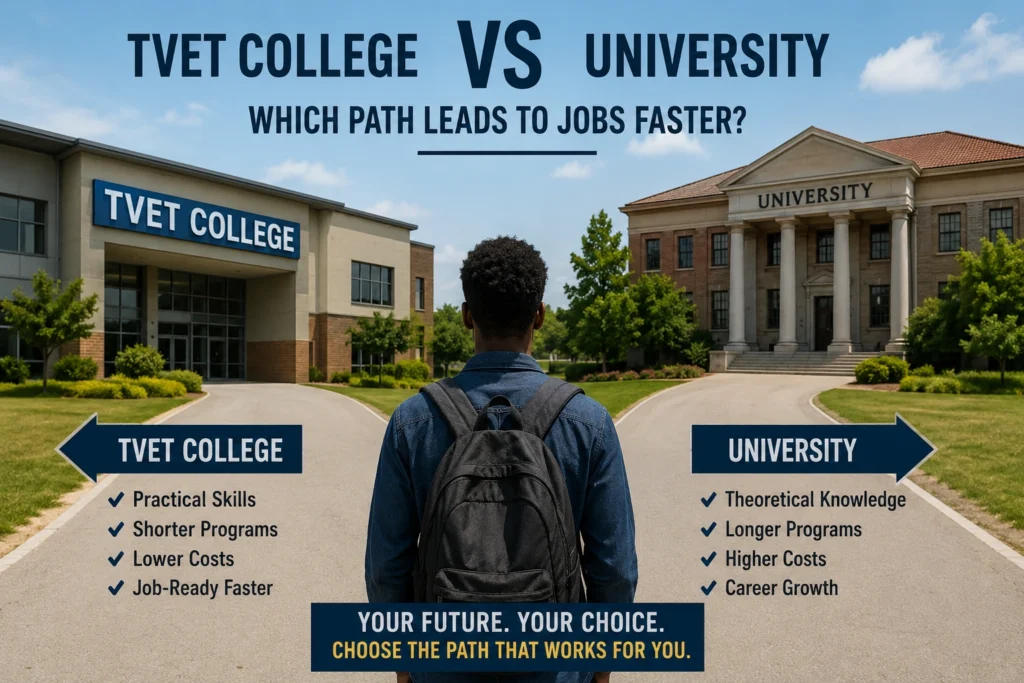

Choosing between a TVET college and a university has become one of the biggest career decisions facing young South Africans today. Many matriculants feel pressure to choose a path that will lead to stable employment as quickly as possible, especially in a difficult economy where youth unemployment remains high. Families often encourage university studies because they are seen as more prestigious, while others argue that practical skills from TVET colleges lead to faster employment.
The problem is that many students make this decision without understanding how the job market actually works. Some spend years studying degrees with limited demand, while others overlook technical careers that are urgently needed by employers. The result is frustration, student debt, delayed employment, and uncertainty about the future.
Understanding the differences between these two educational pathways can help students make smarter decisions based on career goals, financial realities, and labour market demand. In this guide on TVET College vs University: Which Path Leads to Jobs Faster?, we will break down the strengths, challenges, employment opportunities, earning potential, and practical realities of each option so you can choose the path that best fits your future.
Understanding the Difference Between TVET Colleges and Universities
Before deciding which path leads to jobs faster, it is important to understand what each institution offers.
What Is a TVET College?
Technical and Vocational Education and Training (TVET) colleges focus on practical, career-oriented education. These institutions prepare students for specific industries through hands-on training and technical skills development.
Common TVET courses include:
- Electrical engineering
- Plumbing
- Hospitality
- Mechanical engineering
- Welding
- Information technology
- Civil engineering
- Business management
TVET programmes are designed to help students become job-ready quickly. Many courses include workplace-based learning or apprenticeships.
ALSO APPLY FOR: Woodlands Dairy Millwright Apprentice 2026
ALSO APPLY FOR: Manpower SA Industrial Engineer Apprentice
What Is a University?
Universities focus more on academic and theoretical education. Degree programmes often take three to four years and prepare students for professional careers, research roles, or advanced study.
Common university qualifications include:
- Law
- Medicine
- Accounting
- Education
- Psychology
- Computer science
- Economics
University education generally provides broader knowledge and can open doors to higher-level professional careers, but it may take longer before graduates enter the workforce.
Why This Issue Matters
The debate around TVET College vs University: Which Path Leads to Jobs Faster? matters because education choices directly affect employment opportunities, income potential, and long-term career growth.
South Africa faces a serious skills mismatch. Many industries urgently need artisans, technicians, electricians, mechanics, and digital specialists, while thousands of graduates struggle to find jobs in oversaturated fields.
At the same time:
- University tuition costs continue to rise.
- Many families cannot afford years without income.
- Employers increasingly value practical experience.
- Technology is changing the types of jobs available.
Choosing the wrong path can lead to unemployment or years of financial pressure. Choosing the right path can help students enter the job market faster and build sustainable careers.
TVET College vs University: Which Path Leads to Jobs Faster?
In many cases, TVET colleges can lead to employment faster than universities, especially in technical and practical industries.
However, the answer depends on several factors:
- The field of study
- Industry demand
- Work experience
- Internship opportunities
- Personal career goals
- Geographic location
Let’s compare both pathways more closely.
How TVET Colleges Can Lead to Faster Employment
1. Shorter Study Periods
Many TVET programmes take between 6 months and 3 years to complete. Some students begin apprenticeships or internships while studying.
This means graduates may enter the workforce earlier than university students.
2. High Demand for Technical Skills
Industries such as construction, manufacturing, mining, energy, and logistics often struggle to find skilled workers.
Trades such as:
- Electricians
- Millwrights
- Welders
- Fitters
- Boilermakers
remain in strong demand across South Africa.
Employers often prefer candidates with practical experience rather than purely academic qualifications.
3. Workplace Training Opportunities
TVET programmes frequently include:
- Learnerships
- Apprenticeships
- Internships
- Workplace simulations
This exposure gives students practical skills and work references before graduation.
4. Lower Education Costs
TVET colleges are generally more affordable than universities. Lower tuition costs reduce financial pressure and student debt.
Students who start earning earlier may gain financial independence faster.
When University Degrees Lead to Better Opportunities
Although TVET colleges may help students find jobs faster in some sectors, universities still offer major advantages in many professional careers.
1. Access to Professional Careers
Certain careers require university qualifications by law or industry regulation, including:
- Doctors
- Lawyers
- Engineers
- Chartered accountants
- Pharmacists
- Architects
Without a degree, entering these professions is impossible.
2. Higher Long-Term Earning Potential
University graduates often earn higher salaries over time, especially in specialised industries.
Although employment may take longer initially, long-term career progression can be stronger.
3. Greater International Recognition
University degrees may offer broader global recognition, particularly in multinational companies or overseas employment markets.
4. Opportunities for Advanced Study
Degrees can create pathways into:
- Honours programmes
- Master’s degrees
- Research
- Academic careers
- Senior management roles
Industries Where TVET Graduates Often Find Jobs Faster
Some sectors actively recruit TVET graduates because of the shortage of technical skills.
Construction and Infrastructure
South Africa continues to require skilled workers for infrastructure development.
In-demand careers include:
- Plumbers
- Electricians
- Bricklayers
- Civil technicians
Manufacturing and Engineering
Factories and industrial operations rely heavily on technical expertise.
TVET graduates are often recruited for:
- Machine operation
- Maintenance
- Mechanical fitting
- Welding
Information Technology
Some TVET IT programmes now focus on practical digital skills such as:
- Networking
- Software support
- Cybersecurity basics
- Technical support
Employers may hire candidates based on practical competence rather than degrees alone.
Hospitality and Tourism
Hotels, restaurants, and tourism businesses frequently hire students with vocational training and workplace experience.
Industries Where University Graduates Have an Advantage
Healthcare
Medical and healthcare professions require formal university qualifications.
Finance and Accounting
Large financial institutions often require degrees and professional certifications.
Law and Public Policy
Legal careers demand university education and additional professional training.
Research and Academia
Research-intensive careers generally require postgraduate qualifications.
ALSO READ ABOUT: Best Opportunities for Matriculants With No Experience
Step-by-Step Guide to Choosing the Right Path
Making the right decision requires more than following social pressure or trends.
Step 1: Identify Your Career Goals
Ask yourself:
- Do you prefer practical or academic learning?
- Do you enjoy working with tools, systems, or technology?
- Do you want to enter the workforce quickly?
- Are you aiming for a regulated profession?
Career clarity helps narrow your options.
Step 2: Research Labour Market Demand
Look at industries that are actively hiring.
Focus on sectors with:
- Skills shortages
- Apprenticeship opportunities
- Strong growth potential
Avoid choosing qualifications with weak employment demand.
Step 3: Compare Study Costs
Calculate:
- Tuition fees
- Accommodation
- Transport
- Learning materials
- Time without income
A cheaper qualification with faster employment may sometimes be financially smarter.
Step 4: Investigate Work Experience Opportunities
Choose programmes that include:
- Internships
- Workplace learning
- Industry partnerships
Experience significantly improves employability.
Step 5: Speak to Industry Professionals
Talk to:
- Lecturers
- Employers
- Apprentices
- Graduates
- Career advisors
Real-world insight often reveals opportunities that online research misses.
Best Practices Experts Recommend
Career advisors and labour market experts often recommend the following strategies when deciding between TVET and university pathways.
Focus on Employability, Not Prestige
Many students choose university because of social expectations rather than actual job demand.
A practical qualification with strong employment prospects can sometimes provide greater stability than a degree with limited opportunities.
Prioritise Skills That Employers Need
Industries value problem-solving, technical ability, communication, and adaptability.
Students should focus on building skills that solve real business problems.
Gain Experience Early
Part-time work, volunteering, internships, and apprenticeships improve employability regardless of qualification type.
Experience often matters as much as education.
Continue Learning After Graduation
The modern job market changes rapidly.
Successful workers continuously improve their skills through:
- Online courses
- Certifications
- Workshops
- Industry training
Build Professional Networks
Connections can help students discover opportunities before jobs are publicly advertised.
Networking is especially important in technical and specialised industries.
Mistakes People Often Make
Choosing Based on Social Pressure
Some students pursue degrees mainly to impress others, even when their interests and strengths align better with vocational careers.
Ignoring Labour Market Trends
Studying in an oversaturated field can lead to unemployment despite having qualifications.
Assuming University Guarantees Employment
A degree alone does not guarantee a job. Employers increasingly want practical experience and adaptable skills.
Underestimating TVET Careers
Technical careers can offer excellent salaries, entrepreneurship opportunities, and job stability.
Many artisans earn highly competitive incomes.
Failing to Research Accreditation
Students should verify that institutions and programmes are officially accredited and recognised by employers.
Can You Combine Both Paths?
Yes. Many people successfully combine vocational and academic education.
For example:
- A TVET graduate may later complete a university degree.
- A university graduate may pursue technical certifications.
- Some universities recognise TVET qualifications for further study.
Combining practical and academic skills can strengthen career opportunities.
The Role of Entrepreneurship
Both TVET and university graduates can create businesses instead of relying entirely on employment.
TVET graduates may start businesses such as:
- Electrical services
- Plumbing companies
- Automotive workshops
- Catering businesses
University graduates may enter consulting, finance, digital services, or technology startups.
Entrepreneurship skills are increasingly valuable regardless of educational pathway.
Frequently Asked Questions
Is TVET better than university in South Africa?
Neither option is automatically better. The best choice depends on career goals, financial circumstances, industry demand, and learning preferences
Do TVET graduates earn good salaries?
Yes. Skilled artisans and technicians can earn competitive salaries, especially with experience and specialised certifications.
Can TVET students go to university later?
Yes. Some TVET qualifications provide pathways into university programmes, depending on admission requirements.
Which qualifications are currently in high demand?
Fields such as engineering, renewable energy, information technology, logistics, healthcare, and technical trades continue to show strong demand
.
Final Thoughts on TVET College vs University: Which Path Leads to Jobs Faster?
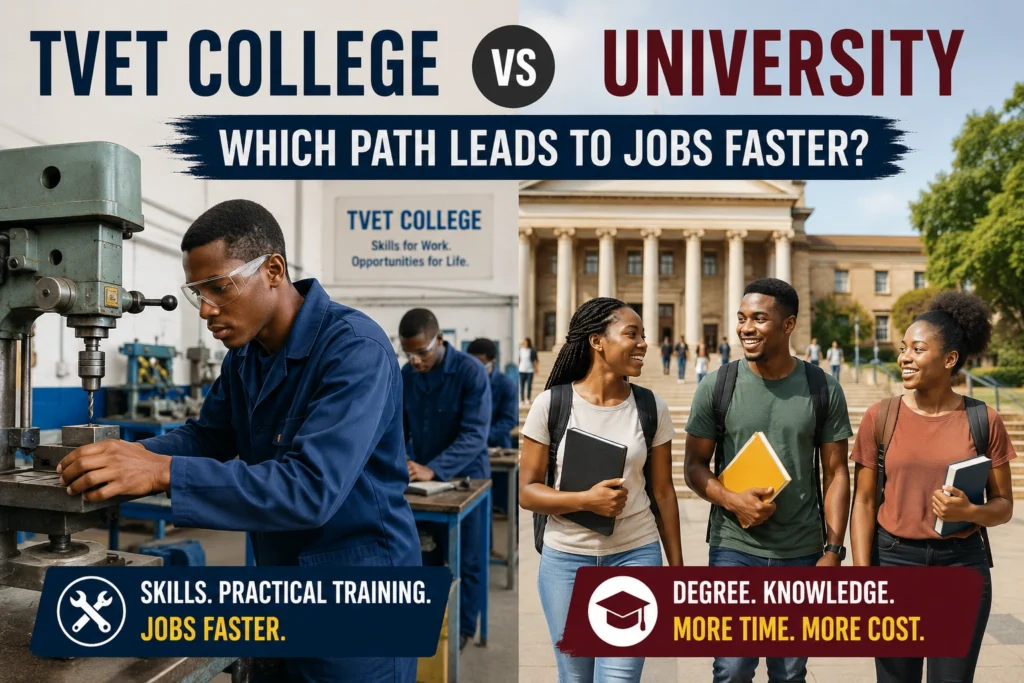
The debate around TVET College vs University: Which Path Leads to Jobs Faster? does not have a one-size-fits-all answer. TVET colleges often help students enter the workforce sooner because of shorter study periods, practical training, and strong demand for technical skills. Universities, however, remain essential for professional careers that require advanced academic qualifications.
The smartest decision is not about prestige — it is about alignment between your skills, career goals, and labour market opportunities.
Students should carefully research industries, compare employment trends, evaluate costs, and consider long-term growth potential before making a choice. In many cases, practical experience, adaptability, and continuous learning matter more than the name of the institution itself.
Whether you choose TVET or university, success depends on how well you build relevant skills, gain experience, and respond to the changing needs of the economy.
ALSO APPLY FOR: Woodlands Dairy Millwright Apprentice 2026
ALSO APPLY FOR: Manpower SA Industrial Engineer Apprentice
ALSO READ ABOUT: Best Opportunities for Matriculants With No Experience