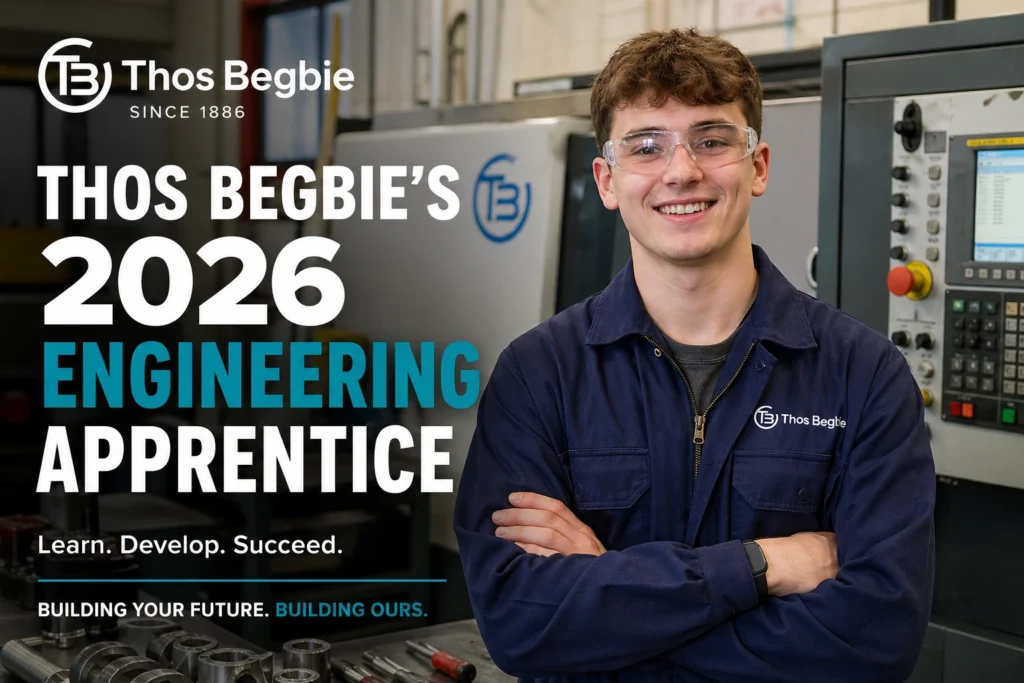

There’s a quiet shift happening in South Africa’s job market—and it’s not coming from flashy tech startups or influencer-driven careers. Instead, it’s rooted in something far more traditional: skilled trades. And right at the center of this renewed attention is Thos Begbie’s 2026 Engineering Apprentice programme.
Once seen as a niche pathway for technically inclined students, apprenticeships are now trending again—especially as youth unemployment remains high and university degrees no longer guarantee employment. In that context, the offering from Thos Begbie & Co is gaining traction as a practical, career-focused alternative.
So why is this particular programme generating buzz now—and what does it say about where the future of work is heading?
A Legacy Company in a Changing Economy
To understand the renewed interest, you need to look at the company behind the programme.
Based in Middelburg, Thos Begbie & Co has been part of South Africa’s industrial backbone for over a century. Known for its heavy engineering, foundry operations, and metal casting, the company serves sectors like mining, manufacturing, and large-scale industrial engineering.
That matters more than it used to.
South Africa’s economy has long relied on these sectors, but in recent years, there’s been a growing skills gap. Experienced artisans are retiring, while fewer young people are entering trades. The result? A shortage of qualified fitters, turners, and moulders—roles that are essential but often overlooked.
This is exactly where apprenticeships come in.
The Return of the Artisan Career
For years, the narrative pushed young South Africans toward university degrees. But reality has been less forgiving. Graduate unemployment has risen, and many degree holders find themselves underemployed or working outside their fields.
At the same time, artisan trades have quietly become more valuable.
The Thos Begbie’s 2026 Engineering Apprentice programme taps directly into this shift. It offers structured training that blends:
- Real workplace experience
- Technical classroom learning
- Trade-specific skills development
- Long-term career preparation
This isn’t theoretical education—it’s hands-on, industry-driven training.
And that distinction is becoming increasingly important.
Inside the Apprenticeship: What Learners Actually Do
Unlike many entry-level programmes that keep learners on the sidelines, this apprenticeship places candidates directly into industrial environments.
Two standout trades dominate the offering:
Apprentice Moulder
This is where engineering meets raw production.
Learners work with sand moulding systems, prepare casting structures, and operate foundry equipment. It’s physical, technical work that requires precision and discipline.
In an era obsessed with digital careers, this trade represents something different: tangible output. You’re not just learning—you’re creating.
Fitter and Turner
Often considered one of the most respected artisan trades, fitting and turning is the backbone of mechanical engineering.
Apprentices learn to:
- Interpret engineering drawings
- Operate lathes and milling machines
- Assemble and repair mechanical systems
- Maintain industrial equipment
It’s a skillset that translates across industries—from mining to manufacturing to energy.
Why Entry Requirements Are Still Strict
One reason this programme maintains its credibility is its entry standards.
Applicants typically need:
- Matric (Grade 12)
- N2 Engineering qualification or higher
- Core subjects like Mathematics and Engineering Science
This isn’t a casual application process—it’s competitive.
And that’s intentional.
By setting a higher bar, the programme ensures that candidates are prepared for the technical demands of the work. It also signals something important: artisan careers are not a fallback—they’re a professional track.
Recent Developments Driving Interest
Several factors have pushed programmes like this into the spotlight in 2026:
1. Skills Shortage Pressure
Industries across South Africa are actively searching for qualified artisans. Mining and manufacturing, in particular, are struggling to replace aging workforces.
2. Youth Employment Crisis
With unemployment among young people remaining high, practical training programmes are being reevaluated as viable solutions.
3. Shift in Career Perception
There’s a growing recognition that:
- Not all careers require university degrees
- Skilled trades offer stable income
- Hands-on work can lead to long-term growth
This cultural shift is subtle but powerful.
Public Reaction: A Divided Perspective
The resurgence of apprenticeships hasn’t gone unnoticed—and reactions are mixed.
Positive Sentiment
Many see programmes like Thos Begbie’s 2026 Engineering Apprentice as:
- A realistic path to employment
- A way to gain experience without student debt
- A gateway into high-demand industries
Parents and educators, in particular, are starting to view artisan careers more favorably.
Ongoing Skepticism
However, some concerns remain:
- Perception that trades are “less prestigious” than degrees
- Limited awareness of application processes
- Fear of physically demanding work environments
These perceptions are slowly changing—but they haven’t disappeared entirely.
The Skills You Walk Away With
What sets this apprenticeship apart is the depth of practical skills gained.
Learners don’t just observe—they participate.
By the end of the programme, apprentices typically develop:
- Machinery operation expertise
- Precision measurement skills
- Technical drawing interpretation
- Mechanical assembly knowledge
- Industrial safety awareness
- Team-based work discipline
These are not entry-level competencies—they’re career-defining abilities.
And importantly, they’re transferable.
Career Outcomes: More Than Just a Job
One of the strongest arguments in favor of this programme is what happens after completion.
Graduates can move into roles such as:
- Qualified Moulder
- Fitter and Turner Artisan
- Maintenance Technician
- Workshop Technician
- Manufacturing Specialist
These aren’t temporary jobs—they’re long-term career paths.
In fact, experienced artisans often become some of the most sought-after professionals in industrial sectors.
Why This Matters Right Now
South Africa is at a crossroads when it comes to employment and skills development.
The traditional education-to-employment pipeline isn’t working for everyone. At the same time, industries are facing real shortages in technical expertise.
This is where Thos Begbie’s 2026 Engineering Apprentice becomes more than just a training programme—it becomes part of a larger solution.
It represents:
- A bridge between education and employment
- A response to industry demand
- A shift toward practical, skills-based careers
In short, it aligns with what the economy actually needs.
And that alignment is rare.
What Could Happen Next
If current trends continue, we could see several developments:
Expansion of Apprenticeships
More companies may follow Thos Begbie’s model, increasing the availability of structured artisan training programmes.
Increased Government Support
With youth unemployment remaining a priority, apprenticeships could receive stronger policy backing and funding.
Changing Career Narratives
Over time, artisan careers may shed outdated stereotypes and become mainstream choices for ambitious young people.
Rising Demand—and Competition
As awareness grows, programmes like this may become even more competitive, raising the bar for entry.
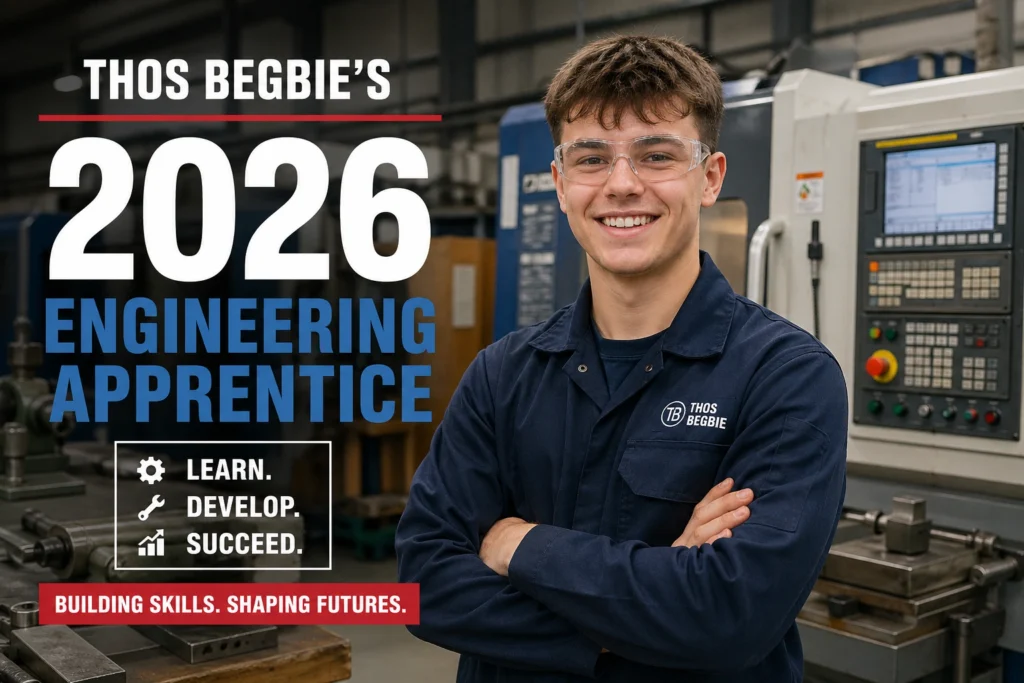
ALSO VISIT: https://thosbegbie.com
The Application Process: A Reality Check
For those considering applying, the process is straightforward—but not casual.
Candidates need to:
- Prepare a detailed CV highlighting technical education
- Gather certified documents (ID, Matric, N2 results)
- Submit applications via email
- Wait for shortlisting and potential assessments
Submit Application
Applications are usually sent by email:
ALSO VISIT: https://thosbegbie.com
It’s a structured, professional process—reflecting the seriousness of the opportunity.
ALSO APPLY FOR: Millwright Apprenticeship – West Coast College 2026
A Quiet but Powerful Opportunity
What makes this programme particularly interesting is that it doesn’t rely on hype.
There are no viral campaigns or flashy marketing strategies. Instead, its value lies in something more grounded: real skills, real work, and real career potential.
In a world increasingly driven by uncertainty, that kind of stability is becoming more attractive.
Final Thoughts
The rise of Thos Begbie’s 2026 Engineering Apprentice programme isn’t just about one company—it’s about a broader shift in how careers are built.
For young South Africans navigating an unpredictable job market, the message is becoming clearer:
Practical skills matter. Experience matters. And sometimes, the most reliable path forward isn’t the most glamorous one.
It’s the one that works.