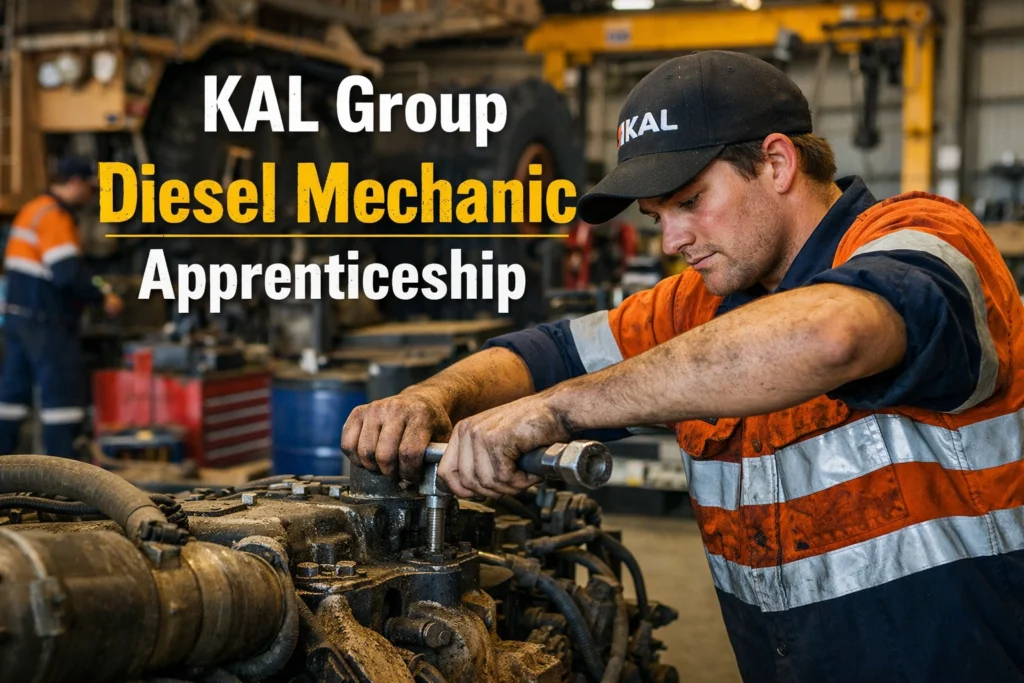

KAL Group Diesel Mechanic Apprenticeship 2026: At a time when many graduates are struggling to find work, opportunities like this are sparking renewed interest—not just because they offer training, but because they promise something more tangible: a pathway to a trade, a stable career, and relevance in an economy that still depends heavily on agriculture and logistics.
But beyond the application details, there’s a bigger story here. Why is this apprenticeship trending now? And what does it reveal about where South Africa’s workforce is heading?
A Different Kind of Career Path Is Gaining Momentum
For years, the narrative pushed young South Africans toward university degrees as the primary route to success. Yet, reality has been less forgiving. Thousands of graduates remain unemployed, while industries like agriculture, transport, and engineering quietly struggle to find qualified artisans.
That’s where the KAL Group Diesel Mechanic Apprenticeship 2026 enters the conversation.
Offered through Agrimark Operations, this three-year programme isn’t just another training scheme—it represents a shift back toward practical, skills-based careers. Diesel mechanics, in particular, are becoming increasingly valuable as machinery grows more advanced and essential across sectors.
From tractors in the Western Cape to logistics fleets across the country, diesel-powered equipment remains the backbone of productivity. And someone needs to keep it running.
APPLY HERE: KAL Group Diesel Mechanic Apprenticeship 2026
The Backstory: How We Got Here
To understand why this apprenticeship matters, it helps to look at how South Africa arrived at this moment.
Over the past decade, there has been a gradual decline in artisan training pipelines. Technical and vocational education often received less attention compared to academic pathways. At the same time, industries evolved—machines became more complex, and the need for skilled technicians increased.
The result? A widening skills gap.
Organisations like KAL Group have responded by investing in structured apprenticeship programmes. These initiatives are designed not only to train individuals but also to secure the future of industries that rely on technical expertise.
Agrimark Operations, with its extensive national footprint, plays a key role in this ecosystem. With over 100 locations, the company operates at the frontline of agricultural support—meaning apprentices gain exposure to real-world challenges from day one.
Inside the Apprenticeship: What Makes It Stand Out
On paper, the KAL Group Diesel Mechanic Apprenticeship 2026 follows a familiar structure: a three-year, work-based training programme combining practical experience with theoretical learning.
But the details reveal why it’s attracting attention.
Participants don’t just stay in one workshop. They rotate across different locations and departments, gaining exposure to a wide range of equipment and working environments. This mobility is both a challenge and an advantage—it builds adaptability, a trait highly valued in today’s workforce.
The programme also requires a certain level of independence. Applicants must have their own transport and be willing to travel or work away from home. For some, this may seem demanding. For others, it signals a more immersive and realistic training experience.
And then there’s the end goal: a recognised Diesel Mechanic Trade Qualification. In a labour market where credentials matter, this is a significant outcome.
Who Is This Really For?
At first glance, the requirements seem straightforward:
- N2 Trade Theory or Grade 12 with Mathematics and Science
- Willingness to travel and relocate
- Access to personal transport
But the ideal candidate profile goes deeper than that.
This apprenticeship is best suited for individuals who prefer hands-on work over desk-based roles. It’s for those who are curious about how machines work, who don’t mind getting their hands dirty, and who are willing to commit to a structured learning journey.
It also appeals to a growing group of young people who are rethinking traditional career paths. In an era where job security feels uncertain, trades offer something increasingly rare: demand-driven stability.
Public Reaction: A Shift in Perception
Online discussions around apprenticeships have changed noticeably in recent years.
Where technical training was once seen as a “second option,” it’s now being reconsidered as a strategic choice. Social media conversations, job forums, and career platforms show increasing interest in artisan careers—especially those linked to industries like agriculture and energy.
The KAL Group Diesel Mechanic Apprenticeship 2026 is part of this broader shift.
Young people are starting to ask different questions:
- “Will this skill still be needed in 10 years?”
- “Can I build a business from this trade?”
- “Does this path offer real work experience?”
Apprenticeships answer these questions in ways that many traditional qualifications cannot.
Recent Developments: Why Timing Matters
The timing of this programme’s announcement is significant.
South Africa continues to grapple with high youth unemployment, and there is growing pressure on both government and private sector organisations to create meaningful opportunities. Apprenticeships are increasingly seen as a practical solution because they combine training with employment.
At the same time, the agricultural sector is undergoing transformation. Mechanisation, sustainability efforts, and technological upgrades are reshaping how farms operate. This evolution requires a new generation of technicians who understand both traditional machinery and modern systems.
KAL Group’s investment in training suggests a long-term strategy: build internal capacity while contributing to broader economic resilience.
Why This Matters Right Now
The relevance of the KAL Group Diesel Mechanic Apprenticeship 2026 goes beyond individual applicants.
It reflects a larger shift in how careers are being defined in South Africa.
Right now, the country faces three interconnected challenges:
- A surplus of job seekers
- A shortage of practical skills
- An evolving industrial landscape
Apprenticeships sit at the intersection of all three.
They provide a structured way to bridge the gap between education and employment. They also align closely with industries that are less likely to be disrupted by automation in the near future—because machines still need human expertise to maintain and repair them.
For rural communities, the impact is even more pronounced. Programmes like this create opportunities closer to home, reducing the need for migration to urban centres.
In many ways, this apprenticeship is not just about training diesel mechanics—it’s about rebuilding confidence in vocational pathways.
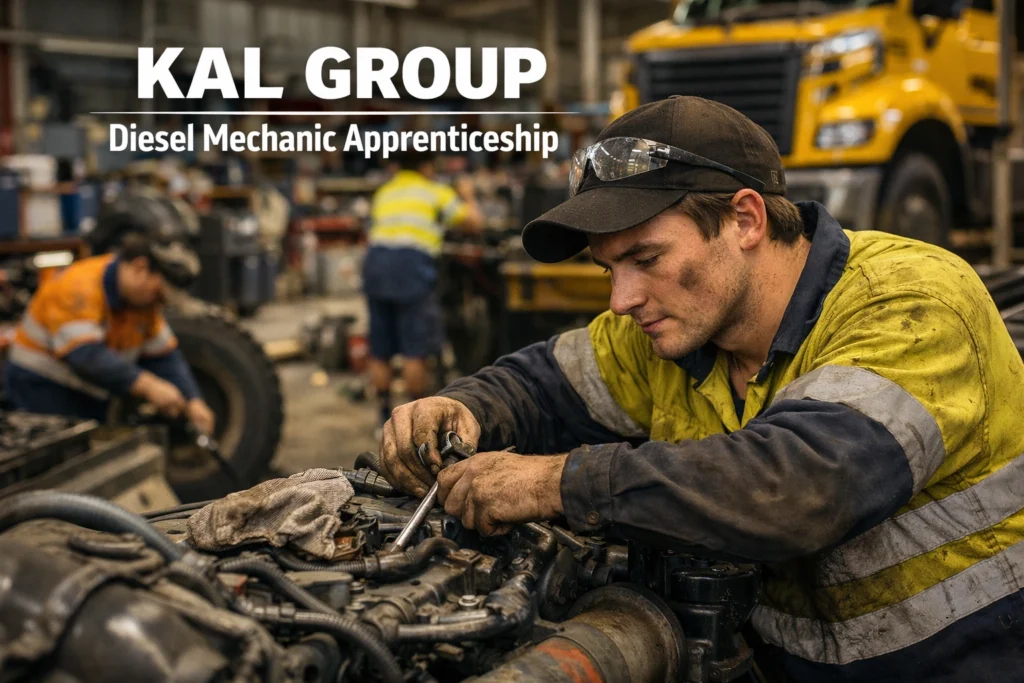
APPLY HERE: KAL Group Diesel Mechanic Apprenticeship 2026
The Real Value: Beyond the Qualification
While the trade qualification is a major drawcard, the real value of the programme lies in the experience gained along the way.
Apprentices learn how to:
- Diagnose complex mechanical issues
- Work under pressure in real-world conditions
- Collaborate with experienced professionals
- Adapt to different environments and challenges
These are not just technical skills—they are career-defining competencies.
In a job market where experience often matters as much as qualifications, this combination can make a significant difference.
ALSO APPLY FOR: Electrician Apprenticeship 2026
What Could Happen Next
Looking ahead, several outcomes could emerge from initiatives like the KAL Group Diesel Mechanic Apprenticeship 2026.
1. Increased Interest in Artisan Careers
If programmes like this continue to gain visibility, more young people may choose vocational training over traditional academic routes.
2. Expansion of Apprenticeship Models
Other companies, particularly in agriculture and logistics, may follow suit by expanding their own training programmes.
3. Stronger Industry-Academia Links
There could be greater collaboration between training institutions and employers, ensuring that skills development aligns with real-world needs.
4. Improved Employment Outcomes
Graduates of structured apprenticeships are often more employable because they already have practical experience.
5. Long-Term Economic Impact
A more skilled workforce can support productivity, innovation, and growth across key sectors.
The Competitive Reality
It’s important to be clear: opportunities like this are highly competitive.
With a closing date of 22 April 2026, applicants will need to act quickly—and strategically. Meeting the minimum requirements is just the starting point. Standing out often requires preparation, attention to detail, and a genuine interest in the field.
This is not a passive application process. It’s an active step toward a specific career path.
A Small Opportunity With Big Implications
At first glance, the KAL Group Diesel Mechanic Apprenticeship 2026 might seem like just another listing among many. But a closer look reveals something more significant.
It represents a shift in how opportunities are being created—and how careers are being built.
In a country searching for solutions to unemployment and skills shortages, programmes like this offer a glimpse of what a more balanced, practical approach to workforce development could look like.
For those willing to take the path, it’s not just about fixing engines. It’s about building a future—one skill at a time.
ALSO APPLY FOR: Electrician Apprenticeship 2026
APPLY HERE: KAL Group Diesel Mechanic Apprenticeship 2026