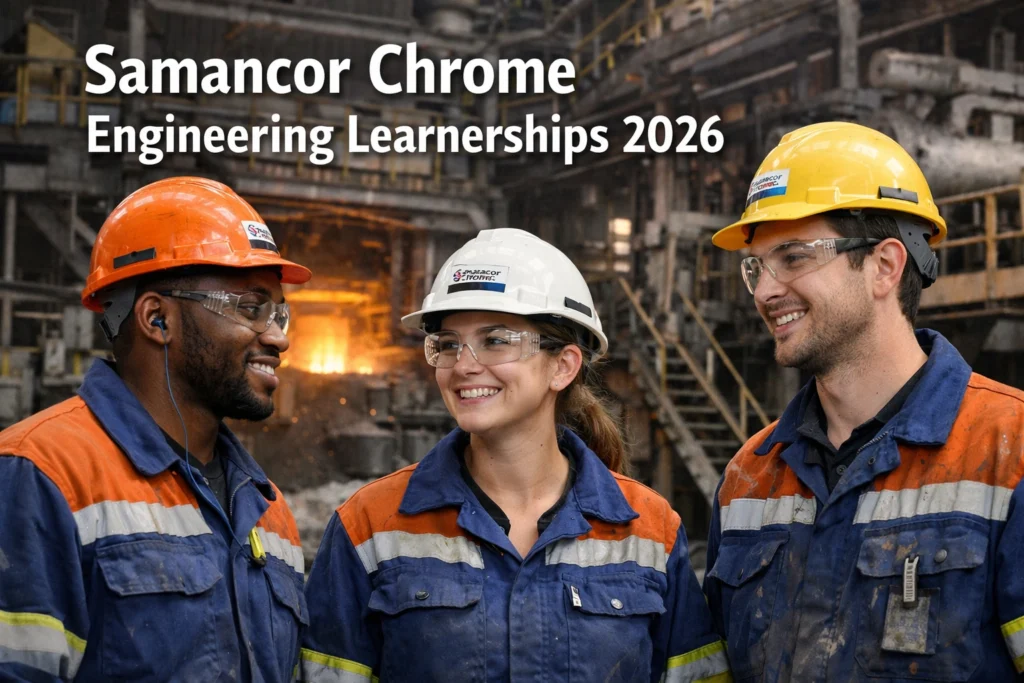

In the past week, one opportunity has quietly started circulating across WhatsApp groups, job boards, and student forums—and it’s not just another listing people scroll past. The Samancor Chrome Engineering Learnerships 2026 have struck a nerve at a moment when thousands of young South Africans are actively searching for something more than just a job: a pathway.
The timing is no coincidence.
As economic pressure tightens and youth unemployment remains one of the country’s most urgent challenges, programmes that promise skills, structure, and a shot at long-term employment tend to move fast. But what’s interesting about this learnership isn’t just the opportunity itself—it’s what it reveals about where South Africa’s mining sector is heading, and who it’s trying to bring along.
A Learnership That Arrives at the Right Time
The announcement by Samancor Chrome comes as South Africa continues to grapple with a difficult reality: too many qualified young people, and too few opportunities that translate education into real work experience.
Learnerships have long been positioned as a bridge—but not all bridges are equal.
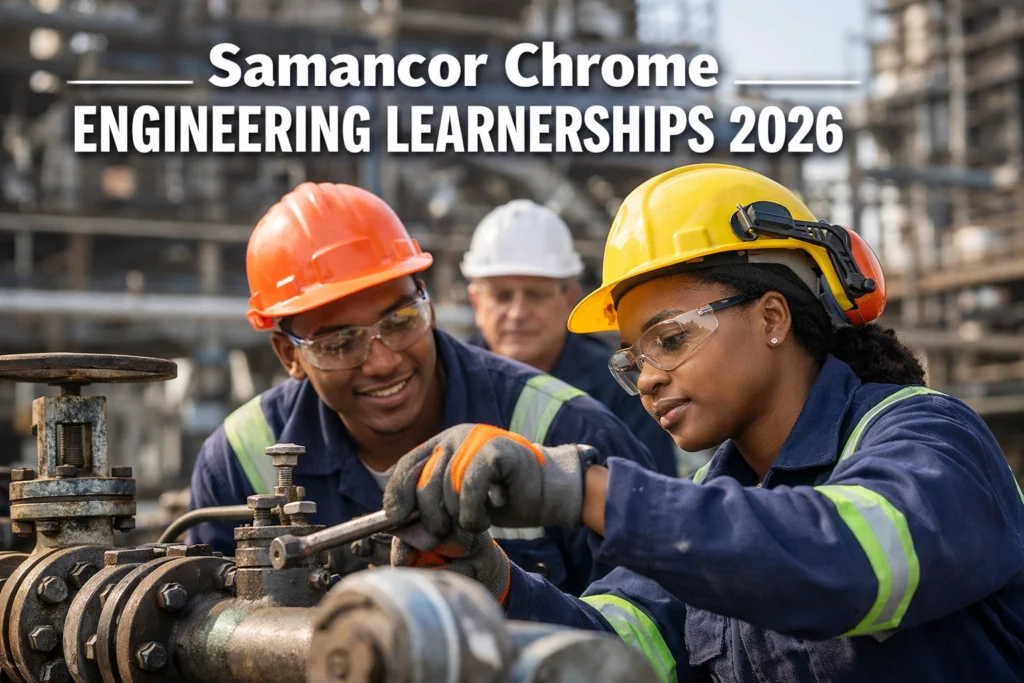
What makes the Samancor Chrome Engineering Learnerships 2026 stand out is their focus on artisanal trades. These are not abstract roles or office-based internships. They are hands-on, technically demanding skills that remain essential in mining, manufacturing, and infrastructure.
The programme offers placements in trades like:
- Fitter
- Electrician
- Boilermaker
- Auto Electrician
- Instrumentation
- Diesel Mechanic
These are not just job titles—they are professions that have historically powered South Africa’s industrial economy and are still in demand today.
How We Got Here: The Bigger Picture Behind Learnerships
To understand why programmes like this matter, you have to zoom out.
South Africa’s mining sector has been under pressure for years. Commodity price fluctuations, energy instability, and evolving global demand have all reshaped how companies operate. But one consistent issue has been skills shortages—particularly in technical and engineering roles.
Companies like Samancor Chrome have responded by investing more deliberately in training pipelines.
This isn’t purely altruistic.
It’s strategic.
Developing artisans internally allows companies to:
- Address skills gaps directly
- Maintain operational efficiency
- Build a workforce aligned with their systems and safety standards
At the same time, government policies and industry pressure have pushed companies to contribute more meaningfully to youth development.
The result? Learnerships that are no longer side initiatives—they are becoming central to how industries sustain themselves.
What the Programme Offers (Beyond the Obvious)
On paper, the Samancor Chrome Engineering Learnerships 2026 follow a familiar structure: theoretical training paired with workplace experience. But the real value lies in what happens between those two elements.
Participants won’t just sit in classrooms or observe from a distance. They’ll be expected to:
- Engage in real-world technical work
- Follow strict operational procedures
- Adapt to industrial environments
- Learn the discipline of professional engineering spaces
This kind of exposure is often what separates candidates who qualify from those who are employable.
And notably, the programme requires no prior work experience—making it accessible to those who might otherwise be locked out of the industry.
The Entry Barrier: Low on Paper, High in Practice
The minimum requirement—Grade 12 and an N2 qualification with Trade Theory—might seem straightforward. But in reality, the competition is anything but.
Why?
Because opportunities like this attract a wide pool of applicants:
- Recent matriculants with technical subjects
- TVET college graduates
- Unemployed youth seeking entry into skilled trades
And while the requirements are accessible, the selection process is rigorous.
Applicants must pass:
- Interviews
- Screening assessments
- Medical fitness evaluations
This means the programme isn’t just looking for qualifications—it’s looking for readiness.
Qualities like time management, communication, and motivation are not just listed requirements. They’re often the deciding factors.
Public Reaction: Hope, Skepticism, and Urgency
Across social platforms and community discussions, the response to the Samancor Chrome Engineering Learnerships 2026 has been mixed—but engaged.
On one hand, there’s genuine excitement.
For many young people, especially those with N2 qualifications, this feels like a rare chance to move forward. The idea of becoming a qualified artisan still carries weight—not just financially, but socially.
On the other hand, there’s a layer of skepticism.
Some common concerns include:
- “How many positions are actually available?”
- “What are the chances of permanent employment afterward?”
- “Is the application process fair and transparent?”
These questions reflect a broader trust gap that has developed around opportunities in both public and private sectors.
Still, the urgency is clear.
With the application deadline set for 17 April 2026, interest is translating into action.
Why Artisans Are Back in the Spotlight
For years, university degrees dominated the conversation around success. But quietly, the narrative has been shifting.
Artisan careers are regaining attention—and for good reason.
Trades like electricians, boilermakers, and diesel mechanics are:
- Less saturated than many degree-based fields
- Directly linked to essential industries
- Often better aligned with practical job creation
In sectors like mining, these roles are not optional—they are foundational.
The Samancor Chrome Engineering Learnerships 2026 tap directly into this shift, positioning technical skills not as a fallback, but as a first choice.
Why This Matters Right Now
This isn’t just another learnership announcement—it’s a signal.
At a time when youth unemployment remains critically high, programmes like this highlight a few important realities:
First, skills development is becoming more targeted. Companies are no longer investing broadly—they’re focusing on areas with clear demand.
Second, the pathway to employment is evolving. Traditional routes are no longer the only option. Technical training and learnerships are increasingly viable alternatives.
Third, opportunity is becoming more competitive. Even entry-level programmes now require preparation, awareness, and strategic application.
For young South Africans, this means one thing: being qualified is no longer enough. Being prepared is what counts.
- Email submission to: Careers@samancorcr.com
- Also visit: https://samancorcr.com
What Could Happen Next
Looking ahead, the impact of the Samancor Chrome Engineering Learnerships 2026 could unfold in several ways.
1. Increased Demand for Similar Programmes
If this learnership gains traction, other companies in mining and manufacturing may expand their own training initiatives to remain competitive.
2. Stronger Focus on TVET Pathways
Success stories from programmes like this could encourage more students to consider technical education, shifting perceptions around vocational careers.
3. Pressure on Companies to Deliver Outcomes
As public interest grows, there will be increased scrutiny on whether learnerships lead to meaningful employment.
4. A More Skilled Entry-Level Workforce
Over time, consistent investment in training could help reduce the skills gap that has long challenged South Africa’s industrial sectors.
Also apply for: ROSSMIN Mining Learnerships 2026
A Quiet Opportunity With Loud Implications
It’s easy to overlook announcements like this—especially in a crowded digital space filled with opportunities that come and go.
But the Samancor Chrome Engineering Learnerships 2026 represent something more substantial.
They sit at the intersection of:
- Youth ambition
- Industry demand
- Economic necessity
And while not every applicant will be selected, the programme reflects a broader shift toward practical, skills-based pathways that could reshape how young people enter the workforce.
How to Apply (Before It Closes)
For those interested, applications must be submitted before 17 April 2026.
Applicants can apply via:
- The official Samancor Chrome careers portal
- Email submission to: Careers@samancorcr.com
- Also visit: https://samancorcr.com
Required documents typically include:
- Updated CV
- Certified copies of qualifications
- Supporting identification documents
Given the level of competition, early application—and careful preparation—can make a significant difference.
Final Thought
In a country where opportunity often feels unevenly distributed, programmes like the Samancor Chrome Engineering Learnerships 2026 stand out not because they solve everything—but because they offer something tangible.
A starting point.
And sometimes, that’s exactly what’s needed.
- Email submission to: Careers@samancorcr.com
- Also visit: https://samancorcr.com