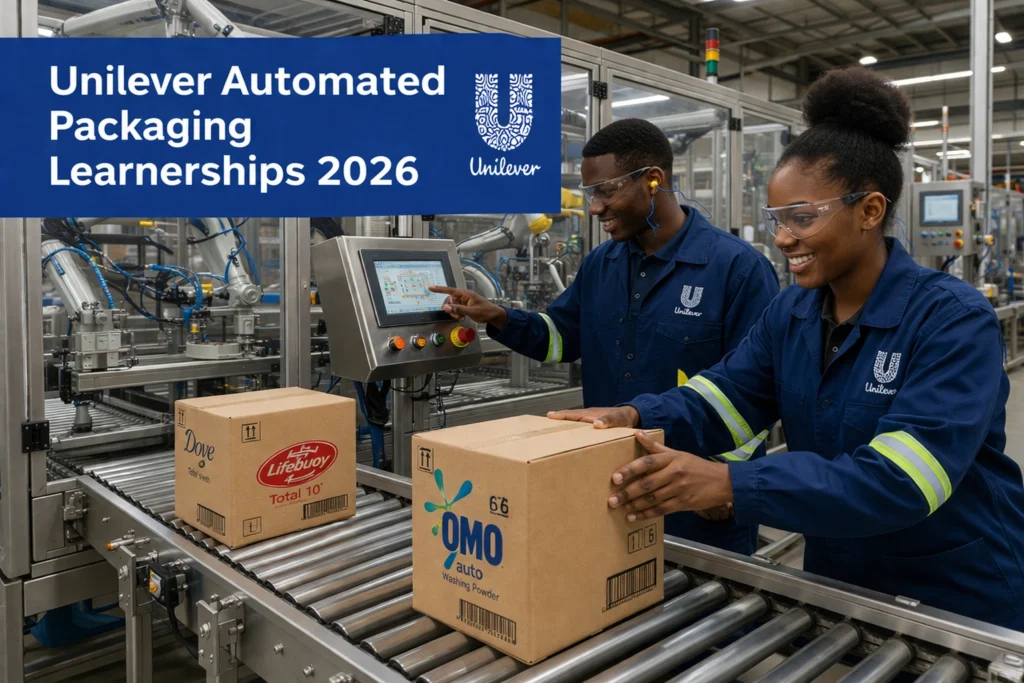

There’s a reason the Unilever Automated Packaging Learnerships 2026 are dominating conversations across job platforms, WhatsApp groups, and student forums right now. It’s not just another entry-level programme—it sits at the intersection of South Africa’s biggest challenges and opportunities: youth unemployment, skills shortages, and the urgent need for industry-ready talent.
At a time when many graduates are struggling to secure even unpaid internships, a structured, paid learnership with a global company has become more than attractive—it’s rare. And when that opportunity comes from a company like Unilever, it instantly carries weight.
But beyond the excitement, there’s a deeper story here—one that reveals why programmes like this are gaining traction in 2026 and what they signal about the future of work in South Africa.
A Perfect Storm: Why Learnerships Like This Are Trending
To understand why this specific learnership is trending, you have to look at the broader economic landscape.
South Africa’s youth unemployment crisis has remained stubbornly high, even as more young people obtain matric certificates and tertiary qualifications. The problem isn’t just a lack of education—it’s a lack of practical, workplace-ready experience.
This is where learnerships step in.
Unlike traditional academic routes, learnerships blend theory with hands-on training, giving participants exposure to real production environments. In sectors like manufacturing and packaging, this matters more than ever.
At the same time, industries are evolving.
Manufacturing is no longer about manual labour alone. It now involves:
- Automated machinery
- Data-driven production systems
- Strict quality and safety protocols
- Sustainability targets
Companies are no longer just hiring workers—they’re looking for technically adaptable operators.
That’s exactly the gap the Unilever programme is designed to fill.
APPLY HERE: Unilever Automated Packaging Learnerships 2026
Inside the Programme: More Than Just a Learnership
At face value, the Unilever Automated Packaging Learnerships 2026 focus on production and packaging operations. But the reality is more layered.
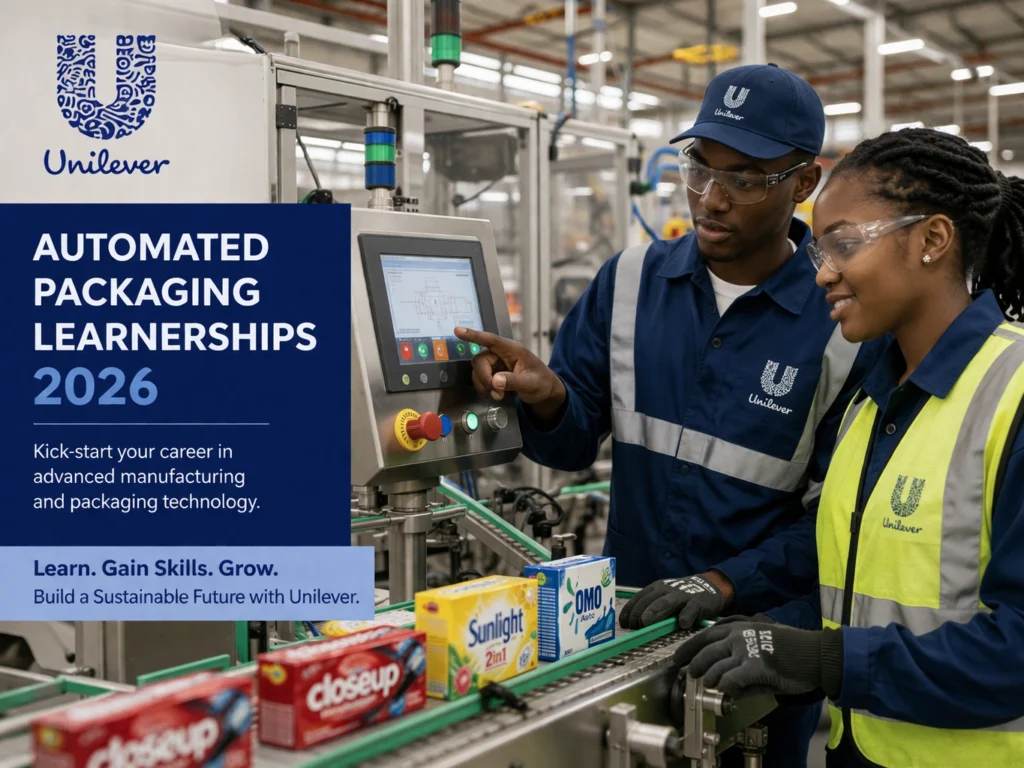
Participants are trained to work within automated environments where precision, speed, and consistency are non-negotiable.
You’re not just learning how to operate machinery—you’re learning how to think like a production specialist.
Daily responsibilities include:
- Running production line processes
- Performing safety and hygiene checks
- Monitoring product quality
- Troubleshooting minor technical issues
- Preparing raw materials
- Maintaining equipment
These aren’t theoretical exercises. They’re real tasks in a real production environment.
And that’s what makes the experience valuable.
Because when the programme ends, learners don’t walk away with just a certificate—they leave with workplace credibility.
The Unilever Factor: Why Brand Matters
Not all learnerships carry the same weight.
When a programme is attached to a global company like Unilever, it changes how employers perceive your experience.
Unilever operates in over 190 countries and produces globally recognised brands like:
- Dove
- OMO
- Sunlight
- Vaseline
This scale matters.
It means:
- Exposure to global production standards
- Training aligned with international best practices
- Experience with large-scale operations
For many participants, this becomes a career-defining line on their CV.
Who Gets In—and Why That Matters
The minimum requirements seem straightforward:
- Grade 12 with Mathematics and Science, or
- An N2/N3/N4 Engineering qualification
But the real selection criteria go beyond academics.
Unilever is known for prioritising behavioural competencies such as:
- Ownership and accountability
- Problem-solving ability
- Attention to detail
- Team collaboration
- Resilience under pressure
This reflects a shift in hiring trends.
Employers are increasingly valuing mindset over memorisation.
In a production environment, the ability to respond quickly to problems or maintain quality under pressure often matters more than theoretical knowledge alone.
Public Reaction: Hope, Skepticism, and Urgency
The response to the Unilever Automated Packaging Learnerships 2026 has been immediate—and intense.
On one hand, there’s genuine excitement.
For many young South Africans, this represents:
- A rare paid opportunity
- A pathway into manufacturing careers
- A chance to work with a respected global brand
But alongside that excitement, there’s also skepticism.
Some common concerns include:
- “Will it lead to permanent employment?”
- “How competitive is the selection process?”
- “Is it worth it compared to university?”
These questions reflect a broader uncertainty about career pathways in 2026.
The traditional promise—study, graduate, get a job—no longer holds the same certainty.
Learnerships are emerging as an alternative, but they’re still not fully understood.
The Skills Shift: Why Packaging and Production Matter Again
For years, many young people overlooked careers in manufacturing, seeing them as outdated or limited.
That perception is changing.
Modern production environments are increasingly:
- Digitised
- Automated
- Sustainability-focused
Packaging, in particular, is becoming a critical area.
Companies are under pressure to:
- Reduce waste
- Improve efficiency
- Meet environmental standards
This means packaging roles now require technical awareness and adaptability.
The Unilever learnership taps directly into this shift.
It prepares candidates for roles that are not only relevant today—but likely to remain in demand in the future.
Why This Matters Right Now
The timing of the Unilever Automated Packaging Learnerships 2026 is not accidental.
It reflects broader changes in both the labour market and corporate strategy.
Here’s why it matters now:
1. The Experience Gap Is Growing
Employers increasingly expect candidates to have practical experience—even for entry-level roles. Learnerships directly address this gap.
2. Technical Skills Are in Demand
Manufacturing, logistics, and production sectors are actively seeking workers with hands-on technical abilities, not just academic qualifications.
3. Corporate Training Is Expanding
Companies like Unilever are investing more in developing talent internally, rather than relying solely on external hiring.
4. Youth Employment Is a National Priority
Programmes like this align with broader efforts to tackle unemployment by creating structured pathways into the workforce.
In short, this isn’t just a learnership—it’s part of a larger shift in how careers are built.
The Application Reality: Opportunity Meets Competition
While the opportunity is significant, so is the competition.
Popular learnerships often attract thousands of applicants for a limited number of positions.
That makes preparation critical.
Strong candidates typically:
- Submit clear, well-structured CVs
- Highlight relevant subjects like Maths and Science
- Demonstrate reliability and work ethic
- Follow application instructions carefully
Timing also matters.
Early applications often have an advantage, especially when screening processes begin before the official closing date.
APPLY HERE: Unilever Automated Packaging Learnerships 2026
ALSO APPLY FOR: MANCOSA Graduate Internships 2026
A Word of Caution: Avoiding Scams
As interest grows, so does the risk of misinformation.
It’s important to remember:
- Unilever does not charge application fees
- Legitimate applications are submitted through official channels
- Any request for payment is a red flag
This warning has become increasingly relevant as fake learnership adverts circulate online.
Staying informed is part of protecting your opportunity.
What Could Happen Next
The growing attention around the Unilever Automated Packaging Learnerships 2026 points to several possible future developments.
1. Expansion of Similar Programmes
If demand continues, more companies may introduce structured learnerships in manufacturing and operations.
2. Increased Competition for Entry-Level Roles
As more candidates gain practical experience, the baseline expectation for “entry-level” jobs may rise.
3. Greater Recognition of Learnerships
Programmes like this could shift perceptions, positioning learnerships as equal alternatives to traditional degrees in certain industries.
4. Potential Pathways to Permanent Employment
While not guaranteed, strong performance during the programme could open doors within Unilever or similar companies.
The Bigger Picture: A New Career Blueprint
What makes this moment interesting is not just the learnership itself—but what it represents.
For years, the dominant narrative was clear:
Go to university → graduate → get a job.
In 2026, that pathway is no longer the only—or even the most reliable—route.
Instead, we’re seeing the rise of a new model:
- Learn
- Work
- Gain experience
- Build skills
- Grow into opportunities
The Unilever Automated Packaging Learnerships 2026 fit neatly into this emerging blueprint.
They offer something many young people are searching for:
A starting point that actually leads somewhere.
Final Thoughts
The buzz around the Unilever Automated Packaging Learnerships 2026 is about more than a single opportunity.
It reflects a shift in how careers are built, how companies hire, and how young people navigate an uncertain job market.
For applicants, it’s a chance to gain practical skills and industry exposure.
For the broader economy, it’s a sign that structured training programmes are becoming increasingly important.
And for anyone watching closely, it’s a reminder:
The future of work isn’t waiting—it’s already here.
ALSO APPLY FOR: MANCOSA Graduate Internships 2026
APPLY HERE: Unilever Automated Packaging Learnerships 2026