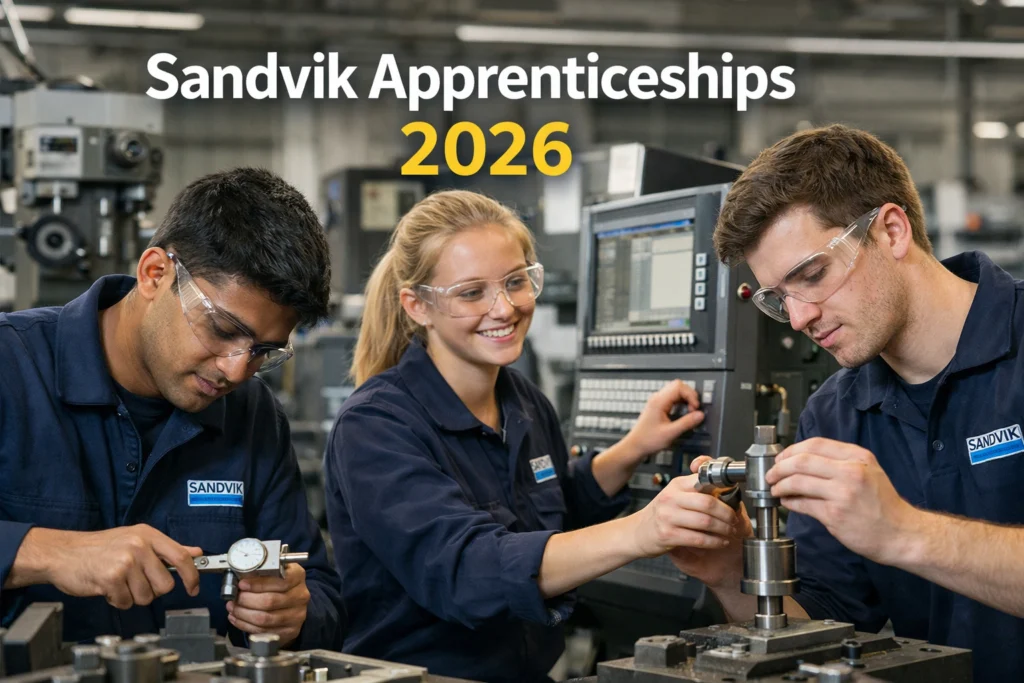

Sandvik Apprenticeships 2026: For many South Africans who want to become qualified artisans, apprenticeships remain one of the most practical pathways into engineering careers. The Sandvik Apprenticeship Programme 2026 offers exactly that: structured training inside a real industrial environment, with the goal of developing skilled artisans in high-demand trades.
Hosted by Sandvik, this apprenticeship takes place primarily at their Rock Processing division in Kempton Park, Gauteng. Successful applicants will train in trades such as Boilermaking, Fitting, Toolmaking, or Millwright, while working toward a nationally recognised artisan qualification.
This opportunity is aimed at young South Africans who have Matric with Mathematics and Physical Science or an N3 engineering qualification and want to build a technical career in manufacturing, mining equipment, or heavy industry.
What this programme actually is
This is a formal artisan apprenticeship. Instead of studying engineering only in a classroom, you learn while working in a real engineering workshop.
Apprentices split their time between:
- Practical training in the factory or workshop
- Technical instruction through accredited training providers
- Assessments and trade tests to measure competence
Over time, you build the skills required to qualify as an artisan in your trade.
In South Africa, completing an apprenticeship like this can eventually lead to trade certification through the national artisan system, which is highly valued in sectors such as mining, manufacturing, energy, and construction.
What you’ll actually do during the apprenticeship
The daily experience is much more hands-on than most classroom-based programmes.
Depending on the trade you enter, your training could include:
Workshop learning
You’ll work in a supervised engineering environment where experienced artisans guide your work. Expect tasks like:
- Assisting with machinery assembly or repairs
- Fabricating metal parts and structures
- Measuring, cutting, and shaping engineering materials
- Maintaining heavy industrial equipment
Trade-specific training
Boilermaker
- Fabricating and repairing large metal structures
- Welding and assembling steel components used in heavy equipment
Fitter
- Installing and maintaining mechanical machinery
- Aligning shafts, pumps, and gear systems
Toolmaker
- Producing precision tools, moulds, and engineering components
- Working with specialised machining equipment
Millwright
- Troubleshooting complex industrial machinery
- Working across both mechanical and electrical systems
Training administration
You’ll also need to:
- Maintain a training logbook
- Complete competency assessments
- Attend structured technical training
- Follow strict workplace safety rules
This is not just “work experience”. It’s structured training aimed at developing a certified artisan.
Who qualifies (minimum requirements checklist)
To be considered, applicants must meet the following criteria:
- South African citizen
- Grade 12 (Matric) with Mathematics and Physical Science
- OR an N3 Engineering Certificate or equivalent qualification
- Ability to submit academic results and supporting documents
- Willingness to commit to a multi-year technical training programme
Advantageous factors
- Strong marks in Maths and Science
- Mechanical or technical interests
- Previous exposure to technical subjects or engineering studies
Why applicants get disqualified
Many candidates get rejected for reasons that could easily be avoided.
Common disqualifiers include:
Mathematics Literacy instead of Mathematics
Engineering apprenticeships typically require Pure Mathematics, not Maths Literacy.
Missing documents
Applications often fail because applicants forget to attach:
- Certified Matric results
- N3 certificates
- Updated CV
Incomplete online applications
Leaving fields blank or entering incorrect details can cause systems to reject applications automatically.
Weak academic background
Low marks in Mathematics or Science may reduce competitiveness.
Applying after the closing date
Large companies usually close applications automatically once the deadline passes.
Who should apply (expert insight)
This programme is best suited for people who genuinely want to become artisans, not those looking for quick office jobs.
You should strongly consider applying if:
- You enjoy practical, hands-on work
- You want a technical trade rather than a university degree
- You’re comfortable working in industrial environments
- You want skills that are in demand in mining and manufacturing
It is particularly valuable for applicants interested in:
- Mining equipment maintenance
- Heavy manufacturing
- Industrial engineering support roles
If you prefer desk-based work or corporate careers, this may not be the right pathway.
Competition level
Competition Level: High
Reasons:
- Sandvik is a globally respected engineering company
- Artisan apprenticeships are highly sought after in South Africa
- Many applicants with N3 engineering qualifications will apply
- The intake size is usually limited
However, applicants with strong maths and science marks or technical college training will have a noticeable advantage.
Tips to improve your selection chances
Small improvements can make a real difference.
Highlight practical interest
Mention things like:
- Technical subjects in school
- Mechanical hobbies
- Workshop exposure
- Technical college studies
Improve your CV for engineering roles
Include:
- Technical subjects
- Any mechanical projects
- Practical work experience
Apply early
Many corporate recruitment systems begin shortlisting before the deadline.
Choose your trade wisely
Apply for the trade that matches your academic strengths or interests.
Prepare for aptitude testing
Engineering apprenticeships often involve:
- Mechanical reasoning tests
- Maths assessments
- Technical interviews
Common mistakes applicants make
These are extremely common in apprenticeship applications:
Submitting a generic CV
Many candidates send a CV designed for retail jobs rather than engineering.
Ignoring the mathematics requirement
Some applicants apply with Maths Literacy despite the requirement clearly stating Mathematics.
Uncertified documents
Some companies reject documents that are not certified.
Using outdated contact details
Applicants miss interview calls because their phone number or email is incorrect.
Applying for everything
Applying randomly for multiple trades without understanding them can hurt credibility.
Application strategy (recommended step-by-step approach)
Step 1 — Verify the vacancy
Search the official Sandvik careers portal for the apprenticeship listing.
APPLY HERE: Sandvik Apprenticeships 2026
Step 2 — Confirm the job reference
Look for the job requisition ID (example: R0089435) to confirm you are applying to the correct listing.
Step 3 — Prepare documents
Gather and certify documents before starting the application.
Step 4 — Complete the online application carefully
Double-check:
- Personal details
- Education records
- Uploaded documents
Step 5 — Submit and monitor email
Shortlisted candidates are usually contacted for:
- Interviews
- Technical assessments
- Aptitude tests
ALSO APPLY FOR: Chief Director Vacancy
Documents checklist
Some documents were mentioned in the listing, while others are standard for apprenticeships.
Confirmed requirements
- Updated CV
- Certified copy of Matric results
- Certified copy of N3 certificate (if applicable)
Common additional documents (assumption based on industry norms)
- Certified ID copy
- Proof of residence
- Academic transcripts
Always verify requirements on the official application portal.
Safety & Scam Check (Important)
When applying for internships or apprenticeships online, always protect yourself.
- Never pay application fees for legitimate apprenticeships.
- Verify the employer domain (official Sandvik websites).
- Confirm the job reference number where possible.
- Be cautious of WhatsApp-only recruitment messages.
- Apply through the official careers portal rather than third-party sites.
Large companies like Sandvik do not charge application fees.
Frequently Asked Questions
1. Is the apprenticeship paid?
Yes. Apprentices typically receive a stipend or salary while training.
2. How long does the apprenticeship last?
Most engineering apprenticeships last 3–4 years, depending on the trade and training progress.
3. Can I apply with Maths Literacy?
Usually not. Engineering apprenticeships normally require Pure Mathematics.
4. Do I need previous work experience?
No. Apprenticeships are designed for entry-level candidates.
5. Where is the training based?
Primarily in Kempton Park, Gauteng.
6. Can I apply if I already have an N3 engineering certificate?
Yes. N3 qualifications often strengthen applications.
7. Will Sandvik hire me permanently after the apprenticeship?
There is no guarantee, but qualified artisans often find strong employment opportunities.
8. Can I choose my trade?
You may indicate preference, but placement may depend on company needs.
9. What industries can I work in after qualifying?
Mining, manufacturing, engineering services, construction, and energy sectors.
10. Is this a recognised qualification?
Yes. Apprenticeships typically lead toward national artisan certification.
Final assessment
The Sandvik Apprenticeship Programme 2026 is a solid opportunity for aspiring artisans who want real technical careers rather than purely academic routes.
The benefits include:
- Training with a global engineering company
- Gaining hands-on industrial experience
- Working toward a recognised artisan qualification
However, the opportunity is competitive, and applicants should ensure they meet the academic requirements and submit a strong application.
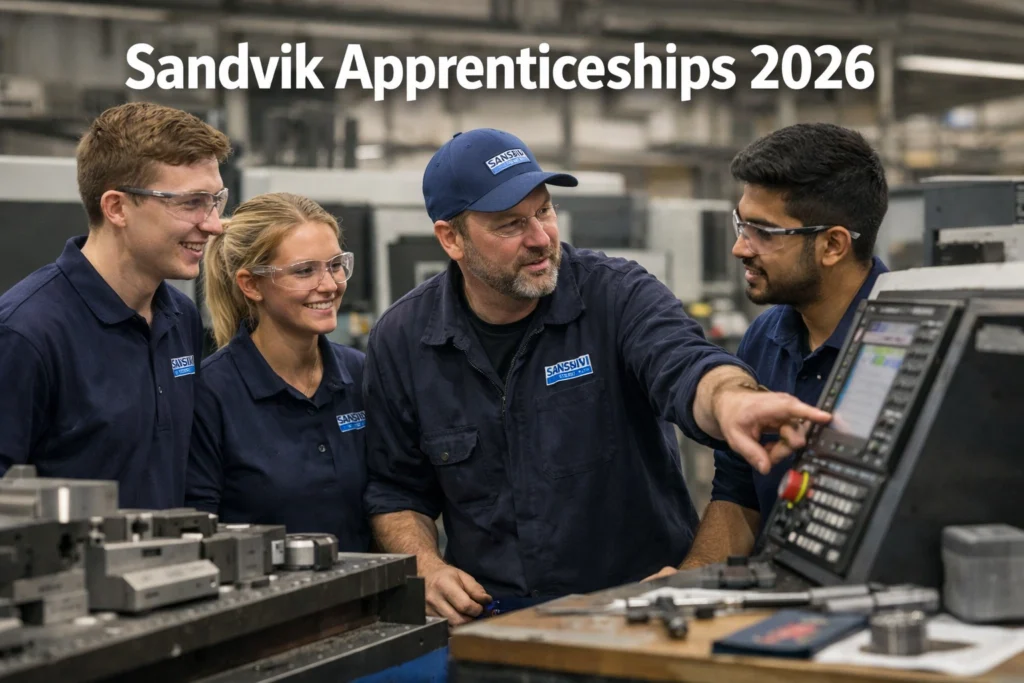
Sandvik Apprenticeships 2026
For candidates who genuinely want a future in engineering trades, this programme can provide a valuable foundation for long-term career growth in South Africa’s technical sectors.
APPLY HERE: Sandvik Apprenticeships 2026