

Starting a new job, joining a different team, or simply trying to grow in your career can be challenging. Many people focus on technical skills, qualifications, and experience while overlooking one factor that quietly influences promotions, teamwork, and professional reputation: workplace etiquette.
You may be excellent at your job, but consistently arriving late, interrupting colleagues, ignoring emails, or speaking disrespectfully can damage your credibility. On the other hand, professionals who demonstrate good manners, respect, reliability, and effective communication often earn trust more quickly and create stronger workplace relationships.
The good news is that workplace etiquette is not about following complicated rules or pretending to be someone you’re not. It is about treating others professionally, communicating thoughtfully, and understanding how your behaviour affects the people around you.
This practical guide explains what workplace etiquette means, why it matters, and how you can improve your professional conduct regardless of your industry or experience level.
What Is Workplace Etiquette?
Workplace etiquette refers to the accepted standards of professional behaviour within a working environment. These unwritten rules help employees interact respectfully, collaborate effectively, and maintain a productive workplace.
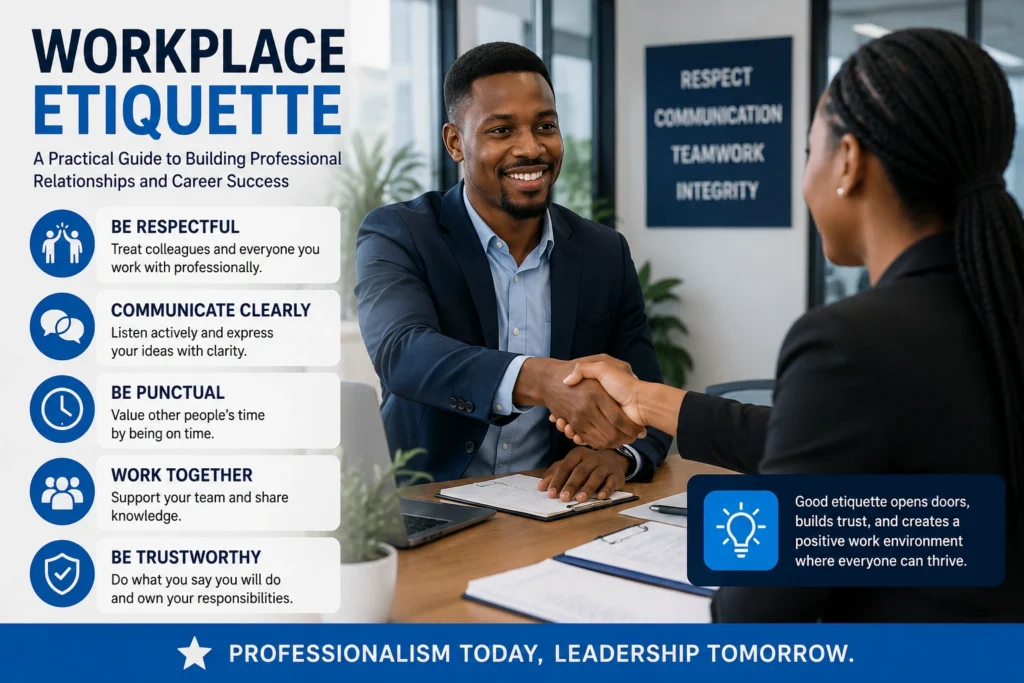
While every organisation has its own culture, certain principles remain universal. Good workplace etiquette includes:
- Respecting colleagues
- Communicating professionally
- Being punctual
- Taking responsibility for mistakes
- Following company policies
- Maintaining appropriate boundaries
- Demonstrating honesty and integrity
Workplace etiquette applies whether you work in an office, factory, retail store, hospital, school, construction site, or remotely from home.
It is not about being overly formal. Instead, it is about creating an environment where everyone feels respected and can work effectively together.
ALSO APPLY FOR: Unitrans Apprentice 2026
ALSO APPLY FOR: Sappi Apprenticeships 2026
Why This Issue Matters
Many employers say technical skills can be taught, but professional behaviour is much harder to develop.
Strong workplace etiquette can influence:
- Performance reviews
- Promotion opportunities
- Team relationships
- Customer satisfaction
- Leadership potential
- Workplace trust
- Company reputation
Poor etiquette often creates unnecessary conflict, lowers morale, and reduces productivity. Small behaviours—such as repeatedly arriving late to meetings or ignoring messages—can gradually affect how colleagues and managers perceive your reliability.
For job seekers and recent graduates, demonstrating excellent workplace etiquette can also compensate for limited work experience. Employers often value attitude just as highly as technical ability.
Understanding the Core Principles of Workplace Etiquette
Before looking at practical strategies, it’s helpful to understand the foundation of professional behaviour.
Respect
Treat everyone with courtesy regardless of their role.
This includes:
- Reception staff
- Cleaners
- Interns
- Managers
- Customers
- Suppliers
Professional respect should never depend on someone’s job title.
Communication
Clear, respectful communication prevents misunderstandings.
Good communication involves:
- Listening actively
- Speaking politely
- Writing professional emails
- Responding within reasonable timeframes
- Avoiding gossip
People often remember how you communicate more than what you actually say.
Accountability
Mistakes happen in every workplace.
Professionals earn trust by:
- Admitting errors
- Taking responsibility
- Correcting problems quickly
- Learning from feedback
Blaming others rarely improves your reputation.
Professionalism
Professionalism means maintaining appropriate behaviour even during stressful situations.
Examples include:
- Staying calm during disagreements
- Respecting confidentiality
- Following workplace rules
- Meeting deadlines
- Remaining dependable
How to Improve Workplace Etiquette Step by Step
Improving professional behaviour does not require dramatic changes. Small habits practiced consistently often have the biggest impact.
1. Arrive on Time
Punctuality demonstrates respect for other people’s schedules.
Try to:
- Arrive a few minutes early
- Join virtual meetings before they start
- Inform colleagues if you’ll be delayed
- Prepare before meetings begin
Being consistently late sends the message that your time is more valuable than everyone else’s.
2. Practice Professional Communication
Whether you’re speaking face-to-face, sending emails, or chatting online, communication should remain respectful.
Remember to:
- Use polite greetings
- Proofread important emails
- Avoid using all capital letters
- Keep messages concise
- Respond promptly
Professional communication also means avoiding emotional responses during disagreements.
3. Listen More Than You Speak
Good listeners often become trusted team members.
Practice active listening by:
- Maintaining eye contact
- Avoiding interruptions
- Asking thoughtful questions
- Confirming understanding
People appreciate feeling heard.
4. Respect Workplace Boundaries
Every workplace has personal and professional boundaries.
Examples include:
- Respecting privacy
- Avoiding inappropriate jokes
- Not borrowing items without permission
- Keeping confidential information secure
- Limiting personal phone use
Healthy boundaries help create a respectful environment.
5. Dress Appropriately
Professional appearance depends on your industry.
Some workplaces require:
- Formal business attire
- Protective clothing
- Uniforms
- Smart casual clothing
Even relaxed workplaces expect employees to appear neat and presentable.
6. Be Reliable
Reliability is one of the strongest indicators of professionalism.
Reliable employees:
- Meet deadlines
- Complete assigned tasks
- Keep promises
- Follow through on commitments
- Communicate early if problems arise
Managers quickly notice employees they can depend on.
7. Handle Conflict Professionally
Disagreements are normal.
When conflicts arise:
- Stay calm
- Focus on facts
- Avoid personal attacks
- Listen to different viewpoints
- Seek solutions rather than blame
Professional conflict resolution strengthens workplace relationships.
8. Show Appreciation
Simple expressions of gratitude improve workplace culture.
Examples include:
- Thanking colleagues for assistance
- Recognising team contributions
- Celebrating achievements
- Giving constructive feedback respectfully
Positive workplaces are built on mutual appreciation.
ALSO READ ABOUT: Green Energy Jobs
Workplace Etiquette in Remote and Hybrid Work
Modern workplaces increasingly rely on remote collaboration.
Professional etiquette still matters—even behind a screen.
Good virtual habits include:
- Joining meetings prepared
- Muting your microphone when not speaking
- Using professional backgrounds if required
- Responding to messages during working hours
- Respecting colleagues’ availability
Remote work requires even stronger communication because misunderstandings occur more easily online.
Best Practices Experts Recommend
Career coaches, human resources professionals, and leadership experts consistently recommend several habits that improve workplace success.
Build Trust Through Consistency
Professional behaviour should remain consistent regardless of who is watching.
Trust develops when colleagues know what to expect from you.
Continue Learning
Every workplace has its own culture.
Observe experienced employees and remain open to feedback.
Learning never stops, even for senior professionals.
Adapt to Company Culture
Each organisation has different expectations regarding communication, meetings, dress codes, and teamwork.
Successful employees understand the culture without compromising their personal values.
Protect Your Professional Reputation
Your reputation develops through everyday behaviour.
Small actions accumulate over time.
Ask yourself regularly:
- Am I dependable?
- Am I respectful?
- Do people enjoy working with me?
- Am I contributing positively to the team?
These questions encourage continuous improvement.
Practice Emotional Intelligence
Professionals who understand emotions often communicate more effectively.
Emotional intelligence includes:
- Managing frustration
- Reading social cues
- Showing empathy
- Remaining calm under pressure
These skills become increasingly valuable in leadership positions.
Mistakes People Often Make
Many workplace etiquette mistakes happen unintentionally.
Recognising them early can prevent bigger problems.
Speaking Negatively About Colleagues
Office gossip damages trust quickly.
If you wouldn’t say something directly to a colleague, avoid saying it behind their back.
Ignoring Emails
Delayed responses slow projects and frustrate coworkers.
Even if you cannot provide a complete answer immediately, acknowledge receiving important messages.
Interrupting Others
Interrupting signals that you value your own opinions more than someone else’s.
Allow colleagues to finish before responding.
Being Defensive About Feedback
Constructive criticism helps people grow.
Instead of becoming defensive:
- Listen carefully
- Ask questions
- Thank the person
- Focus on improvement
Taking Credit for Team Success
Successful projects usually involve multiple people.
Recognising team contributions builds stronger relationships and demonstrates integrity.
Using Phones Excessively
Constant phone use during meetings or conversations appears disrespectful.
Keep personal distractions to a minimum during working hours.
Forgetting Professional Courtesy
Simple habits matter.
These include:
- Greeting colleagues
- Holding doors
- Cleaning shared spaces
- Returning borrowed items
- Respecting meeting times
Courtesy creates positive workplace experiences.
How Managers Can Encourage Good Workplace Etiquette
Professional behaviour should not depend solely on employees.
Managers can help by:
- Setting clear expectations
- Leading by example
- Addressing problems fairly
- Providing regular feedback
- Recognising positive behaviour
- Encouraging respectful communication
Strong leadership creates workplaces where etiquette becomes part of the organisational culture.
Frequently Asked Questions
What is the most important aspect of workplace etiquette?
Respect is the foundation of workplace etiquette. Treating colleagues professionally, communicating clearly, and being dependable contribute to stronger workplace relationships.
Does workplace etiquette matter if I work remotely?
Yes. Professional behaviour is just as important in remote work. Prompt communication, punctuality during virtual meetings, and respectful online interactions help maintain trust.
Can workplace etiquette improve my career?
Absolutely. Employees with strong professional behaviour often build better relationships, earn greater trust, and increase their chances of promotion and leadership opportunities.
How can I improve my workplace etiquette quickly?
Focus on small daily habits such as arriving on time, communicating respectfully, listening carefully, meeting deadlines, accepting feedback positively, and showing appreciation to colleagues.
Final Thoughts
Strong workplace etiquette is about far more than good manners. It shapes how colleagues, managers, customers, and employers perceive your professionalism. While technical skills help you perform your job, professional behaviour often determines how far your career progresses.
The encouraging part is that workplace etiquette is a skill anyone can improve. By being punctual, communicating respectfully, listening actively, taking responsibility, and treating others with consideration, you can build trust and create a positive reputation that lasts throughout your career.
Start with one or two habits today rather than trying to change everything at once. Over time, these consistent actions will strengthen your relationships, improve teamwork, and help you become someone others enjoy working with and rely on.
ALSO READ ABOUT: Green Energy Jobs
ALSO APPLY FOR: Unitrans Apprentice 2026
ALSO APPLY FOR: Sappi Apprenticeships 2026