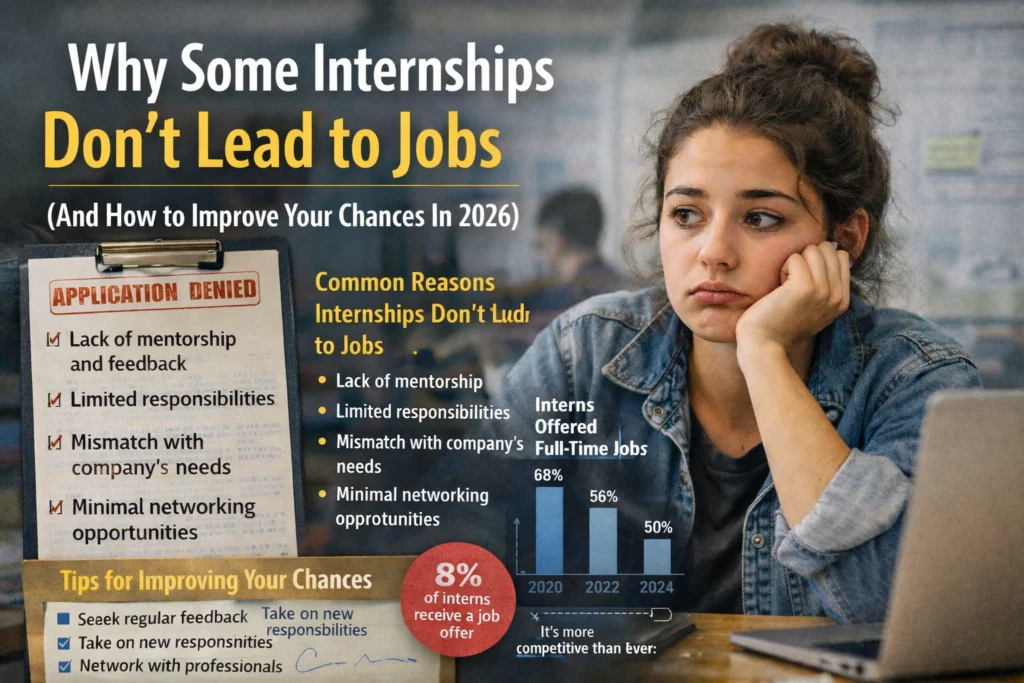

Internships are often seen as the golden bridge between education and employment. You gain experience, build connections, and ideally, land a full-time offer at the end. But for many people, that final step never happens. Despite months of hard work, the internship ends with a polite goodbye—and no job.
So what’s going on?
Understanding Why Some Internships Don’t Lead to Jobs (And How to Improve Your Chances) can make a real difference in how you approach your next opportunity. Whether you’re a student, recent graduate, or career switcher, knowing how internships actually work—and how hiring decisions are made—can help you turn temporary roles into long-term success.
What You Should Know First
Not all internships are designed to lead to full-time jobs.
Some companies use internships as short-term support, others as a recruiting pipeline. The key idea is this:
Getting hired after an internship depends less on just “working hard” and more on strategy, visibility, and alignment with company needs.
If you understand what employers are really looking for—and position yourself accordingly—you significantly increase your chances of getting an offer.
ALSO APPLY FOR: Eskom’s 2026 Engineering Design Internship
ALSO APPLY FOR: Electoral Commission (IEC) Internships 2026
1. Not All Internships Are Built for Hiring
One of the biggest misconceptions is that every internship is a trial period for a full-time role. In reality, that’s not always the case.
Different Types of Internships
- Pipeline internships: Designed to recruit future employees (common in large corporations)
- Project-based internships: Focused on short-term tasks with no long-term intent
- Exploratory internships: Help students gain exposure, not necessarily employment
- Budget-limited roles: Even if you perform well, there may be no open position
Example
Imagine you intern at a startup helping with marketing campaigns. You do great work—but the company simply doesn’t have the budget to hire a full-time marketer. Your performance isn’t the issue; the structure is.
What this means for you:
Before accepting an internship, ask:
- “Do interns typically get hired here?”
- “Is there a pathway to full-time roles?”
2. Performance Alone Isn’t Enough
Working hard is important—but it’s not the full picture.
What Employers Actually Evaluate
- Your impact, not just effort
- Your initiative, not just task completion
- Your fit with the team and culture
- Your ability to solve problems independently
Step-by-Step Breakdown
Let’s say you’re assigned to analyze data:
- You complete the task → Good
- You deliver insights → Better
- You suggest improvements based on those insights → Even better
- You help implement those improvements → Standout candidate
The difference lies in going beyond the assignment.
3. Lack of Visibility Can Hold You Back
You might be doing great work—but if the right people don’t see it, it may not matter.
Why Visibility Matters
Hiring decisions are often made by:
- Senior managers
- Team leads
- Department heads
If they don’t know your contributions, they can’t advocate for you.
How to Improve Visibility
- Share progress updates in meetings
- Ask thoughtful questions
- Present your work clearly
- Build relationships across teams
Example
Two interns perform equally well. One quietly completes tasks; the other communicates results and engages with the team. Guess who gets remembered?
4. Timing and Business Needs Play a Huge Role
Sometimes, the decision has nothing to do with you.
External Factors That Affect Hiring
- Company hiring freezes
- Budget cuts
- Organizational restructuring
- Economic conditions
Even top-performing interns can be let go if the company isn’t hiring.
What You Can Do
- Ask about hiring timelines early
- Stay flexible and open to other roles
- Keep networking even if things look promising
5. Weak Networking Limits Opportunities
Internships are not just about work—they’re about relationships.
Why Networking Matters
Many job offers come from:
- Internal referrals
- Manager recommendations
- Informal conversations
If you don’t build connections, you miss out on these hidden opportunities.
Simple Networking Strategy
- Introduce yourself to team members
- Schedule short coffee chats
- Ask about career paths
- Stay in touch after the internship
Think of networking as planting seeds for future opportunities.
6. Not Communicating Your Interest
Surprisingly, some interns never explicitly say they want a job.
Why This Is a Problem
Managers can’t read your mind. If you don’t express interest, they may assume:
- You’re exploring other options
- You’re not ready for full-time work
- You’re not committed
What to Say
Toward the end of your internship:
- “I’ve really enjoyed working here and would love to explore full-time opportunities.”
- “What steps should I take to be considered for a role here?”
Clear communication can make a big difference.
7. Skill Gaps Can Be a Hidden Barrier
Even if you perform well, you might still lack certain skills required for a full-time role.
Common Skill Gaps
- Advanced technical knowledge
- Industry-specific tools
- Communication or leadership skills
How to Close the Gap
- Ask for feedback regularly
- Identify areas for improvement
- Take online courses or certifications
- Practice skills outside work
Example
If a company needs someone with advanced Excel or coding skills, basic knowledge might not be enough—even if your attitude is great.
Common Misunderstandings About Why Some Internships Don’t Lead to Jobs (And How to Improve Your Chances In 2026)
Let’s clear up a few myths.
“If I work hard, I’ll definitely get hired”
Hard work helps—but strategy, visibility, and fit matter just as much.
“My manager will automatically recommend me”
Not necessarily. You need to build that relationship and show your value clearly.
“No offer means I failed”
Often untrue. External factors like budget or hiring freezes play a big role.
“Networking is optional”
It’s not. Networking is often the difference between being considered and overlooked.
ALSO READ ABOUT: Bursary or Scholarship? Key Differences Explained- ( 2026 )
How to Improve Your Chances of Getting Hired
Now that you understand the challenges, here’s how to tilt the odds in your favor.
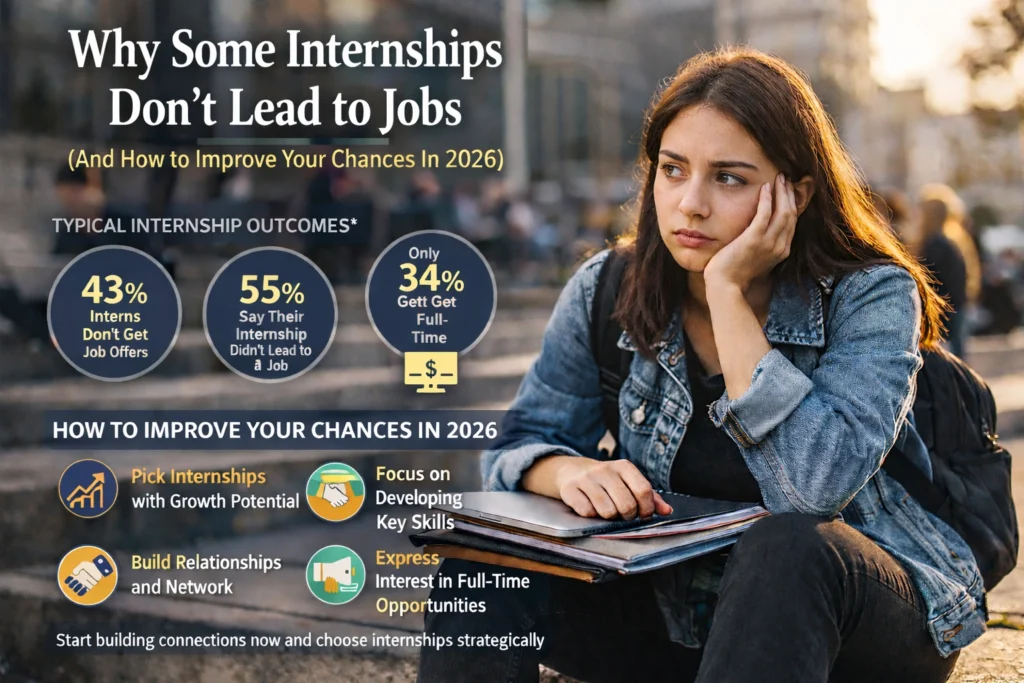
1. Treat Your Internship Like a Long Job Interview
- Be reliable and consistent
- Meet deadlines
- Maintain a professional attitude
2. Go Beyond Assigned Tasks
- Look for problems to solve
- Suggest improvements
- Take initiative
3. Build Strong Relationships
- Connect with colleagues
- Learn from mentors
- Stay engaged
4. Ask for Feedback Early and Often
- “What can I improve?”
- “Am I meeting expectations?”
This shows maturity and helps you grow quickly.
5. Make Your Impact Visible
- Share results
- Highlight achievements
- Document your contributions
6. Express Your Career Goals
Don’t wait until the last day—bring it up early.
7. Keep a Backup Plan
Even if things look promising:
- Apply to other jobs
- Continue networking
- Stay prepared
Key Takeaways
- Not all internships are meant to lead to jobs—understand the type before committing
- Performance matters, but visibility and initiative matter just as much
- Business needs and timing can affect hiring decisions beyond your control
- Networking and communication are critical for turning internships into offers
- Identifying and closing skill gaps can improve your chances significantly
- Being proactive, strategic, and visible can set you apart from other interns
Frequently Asked Questions (FAQs)
1. How common is it for internships to lead to full-time jobs?
It depends on the industry and company. Some organizations hire a large percentage of interns, while others rarely do.
2. When should I ask about a full-time role?
Ideally, midway through your internship. This gives you time to align your performance with expectations.
3. What should I do if I don’t get an offer?
Ask for feedback, stay connected with your network, and use the experience to strengthen your resume and future applications.
4. Can I still use my internship to get a job elsewhere?
Absolutely. Internships build experience, skills, and references—all valuable for job applications.
Final Thoughts
Understanding Why Some Internships Don’t Lead to Jobs (And How to Improve Your Chances) can change how you approach your career early on. Internships are valuable—but they’re not guarantees.
The difference often comes down to awareness and action.
By focusing on visibility, building relationships, improving your skills, and communicating your goals clearly, you can turn an internship from a temporary experience into a powerful stepping stone toward long-term employment.
ALSO APPLY FOR: Eskom’s 2026 Engineering Design Internship
ALSO APPLY FOR: Electoral Commission (IEC) Internships 2026
ALSO READ ABOUT: Bursary or Scholarship? Key Differences Explained- ( 2026 )