
For decades, earning a university degree was widely considered the safest path to a successful career. Students were encouraged to study hard, graduate, and expect stable employment. While higher education remains valuable, many graduates are discovering that finding a job is far more challenging than they expected.
Across South Africa and many other countries, thousands of qualified graduates apply for the same entry-level positions. Employers often receive hundreds of applications for a single vacancy, making it difficult for candidates to stand out based on qualifications alone.
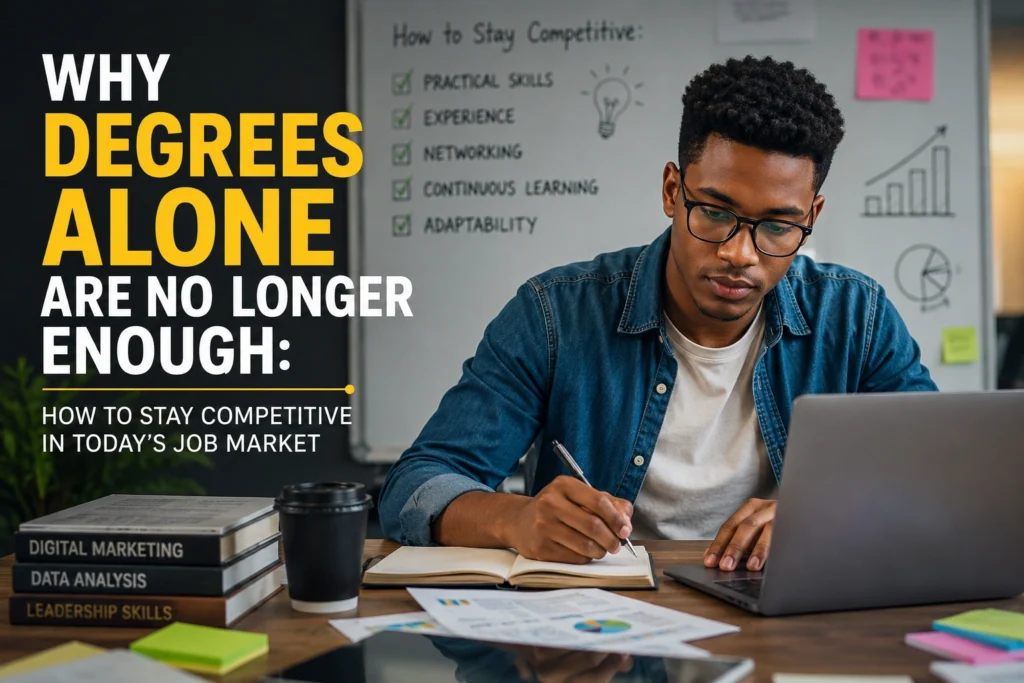
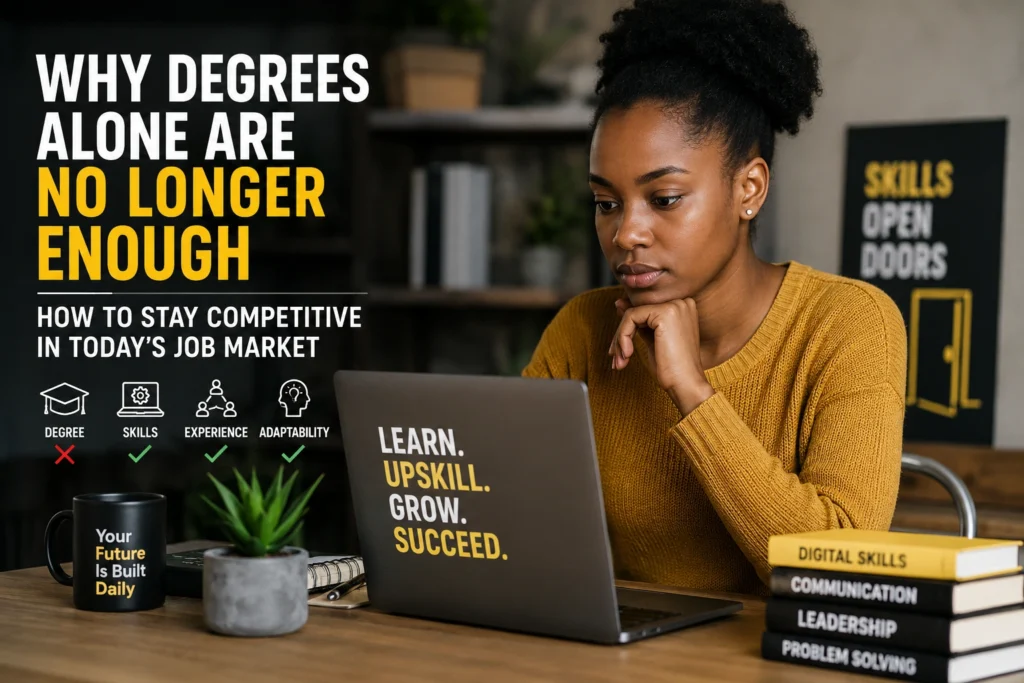
This is why Why Degrees Alone Are No Longer Enough has become one of the biggest career discussions today. Employers increasingly want candidates who can demonstrate practical skills, adaptability, communication abilities, and real workplace experience—not just academic achievement.
The good news is that graduates are not powerless. By understanding what employers actually value and taking practical steps to develop those qualities, job seekers can significantly improve their chances of securing meaningful employment.
Why Degrees Alone Are No Longer Enough
A university degree still has enormous value. It teaches critical thinking, subject knowledge, research skills, and discipline. Many professions—including engineering, medicine, law, accounting, and education—continue to require formal qualifications.
However, today’s workplace has changed dramatically.
Technology evolves rapidly. Businesses adapt constantly. Artificial intelligence automates repetitive tasks. Companies want employees who can solve problems, learn quickly, collaborate with others, and contribute from day one.
As a result, employers increasingly evaluate candidates based on a combination of factors, including:
- Practical work experience
- Digital literacy
- Communication skills
- Problem-solving ability
- Adaptability
- Emotional intelligence
- Teamwork
- Initiative
- Continuous learning
A degree may open the door, but these additional qualities often determine who gets hired.
ALSO APPLY FOR: Clover Learnership 2026
ALSO APPLY FOR: Impactful Learnership 2026
Why Employers Have Changed Their Hiring Priorities
Several trends have reshaped recruitment over the past decade.
Increased Competition
More people are earning tertiary qualifications than ever before. While this is positive for education, it also means employers have a much larger pool of qualified applicants.
When dozens or even hundreds of candidates have similar degrees, hiring managers look for other ways to identify the strongest applicants.
Rapid Technological Change
Industries now adopt new software, automation tools, and digital systems much faster than universities can update their curricula.
Employers therefore prefer candidates who show they can keep learning after graduation.
Someone who continuously develops new skills often becomes more valuable than someone who relies only on what they learned several years ago.
Greater Focus on Practical Skills
Many organisations want employees who can contribute immediately.
Work experience—even through internships, learnerships, volunteering, freelance projects, or student leadership—shows employers that a candidate understands workplace expectations.
Practical exposure also reduces training time for employers.
Soft Skills Matter More Than Ever
Technical knowledge is important, but many jobs depend heavily on interpersonal skills.
Employers consistently value candidates who can:
- Communicate clearly
- Work well with different personalities
- Handle pressure
- Solve problems independently
- Adapt to changing priorities
- Show professionalism
These qualities often determine long-term career success.
Why This Issue Matters
The discussion around Why Degrees Alone Are No Longer Enough affects millions of students, graduates, and career changers.
Understanding this shift helps people make smarter decisions about their education and career development instead of assuming that graduation automatically leads to employment.
The real-world impact includes:
- Increased graduate unemployment
- Greater competition for entry-level jobs
- Rising demand for digital skills
- More emphasis on internships and learnerships
- Continuous professional development becoming essential
- Employers rewarding practical ability alongside academic achievement
Recognising these changes early allows job seekers to prepare rather than become discouraged after graduation.
Skills Employers Now Value Alongside Degrees
Today’s employers often seek a balanced combination of academic knowledge and workplace capability.
Some of the most valuable skills include:
Digital Skills
Nearly every industry now uses technology extensively.
Useful digital skills include:
- Microsoft Excel
- Data analysis
- Cloud collaboration tools
- Basic coding
- Digital marketing
- Cybersecurity awareness
- Project management software
- AI productivity tools
Even non-technical careers increasingly require digital confidence.
Communication
Strong written and verbal communication improves nearly every job.
Candidates who can explain ideas clearly, write professional emails, and communicate confidently often stand out during interviews.
Critical Thinking
Employers appreciate people who can analyse situations instead of simply following instructions.
Problem-solving skills become increasingly valuable as businesses face new challenges.
Adaptability
Modern careers rarely follow a straight path.
Employees may need to:
- Learn new systems
- Change responsibilities
- Work remotely
- Join cross-functional teams
- Handle changing customer needs
Adaptable employees often progress faster.
Teamwork
Few jobs are completed independently.
Employers want individuals who cooperate respectfully, share ideas, and contribute positively to team success.
ALSO READ ABOUT: Fake Recruitment Agencies to Avoid
Practical Steps to Become More Employable
Understanding the problem is important, but taking action matters even more.
Step 1: Gain Real-World Experience
Experience does not always mean a permanent job.
You can build practical exposure through:
- Learnerships
- Graduate programmes
- Internships
- Volunteering
- Student organisations
- Community projects
- Freelancing
- Part-time work
Every experience helps build workplace confidence.
Step 2: Keep Learning After Graduation
Learning should not stop after earning a degree.
Short courses and professional certifications can strengthen your CV considerably.
Focus on skills that employers actively request in job advertisements.
Examples include:
- Advanced Excel
- Data analytics
- Project management
- Artificial intelligence fundamentals
- Customer service
- Business communication
Continuous learning demonstrates initiative.
Step 3: Build a Professional Online Presence
Many recruiters search online before inviting candidates for interviews.
Maintain a professional profile that highlights:
- Education
- Projects
- Skills
- Volunteer work
- Certifications
- Career interests
A well-presented online profile helps employers learn more about your capabilities.
Step 4: Develop Transferable Skills
Transferable skills apply across many industries.
Examples include:
- Leadership
- Time management
- Organisation
- Conflict resolution
- Presentation skills
- Research
- Decision-making
These skills remain valuable regardless of career changes.
Step 5: Learn How Recruitment Actually Works
Understanding recruitment improves job search success.
Tailor every application.
Read job descriptions carefully.
Use relevant keywords.
Prepare thoroughly for interviews.
Research each employer before applying.
These simple habits increase competitiveness.
Step 6: Build a Portfolio
Many professions benefit from portfolios.
Examples include:
- Marketing campaigns
- Design work
- Software projects
- Writing samples
- Business case studies
- Data dashboards
- Photography
- Research projects
A portfolio provides evidence of your abilities rather than simply listing them on a CV.
Step 7: Expand Your Professional Network
Networking is about building genuine professional relationships.
Useful opportunities include:
- Career fairs
- Industry conferences
- Alumni associations
- Professional organisations
- Volunteer events
- Online communities
Networking often exposes graduates to opportunities that are never publicly advertised.
Best Practices Experts Recommend
Career advisors and recruitment professionals consistently recommend several practical strategies.
Focus on lifelong learning.
The strongest professionals continue improving throughout their careers rather than relying on qualifications earned years earlier.
Apply quality over quantity.
Sending hundreds of generic applications is usually less effective than submitting carefully tailored applications.
Develop both technical and human skills.
Employers increasingly seek balanced candidates who combine knowledge with communication, teamwork, and adaptability.
Seek constructive feedback.
After interviews or unsuccessful applications, identify areas for improvement instead of assuming rejection reflects your overall potential.
Stay informed about industry trends.
Reading industry news helps candidates understand emerging technologies, changing employer expectations, and growing career opportunities.
Show initiative.
Recruiters notice candidates who complete additional certifications, volunteer, build projects, or solve problems independently.
Mistakes People Often Make
Many graduates unintentionally reduce their chances of employment.
Here are some of the most common mistakes.
Believing Graduation Guarantees Employment
A degree improves opportunities but does not guarantee immediate employment.
Career success requires ongoing development.
Ignoring Soft Skills
Some candidates focus entirely on technical knowledge while overlooking communication, teamwork, and professionalism.
These qualities strongly influence hiring decisions.
Using the Same CV Everywhere
Generic CVs often fail to demonstrate relevance.
Tailoring applications shows employers genuine interest.
Waiting for Experience Instead of Creating It
Many graduates wait for their first job before gaining experience.
Instead, internships, volunteer work, freelance projects, and community initiatives can all strengthen employability.
Stopping Learning
Industries evolve constantly.
Candidates who stop learning may struggle to remain competitive over time.
Applying Without Research
Employers appreciate applicants who understand the organisation, its values, and its industry.
Research improves interview performance and application quality.
How Universities and Employers Can Work Together
Educational institutions continue playing a vital role, but closer collaboration with industry can better prepare graduates.
Possible improvements include:
- More workplace learning opportunities
- Industry guest lectures
- Internship partnerships
- Practical assessments
- Career readiness workshops
- Digital skills training
- Entrepreneurship education
Graduates benefit when academic learning connects directly with workplace expectations.
Preparing for the Future of Work
The future workplace will continue evolving.
Artificial intelligence, automation, sustainability initiatives, remote work, and digital transformation are already changing many careers.
Rather than fearing these changes, graduates should focus on becoming adaptable learners.
People who regularly update their knowledge, embrace new technology, and remain curious are likely to enjoy stronger long-term career prospects.
The most successful professionals will combine:
- Formal education
- Practical experience
- Digital literacy
- Emotional intelligence
- Continuous learning
- Strong professional relationships
This balanced approach creates resilience in an uncertain job market.
Frequently Asked Questions
Does a university degree still matter?
Yes. Many careers still require formal qualifications, and degrees continue to provide valuable knowledge and credibility. However, employers increasingly expect graduates to combine academic achievement with practical skills and workplace experience.
Can I get hired without experience?
Yes. Internships, learnerships, volunteer work, freelance projects, student leadership roles, and community initiatives all count as valuable experience that demonstrates initiative and practical ability.
What skills are employers looking for most?
Commonly requested skills include communication, teamwork, digital literacy, adaptability, problem-solving, critical thinking, project management, and the willingness to keep learning throughout your career.
How can I improve my employability after graduating?
Focus on gaining practical experience, earning relevant certifications, tailoring your CV for each application, building a professional network, developing transferable skills, and staying informed about changes in your chosen industry.
Final Thoughts
The conversation around Why Degrees Alone Are No Longer Enough is not about reducing the importance of higher education. Instead, it reflects how the modern workplace has evolved.
A degree remains an excellent foundation, but employers increasingly expect candidates to bring practical experience, adaptable skills, digital confidence, and a commitment to lifelong learning.
Graduates who continue developing themselves after university place themselves in a stronger position than those who rely solely on academic qualifications. Building experience through internships, volunteering, short courses, personal projects, and networking can significantly improve employability.
Rather than viewing graduation as the finish line, treat it as the beginning of your professional development. The individuals who combine education with practical skills, curiosity, and continuous improvement are likely to remain competitive in an ever-changing job market.
ALSO APPLY FOR: Clover Learnership 2026
ALSO APPLY FOR: Impactful Learnership 2026
ALSO READ ABOUT: Fake Recruitment Agencies to Avoid