
Imagine arriving at work in Johannesburg and being handed a social media challenge that looks deceptively simple: a brand needs to speak to a young audience, the conversation is already moving online, and your team has to decide what to say, when to say it and, just as importantly, when not to say anything.
That is the kind of environment in which social media careers are increasingly being built.
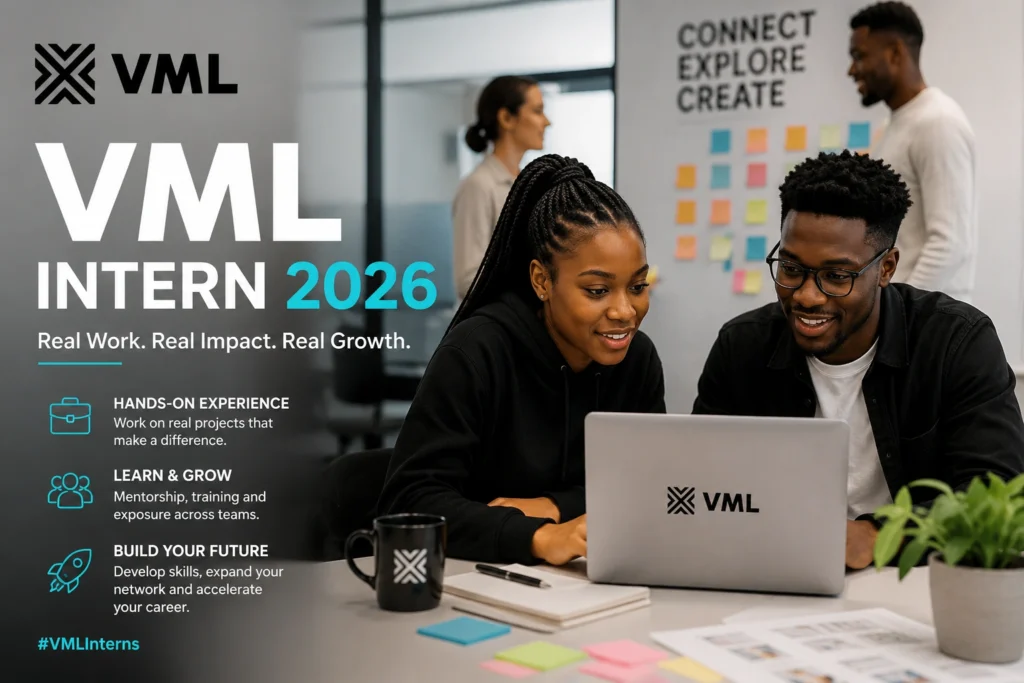
For South African students studying marketing, communications, media, public relations or related disciplines, the VML Intern 2026 opportunity in Johannesburg offers a chance to move beyond classroom theory and into the daily mechanics of a major creative agency. The advertised Intern – Social Media Manager position sits within VML’s Connections capability and focuses on the work behind successful online communities: content planning, monitoring conversations, supporting campaigns and understanding what makes people engage with a brand.
The opportunity is particularly interesting because social media is no longer simply the place where companies publish advertisements. In South Africa, platforms have become spaces where customers ask questions, complain, discover products, follow creators, debate brands and form opinions almost instantly.
For an aspiring communications professional, learning how to navigate that environment inside an international agency can be considerably more valuable than simply adding another qualification to a CV.
The VML internship is really about learning how brands behave online
VML is part of WPP and operates as a global creative company combining brand experience, customer experience and commerce. Its work spans creativity, technology, communications and digital experiences, giving interns exposure to an environment where social media is connected to a much bigger marketing operation.
The company says its global network includes 26,000 people across more than 55 markets, with work for major international brands including Microsoft, Nestlé, Ford and The Coca-Cola Company.
That scale matters, but perhaps not for the reason a student might initially think.
A famous client name on a CV can certainly attract attention. The more important benefit is seeing how a large agency turns a brief into something that people actually encounter in the real world.
A social media intern may begin with a content calendar or campaign brief. But behind that document are questions that require judgement.
What would a Social Media Manager Intern actually do?
The title may sound more senior than the position really is, so applicants should look beyond the wording.
The advertised internship centres on supporting social media activity rather than arriving as an experienced manager responsible for an entire brand portfolio. The work is expected to involve planning, managing and growing online communities, maintaining content calendars, monitoring social platforms and assisting with campaigns.
In practice, that can mean a mixture of creative and organisational work.
One morning could involve checking what people are saying about a brand and flagging an emerging conversation. Later, the intern might help organise upcoming posts, contribute ideas during a campaign meeting or assist with reporting on social performance.
There is also an important distinction between being active on social media and understanding social media professionally.
A student may know TikTok trends, Instagram formats, memes and popular creators. That is useful, but an agency needs more than platform familiarity.
Why Johannesburg makes this opportunity particularly relevant
Johannesburg is one of South Africa’s major commercial and creative centres, bringing together advertising agencies, financial services companies, retailers, technology businesses, media organisations and consumer brands.
That creates an unusually useful environment for someone interested in communications.
South African audiences are also not a single, predictable digital group. Campaigns can need to account for different languages, cultures, income levels, age groups and patterns of internet use.
A message that feels natural in one community may land differently somewhere else.
For an intern, this creates an opportunity to learn something that international marketing courses sometimes overlook: context matters.
A global brand may have an international identity, but its social content still has to make sense to the people seeing it in Johannesburg, Cape Town, Durban or elsewhere in South Africa.
That is where local cultural awareness becomes a genuine professional skill.

Who should apply for the VML Intern 2026 opportunity?
The advertised position is aimed at candidates currently pursuing a bachelor’s degree or diploma in fields such as Marketing, Communications, Media Studies, Digital Marketing, Public Relations, Creative Brand Communication or a related discipline.
That qualification requirement should not discourage students who do not have years of agency experience.
This is an internship.
What can separate applicants is how convincingly they demonstrate that they understand digital communication and are ready to learn.
A strong application could show evidence through university projects, student societies, campus campaigns, volunteer work, personal creative projects or even a thoughtfully managed social media page.
The important point is not to pretend that a student project was a major commercial campaign.
Instead, explain what you actually did.
If you created content for a student organisation, say what your role was. If you developed a campaign concept for a university assignment, explain the audience and reasoning. If you monitored engagement, mention what you learned from the results.
APPLY HERE: VML Intern 2026
ALSO APPLY FOR: Woodwind Intern 2026
An expert-style insight: social media is becoming a judgement profession
The deeper opportunity here is that social media careers are changing.
The ability to operate a platform is becoming less distinctive. Millions of young people understand how Instagram, TikTok, YouTube and other platforms work.
What employers increasingly need is judgement.
That means knowing when a trend is relevant to a brand, when a joke could create reputational problems, when a community complaint requires escalation and how creative ideas can support an actual business objective.
For an intern, learning that judgement may be one of the most valuable parts of the experience.
It also explains why a creative agency environment can be useful early in a career. An agency exposes junior employees to different briefs, audiences and industries instead of limiting them to one brand perspective.
Competition will favour evidence, not just enthusiasm
There is a temptation for students applying to creative internships to make their application look extremely polished.
Design matters, particularly in a creative environment, but substance matters more.
Recruiters need to understand what the candidate can contribute and how the candidate thinks.
A useful application strategy is straightforward:
- Tailor your CV to social media, communications and creative work.
- Highlight relevant university projects rather than burying them.
- Include measurable results where they genuinely exist.
- Prepare examples showing how you follow digital trends.
- Research VML and its style of work before an interview.
- Be ready to explain one campaign you admire and why it worked.
The last point is particularly valuable.
Instead of saying, “I like this campaign because it is creative,” explain the audience insight, cultural relevance, execution or social behaviour that made it effective.
That turns a personal opinion into professional analysis.
Applicants should also resist filling their CV with every platform or software tool they have ever opened.
If you genuinely understand content planning, social listening, basic analytics, copywriting, short-form video or community engagement, make those abilities clear. But do not claim expertise where you have only experimented.
Creative agencies can usually tell the difference.
Why this internship matters beyond the first job
The immediate attraction of the VML internship is obvious: experience at an established agency in Johannesburg.
But the longer-term value could be broader.
An intern who learns how campaigns are developed, approved, published, measured and refined begins to understand the complete communications cycle.
That knowledge can lead into several career paths, including social media, community management, digital marketing, content strategy, communications, account management and broader brand work.
It can also make future interviews easier.
Instead of telling an employer, “I want to work in social media,” a graduate can explain what they have actually observed and contributed to.
That difference is important in a competitive graduate market.
There is another benefit that is easy to overlook: professional networks.
Working alongside strategists, creatives, account teams and other specialists allows an intern to see how different career paths operate. Even if the internship does not immediately become a permanent role, the experience can help clarify what type of work the graduate wants to pursue.
For a student still deciding between advertising, marketing, communications and digital media, that exposure can be extremely useful.
Frequently Asked Questions
1. Where is the VML Social Media Manager internship located?
The advertised position is based in Johannesburg, South Africa.
2. What qualification is required?
The opportunity is aimed at students pursuing a bachelor’s degree or diploma in areas including Marketing, Communications, Media Studies, Digital Marketing, Public Relations, Creative Brand Communication or a related discipline.
3. Is there a closing date?
The information supplied for this opportunity does not specify a closing date, so eligible applicants should avoid waiting until later and should check the official VML careers listing for the current application status before applying.
Final assessment
The VML Intern 2026 opportunity is worth taking seriously, particularly for students who already spend a lot of time thinking about why certain content works and how brands communicate with online communities.
It is not simply an opportunity to put a well-known company name on a CV.
The real attraction is the possibility of learning inside an agency where creativity, technology, strategy and client objectives meet. For someone beginning a career in South Africa’s digital marketing and communications sector, that kind of exposure can provide a much clearer understanding of what professional social media work actually involves.
The strongest applicants are unlikely to be those who merely describe themselves as “social media obsessed.” They will be the students who can demonstrate curiosity, cultural awareness, clear communication and an ability to look beyond likes and followers.
If you meet the qualification requirements, Johannesburg is accessible to you and your interests genuinely sit at the intersection of creativity and digital culture, this is an opportunity worth investigating promptly.