
Technology is changing faster than many people expected. Artificial intelligence is becoming part of everyday work, automation is reshaping industries, and employers are placing greater value on skills that cannot easily be replaced by machines. For students, graduates, job seekers, and even experienced professionals, one of the biggest challenges is knowing which abilities will still be valuable five or ten years from now.
Many people spend time learning skills that quickly become outdated while overlooking capabilities that employers increasingly demand. This uncertainty makes career planning difficult and can leave workers feeling unprepared for future opportunities.
Understanding The Skills That Could Become Essential by 2030 can help you make smarter decisions about education, training, and career development today. Rather than chasing every new trend, the goal is to build a combination of technical knowledge, digital confidence, and human-centered abilities that remain useful across different industries.
This guide explains what these future-ready skills are, why they matter, and how you can start developing them without waiting for a major career change.
Understanding The Skills That Could Become Essential by 2030
When experts discuss future workplace skills, they are not predicting that every current job will disappear. Instead, they expect most jobs to evolve.
Many routine tasks are becoming automated, while human workers increasingly focus on problem-solving, decision-making, creativity, communication, and managing technology.
The Skills That Could Become Essential by 2030 are those that help people adapt as workplaces continue changing. These skills are valuable whether someone works in healthcare, engineering, education, retail, finance, manufacturing, government, agriculture, or runs their own business.
Instead of preparing for one specific job, workers will increasingly prepare for careers that may include several different roles over time.
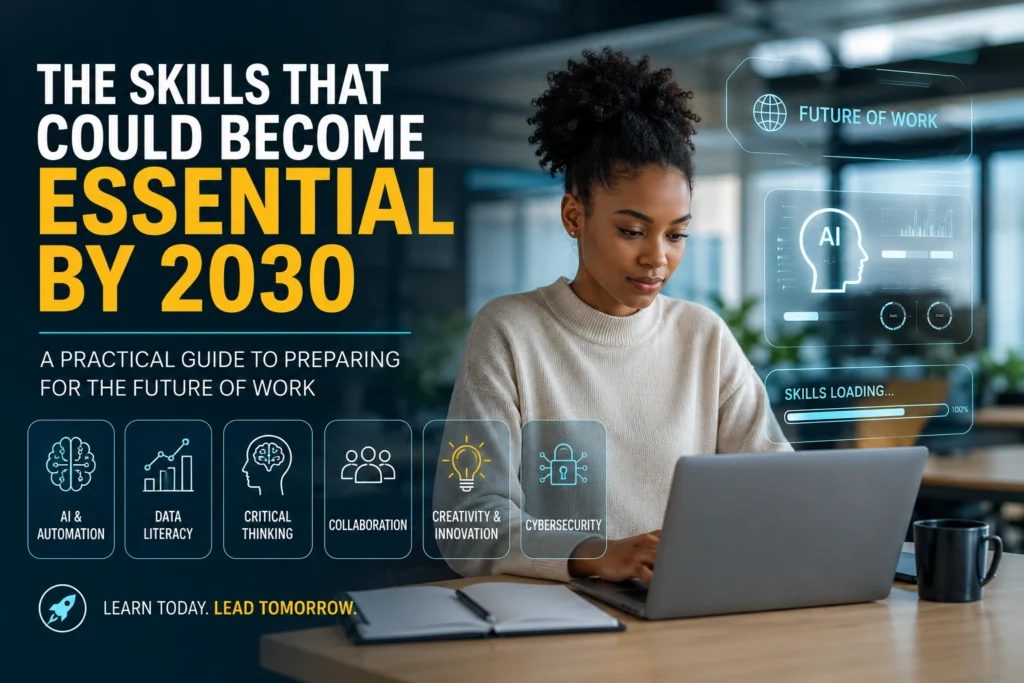
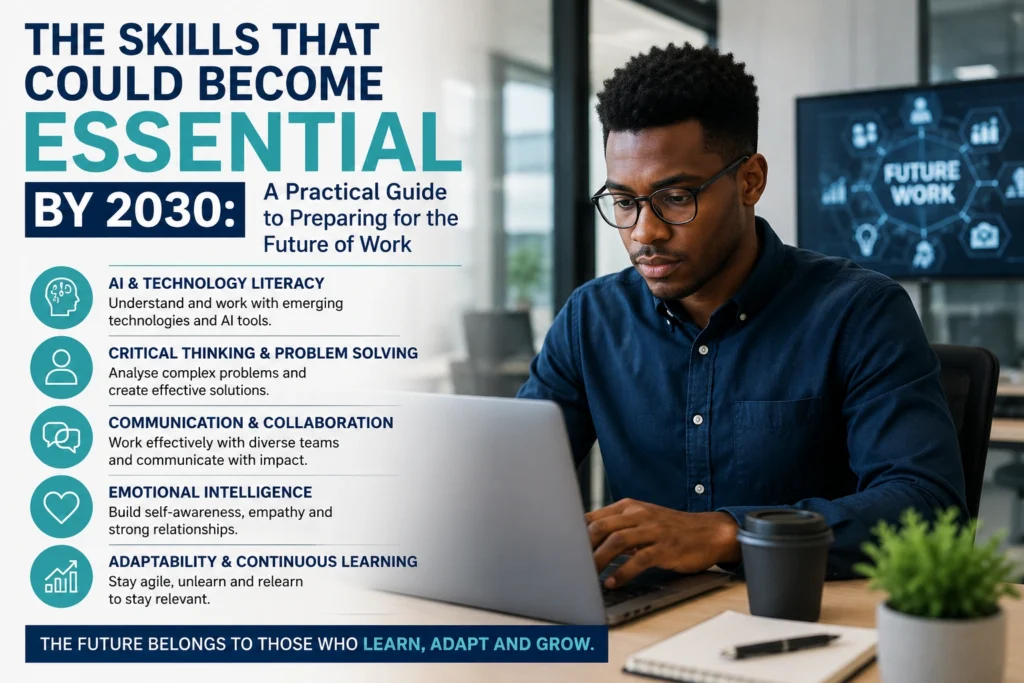
Some of these essential skills include:
- Digital literacy
- Artificial intelligence awareness
- Critical thinking
- Emotional intelligence
- Communication
- Creativity
- Adaptability
- Data interpretation
- Leadership
- Continuous learning
The combination of technical knowledge and strong interpersonal skills is likely to become one of the biggest advantages in tomorrow’s workforce.
ALSO APPLY FOR: FASSET Learnership 2026
ALSO APPLY FOR: EduPower Learnership 2026
Why This Issue Matters
Preparing for future workplace demands is no longer something only technology professionals need to consider.
Across many industries, employers are investing in automation, digital tools, and AI-assisted workflows to improve efficiency. At the same time, populations are changing, customer expectations are evolving, and businesses are adapting to global competition.
For individuals, this means:
- Some routine jobs may require fewer workers.
- Existing jobs will likely include new digital responsibilities.
- Employers may prioritize adaptable candidates over those with only technical qualifications.
- Lifelong learning could become a normal part of most careers.
Those who actively build future-ready skills are generally better positioned to move into new opportunities when industries change.
Rather than viewing change as a threat, developing relevant skills allows people to remain competitive throughout their careers.
The Skills That Could Become Essential by 2030
1. Digital Literacy Beyond Basic Computer Skills
Knowing how to use email and office software is no longer enough.
Digital literacy increasingly includes:
- Cloud collaboration tools
- Online project management
- Cybersecurity awareness
- Digital communication
- Remote working platforms
- Digital research
Even jobs outside technology now expect employees to work confidently with digital systems.
2. Artificial Intelligence Literacy
AI is becoming part of customer service, healthcare, finance, education, logistics, and manufacturing.
You do not need to become an AI engineer.
Instead, workers benefit from understanding:
- What AI can do
- Where AI has limitations
- How to use AI responsibly
- How to verify AI-generated information
- How AI supports workplace productivity
Learning how to work alongside AI is becoming more valuable than competing against it.
3. Critical Thinking
Information is everywhere, but not all information is accurate.
Employers increasingly value people who can:
- Evaluate evidence
- Identify reliable sources
- Solve complex problems
- Make informed decisions
- Consider different perspectives
Critical thinking helps reduce costly mistakes and improves decision-making across almost every profession.
4. Communication Skills
Technology cannot replace clear communication.
Strong communicators can:
- Explain ideas clearly
- Write professional emails
- Deliver presentations
- Resolve misunderstandings
- Build productive relationships
As workplaces become more collaborative, communication remains one of the most transferable career skills.
5. Emotional Intelligence
Emotional intelligence involves understanding your own emotions while recognizing and responding appropriately to others.
This includes:
- Empathy
- Self-awareness
- Conflict resolution
- Active listening
- Team collaboration
These abilities become especially important in leadership and customer-facing roles.
6. Adaptability
Career changes are becoming more common.
Adaptable workers can:
- Learn new software quickly
- Adjust to changing responsibilities
- Work across multiple projects
- Embrace new technologies
- Remain productive during uncertainty
Adaptability often matters as much as previous experience.
7. Data Literacy
Modern organizations collect large amounts of information.
Employees increasingly need to understand:
- Basic statistics
- Data visualization
- Performance metrics
- Business reports
- Trend analysis
Even managers outside technical fields regularly make decisions using data.
8. Creativity and Innovation
Automation handles repetitive tasks well but struggles with originality.
Creative thinking includes:
- Generating ideas
- Improving existing processes
- Designing better solutions
- Finding opportunities
- Solving unusual problems
Innovation often comes from combining existing ideas in new ways.
9. Leadership and Collaboration
Leadership is not limited to management positions.
Future workplaces reward individuals who can:
- Coordinate teams
- Support colleagues
- Take initiative
- Manage projects
- Build trust
Effective collaboration becomes increasingly important in remote and hybrid work environments.
10. Lifelong Learning
Perhaps the most important skill is learning itself.
Industries continue evolving, making continuous learning essential.
Successful professionals often:
- Complete online courses
- Read industry publications
- Attend workshops
- Learn new software
- Develop additional certifications
Learning becomes an ongoing career habit rather than something that ends after graduation.
ALSO APPLY FOR: Build a Better LinkedIn Profile in 10 Days
Step-by-Step Strategy to Prepare for 2030
Step 1: Assess Your Current Skills
Write down your existing strengths.
Include:
- Technical skills
- Communication abilities
- Leadership experience
- Computer knowledge
- Industry expertise
This provides a realistic starting point.
Step 2: Identify Skill Gaps
Compare your abilities with those increasingly requested in job advertisements.
Notice recurring requirements such as:
- Digital skills
- Data analysis
- Project management
- Communication
- Problem-solving
Focus on the biggest gaps first.
Step 3: Choose One New Skill Every Three Months
Trying to master everything at once often leads to frustration.
Instead:
- Pick one skill.
- Learn consistently.
- Practice regularly.
- Apply it in real situations.
Small improvements accumulate over time.
Step 4: Use Free and Affordable Learning Resources
Many high-quality resources are available online.
Consider:
- Free university courses
- Educational YouTube channels
- Professional certificates
- Industry webinars
- Open educational platforms
Regular learning matters more than expensive training.
Step 5: Practice Real Projects
Knowledge becomes valuable through application.
Examples include:
- Creating presentations
- Building spreadsheets
- Writing reports
- Analyzing public datasets
- Using AI tools responsibly
- Managing small projects
Employers often value practical experience alongside formal qualifications.
Step 6: Build Your Professional Network
Learning from others accelerates growth.
Connect with:
- Mentors
- Industry professionals
- Alumni
- Professional associations
- Online communities
Networking often leads to learning opportunities and career advice.
Step 7: Review Your Progress Every Six Months
Career development should be continuous.
Ask yourself:
- Which skills improved?
- What remains difficult?
- Which industries are changing?
- What should I learn next?
Regular reviews keep your learning aligned with workplace demands.
Best Practices Experts Recommend
Professionals who study workplace trends often recommend several practical habits for long-term career success.
Focus on learning how to learn. New technologies will continue emerging, making adaptability more valuable than memorizing specific tools.
Combine technical and human skills. Technical knowledge opens doors, while communication, leadership, and emotional intelligence help people grow within organizations.
Stay curious. Reading industry news, exploring emerging technologies, and asking questions helps maintain professional relevance.
Practice consistently. Small daily learning sessions are generally more effective than occasional intensive study.
Develop a growth mindset. View mistakes as opportunities to improve rather than evidence of failure.
Build a portfolio of work. Whether you create reports, presentations, designs, coding projects, or research, examples of your work demonstrate your abilities more effectively than simply listing skills on a résumé.
Mistakes People Often Make
Preparing for the future does not mean following every trend.
Common mistakes include:
Waiting until skills become mandatory. Learning after everyone else often makes career transitions more difficult.
Ignoring soft skills. Communication, teamwork, and emotional intelligence remain valuable regardless of technological change.
Depending on a single qualification. Degrees remain important, but ongoing learning helps maintain career competitiveness.
Following every new technology. Not every innovation becomes essential. Focus on widely adopted technologies with practical workplace applications.
Learning without practice. Watching tutorials alone rarely builds confidence. Practical application reinforces learning.
Assuming experience guarantees future success. Even experienced professionals benefit from updating their knowledge as industries evolve.
Frequently Asked Questions
1. Will artificial intelligence replace most jobs by 2030?
AI is expected to automate certain tasks rather than eliminate every job. Many roles will evolve, requiring workers to use AI alongside their existing expertise.
2. Which skill should beginners learn first?
Digital literacy is a strong starting point because it supports learning many other future workplace skills, including data analysis and AI tools.
3. Do I need a university degree to develop future-ready skills?
Not necessarily. Degrees remain valuable, but many practical skills can also be developed through online courses, workplace experience, certifications, self-study, and personal projects.
4. How much time should I spend learning new skills?
Even 30 to 60 minutes several times a week can produce meaningful progress when learning is consistent and focused on practical application.
Final Thoughts
Preparing for the future does not require predicting every technological breakthrough. Instead, it means building adaptable abilities that remain useful as workplaces evolve.
The Skills That Could Become Essential by 2030 are less about mastering one specific technology and more about combining digital confidence with critical thinking, communication, emotional intelligence, creativity, and lifelong learning. These capabilities can help people remain valuable across industries, regardless of how individual job roles change.
Start by identifying one skill that will strengthen your current career or support your future goals. Commit to learning it consistently, apply it through real-world projects, and review your progress regularly. Small, steady improvements today can create significant opportunities over the coming years.
ALSO APPLY FOR: FASSET Learnership 2026
ALSO APPLY FOR: EduPower Learnership 2026
ALSO APPLY FOR: Build a Better LinkedIn Profile in 10 Days